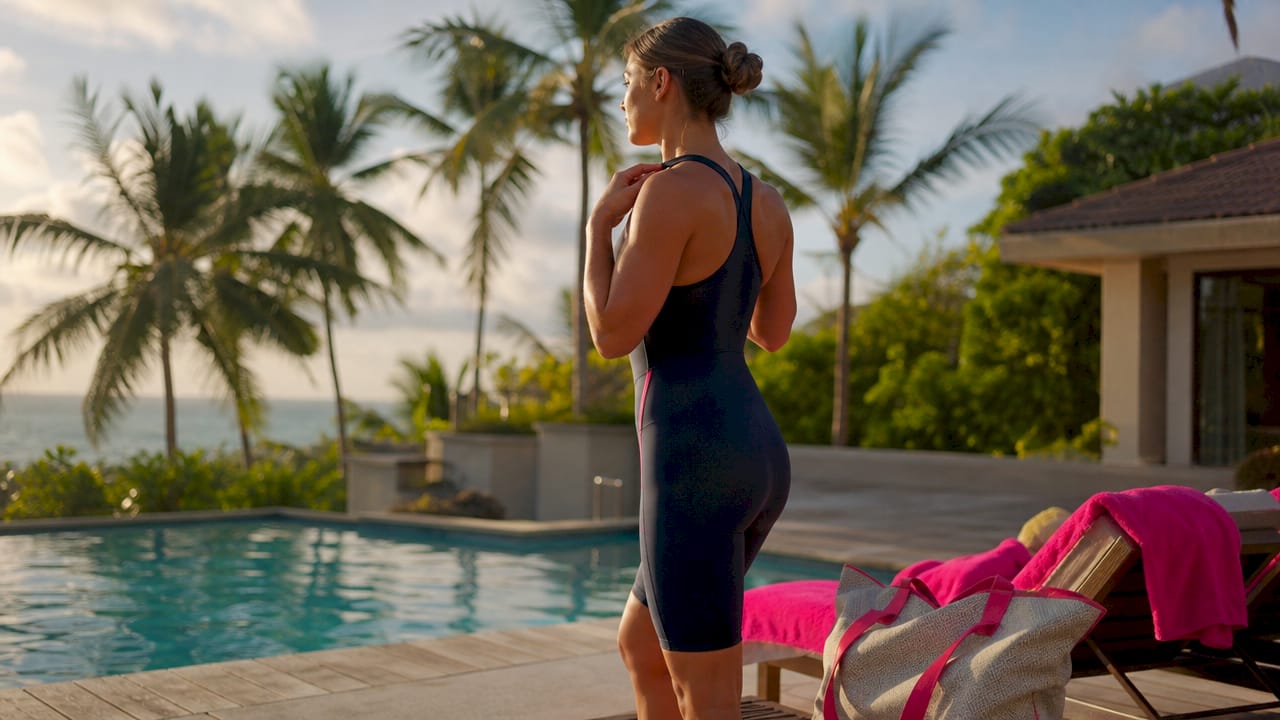
A power swimsuit is a garment engineered with high-compression fabrics, targeted construction, and specialized linings to improve muscle support, reduce drag, and shape the body in water. The term covers two distinct categories: competitive tech suits built for race-day performance, and leisure shaping suits designed for confidence and silhouette control at the beach or pool. Both types rely on advanced textile science, including elastane percentages, power mesh lining, and hydrophobic materials. Knowing which type you need changes everything about how you shop, wear, and care for your suit.
What is a power swimsuit and how is it defined?
A power swimsuit is defined as any swimwear garment that uses compression fabric technology to deliver functional benefits beyond basic coverage. The industry uses two terms interchangeably: “power swimsuit” as a broad consumer label, and “tech suit” or “compression swimsuit” as more specific technical terms depending on the context.
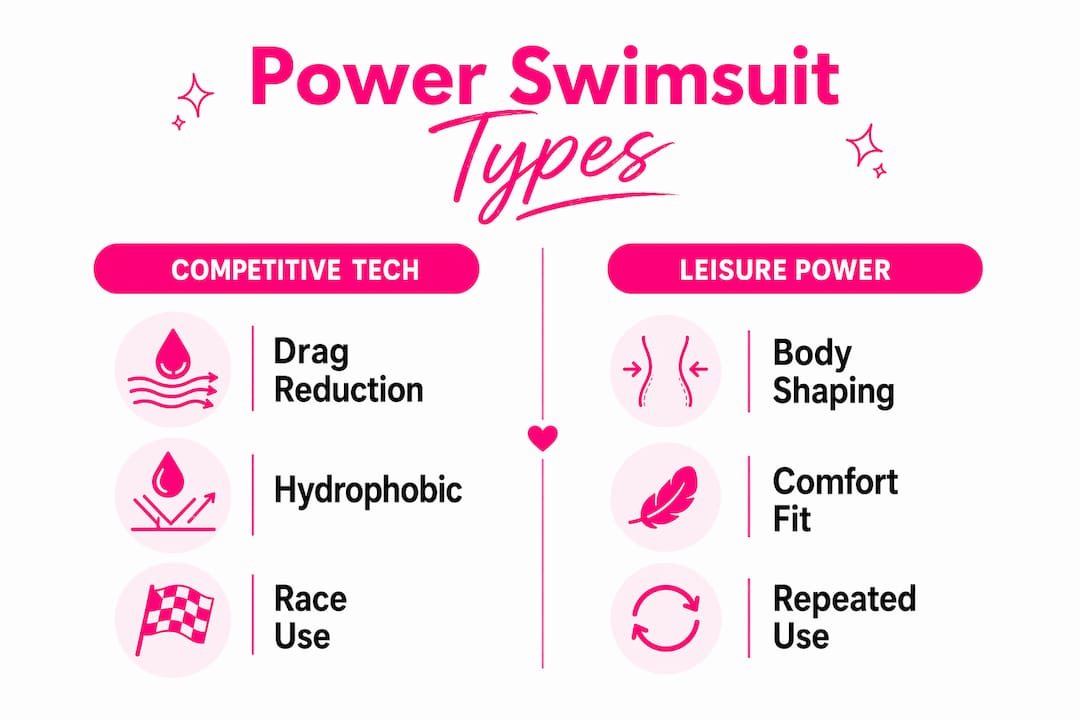
Power swimsuits fall into two categories: competitive tech suits using high-compression hydrophobic materials for drag reduction, and leisure shaping suits using power mesh panels for silhouette control. Confusing these two leads to discomfort or poor performance. A competitive tech suit worn casually will feel painfully tight and wear out fast. A leisure shaping suit worn in a race will not deliver the drag reduction a swimmer needs.
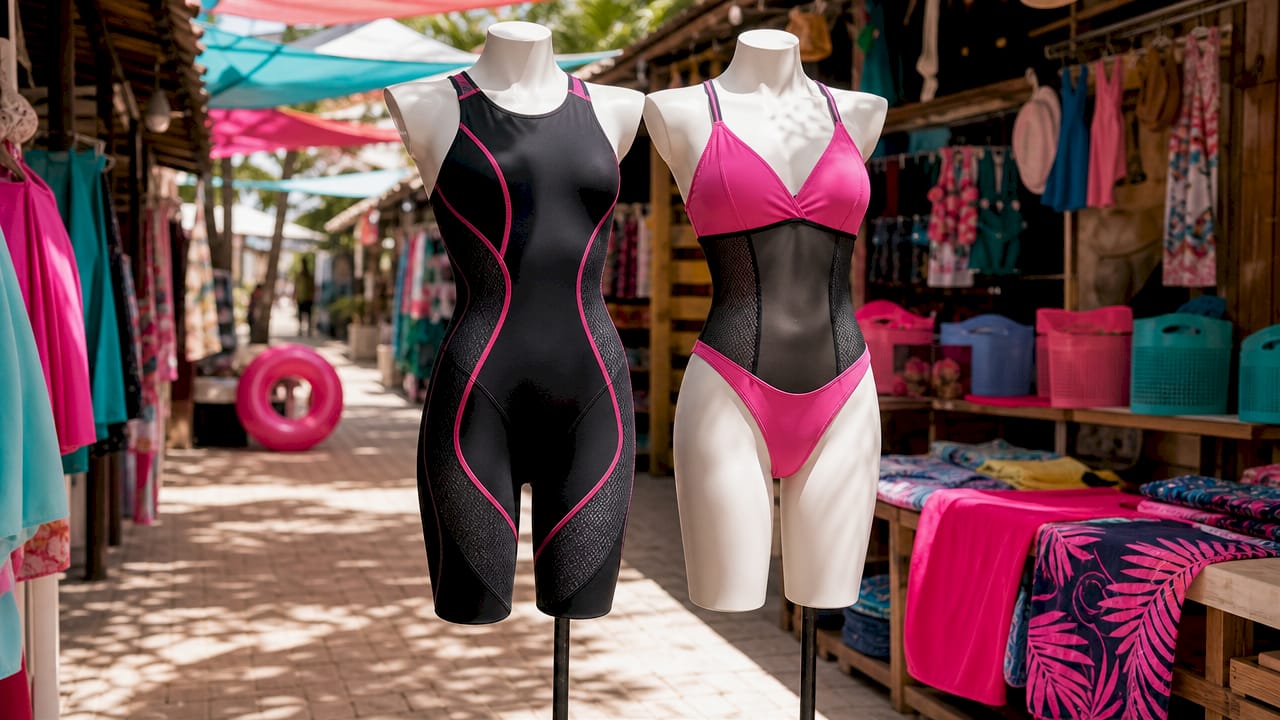
The core construction elements that define both types include elastane percentage, power mesh lining, seam bonding, and fabric modulus. Standard swimsuits use 10–18% elastane, while leisure power suits typically use 20–30% for stronger shape retention. Competitive tech suits go further, using highly compressive hydrophobic materials with bonded seams that eliminate water-catching stitching. These construction choices are what separate a power swimsuit from a regular one.
How do power swimsuits work to improve performance and appearance?
Power swimsuits work through three mechanisms: compression, drag reduction, and targeted panel placement. Each mechanism serves a different purpose depending on whether the suit is built for racing or shaping.
Hydrophobic fabrics and drag reduction
Competitive tech suits use hydrophobic fabric treatments that repel water rather than absorbing it. Performance testing shows drag reduction of 4.4% to 6.2% and energy savings of approximately 4.5% to 5.5% compared to standard suits. That margin is significant at the elite level, where races are decided by hundredths of a second. The fabric texture and bonded seams work together to let water slide off the body rather than creating resistance.
Power mesh lining and shaping
Leisure power suits rely on a different technology: power mesh fabric, a lightweight, sheer, synthetic mesh with 4-way stretch that combines support with breathability. Power mesh is typically 80–90% nylon and 10–20% spandex. It is sewn into panels inside the suit, and the direction of tension in those panels determines the shaping effect. Panels tensioned horizontally flatten the stomach. Panels tensioned vertically support posture. The direction and placement of power mesh panels uniquely affect shaping benefits, which is why two suits that look identical on a hanger can feel completely different when worn.
Pro Tip: When shopping for a leisure power suit, check the panel map if the brand provides one. A suit with a single front panel shapes differently than one with side panels that wrap around the torso.
- Hydrophobic outer fabric repels water and reduces surface drag
- Bonded or ultrasonically welded seams eliminate raised stitching that catches water
- High-elastane blends (20–30%) maintain shape under repeated stretching
- Power mesh inner panels apply targeted compression to specific body zones
- High-modulus fabric resists sagging after exposure to chlorine and saltwater
What are the benefits of wearing a power swimsuit?
The advantages of power swimsuits split clearly between performance gains and confidence benefits. Both are real, and both are backed by how the fabric actually functions.
Performance benefits for competitive swimmers:
- Tech suits improve race times by over 3% through hydrophobic fabrics and compression panels that stabilize muscles. A 3% improvement in a 100-meter freestyle translates to roughly a second off your time, which is the difference between placing and not placing at a competitive meet.
- Compression reduces muscle fatigue by stabilizing muscle oscillation and improving blood flow. Less muscle vibration means less energy wasted on stabilizing the body, and more energy directed toward propulsion.
- Bonded seams and hydrophobic coatings reduce the energy cost of moving through water, which compounds over longer distances.
Confidence and shaping benefits for leisure wear:
- Power mesh panels smooth the silhouette without restricting movement or breathing. The compression is firm but not painful when the suit fits correctly.
- High-quality power swimsuits prevent sagging by using high-modulus fabrics with strong push-back, maintaining shape despite exposure to chlorine and saltwater. A suit that holds its shape after 20 pool sessions is worth the higher price tag.
The psychological benefit is real too. Knowing your suit is doing structural work, not just covering your body, changes how you carry yourself at the pool or beach. That confidence shows up in posture, movement, and how you feel in photos.
How do competitive tech suits differ from leisure shaping swimwear?
The gap between a competitive tech suit and a leisure power suit is wider than most people expect. Using the wrong type in the wrong context causes discomfort, poor results, or both.
Tech suits are designed exclusively for championship meets and are not intended for daily wear. The extreme compression and specialized hydrophobic materials degrade quickly with repeated use. Most competitive swimmers wear their tech suit for fewer than ten races before the compression performance drops noticeably.
Leisure power suits, by contrast, are built for repeated use. They use comfort-oriented power mesh and elastane blends that tolerate regular chlorine and saltwater exposure. The compression level is firm but wearable for hours, not the near-painful tightness of a race suit.
| Feature | Competitive tech suit | Leisure power suit |
|---|---|---|
| Primary purpose | Drag reduction, race performance | Silhouette shaping, confidence |
| Fabric type | Hydrophobic, bonded seams | Elastane blend with power mesh lining |
| Compression level | Extreme (race-day only) | Firm but comfortable for extended wear |
| Durability | Limited (fewer than 10 races recommended) | High (withstands repeated pool and ocean use) |
| Typical user | Competitive swimmer | Recreational swimmer, beachgoer |
| Regulatory compliance | FINA approval required for competition | No governing body restrictions |
FINA, the international swimming federation, sets strict rules on tech suit coverage and materials for sanctioned competition. Suits must meet FINA approval standards to be legal in official races. Leisure suits have no such restrictions, which gives designers more freedom to combine shaping technology with fashion details like prints, cutouts, and color blocking.
Pro Tip: If you swim recreationally three or more times a week, a leisure power suit with a power mesh lining gives you the shaping and support benefits of compression without the cost or fragility of a competitive tech suit.
What should you know when selecting and wearing a power swimsuit?
Choosing the right power suit comes down to fit, fabric quality, and how you plan to use it. Getting these three things right means the suit works for you instead of against you.
- Size down carefully. Power suits are meant to feel snug. If a suit feels slightly tight in your normal size, that is often correct compression, not a sizing error. Try one size down only if the suit restricts breathing or cuts into skin.
- Don the suit slowly. Pull the suit on from the feet upward, working it up the body gradually. Yanking or pulling from the waist risks snapping the power mesh or damaging bonded seams.
- Rinse after every use. Chlorine and saltwater break down elastane over time. A cold water rinse immediately after swimming removes chemicals before they degrade the fabric.
- Test fabric modulus before buying. Stretch the fabric and release it. High-modulus fabric snaps back immediately with strong resistance. Fabric that stretches easily and recovers slowly will sag after a few wears.
- Match the style to your body goal. A suit with front-only power mesh panels shapes the stomach. A suit with wrap-around side panels shapes the waist and hips. Check the product description for panel placement before buying.
For style guidance on combining function with fashion, the Dollhousebikinis guide on sporty swimsuit selection breaks down how to read fit and construction details across different swimwear categories.
Key takeaways
A power swimsuit works because its compression fabric, power mesh panels, and high-modulus construction deliver measurable shaping and performance benefits that standard swimwear cannot replicate.
| Point | Details |
|---|---|
| Two distinct categories exist | Competitive tech suits and leisure shaping suits serve different purposes and should not be interchanged. |
| Power mesh drives shaping | Panel placement and tension direction determine whether a suit shapes the stomach, waist, or posture. |
| Fabric modulus signals quality | Strong push-back when stretched indicates the suit will hold its shape through chlorine and saltwater exposure. |
| Donning technique protects the suit | Pulling slowly from feet upward prevents power mesh damage and extends the suit’s lifespan. |
| Compression should feel snug, not painful | Tightness indicates effective muscle support; pain or restricted breathing signals the wrong size. |
Why power swimsuits changed how I think about swimwear
Most people treat swimwear as purely aesthetic. I used to think the same way. What changed my view was understanding that the tightness most women find uncomfortable in a power suit is actually the suit doing its job. The snugness is not a fit problem. It is compression working against muscle oscillation, the micro-vibrations that cause fatigue over time.
The misconception that a tight suit is the wrong size keeps a lot of women from experiencing what a well-fitted power suit actually does. When the fit is correct, you move differently. Your posture improves because the panels are doing structural work. Your stomach feels supported, not squeezed. That distinction matters.
What I find most interesting about modern leisure power suits is how far the textile engineering has come without sacrificing style. The features worth paying for in swimwear now include internal power mesh construction, high-modulus elastane blends, and chlorine-resistant coatings, all in suits that look like fashion pieces, not athletic gear. That combination did not exist at the same price point a decade ago.
The practical advice I give anyone shopping for a power suit: ignore the discomfort instinct on first try. If the suit is snug but you can breathe and move freely, you have the right size. If it cuts into your skin or restricts your breath, go up a size. That single adjustment makes the difference between a suit you wear twice and one you reach for every time.
— Ryan
Dollhousebikinis power swimsuits: style, support, and fit
Dollhousebikinis carries a range of swimwear built for women who want both shaping support and fashion-forward design. The collection includes styles with targeted compression construction suited to different body types and preferences.
The original swimsuit at Dollhousebikinis is a strong starting point for anyone looking for a suit that combines structure with style. For those who prefer sets, the two-piece set swimwear collection offers shaping options with power mesh lining in a range of prints and colors. Free shipping applies to orders over $100, and the site filters by style, price, and fit to make finding the right suit straightforward.
FAQ
What is a power swimsuit used for?
A power swimsuit is used for either competitive swimming performance or leisure body shaping, depending on its construction. Competitive versions reduce drag and stabilize muscles; leisure versions smooth the silhouette using internal power mesh panels.
How tight should a power swimsuit feel?
A power swimsuit should feel snug and firm but should not restrict breathing or cut into skin. Tightness indicates the compression is working correctly to support muscles and shape the body.
Can you wear a competitive tech suit for casual swimming?
Tech suits are not designed for casual or daily wear. They are built for race-day use only, and repeated casual use degrades the hydrophobic fabric and compression performance quickly.
What is power mesh in a swimsuit?
Power mesh is a lightweight synthetic fabric made from 80–90% nylon and 10–20% spandex, sewn into panels inside leisure swimsuits to provide targeted compression and silhouette shaping.
How do you care for a power swimsuit to make it last?
Rinse the suit in cold water immediately after every swim to remove chlorine and saltwater. Avoid wringing or machine washing, as both break down the elastane and power mesh that give the suit its shape and support.