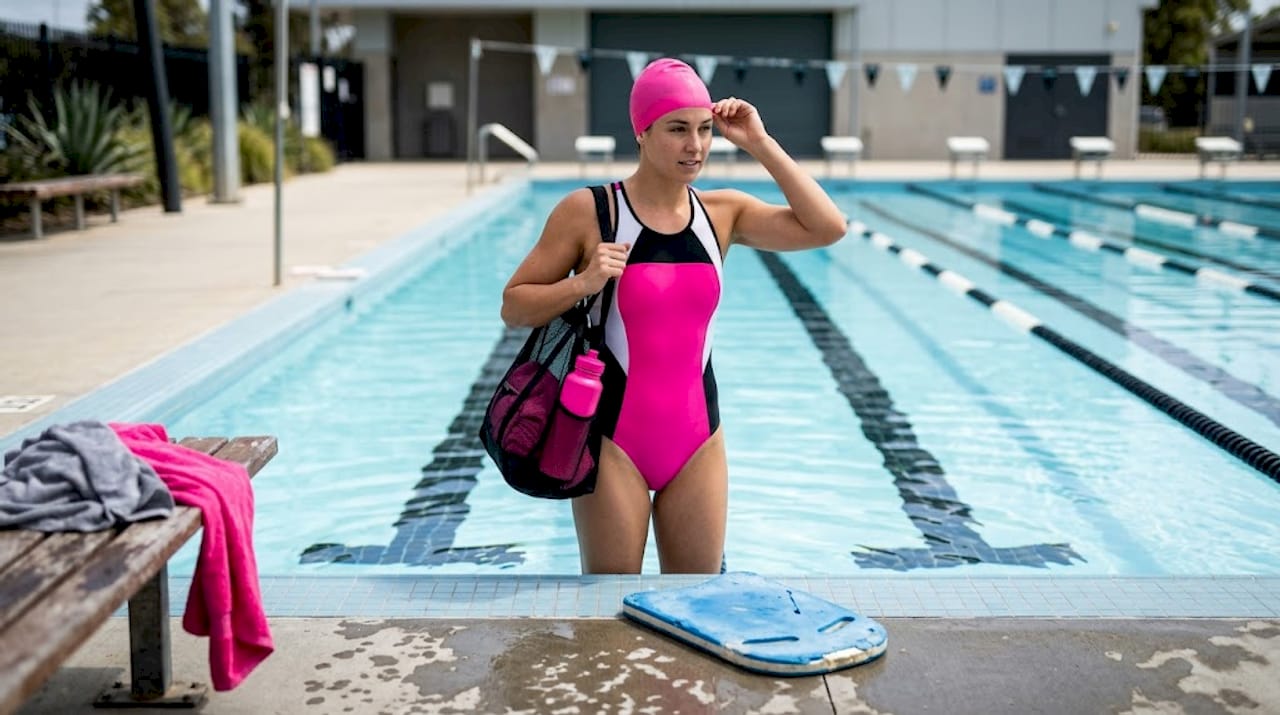
Most women assume a bold print and a snug fit are enough to call a swimsuit “sporty.” They buy something that looks athletic at the store, then spend their beach volleyball game constantly adjusting the top or chasing a bottom that crept up during a dive. A true sporty swimsuit is an engineered product, not just a style category. This guide breaks down exactly what separates functional active swimwear from ordinary fashion bikinis, which features actually matter, and how to choose the right fit for your summer plans.
Table of Contents
- Defining a sporty swimsuit: Beyond the basics
- Sporty vs. performance vs. competitive swimwear: Key differences
- Core features of a sporty swimsuit for active women
- How to choose the right sporty swimsuit for your needs
- Why most guides get sporty swimwear wrong
- Explore stylish sporty swimwear collections
- Frequently asked questions
Key Takeaways
| Point | Details |
|---|---|
| Function comes first | Sporty swimsuits prioritize secure fit and durable construction for active use. |
| Know your activity | Choose features and materials based on whether you plan to lounge, swim, or engage in sports. |
| Test for slip resistance | High-impact movement demands suits that stay in place—check reviews and features. |
| Style and support co-exist | Fashion-forward designs are available that don’t sacrifice comfort or movement. |
Defining a sporty swimsuit: Beyond the basics
The word “sporty” gets used loosely in swimwear marketing. Brands slap it on anything with a racerback strap or a solid color. But the actual definition is more specific. A performance swimwear standard means a swimsuit is designed to perform during active movement, including swimming, surfing, water aerobics, and beach sports, not just to look good while lounging.
That distinction changes everything about how a suit is constructed. Regular fashion bikinis are built around visual appeal. Draping, cutouts, and fabric choices are selected for how they photograph or how they look in motion on a slow walk. Sporty swimwear, by contrast, is built around what happens when your body is actually working. The stitching, the fabric weight, the band tension, the strap width—all of it feeds into whether you stay covered and comfortable during high-movement activity.
Here are the core requirements that separate sporty swimwear from standard fashion swimwear:
- Secure fit during movement: No slipping, shifting, or riding up during lunges, jumps, or paddling strokes
- Material resilience: Chlorine-resistant and sun-resistant fabrics that hold their shape after repeated use
- Supportive structure: Underwire, molded cups, or compression panels that keep the bust in place
- Range-of-motion cuts: Arm openings, back designs, and bottom cuts that allow full athletic movement
- Durable seaming: Flatlock or double-stitched seams that resist friction and don’t chafe during repetitive motion
A sporty swimsuit built for real activity uses materials and construction details that fashion bikinis skip entirely. The difference becomes obvious the moment you jump into the water or play a full set of beach volleyball.
The popular sporty swimwear options available today combine these functional features with current style trends, so you don’t have to sacrifice aesthetics to get real performance.
With the basics in mind, let’s compare sporty swimwear to its closest cousins for added clarity.
Sporty vs. performance vs. competitive swimwear: Key differences
Many shoppers use these three terms interchangeably, which leads to real confusion at checkout. They aren’t the same thing, and understanding the differences helps you spend money on the right suit.
Competitive swimwear is engineered to reduce drag and maximize speed for athletes, while sporty and active suits prioritize secure fit and durability for recreational use. Competitive suits are often paper-thin, nearly sheer, and highly compressive. They’re not designed for comfort or style. They’re designed to shave fractions of a second off a race time.
| Category | Primary Goal | Typical User | Style Options | Comfort Level |
|---|---|---|---|---|
| Competitive | Drag reduction, speed | Competitive swimmers | Minimal | Low |
| Performance | Durability, training fit | Serious recreational users | Moderate | Moderate |
| Sporty/Active | Secure fit, style, comfort | Active beachgoers | Wide variety | High |
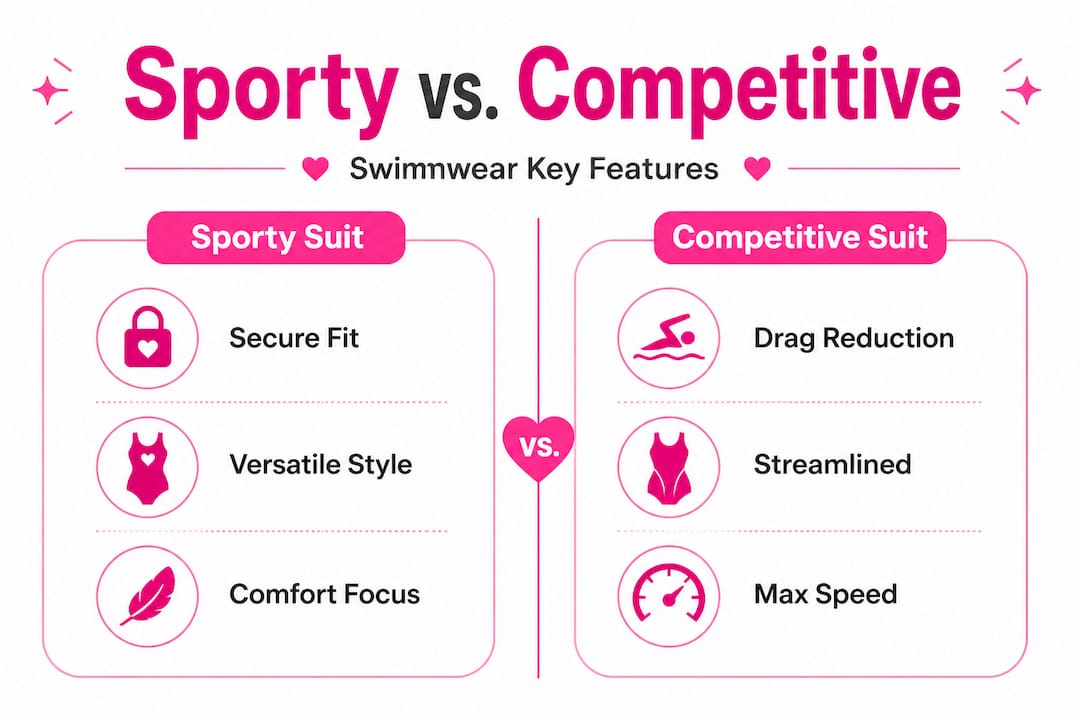
Performance swimwear sits between competitive and sporty. It’s built for training sessions and serious recreation, where a swimmer might be doing laps for an hour. These suits last longer than competitive options and offer more coverage, but they’re still not optimized for style or casual versatility.
Sporty swimwear is the category most women actually need. It covers active beach and pool use, is available in a broad range of styles and cuts, and balances function with fashion. Key features that make sporty suits stand out in this category include:
- Wider straps that stay put during paddling and arm movement
- Adjustable closures for a personalized, secure fit
- UV protection fabric rated at UPF 50 or higher
- Quick-dry materials that don’t become heavy or drag in the water
- Coverage cuts that work for both sports and casual beach time
A surfing sport swimsuit with long sleeves and a secured bottom is a strong example of sporty swimwear done right. The added sleeve coverage provides UV protection and reduces the chance of the top shifting during wave activity. For days that mix water sports with beach lounging, an active two-piece swimwear set lets you adjust coverage and keep a stylish profile from morning to evening.
Now that the distinctions are clear, let’s explore which features make a sporty swimsuit truly functional for active use.
Core features of a sporty swimsuit for active women
Knowing the category matters, but knowing what to look for inside that category is where smart shopping happens. Sporty swimwear construction details vary widely even within the same brand, and some features make a substantial difference in real-world performance.

For higher-impact movement like paddling, diving, and beach volleyball, “stays put” becomes the central requirement and best bikinis for active women reviews consistently test for slipping and creeping during activity. That’s a practical benchmark you can use when reading any product review.
Here’s a numbered breakdown of the most important features to check before buying:
- Fabric composition. Look for nylon-spandex or polyester-spandex blends with at least 15 to 20 percent elastane content. These materials stretch and recover without losing shape.
- Seam construction. Flatlock seams lie flat against the skin and reduce chafing during repetitive motion. Raised seams create friction hotspots over time.
- Strap design. Wide straps or cross-back configurations distribute weight more evenly and resist the downward pull of a wet, heavy fabric.
- Band tension. The underbust band on a top should be snug but not restrictive. A loose band allows the top to ride up when arms are raised.
- Bottom coverage and cut. Higher-rise bottoms and those with internal grip tape or silicone lining stay in place better during active use.
- Closure systems. Adjustable ties, hook-and-eye closures, and snap backs give you control over tension in a way that pull-on designs don’t.
| Feature | Low-Activity Need | High-Activity Need |
|---|---|---|
| Fabric stretch | Light elastane blend | High-recovery spandex blend |
| Seam type | Standard seam | Flatlock or double-stitched |
| Strap width | Thin or decorative | Wide or cross-back |
| Bottom cut | Any style | Higher-rise with grip lining |
| Closure | Fixed or tie | Adjustable, secure closure |
Pro Tip: Before buying online, check reviews specifically for comments about movement. If five reviewers mention the top shifted during swimming, that’s a reliable performance indicator regardless of how good the suit looks in product photos.
An anti-slip swimwear design with structured panels and secure closures covers multiple active use cases in one outfit. For simpler active days, secure two-piece suits with adjustable hardware let you dial in the fit before you hit the water.
Understanding the features is vital—let’s see how and when to choose the right sporty swimsuit for your activity and body type.
How to choose the right sporty swimsuit for your needs
Shopping for sporty swimwear with a clear plan saves money and prevents the frustrating experience of realizing mid-trip that your suit doesn’t hold up. The right approach starts with identifying your primary activity, then working backward to the features that support it.
A performance swimwear framework confirms that activity type is the single biggest factor in choosing the right sporty swimsuit. A suit built for open-water swimming has different needs than one designed for poolside yoga or beach volleyball.
Follow these steps to find the right match:
- Define your activity level. Light activity, such as casual swimming or paddleboarding, allows more style flexibility. High-impact activity, such as surfing or competitive beach sports, requires tighter construction standards across every feature listed above.
- Identify your coverage preference. Some women prefer minimal coverage for comfort and style; others prioritize full-coverage options for sun protection or personal confidence. Both are valid, and sporty swimwear accommodates both.
- Match strap style to arm movement. If your activity involves a lot of arm overhead movement—paddling, throwing, spiking—choose a racerback or cross-back configuration that won’t restrict shoulder rotation.
- Check the return policy. Fit is personal, and no amount of sizing guidance replaces trying a suit in motion. Brands with easy returns make it lower risk to test multiple options.
- Read reviews for activity-specific feedback. General “great quality” reviews aren’t useful here. Look for comments from women who wore the suit in conditions similar to yours.
A stylish three-piece design gives you coverage layering options for both active and lounge settings. Starting with a three-piece set means you have pieces to mix and match as your activity level changes throughout the day. Similarly, versatile swimwear sets that include a coverup or third piece extend the functional range of a single purchase across more situations.
Pro Tip: If you’re shopping for a beach vacation with multiple planned activities, prioritize a suit that performs well at your most demanding planned activity. It will also handle every lower-intensity situation easily.
Body type also matters, but not in the limiting way fashion advice usually frames it. The real question is where you personally need the most support or coverage during movement. Someone with a larger bust needs stronger band tension and wider straps regardless of overall body size. Someone who moves constantly benefits from higher-rise bottoms regardless of preferred style. Let your actual movement needs inform the choice, not just visual preference.
These shopping strategies synthesize the guide—here’s a fresh perspective you might not find in most swimwear articles.
Why most guides get sporty swimwear wrong
Most fashion and lifestyle guides treat sporty swimwear as a trend category, not a functional one. They highlight color palettes, seasonal prints, and influencer picks without ever testing whether the suit actually stays in place when a wave hits. That approach fails active women consistently.
The real issue is that style-first advice creates a disconnect between what a suit looks like and what it actually does. Women buy based on aesthetics, arrive at the beach with confidence, and then spend the whole day self-consciously adjusting. That experience isn’t a fit problem. It’s an information problem. The right information upfront would have guided a better choice.
Personal reviews from real active users are more valuable than any editorial trend report. A woman who tested a suit during paddleboarding for two hours knows more about its performance than a publication that photographed it on a model. Seeking out that kind of user-generated feedback—specifically from women who match your planned activity—is the single most reliable research method available.
Prioritizing fit security and structural support isn’t a compromise on style. It’s actually the foundation of feeling genuinely confident at the beach. A suit that stays in place lets you focus on the activity and the experience rather than constant self-monitoring. That’s a more authentic version of beach confidence than any trend-driven purchase.
Popular bodysuit styles that combine secure coverage with modern design show that the functional-versus-stylish trade-off is largely a myth. The best sporty swimwear delivers both, and settling for less on either front isn’t necessary.
Explore stylish sporty swimwear collections
Doll House Bikinis carries a range of swimwear built for women who want both active functionality and current style. Whether the priority is full-day beach sport use or a mix of swimming and lounging, the catalog includes options across coverage levels, closure types, and construction standards.
Start with shop sporty swimwear for a solid baseline active style. For structured full-coverage needs, secure four-piece swimsuits provide layered coverage and adjustable fit across multiple pieces. For UV protection during water sports, long sleeve sporty suits cover the arms while keeping the athletic silhouette intact. Orders over $100 qualify for free shipping, and new arrivals are updated regularly across all active swimwear categories.
Frequently asked questions
What defines a sporty swimsuit compared to a regular bikini?
A sporty swimsuit is designed for active movement, offering secure fit, durable materials, and supportive construction, while regular bikinis focus primarily on visual style without the same structural requirements.
Are sporty swimsuits suitable for all body types?
Yes. Sporty swimsuits are available across a wide range of designs, coverage levels, and support structures, so women of all body types can find options that match their movement needs and personal comfort.
Can I wear a sporty swimsuit for lounging as well as sports?
Absolutely. Most sporty swimsuits handle both settings well. The supportive construction that keeps the suit in place during activity also provides comfortable, secure coverage during relaxed beach time.
How can I tell if a swimsuit will stay put during activity?
Look for secure straps, snug underbust bands, and adjustable closures, then check user reviews for slip-resistance testing feedback from women who wore the suit during active use similar to yours.