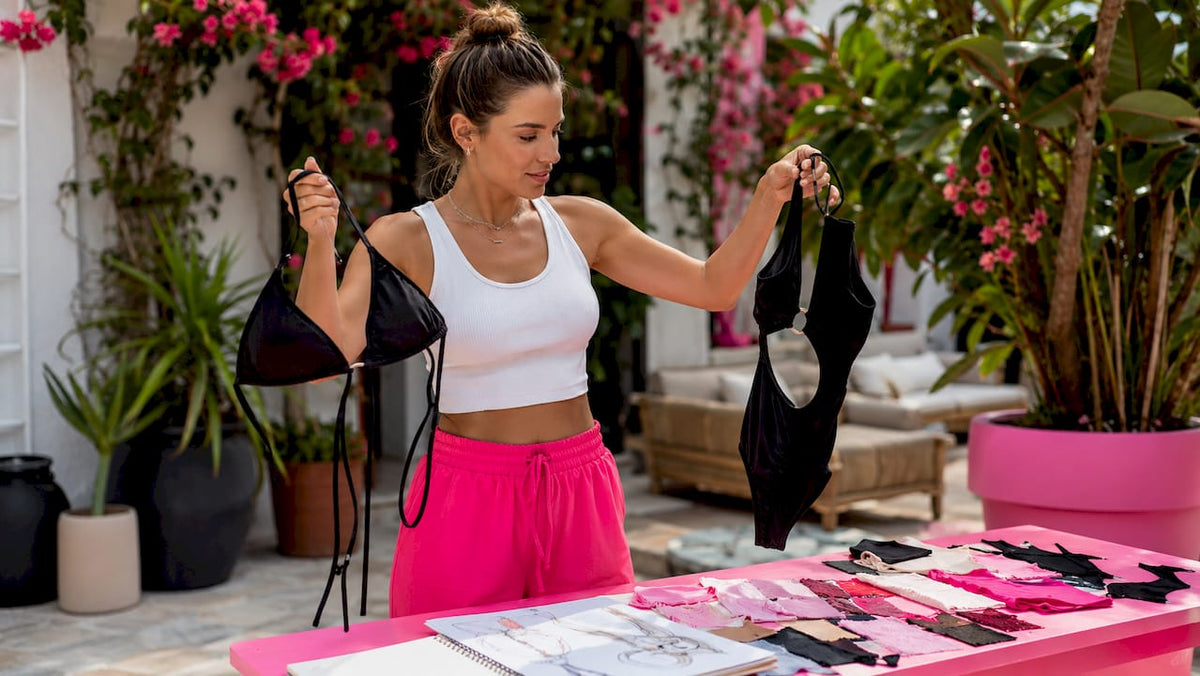
A bikini is a two-piece swimsuit with a separate top and bottom that leaves the midriff fully exposed, while a monokini is a one-piece swimsuit with strategic cut-outs or fabric connectors that visually mimic a bikini. The difference between bikini and monokini styles comes down to construction: one is two garments, the other is a single piece designed to look like two. Both styles appear across every major swimwear retailer in 2026, from Dollhousebikinis to department store swim sections, yet shoppers consistently confuse them. This guide breaks down every design, fit, and style distinction so you can shop with confidence.
What is the difference between bikini and monokini designs?
A bikini consists of two fully independent pieces: a top (bandeau, halter, triangle, or underwire) and a bottom (string, high-waist, cheeky, or full coverage). The midriff is completely open between the two pieces. Bikini styles range widely, from minimal string cuts to fuller high-waisted bottoms, giving wearers precise control over coverage at every part of the body.
A monokini, by contrast, is a single continuous garment. Monokinis connect top and bottom with fabric panels, mesh inserts, lace-up ties, or thin straps, creating bold skin-revealing silhouettes while keeping the suit structurally intact. The cut-outs give the visual impression of a two-piece without the separate pieces. This is the defining structural fact that separates the two categories.
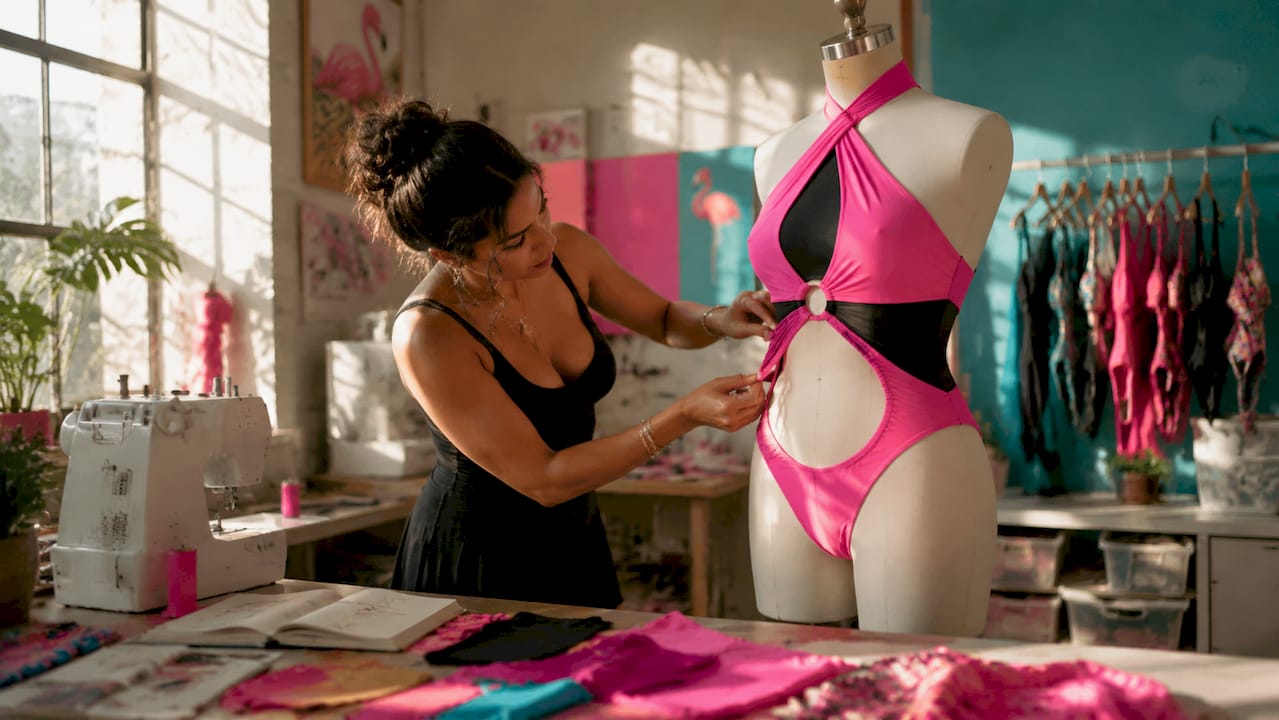
The monokini has a specific origin point. The original 1964 monokini was a topless design that sold 3,000 units at $24 each, a radical departure from conventional swimwear at the time. Modern monokinis have moved far from that concept. Today’s versions retain the one-piece structure but use cut-outs at the waist, sides, or torso to create a look that reads as a bikini from a distance.
| Feature | Bikini | Monokini |
|---|---|---|
| Piece count | Two separate pieces | One continuous garment |
| Midriff exposure | Fully open | Exposed through cut-outs |
| Coverage | Varies by style | Slightly more than a standard bikini |
| Adjustability | Top and bottom sized independently | Sized as a single unit |
| Structural security | Dependent on ties or clasps | Built-in connection adds security |
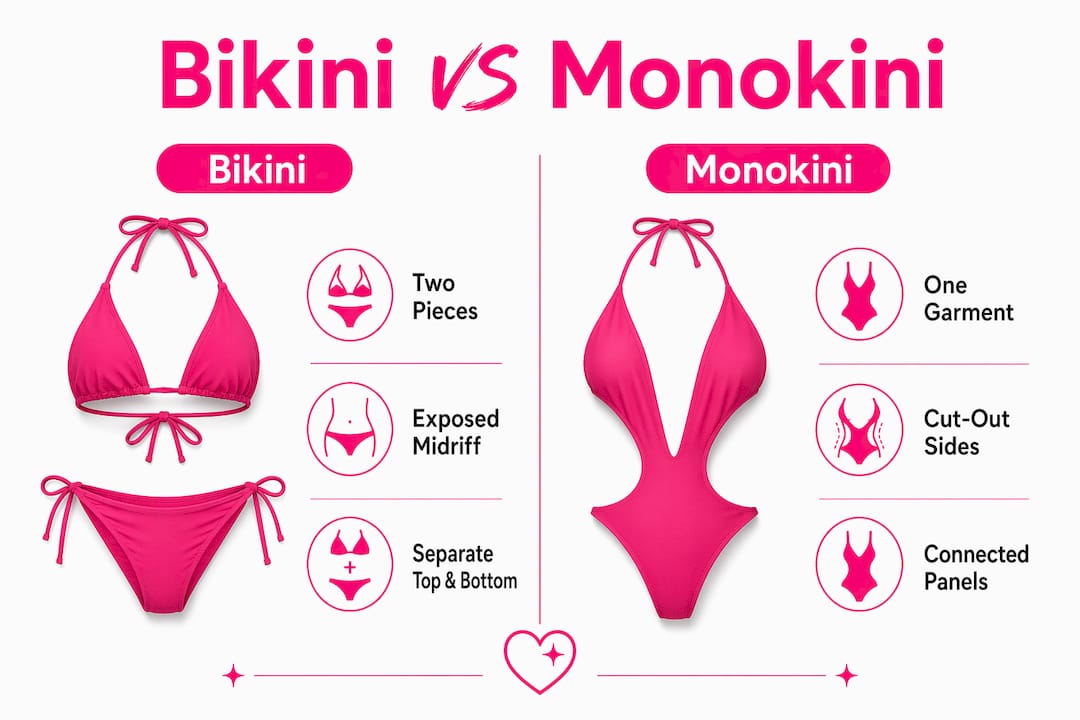
Pro Tip: If you love the look of a bikini but want more security during water activities, a monokini with side cut-outs gives you the same visual effect with less risk of shifting.
How do bikinis and monokinis fit different body types?
Fit is where the bikini vs monokini decision gets practical. The biggest functional difference is how each style handles torso length. Monokinis are less forgiving with torso length, so checking for adjustable straps and long-torso sizing options is critical before buying. A monokini sized for a standard torso will pull uncomfortably on a longer frame or bunch at the waist on a shorter one.
Bikinis solve this problem by default. Because the top and bottom are sized independently, you can match a size 8 top with a size 10 bottom, or choose a high-waist bottom with a bandeau top without any torso length constraint. This flexibility makes bikinis the more forgiving option for women whose top and bottom measurements fall in different size brackets.
Support is a separate question from piece count. Structural elements like underwire and power mesh define support in both bikinis and monokinis. A well-constructed underwire bikini top can provide the same lift as a structured monokini bodice. What matters is the construction, not whether the suit is one piece or two.
Here is how different body shapes typically approach the choice:
- Hourglass figures work well in both styles. Triangle bikinis and cut-out monokinis both highlight a defined waist.
- Athletic or straight frames often benefit from monokinis with ruched panels or side ties that create the appearance of curves.
- Pear-shaped figures can use high-waist bikini bottoms to balance proportions, or choose a monokini with a darker lower panel for the same effect.
- Fuller busts get the most support from underwire bikini tops or monokinis with built-in power mesh lining across the chest.
- Petite frames should look for monokinis labeled “short torso” or bikinis with narrow waistbands that do not visually cut the body in half.
Pro Tip: When trying a monokini for the first time, check the swimwear sizing guide and measure your torso from shoulder to hip before ordering. One size up in a monokini often fits better than sizing down.
What are the 2026 swimwear fashion trends for bikinis and monokinis?
Swimwear in 2026 splits into two clear aesthetics: minimalist “stealth wealth” and tactile maximalism. Both bikinis and monokinis appear across both camps, but they express each mood differently. Understanding which aesthetic you lean toward makes the bikini vs monokini decision much easier.
The minimalist direction favors clean lines, neutral tones (sand, ivory, slate, chocolate brown), and simple silhouettes with no hardware or embellishment. In bikini form, this looks like a seamless triangle top with matching low-rise bottoms. In monokini form, it translates to a sleek cut-out one-piece in a single solid color with thin strap connectors rather than wide fabric panels.
The maximalist direction goes the opposite way. Textured fabrics like terry cloth, crochet, and ruched nylon dominate this aesthetic, alongside bold prints, metallic finishes, and embellished hardware. Monokinis carry this look particularly well because the continuous fabric gives more surface area for texture and print. Bikinis in this trend lean toward padded cups, lace-up sides, and mix-and-match prints between top and bottom.
Key 2026 trends to watch across both styles:
- Crochet and knit textures on both bikini tops and monokini bodies
- Cut-out placement shifting lower, toward the hip rather than the waist, on monokinis
- Micro bikini styles with minimal coverage for sunbathing
- High-neck monokinis that combine modest coverage with bold side cut-outs
- Color-blocked two-piece sets where top and bottom are contrasting shades
Swimwear is evolving into a fashion statement where consumers choose styles based on function and non-negotiable comfort features, not just appearance. This shift means the best swimwear in 2026 is the piece that works for your specific activity and body, not just the one that photographs well.
How to choose between a bikini and a monokini for your lifestyle
Choosing between the two styles comes down to four practical factors: activity, coverage preference, travel habits, and personal style. Work through each one before buying.
-
Activity type. Different swimsuit styles serve different purposes like surfing or sunbathing, and functionality drives the best style choice. For active water sports like surfing or paddleboarding, a monokini with secure connectors stays in place better than a string bikini. For sunbathing or pool lounging, a bikini gives you more flexibility to adjust coverage and tan lines.
-
Coverage and confidence. Monokinis provide slightly more coverage than standard bikinis while maintaining a bold, skin-revealing look through strategic cut-outs. If you want the visual impact of a bikini with a bit more security around the midsection, a monokini is the practical choice.
-
Travel and packing. Bikinis pack smaller. A triangle top and two bottoms take up less space than a structured monokini with mesh panels or hardware. If you are packing light for a trip, three bikini pieces can create more outfit combinations than two monokinis. Check out travel-friendly swimwear tips for more packing strategies.
-
Personal style alignment. A well-selected swimsuit should feel like an extension of self, balancing elegance, comfort, and personal style. If you gravitate toward coordinated, put-together looks, a monokini delivers a single cohesive silhouette. If you prefer mixing prints and customizing fit, a bikini gives you more creative control.
Key takeaways
The core difference between a bikini and a monokini is structural: a bikini is two independent pieces, while a monokini is one continuous garment with cut-outs that create a similar visual effect.
| Point | Details |
|---|---|
| Construction difference | Bikinis are two separate pieces; monokinis are one garment with cut-outs. |
| Fit flexibility | Bikinis allow independent top and bottom sizing; monokinis require torso length checks. |
| Support source | Both styles can offer strong support when built with underwire or power mesh lining. |
| Activity suitability | Monokinis stay more secure during active water sports; bikinis suit lounging and sunbathing. |
| 2026 trend direction | Both styles appear in minimalist and maximalist aesthetics depending on fabric and cut. |
My take on the bikini vs monokini debate
I have spent years looking at swimwear from a style and fit perspective, and the most common mistake I see is shoppers choosing based on appearance alone without accounting for torso length or activity. A monokini that looks perfect on a model with a standard torso can be genuinely uncomfortable on anyone outside that range. That is not a body issue. That is a sizing issue, and it is fixable.
My honest recommendation: if you have never worn a monokini, try one with adjustable straps and a cut-out at the natural waist rather than the hip. That placement is the most flattering across the widest range of body types. If you are a bikini loyalist, consider that a well-designed one-piece vs bikini comparison often surprises people. Monokinis move differently in the water, and many women find they actually prefer the security once they try it.
The trend conversation matters less than fit. A monokini in last season’s color that fits perfectly will always look better than a trendy bikini that shifts every time you move. Buy for fit first, style second.
— Ryan
Shop bikinis and monokinis at Dollhousebikinis
Dollhousebikinis carries both bikini sets and monokini styles across a range of cuts, colors, and coverage levels. Whether you are looking for a minimalist solid-color monokini or a bold printed two-piece swimsuit set for your next beach trip, the catalog covers both aesthetics in 2026-current styles.
The site filters by style, coverage level, and price, making it straightforward to compare bikini types and monokini cuts side by side. Orders over $100 ship free. Browse the full swimwear collection to find your fit across bikini tops, bottoms, and monokini one-pieces designed for real bodies and real activities.
FAQ
What is the main difference between a bikini and a monokini?
A bikini is two separate pieces (top and bottom) with an open midriff, while a monokini is a single garment with cut-outs or fabric connectors that mimic the look of a bikini. The structural difference is the defining factor between the two styles.
Is a monokini more supportive than a bikini?
Not necessarily. Support comes from construction features like power mesh, underwire, and silicone gripper tape, which can appear in both bikinis and monokinis. A well-built bikini top can match or exceed the support of a monokini bodice.
Can a monokini fit all body types?
Monokinis work for most body types, but torso length is a key variable. Look for adjustable straps or styles labeled “long torso” if you are taller, and check sizing charts carefully since monokinis are less forgiving than bikinis when top and bottom measurements differ.
Which style is better for swimming and water sports?
A monokini with secure connectors or a structured one-piece design stays in place better during active water use. String bikinis can shift during swimming or surfing. For active water sports, a monokini or a sporty swimsuit style with secure fastenings is the more practical choice.
How do I know which swimwear style suits my body shape?
Start with your proportions: hourglass frames suit both styles, pear shapes benefit from high-waist bikini bottoms or darker lower panels on monokinis, and fuller busts need underwire support in either style. The bikini cuts guide at Dollhousebikinis breaks down fit by body shape in detail.
Recommended
- One piece vs bikini: Choose your perfect swimwear | News - Doll House
- What is the difference between bikini tops and bottoms? | News - Doll House
- Different Bikini Cuts Explained: Your Style and Fit Guide | News - Doll House
- Triangle Bikinis Explained: Stylish Swimwear Options & Trends | News - Doll House