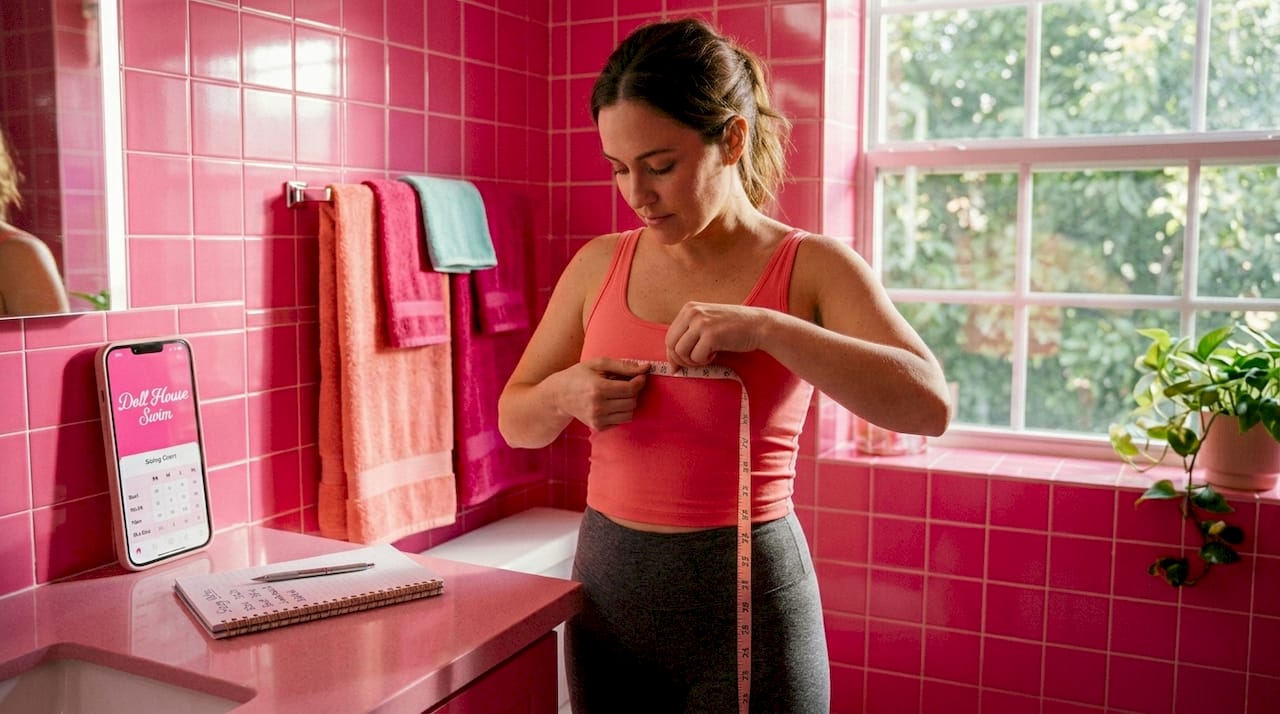
A swimwear sizing guide is a measurement-based system that maps your bust, waist, hips, and torso length to the specific size range a suit is designed to fit. Standard clothing sizes do not transfer to swimwear. A size 8 dress and a size 8 swimsuit are cut from different logic entirely, and assuming otherwise is the most common reason suits gap, ride up, or restrict movement. This guide covers how to measure accurately, how to read brand-specific size charts, and how to test fit through movement rather than just a mirror check.
What body measurements do you need for swimwear sizing?
Swimwear size charts reflect body measurement ranges, not garment dimensions. That distinction matters because it means you are matching your body to the suit’s intended fit zone, not guessing at fabric width. Four measurements cover most swimwear decisions.
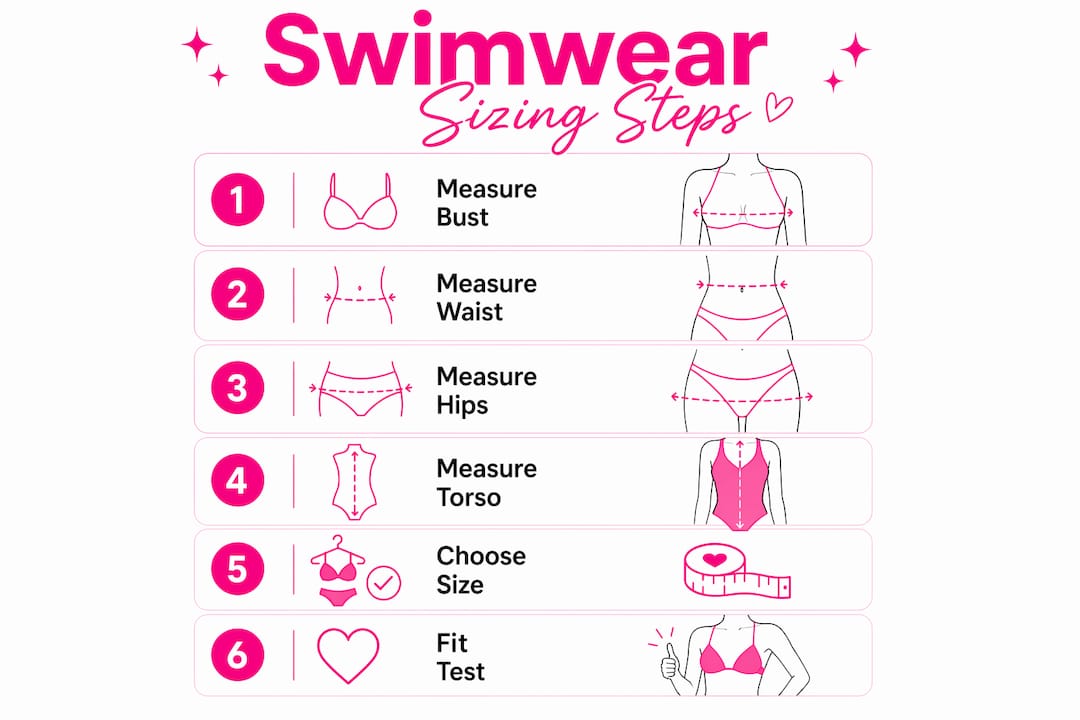
The core measurements are:
- Bust: Measured at the fullest point of your chest, with the tape parallel to the floor. This number drives top sizing for one-pieces and bikini tops.
- Under bust: Measured directly below the breast tissue. Subtract this from your bust measurement to calculate cup size for bikini top sizing.
- Waist: Measured at the narrowest point of your torso, typically 1 to 2 inches above the navel.
- Hips: Measured at the widest point, usually 7 to 9 inches below the waist. This number drives bikini bottom and high-waisted sizing.
- Torso length: Measured from the top of your shoulder, over the bust, down through the crotch, and back up to the starting point. This measurement is the deciding factor for one-piece fit.
Torso length is the measurement most shoppers skip, and it causes the most problems. A one-piece that pulls at the shoulders or rides up almost always has a torso length mismatch, not a bust or hip error. Bikini tops also use separate sizing logic from bottoms, which is why mix-and-match sets exist. Your top size and bottom size may not match on any single brand’s scale, and that is completely normal.
How to measure yourself for swimwear at home
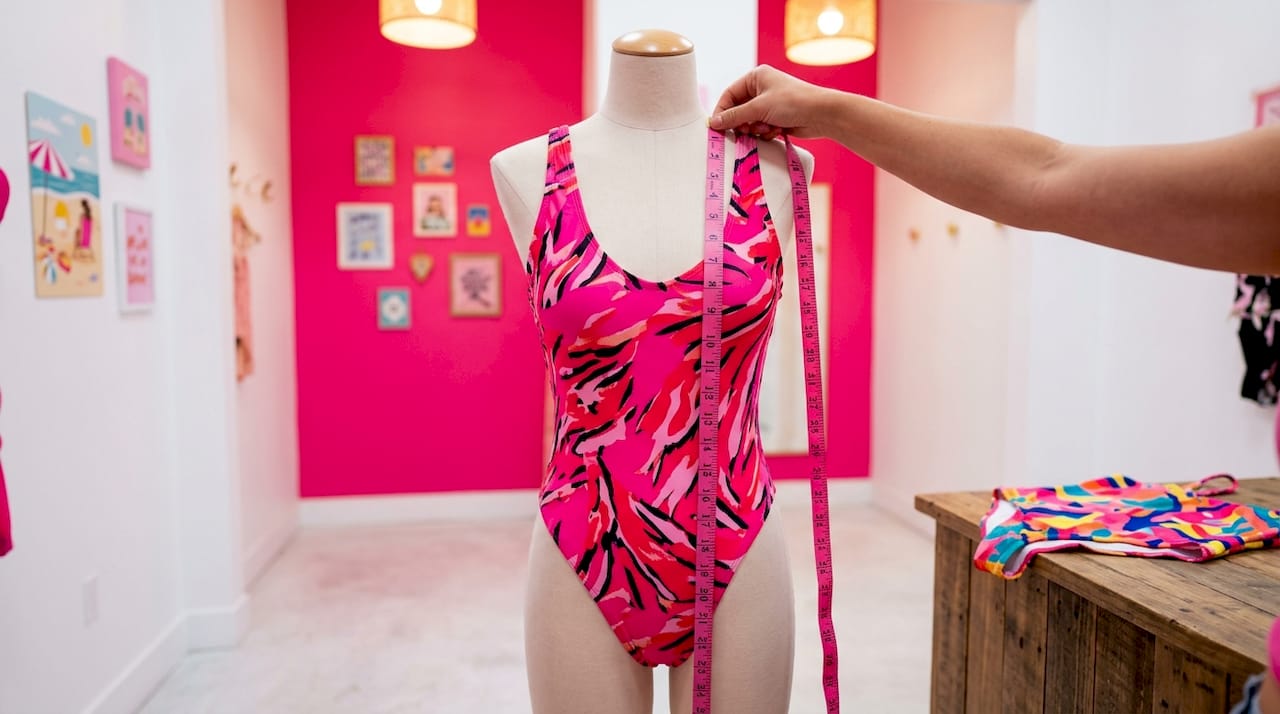
Accurate measurement requires a flexible fabric tape measure, a mirror or a helper, and natural standing posture. Do not pull the tape tight. It should lie flat against the skin without compressing it.
Follow these steps in order:
- Bust: Stand straight, arms relaxed at your sides. Wrap the tape around the fullest part of your chest. Record the number in inches.
- Under bust: Slide the tape directly below your breast tissue. Keep it level. Subtract this from your bust number to get cup size. A 1-inch difference is an A cup, 2 inches is a B cup, and so on.
- Waist: Find the narrowest part of your torso by bending slightly to one side. Measure there, not at the navel.
- Hips: Stand with feet together. Measure around the widest part of your hips and seat.
- Torso length: Start at the top of your shoulder, run the tape over your bust, between your legs, and back up to the starting point. This full loop is your torso measurement.
Pro Tip: Measure twice and record both numbers. If they differ, use the larger one. Fabric tape can shift slightly between attempts, and using the smaller number is the most common cause of a suit that fits too tight.
Proper measurement technique also requires checking your posture. Slouching compresses the torso and gives a shorter reading. Stand against a wall if you are measuring alone. The goal is a number that reflects how your body actually sits in a suit, not how it looks in a photo.
How do you read swimwear size charts and pick the right size?
Size charts vary by brand, country of origin, and suit style. US sizing typically runs in numeric sizes 0 to 16 or in XS through XL. European sizing uses centimeter-based numbers from 28 to 48. Asian sizing runs smaller and uses different torso length expectations. A size M from a US brand and a size M from a Korean brand are not the same garment.
The table below shows how the three main sizing systems approach the same body:
| Sizing system | Format used | Key measurement priority | Notes |
|---|---|---|---|
| US numeric (0–16) | Dress-style numbers | Bust and hip | Torso often assumed average |
| US alpha (XS–XL) | Letter grades | Bust, waist, hip range | Widest variation between brands |
| EU (28–48 cm) | Centimeter-based | Precise body measurements | More consistent across brands |
| Cup/band (bikini tops) | 32A, 34B, etc. | Band and cup separately | Most accurate for bust fit |
| Asian sizing | Numeric or alpha | Bust-forward, shorter torso | Size up by at least one from US |
When your measurements fall between two sizes, size up. Performance suits compress when wet, so a suit that feels slightly loose dry will tighten in the water to a snug, functional fit. A suit that feels tight dry will restrict breathing and movement once submerged. Nike’s training swimsuit sizing, for example, builds in this compression logic directly. Their size 34 fits a bust of 38.5 to 40.5 inches, a waist of 30 to 31.5 inches, and a torso of 64 to 65.75 inches, with the explicit recommendation to size up for a looser fit.
For bikini tops, always check whether the brand uses alpha sizing or cup and band sizing. Alpha-sized tops average across cup sizes and work well for smaller busts. Cup and band sizing, like 32C or 36B, gives a more precise fit for larger busts and prevents the top from gaping or compressing unevenly.
Pro Tip: When shopping across international brands, always convert your measurements to the brand’s native sizing system before checking their chart. Do not convert sizes between systems directly. Convert your body measurements instead.
How do you test swimwear fit beyond the size label?
A mirror check in a fitting room tells you very little. Fit testing requires movement, and movement reveals problems that standing still never will.
Run through these checks before committing to a size:
- Overhead reach: Raise both arms straight above your head. If the neckline drops forward or the suit pulls away from your body, the torso length is too short.
- Torso twist: Rotate your upper body left and right. The suit should move with you without shifting position on your body.
- Squat: Bend your knees to a seated position. The seat of the suit should stay in place. If it rides up or the leg openings cut in, the hip or rise sizing is off.
- Walking: Take 10 steps. Any suit that requires constant adjustment during a short walk will need constant adjustment at the beach.
Signs of a too-tight suit include red marks on the skin after 10 minutes, restricted breathing, and leg openings that cut into the thigh. Signs of a too-loose suit include fabric bunching at the bust, a seat that sags, or straps that slip off the shoulder without adjustment.
Water changes the equation further. Fabric loosens slightly when wet, which means a snug dry fit is the correct starting point for any suit you plan to swim in. A suit that already feels loose dry will feel sloppy and unsupportive in the water. Understanding how swimwear design affects fit in water helps you factor in fabric behavior before you buy. Swimwear materials explained in terms of stretch and recovery also matter here. Fabrics with high elastane content, like those containing 20% or more spandex, recover their shape after stretching and hold their fit longer than low-stretch alternatives.
Key takeaways
Accurate swimwear fit depends on four body measurements, correct size chart interpretation, and movement-based fit testing rather than size labels alone.
| Point | Details |
|---|---|
| Measure four dimensions | Bust, waist, hips, and torso length are all required for accurate swimwear sizing. |
| Torso length is decisive | One-piece suits that ride up or pull at the shoulders have a torso length mismatch, not a bust or hip error. |
| Size up between sizes | Swimwear compresses when wet, so a slightly loose dry fit produces the correct in-water result. |
| Size charts vary by brand and region | US, EU, and Asian sizing systems differ significantly. Always convert body measurements, not size labels. |
| Movement tests reveal true fit | Overhead reach, squat, and torso twist expose fit problems that a static mirror check cannot detect. |
Why sizing systems are not built for your body, and what to do about it
Sizing systems have a documented flaw at their foundation. They originated from male military body data, which means the proportional assumptions built into standard sizing have never accurately reflected the range of women’s bodies. If you regularly fall between sizes or find that your top and bottom measurements point to different sizes, that is not a fit problem with your body. It is a structural problem with the system.
What I have found actually works is treating the size label as a starting point, not a conclusion. Your measurements get you to the right neighborhood. The movement tests get you to the right suit. I have seen women spend 20 minutes in front of a mirror convinced a suit looks right, then spend the entire beach day adjusting it because they never did a single squat test. The mirror shows you color and coverage. Movement shows you function.
For casual beach wear, you have more flexibility. A suit that fits well standing still and looks the way you want it to is a reasonable choice. For swimming laps, surfing, or any activity where you are in and out of the water repeatedly, the movement tests are non-negotiable. A suit that shifts during a squat will shift during a dive, and no one wants to be chasing their top across a pool.
The best bikini fit guide reinforces one more point worth remembering: fit changes as fabric ages. Swimwear loses elasticity over time, particularly with chlorine exposure. A suit that fit perfectly at the start of summer may need replacing by the end of it. Check fit at the start of each season, not just at purchase.
— Ryan
Find your fit at Dollhousebikinis
Dollhousebikinis carries bikinis, bikini sets, monokinis, high-waisted swimsuits, and micro bikinis across a range of styles and fits. The catalog includes options for petite and plus sizes, with detailed size charts for each product category. Whether you are shopping for a one-piece that needs to match your torso length or a two-piece set with separately sized top and bottom, Dollhousebikinis provides the product range and sizing information to make a confident choice. Check the swimsuit collection and use the measurements from this guide to find your size before adding to cart. Free shipping applies to orders over $100.
FAQ
What measurements do I need for swimwear sizing?
You need bust, under bust, waist, hips, and torso length. Torso length is the most commonly skipped measurement and the most important one for one-piece suits.
Should I size up or down if I am between swimwear sizes?
Size up. Swimwear fabrics compress when wet, so a suit that fits slightly loose when dry will tighten to a snug, functional fit in the water.
Why does my top size and bottom size differ in bikinis?
Bikini tops use bust and cup measurements while bottoms use waist and hip measurements. These are independent sizing systems, and it is normal for them to point to different size labels on the same brand’s chart.
How do I know if a swimsuit fits correctly?
Run a movement test. Raise both arms overhead, do a squat, and twist your torso. The suit should stay in place during all three movements without pulling, riding up, or shifting.
Do swimwear sizes differ between US and international brands?
Yes, significantly. US, EU, and Asian sizing use different scales and proportional assumptions. Always convert your body measurements to the brand’s native system rather than converting size labels directly between systems.