
Swimwear design gets reduced to looks far too often. Pick a color, find a pattern, done. But why swimwear design matters goes much deeper than what you see on a rack or a product page. The fabric blend, the seam placement, the lining choice, the strap construction — these details determine whether a suit holds its shape after twenty pool sessions or bags out after five. They determine whether you’re constantly adjusting or completely free to move. This article breaks down the technical, functional, and environmental reasons that design is the most important factor in any swimwear decision.
Table of Contents
- Key takeaways
- Why swimwear design matters beyond aesthetics
- How design features shape fit and confidence
- Durability and care: the design connection
- Design innovations addressing fit and sustainability
- My take on what the industry gets wrong
- Shop swimwear built with design in mind at Dollhousebikinis
- FAQ
Key takeaways
| Point | Details |
|---|---|
| Fabric blend drives performance | The standard 80/20 polyester-elastane mix determines stretch, recovery, and how fast a suit degrades. |
| Lining is functional, not decorative | Linings prevent sheerness, reduce chafing, and extend a suit’s lifespan by several seasons. |
| Fit is more than size | Seam placement, strap adjustability, and stretch recovery all affect how a suit actually feels during wear. |
| Care habits are design-dependent | Rinsing immediately after pool or ocean use preserves elastane and protects the design investment. |
| Sustainability starts at design | Material choices and construction quality reduce replacement frequency and lower environmental impact. |
Why swimwear design matters beyond aesthetics
Most people assume that swimwear design is about silhouette and color. Those things matter for personal style. But the structural decisions made before a suit ever gets printed or dyed are what determine whether it performs or fails.
Modern swimwear fabric is typically composed of 80% polyester or polyamide and 20% elastane. Elastane is what gives the fabric its stretch. Without it, a suit would feel rigid and uncomfortable within minutes. But elastane is also the weak point. It degrades under chlorine exposure, UV radiation, and even body oils. After 300 hours of chlorine and sunlight exposure, fabric strength can drop by 65%. That is not a minor dip. That is a suit that no longer fits, no longer covers, and no longer recovers after stretching.
The type of fiber used matters too. Polyamide (also sold as nylon) is softer and more resistant to chlorine than polyester. Polyester holds color better and costs less to produce. Neither is perfect. Smart design accounts for where the suit will be used most and picks the blend accordingly. A suit built for lap swimming needs different fabric engineering than one designed for beach days.
What fabric testing actually looks at
Quality swimwear goes through stretch recovery tests, opacity checks, and chlorine resistance evaluations before it reaches consumers. Opacity tests check the fabric in its relaxed state, its stretched state, and when fully saturated to prevent any transparency during real use. A suit that looks fine on the hanger but goes sheer when wet is a design failure, not a fabric accident.
Pro Tip: Hold any swimwear fabric up to a light source and stretch it to at least 50% of its size. If it goes noticeably sheer, the lining is doing all the work. Check that the lining is intact and well-attached before buying.
How design features shape fit and confidence
Fit is not just size. Two suits labeled the same size from different brands can feel completely different, and the reason is always in the design details.

Seam placement is one of the most underrated factors in swimwear construction. Seams positioned along natural body lines reduce friction and chafing during movement. Seams running across high-friction zones, like the inner thigh or under the bust, create irritation fast. Well-fitted swimwear uses seam placements aligned with body lines and stretch fabrics that retain their shape to maximize comfort throughout wear.
Strap design is another area where small choices produce big results:
- Adjustable straps allow the wearer to customize shoulder support without affecting the chest coverage or back fit.
- Halter neck designs redistribute support load across the neck and upper back, which works well for fuller busts.
- Racerback cuts allow full arm movement, making them the preferred choice for active swimmers.
- Tie straps offer styling flexibility but provide the least structured support, which is fine for lounging but not for anything active.
Linings are perhaps the most misunderstood design element. They are often treated as an afterthought or a cost-cutting target, but linings prevent wet sheerness, reduce chafing, and extend garment lifespan by protecting the outer fabric from direct friction and chemical exposure. Lined suits consistently outlast unlined ones by several seasons. That is not a small difference over time.
Effective swimwear design targets distinct user needs and body shapes rather than assuming one construction works for everyone. A high-waisted bottom, for example, provides abdominal coverage and support that a low-rise cut does not. A bandeau top suits certain body proportions well but may not provide enough support for others. These are design decisions, not just style preferences.
Pro Tip: When shopping for bikini tops, look for styles with adjustable hardware at both the neck and the back. This gives you two points of customization instead of one, which makes a significant difference for achieving a secure fit.
Durability and care: the design connection
How long a swimsuit lasts is not just about how often you wear it. It is directly tied to the construction decisions made at the design stage. A well-constructed suit with quality lining, reinforced seams, and a chlorine-resistant fabric blend will hold up significantly longer than one that prioritizes cost reduction at every stage.
Here is what accelerates swimwear degradation in practical terms:
- Chlorine exposure without rinsing. Pool water chemically breaks down elastane fibers. Every hour in chlorinated water without a post-swim rinse shortens the suit’s life.
- UV radiation during drying. Hanging a suit in direct sunlight to dry speeds up elastane breakdown. Dry in shade or indoors.
- Salt water saturation. Ocean salt is abrasive and pulls moisture from fabric. Rinse thoroughly after salt water exposure.
- Machine washing on hot cycles. Heat destroys elastic. Hand wash in cold water or use a mesh bag on a delicate cycle.
- Wringing to remove water. Twisting a wet suit damages fiber alignment. Press water out gently instead.
Cold or lukewarm water rinsing immediately after swimming is the single most effective maintenance step for preserving elastane and extending a suit’s functional life. This is not optional advice. It is what keeps the design working as intended.
“A well-designed suit protects itself better than a poorly designed one — but no suit survives neglect. Maintenance and design work together.”
The sustainability angle here matters too. A suit that lasts three to four seasons instead of one dramatically reduces the raw materials, production energy, and packaging waste associated with replacement purchases. Choosing quality construction is one of the most direct paths to more sustainable swimwear choices.
Design innovations addressing fit and sustainability
The swimwear industry has historically relied on sizing systems that do not reflect real body diversity. Women’s bodies can shift up to 3 kilograms in a week, but most swimwear only accommodates 1 to 2 centimeters of size variation. That gap between real bodies and rigid sizing has driven real innovation in recent years.
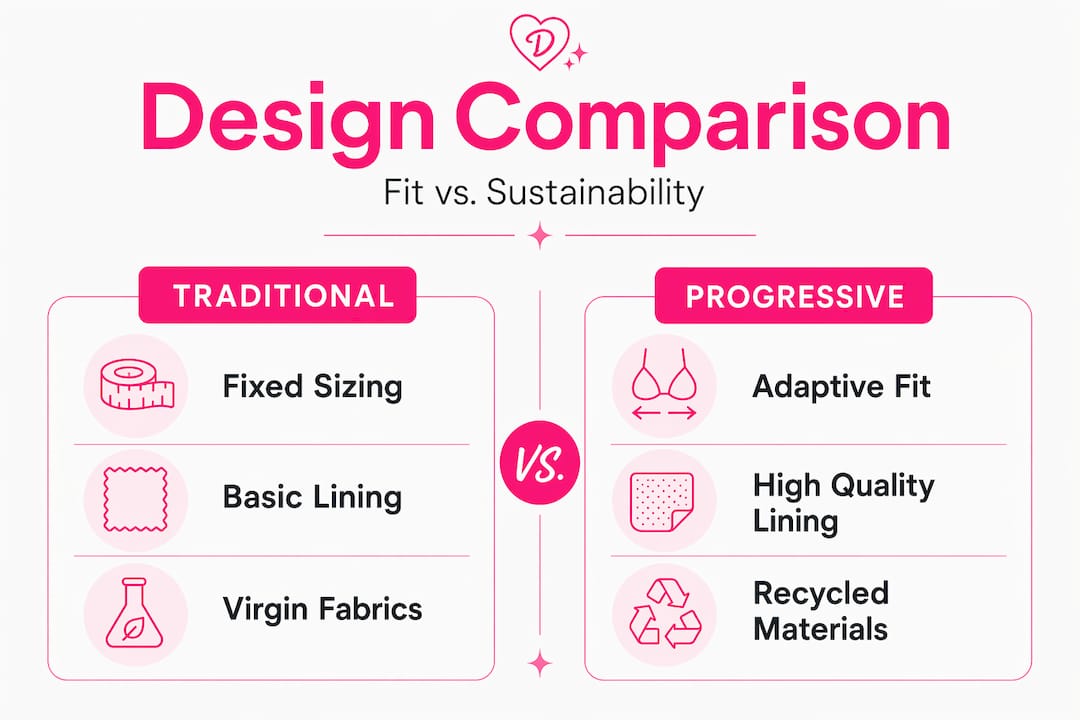
Some brands now use what they call “Magic Sizing” or adaptive stretch zones that accommodate body fluctuation without altering coverage or support. Others have rethought pattern cutting entirely, using curved panels instead of flat ones to wrap the body more accurately.
Here is a direct comparison of traditional versus progressive swimwear design approaches:
| Design Factor | Traditional Approach | Progressive Approach |
|---|---|---|
| Sizing system | Fixed numerical sizes | Adaptive stretch zones, multi-size fits |
| Body shape coverage | One cut per silhouette | Multiple cuts targeting specific proportions |
| Lining use | Optional or skipped | Standard in coverage-critical areas |
| Fabric sourcing | Conventional synthetic fibers | Recycled nylon or ECONYL alternatives |
| Sustainability messaging | Absent or incidental | Integrated into product design and marketing |
On the sustainability side, understanding what is eco-friendly swimwear means looking past the label. Synthetic microfibers shed during wear and washing and enter marine ecosystems. This is a design problem as much as a consumer behavior problem. Tightly woven fabrics shed fewer fibers than loosely constructed ones. Choosing swimwear made from recycled materials like ECONYL, which is regenerated nylon from ocean waste and industrial scraps, addresses the raw material side of the equation.
The benefits of sustainable bikinis extend beyond environmental goodwill. Recycled nylon often performs comparably to virgin nylon, retains color well, and resists chlorine at a similar rate. You are not trading performance for sustainability. You are getting both. Choosing eco-friendly swimwear does not require accepting compromises on fit or durability when the design is done right.
When building your own sustainable swimwear choices list, focus on: fabric composition and sourcing, lining quality, seam construction, and the brand’s stated approach to sizing. Those four factors tell you more about a suit’s true value than price or trend status ever will.
My take on what the industry gets wrong
I’ve looked at a lot of swimwear, and the pattern I keep seeing is this: brands spend enormous effort on print development and influencer marketing, and almost none on educating buyers about what makes a suit actually worth owning.
In my experience, the details that matter most, such as lining construction, seam placement, and fabric testing protocols, are rarely mentioned anywhere near a product page. Shoppers are left to figure out why their suit bagged out after two months, when the answer was visible in the fabric spec all along.
What I’ve found is that the fit problem and the sustainability problem are the same problem. A suit that fits poorly gets replaced more often. A suit built with cheap elastane degrades faster. Both outcomes drive higher consumption and more waste. The solution to both is better design from the start.
Rigid sizing systems cause continuous discomfort and I think the industry underestimates how much this affects purchasing behavior. When something doesn’t fit well, buyers assume it’s their body, not the design. That assumption needs to change. The suit should fit the body, not the other way around.
My recommendation: before you buy anything, find out what fabric blend it uses, whether it’s lined, and how the brand approaches sizing. Those three questions filter out more bad purchases than any amount of trend research.
— Ryan
Shop swimwear built with design in mind at Dollhousebikinis
Dollhousebikinis carries swimwear built around the design principles covered in this article: quality fabric blends, structured lining, and fits that work across body types.
Browse the two-piece bikini sets for options that pair tops and bottoms with intentional fit construction, or check out the original swimsuit for a one-piece designed with coverage and comfort in mind. For beach days that call for more than just a suit, the beach cover-up collection adds practical, well-designed layering options. Free shipping applies to orders over $100.
FAQ
Why does swimwear fabric composition matter so much?
Fabric composition determines stretch, durability, and resistance to chlorine and UV damage. A suit with quality elastane and a tight weave will hold its fit and coverage far longer than one built with lower-grade materials.
What does swimwear lining actually do?
Lining prevents wet sheerness, reduces chafing against the skin, and protects the outer shell fabric from direct chemical and friction exposure. Lined suits outlast unlined ones by several seasons in real-world use.
How does swimwear design affect sustainability?
Design choices determine how long a suit lasts, how many microfibers it sheds, and whether the materials came from recycled sources. Better design directly reduces replacement frequency and environmental impact, which is why sustainable swimwear practices start at the construction stage.
Why do so many swimsuits stop fitting after a short time?
Elastane degrades under chlorine, UV light, and salt water exposure. Without proper rinsing and care, fabric strength can drop significantly within a single season. Poor lining and low-grade elastane accelerate this process.
What should you look for when choosing eco-friendly swimwear?
Look for suits made from recycled nylon or ECONYL, with tight fabric construction to minimize microfiber shedding, and durable lining that reduces how often the suit needs replacing. These are the clearest markers of genuinely eco-conscious swimwear design.