
Swimwear sales spike sharply in spring and summer every year, yet a growing number of shoppers are buying bikinis in January for a February resort trip, picking up a new one-piece for indoor lap swimming, or stocking up during a fall clearance event. The idea that swimwear belongs only in a beach bag from June through August is losing ground fast. Understanding why seasonality exists, how brands are responding to it, and how you can use that knowledge to shop smarter will change the way you approach your swimwear collection for good.
Table of Contents
- What makes swimwear seasonal?
- Behind the surge: Calendar vs. promotional seasonality
- How brands adapt: The global and year-round approach
- Smart shopping: How to find stylish swimwear whenever you need it
- The uncomfortable truth about swimwear seasonality
- Explore stylish swimwear year-round
- Frequently asked questions
Key Takeaways
| Point | Details |
|---|---|
| Swimwear sales peak in summer | The majority of swimwear purchases occur in spring and summer due to weather and vacation timing. |
| Brands extend demand | Leading swimwear brands smooth seasonal declines by marketing to global customers and year-round occasions. |
| Promotional windows matter | E-commerce events and marketing campaigns can create sales peaks outside typical summer months. |
| Smart shopping is year-round | Fashion-savvy shoppers can find stylish swimwear and deals any time of year by targeting off-season and international brands. |
What makes swimwear seasonal?
Swimwear is a product category shaped almost entirely by when and where people plan to use it. Unlike a white t-shirt or a pair of jeans, a bikini or one-piece has a very specific use case tied to water, warmth, and leisure. That narrow context is exactly what creates such a sharp seasonal pattern in the market.
Swimwear demand concentrates around warmer-weather and vacation occasions, with buying and shopping surges in the months leading into summer. Search volume data backs this up. Google Trends data consistently shows that searches for “bikini,” “swimsuit,” and related terms begin climbing in late February and March, hit their highest point in June and July, and then fall off sharply by September.
Several forces drive this predictable pattern:
- Weather: Warm temperatures trigger the immediate need for swimwear, especially for pool and beach outings.
- School vacations: Spring break and summer break are the two biggest windows when families and young adults plan beach and pool trips.
- Destination travel: Vacation planning typically starts 6 to 12 weeks before departure, which means shoppers start browsing trendy swimwear styles well before they actually pack their bags.
- Social events: Pool party outfit ideas and outdoor event invitations spike in late spring, pushing another wave of swimwear searches and purchases.
“When a product’s use case is tied tightly to a specific season or activity, demand doesn’t just shift, it compresses. Nearly all of the year’s purchases happen in a very short window.”
This compression creates challenges for both retailers and shoppers. Retailers must stock inventory months in advance, which means they are betting on what styles will sell before they know what the season will actually look like. Shoppers, on the other hand, often face limited options if they wait too long into summer to buy, because the best styles sell out quickly at peak season. The pattern is predictable, but that doesn’t mean it has to control when or how you shop.
Behind the surge: Calendar vs. promotional seasonality
Swimwear seasonality is not driven by weather alone. There are actually two distinct types of seasonality at work here, and understanding the difference puts you in a much better position as a shopper.
The first type is calendar seasonality. This is the natural demand spike tied to weather, school schedules, and travel timing. It’s the reason swimwear searches jump every March and why stores stock bikinis before Memorial Day weekend. Calendar seasonality is predictable and largely outside anyone’s control.
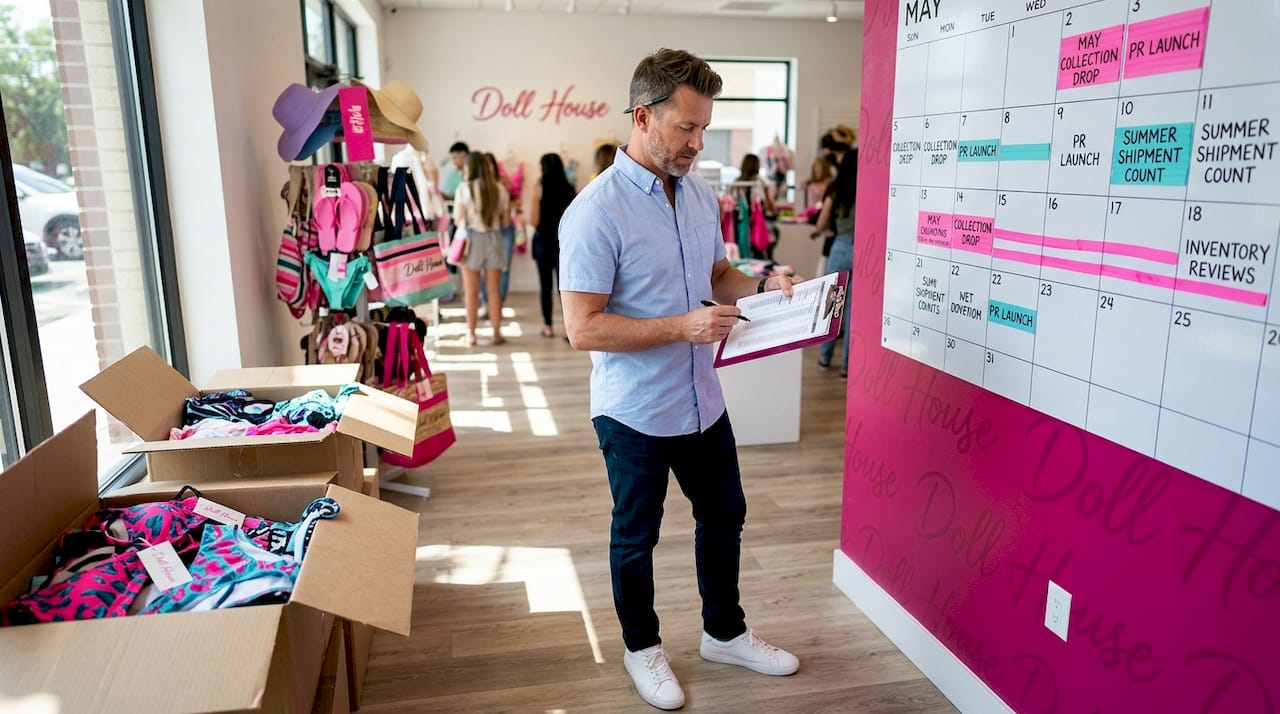
The second type is promotional or campaign seasonality. This is the demand concentrated around marketing windows even outside the hottest months, driven by e-commerce events, sales campaigns, and brand-led promotions. Think Black Friday, Cyber Monday, end-of-season clearance events, and mid-winter “new arrivals” drops timed to vacation planning season.
| Factor | Calendar seasonality | Promotional seasonality |
|---|---|---|
| Driver | Weather, school schedules | Marketing campaigns, e-commerce events |
| Timing | Spring and summer | Year-round, tied to campaign windows |
| Shopper benefit | Fresh seasonal styles | Lower prices, off-season deals |
| Retailer goal | Maximize peak-season revenue | Smooth demand across the full year |
| Best time to buy | Early spring for best selection | Late summer through fall for best pricing |
Brands use promotional seasonality strategically. Here’s how a typical campaign cycle works:
- Launch new collections in early spring to capture high-intent shoppers planning ahead for summer.
- Run flash sales and limited-time promotions during peak summer to clear slower-moving inventory while demand is still high.
- Introduce end-of-season clearance events in August and September to move remaining stock before the next cycle begins.
- Create “resort season” campaigns in November and December targeting shoppers planning winter getaways and holiday travel.
- Tie new arrivals to e-commerce events like Valentine’s Day or New Year’s to generate buzz and purchases during traditionally slow retail months.
Pro Tip: The best time to buy trendy bikinis at a discount is during late summer clearance or post-holiday resort sales. You get current-season styles at significantly reduced prices, and you’re already set for your next trip before the spring rush hits.
The key takeaway here is that promotional seasonality creates real opportunities for shoppers who pay attention to campaign windows. The brands doing this well are not just trying to sell you something off-season. They’re responding to a genuine need from travelers, fitness swimmers, and anyone planning a winter vacation who needs quality swimwear outside the traditional June-to-August window.
How brands adapt: The global and year-round approach
Smart brands don’t just ride the seasonal wave. They actively work to reduce their dependence on a narrow summer peak by expanding where and how they sell, and by repositioning swimwear for year-round occasions.
Brands can partially smooth the seasonal cycle using global sales strategies and product positioning beyond beach-only use cases. Resort experiences and swimming occasions are two of the biggest drivers of off-season swimwear demand. A shopper in New York planning a Cancun trip in February has the exact same swimwear needs as someone in Miami heading to the beach in July. The occasion is different, but the product requirement is identical.
Swimwear demand is also less seasonal in colder climates when the product is purchased for destination travel, cruises, or indoor and fitness swim uses. This is a significant insight. Shoppers in Scandinavia, Canada, and the northern United States buy swimwear at different points in the year compared to shoppers in Florida or Southern California, but they still buy it. The trigger is just different: a cruise booking, a gym membership with a pool, or a tropical vacation rather than local beach weather.
Here’s how brands are actively adapting to these patterns:
- International sales and opposite-hemisphere targeting: When it’s winter in North America, it’s summer in Australia and South America. Brands with global distribution can maintain demand year-round by targeting these markets during their peak seasons.
- Resort and cruise collections: These drops are typically released in October and November, timed specifically to shoppers planning winter and spring travel. They often feature slightly different silhouettes and cover-up styles suited to resort environments.
- Fitness and indoor swim positioning: High-performance one-pieces and athletic swimwear are marketed as year-round products, not seasonal ones. This repositioning expands the potential buying window significantly.
- Coverup and resort wear expansion: By adding beach cover ups and resort-ready pieces to their catalogs, brands create year-round relevance beyond the core swimwear category.
| Strategy | Target occasion | Sales impact |
|---|---|---|
| Global/opposite-hemisphere sales | Year-round demand | Reduces off-season revenue drop |
| Resort collections | Winter and spring travel | Opens new Q4 and Q1 revenue window |
| Fitness/indoor swim | Year-round activity | Consistent demand regardless of weather |
| Coverup and resort wear | Travel and leisure | Adds year-round category relevance |
Pro Tip: When you need swimwear outside of peak summer season, look for brands that actively pack swimwear for vacation planning content and resort-focused collections. These brands tend to carry broader year-round selections and are more likely to have current styles available during off-peak months. You can also use these off-season moments to build your bikini wardrobe with versatile pieces that work across multiple occasions.
Smart shopping: How to find stylish swimwear whenever you need it
Knowing that swimwear seasonality is driven by both natural and manufactured patterns gives you a real advantage as a shopper. Here’s how to use that knowledge practically.
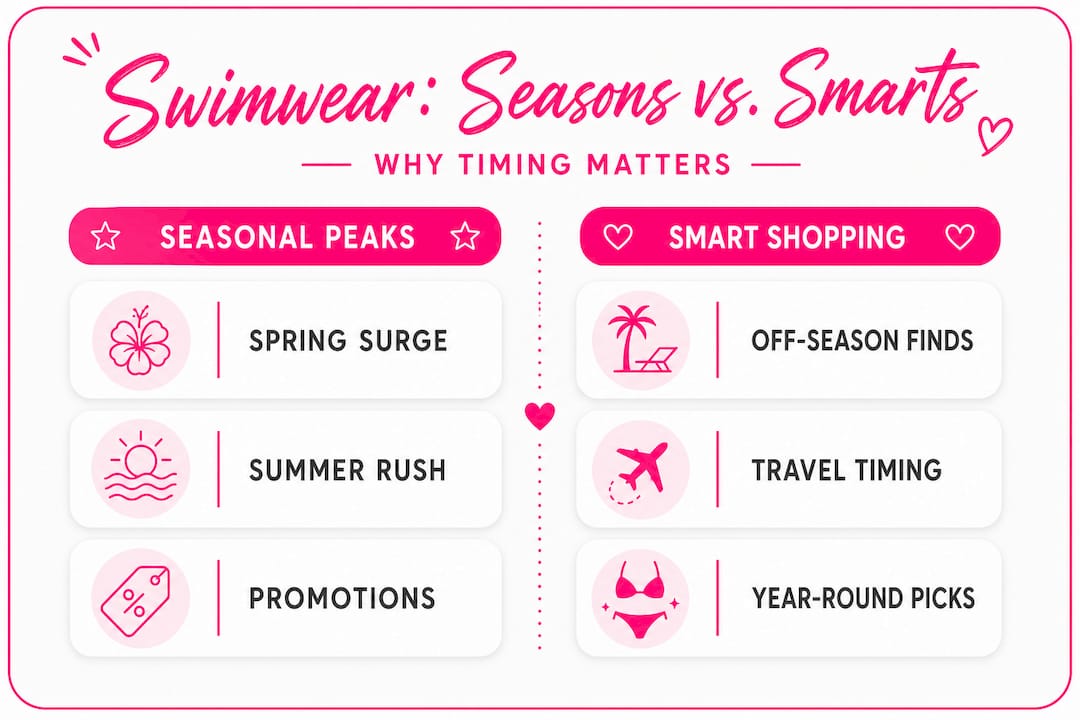
For shoppers in colder regions, swimwear needs shift away from calendar-based buying toward occasion-based buying tied to destination travel, cruise itineraries, and fitness routines. That means the best strategy is not to follow the crowd in May and June, but to buy when your specific need arises, and to know which shopping windows offer the best combination of selection and price.
Follow these steps to shop for swimwear smarter throughout the year:
- Plan around your travel calendar, not the weather. If you have a winter trip booked, start browsing resort and cruise collections in October and November. Selection is strong and prices are often better than peak summer.
- Set alerts for brand promotions and campaign events. Black Friday, end-of-season sales, and New Year resort drops are all high-value windows to buy quality swimwear at a lower price point.
- Buy staple pieces off-season. Classic styles like solid-color bikini sets and high-waisted bottoms don’t go out of style. Buying them during clearance saves money without sacrificing quality or relevance.
- Look for brands with global or resort-focused positioning. These brands maintain broader inventory year-round compared to those that only push seasonal collections in spring.
- Shop fitness and active swim styles for winter months. If you use an indoor pool or take water fitness classes, athletic swimwear is available year-round and often at better prices than fashion swimwear during peak season.
- Use trend-focused content to identify monokinis fashion trends and style directions before the spring rush so you know exactly what you want before inventory gets picked over.
Pro Tip: Shopping for destination travel and fitness swimwear off-season gives you access to styles that disappear quickly in spring. If you spot something you love in December or January, buy it then. Waiting until June means competing with everyone else for the same styles.
The biggest mistake most shoppers make is treating swimwear as a last-minute purchase. Waiting until two weeks before a trip in July means shopping during peak demand, with the least selection and the highest prices. Shifting your buying habits even slightly, by planning one or two purchases off-season each year, produces noticeably better results in terms of style, fit, and value.
The uncomfortable truth about swimwear seasonality
Here’s the honest take: swimwear is not seasonal because of the weather. It’s seasonal because most shoppers behave as if it is.
Weather creates the context for swimwear use, but it doesn’t create the buying timeline. Brands ship collections months before summer. Resort drops land in fall. Clearance events run in August. The actual window to buy is much wider than most shoppers use. The bottleneck is behavior, not supply.
Brands have already figured this out. They’re building resort collections, targeting opposite-hemisphere customers, and creating year-round positioning around fitness and travel. The infrastructure to shop year-round is already there. What’s missing is the shopper habit to match.
The better approach is to tie swimwear shopping to your plans, not to the calendar. Going on a cruise in February? Shop in November. Building out a capsule wardrobe for a summer of travel? Browse a trendy swimwear style guide in January when the resort collections are fresh and the summer rush hasn’t started yet. You’ll find better selection, lower prices, and less competition for the styles you actually want.
The calendar is a habit. Your travel plans and lifestyle are real needs. Shop to meet those needs, and swimwear seasonality becomes something that works for you instead of against you.
Explore stylish swimwear year-round
Whether you’re planning a winter resort trip, prepping for pool season, or building out a swimwear wardrobe that works across every occasion, Doll House Bikinis carries styles designed for year-round use.
Browse the full collection for beach, pool, travel, and fitness occasions. Shop the beach cover up for resort-ready layering, check out the classic swimsuit for a timeless one-piece option, or go straight for the two piece set swimwear for a versatile bikini set that works from the pool to the beach. Free shipping on orders over $100. New arrivals and sale styles available year-round.
Frequently asked questions
When do swimwear sales peak during the year?
Swimwear sales surge in spring and peak during summer, driven by warmer weather, school breaks, and vacation planning that concentrates consumer demand into a short window each year.
What are the best times to find swimwear discounts?
The best discounts appear during late summer clearance and off-season promotional campaign windows, including post-summer sales events and holiday resort drops in November and December.
Can swimwear be worn outside summer months?
Yes, brands position swimwear for resort experiences and swimming occasions year-round, making it a practical choice for cruise travel, indoor pools, and destination vacations regardless of local weather.
How do brands manage swimwear sales in colder climates?
Brands target destination travel and indoor swim use cases for colder-climate customers, and they sell to opposite-hemisphere markets during their peak seasons to reduce off-season revenue drops.