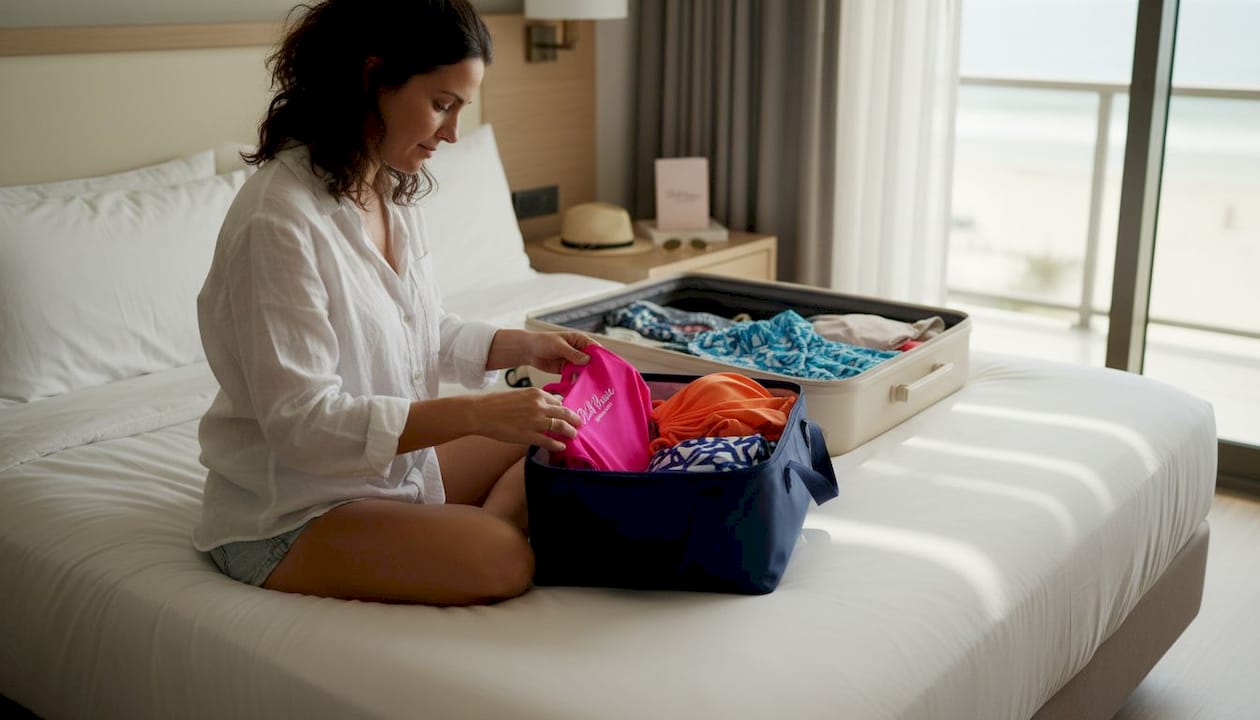
Standing in front of your suitcase with six bikinis, three cover-ups, and zero space left is a situation most travelers know well. Overpacking swimwear is one of the most common vacation prep mistakes, and it often leads to wrinkled tops, stretched-out bottoms, and a bag that won’t zip. The good news is that a smarter approach to swimwear selection, packing technique, and daily care can solve all three problems at once. This guide covers exactly what to bring, how to pack it, and how to keep every piece looking fresh from day one to the last beach day.
Table of Contents
- What to pack: Stylish and practical swimwear selection
- How to pack swimwear: Efficient and stylish suitcase solutions
- Swimwear care on the go: Keeping suits fresh daily
- Common mistakes and expert fixes for swimwear packing
- Real talk: What actually works (and what doesn’t) when packing swimwear
- Ready for your most stylish swim yet?
- Frequently asked questions
Key Takeaways
| Point | Details |
|---|---|
| Pack a swimwear capsule | Limiting to three to four stylish, mix-and-match suits saves space and maximizes outfit options. |
| Use gentle packing methods | Roll or flat-fold suits in fabric bags to keep them compact and prevent snags or creases. |
| Prioritize air-drying | Always air-dry swimwear flat indoors to prevent damage and preserve style. |
| Rotate and refresh | Bring an extra bottom or top for daily pool trips and always rinse out sand, salt, or chlorine. |
What to pack: Stylish and practical swimwear selection
Now that you understand the challenge, let’s talk about the ideal swimwear lineup for a gorgeous and functional vacation wardrobe.
The single most useful rule for packing swimwear is to keep the number small and the versatility high. Vogue recommends editing down to a small rotation of roughly three to four statement swimsuits rather than packing many near-duplicate styles. That advice applies especially when you’re trying to avoid checking a bag or working with a compact carry-on.
Three to four pieces sounds minimal, but it works because the right selection covers every scenario. Think of it as a rotation: one suit for active water days like snorkeling or water parks, one for relaxed sun-lounging, and one or two that can transition from the beach to a casual lunch or rooftop bar. A stylish travel swimsuit with a simple, clean silhouette pairs easily with a linen skirt or denim shorts, making it useful beyond the pool deck.
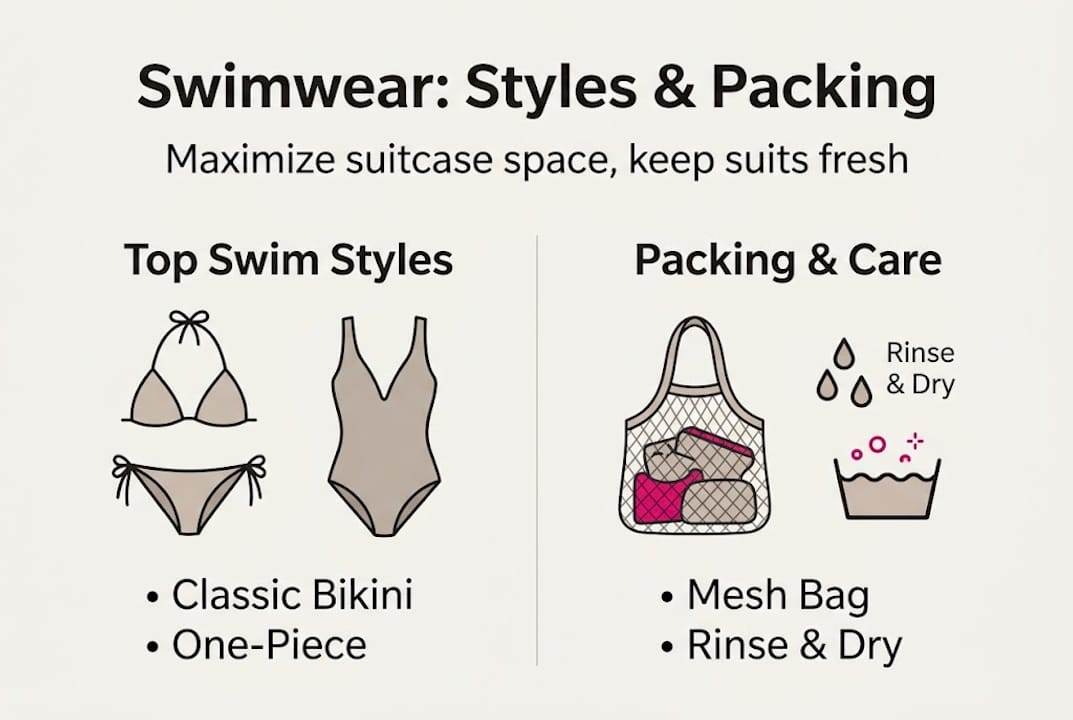
Mix-and-match pieces are the real secret weapon. When you bring separates, two tops and two bottoms become four distinct looks. That’s four outfit combinations from just four items. Three piece swim sets that include a top, bottom, and coordinating cover-up are another strong option because they travel as a complete outfit while taking up minimal space.
Hero swimwear options: Quick comparison
| Swimwear type | Best for | Doubles as outerwear? | Space needed |
|---|---|---|---|
| Classic bikini set | Sun-lounging, pools | Yes, with shorts or skirt | Minimal |
| Three-piece set | All-day beach outings | Yes, built-in cover-up | Low to moderate |
| One-piece/monokini | Water sports, snorkeling | Yes, as a bodysuit | Moderate |
| High-waisted set | Casual beach, boat days | Yes, with a crop top | Minimal |
| Micro bikini | Resort pools, tanning | Limited | Very minimal |
When choosing, think specifically about your destination’s activities. A snorkeling day calls for a one-piece or a secure bikini top with a clasp back. A water park means something that stays put on slides. A resort pool day is where your most fashion-forward look earns its place.
Pro Tip: If you plan to swim every single day, bring at least one extra bottom or top. Bottoms take longer to dry than tops, and re-wearing a damp suit is uncomfortable and bad for the fabric. Check out more packing tips for swimwear to build a complete vacation checklist.
How to pack swimwear: Efficient and stylish suitcase solutions
Once you’ve picked your swim lineup, you’re ready to pack like a pro. Here’s how to do it efficiently and keep your pieces in top condition.
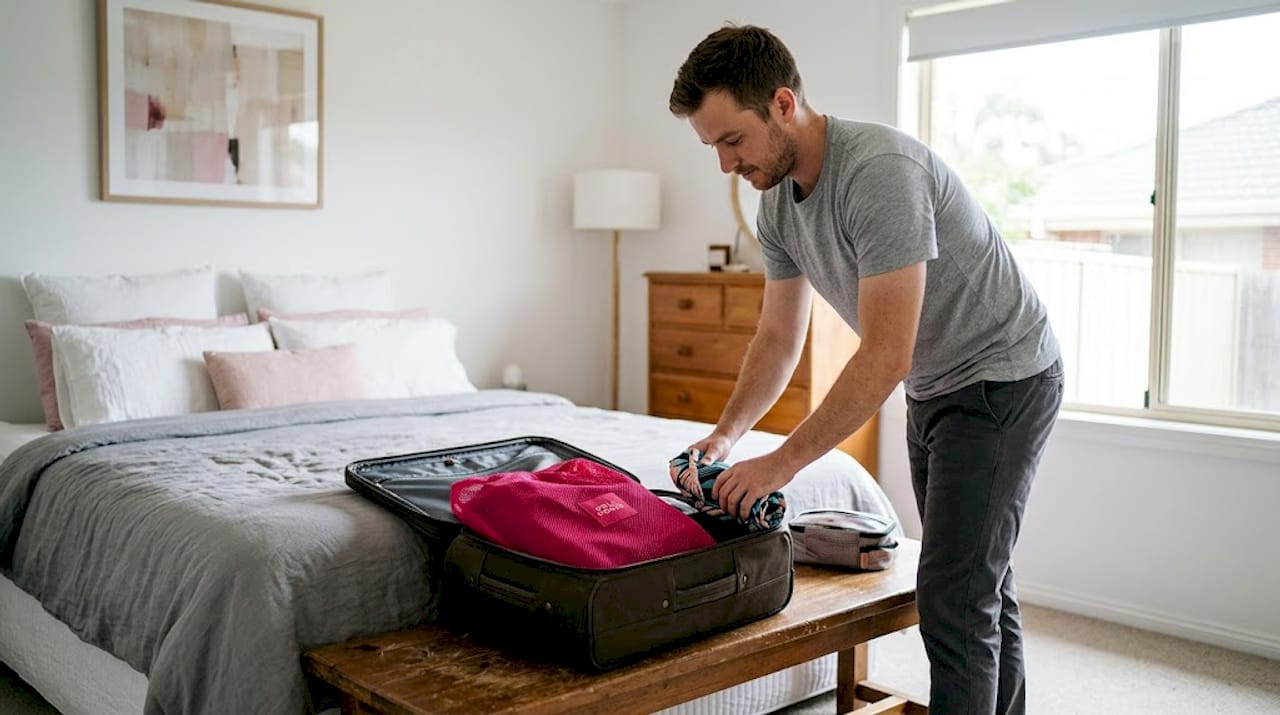
The way you physically pack swimwear matters as much as what you bring. Tossing bikinis loose into a suitcase leads to tangled straps, stretched fabric, and suits buried under everything else. A structured approach keeps pieces accessible and in good shape.
Step-by-step packing method:
- Pre-trip wash. Always start with clean, fully dry suits. Packing anything even slightly damp creates odor and mildew risk before the trip even starts.
- Flat-fold or roll. Bikini bottoms fold flat easily. Tops with padding should be kept cup-side up and not compressed. Roll soft, unpadded pieces to save space.
- Use a mesh or fabric pouch. Place each suit or set in its own small mesh bag. This keeps pieces separated, easy to identify, and protected from zippers or rough surfaces inside the bag.
- Position strategically. Place swimwear near the top of your suitcase or in a dedicated packing cube so it’s easy to grab on the first beach day without unpacking everything.
- Separate wet from dry. Pack a second waterproof or mesh bag specifically for post-swim suits. Never let wet swimwear sit loose in your luggage.
Essential packing materials: Pros and cons
| Packing material | Pros | Cons |
|---|---|---|
| Mesh laundry bag | Breathable, lightweight, easy to see contents | Less protection from snagging |
| Waterproof zip pouch | Keeps moisture contained | Not breathable for extended storage |
| Packing cube | Organized, compresses items | Can over-compress padded tops |
| Reusable fabric bag | Eco-friendly, soft on fabric | Less structure |
| Zip-lock bag | Cheap, waterproof | Not breathable, single-use |
Proper care starts before you even hit the water. Rinsing swimsuits promptly after exposure to chlorine, salt water, or sunscreen helps preserve fabric and elasticity. Avoid heat drying methods entirely and always air dry instead.
“Avoid heat and UV—both stretch and fade your suit.”
The mix-and-match swimwear approach also simplifies packing because fewer total pieces take up less room in pouches and cubes. A bikini for travel in a neutral or versatile color works with multiple bottoms, cutting your total item count even further.
Pro Tip: Tuck a small mesh laundry bag into your suitcase specifically for damp suits on the return trip. It keeps moisture away from clean clothes and makes unpacking at home much faster.
Swimwear care on the go: Keeping suits fresh daily
After you’re packed, daily care is what keeps your swimwear looking new throughout your trip.
Vacation days are long and active. You might swim in the morning, rinse off, then head to lunch, then back to the pool in the afternoon. That kind of repeated water exposure is hard on swimwear fabric if you skip the basic care steps. The good news is that the routine is quick and easy once you make it a habit.
Daily swimwear care steps:
- Rinse immediately. As soon as you’re done swimming, rinse the suit under cool, fresh water. This removes chlorine, salt, and sunscreen residue before they break down the fibers.
- Gently blot, don’t wring. Press the suit between two towels or blot with a dry towel. Twisting or wringing stretches the elastic and distorts the shape.
- Lay flat indoors to dry. Place the suit on a flat surface or a drying rack inside the room. Air-drying flat on an indoor rack gives the suit enough time to fully regain its shape before the next wear.
- Check dryness before re-wearing. A suit that feels slightly cool or stiff is not fully dry. Give it more time, especially in humid climates where drying takes longer.
What to skip entirely:
- Dryers and hair dryers (heat degrades elastic)
- Direct sunlight for drying (UV fades color and weakens fabric)
- Rough wringing or twisting
- Leaving suits in a ball at the bottom of a beach bag
- Soaking in hot water
UV exposure and dryer heat degrade elasticity significantly faster than normal wear, which is why even a few days of careless drying can visibly affect how a suit fits by the end of the week. Keeping suits away from direct sun while drying is one of the highest-impact habits you can build.
If you’re swimming every day, a swimsuit separate like a standalone top or bottom gives you a backup option while your primary suit dries. This is especially useful in humid coastal destinations where overnight drying isn’t always guaranteed.
Common mistakes and expert fixes for swimwear packing
Even with the best plans, it’s easy to slip up. Here’s how to avoid common pitfalls and fix any last-minute swimwear blunders.
Most swimwear packing problems fall into a small set of predictable categories. Knowing what they are ahead of time makes them easy to avoid.
Common swimwear packing mistakes:
- Bringing too many similar styles with no mix-and-match potential
- Underpacking and not having a dry option when needed
- Skipping the mesh laundry bag and letting wet suits sit loose in luggage
- Storing wet items directly against dry clothing or electronics
- Forgetting to check if the hotel has drying racks or hooks
- Packing suits that are already stretched or faded and expecting them to perform
When you’re stuck in a humid hotel room with a suit that won’t dry, there are a few fixes that actually work. Hang the suit near an air conditioning vent, which circulates dry air across the fabric. Use a clean, dry towel as a blotter first to remove as much moisture as possible before hanging. If the room has a ceiling fan, position the suit directly below it.
Packing an extra swim bottom or top is the most practical fix for daily swimmers. If you’re at the pool or beach every day, a damp suit from the morning session may not be ready for the afternoon. Having a backup means you’re never stuck re-wearing something wet.
Pro Tip: Rotate your suits intentionally. If you have three bikinis, wear them in order and give each one a full 24 hours to dry before wearing again. This extends the life of each piece and keeps every suit in better shape by the end of the trip.
Check the hotel amenities before you arrive. Many resorts and beach hotels provide drying racks, balcony hooks, or even poolside drying lines. Knowing this in advance helps you plan your rotation. If you’re staying somewhere without these options, a small travel drying line (available for under $10) is worth packing.
Options like extra swim bottoms or vintage-inspired styles that double as statement pieces give you more flexibility without adding much weight or bulk to your bag.
Real talk: What actually works (and what doesn’t) when packing swimwear
Finally, let’s get honest about swimwear packing: here’s what style-savvy travelers actually do when suitcase space is tight.
The most consistent pattern among experienced beach travelers is this: fewer, better pieces always outperform a suitcase full of options. Three versatile, high-quality swimsuits that you genuinely love will get worn. Eight suits that are “just okay” will mostly sit in the bag while you default to your favorites anyway. That’s wasted space and wasted money.
Quick-dry fabrics have genuinely changed the math on how many suits you need to pack. Modern swimwear made from nylon and spandex blends dries significantly faster than older polyester or cotton-blend styles. A suit rinsed and blotted at noon can often be dry and ready by late afternoon in a warm, dry climate. This means a rotation of three suits is genuinely sufficient for a week-long trip if you care for them properly.
Re-wearing swimwear is also not the problem most people think it is. A suit rinsed thoroughly after each use and allowed to fully dry is clean enough to wear again. The idea that you need a fresh suit every single day is a myth that mostly benefits overpacking. What matters is the rinse-and-dry routine, not the number of suits in your bag.
The advice to skip: don’t bother with elaborate folding systems or color-coded packing cubes for swimwear specifically. Simple mesh bags, a flat-fold or roll, and a clear rotation plan are all you need. The real-life travel stories from frequent beach-goers back this up consistently. Simple systems get used. Complex ones get abandoned by day two.
What does work in tiny hotel bathrooms: a small travel towel for blotting, the air conditioning vent trick for faster drying, and always rinsing in the shower immediately after swimming rather than waiting until later. That immediate rinse is the single highest-impact habit for preserving swimwear quality on the road.
Ready for your most stylish swim yet?
If you’re ready to refresh your swim drawer for your next escape, here’s how to find the perfect styles to suit any destination.
Doll House Bikinis carries a curated range of swimwear built for exactly this kind of travel. Whether you’re looking for a clean, versatile trendsetting swim style that pairs with everything, or a complete three piece swimsuit option that covers beach to brunch, the selection is organized to make choosing easy.

For those who want to make a statement at the pool, the micro bikini collection offers bold, fashion-forward options that pack down to almost nothing. Orders over $100 qualify for free shipping, making it easy to build your ideal rotation without the extra cost.
Frequently asked questions
How many swimsuits should I pack for a week-long beach vacation?
Aim to pack three to four swimsuits that are stylish, versatile, and easy to mix and match for a week-long trip. Travel fashion editors consistently recommend a small rotation of statement pieces rather than many similar styles.
How can I keep my swimwear from smelling musty in my suitcase?
Always allow suits to air dry fully before packing and use a breathable mesh bag to separate damp items if necessary. Air-drying flat on an indoor rack gives the fabric time to fully dry and regain its shape.
Is it safe to use hotel hairdryers to dry my swimsuits?
No—it’s best to avoid dryers entirely, as heat damages swimsuit fabric and elasticity. Avoid heat drying methods and air-dry flat instead for best results.
What’s the fastest way to dry a swimsuit while traveling?
Gently press the suit between two dry towels, then air-dry flat indoors for at least several hours, keeping it away from direct sun and heat sources.
Should I pack an extra swimsuit if I swim every day?
Yes—packing an extra bottom or top helps if your suit doesn’t dry overnight or if you want variety for daily outings, especially in humid destinations where drying takes longer.