
Shopping for a bikini sounds simple until you order something that looks perfect online and arrives feeling like a completely different product. The straps dig in. The top gaps. The fabric stretches out the moment it hits water. Finding a bikini that is both trendy and genuinely comfortable is one of the most frustrating parts of planning a beach trip. This guide breaks the process into clear, practical steps covering fit mechanics, accurate sizing, style selection, and smart shopping strategies so you can buy with confidence and skip the returns.
Table of Contents
- Understand fit mechanics before picking styles
- Measure accurately and use brand size charts
- Balance trend-forward styles with versatile cuts
- Spot current trends and smart shopping shortcuts
- What most bikini shoppers miss—and how to actually master the process
- Find your perfect trendy bikini with Doll House
- Frequently asked questions
Key Takeaways
| Point | Details |
|---|---|
| Fit mechanics matter | Prioritize support, coverage, and stability when choosing a bikini to avoid discomfort and wardrobe malfunctions. |
| Trust brand size charts | Measure yourself carefully and use each brand’s sizing chart instead of relying on your usual dress size. |
| Mix trend and staple | Combine photogenic, trendy pieces with versatile, durable classics to build a reliable swim wardrobe for various occasions. |
| Check latest trends | Stay updated by following reputable fashion editors and review round-ups for 2026 swimwear directions. |
Understand fit mechanics before picking styles
Most shoppers start with style and work backward to fit. That approach leads to the most common bikini regrets. A better method is to understand fit mechanics first, specifically support, coverage, stability, and how the fabric behaves when you move, and then layer style choices on top of that foundation.
A well-fitting bikini top should hold and lift the bust without feeling tight across the ribcage. It should not gap at the cups, allow spillage at the sides, or shift when you raise your arms. The same logic applies to bottoms. A good-fitting bikini bottom should sit flat against the hip bones without rolling, pinching, or creating uncomfortable pressure on the inner thigh or waist.
Here is a quick comparison of what happens when you shop style-first versus fit-first:
| Factor | Style-only buying | Fit-first buying |
|---|---|---|
| Primary focus | Color, print, trend | Support, coverage, stability |
| Common outcome | Returns, discomfort | Confident wear, fewer returns |
| Fabric check | Often skipped | Tested dry and wet |
| Movement test | Rarely considered | Built into the decision |
| Long-term value | Low | High |
Common fit mistakes include choosing a top that is too small in the cup for extra support (which actually causes spillage), picking bottoms based on waist size alone without checking hip measurements, and ignoring fabric composition. Fabrics with low elastane content lose their shape faster in water and chlorine. Look for at least 15 to 20 percent spandex or elastane in the blend for reliable stretch and recovery.
- Support: Underwire, molded cups, or thick banded styles add structure.
- Coverage: Full, moderate, or minimal. Match coverage to your activity level.
- Stability: Adjustable ties and thicker straps reduce shifting during movement.
- No pinching: Flat seams and soft elastic edges prevent irritation.
- No gaping: Cups should follow the natural curve of your bust without pulling away.
You can stay current on swimwear news and updates to track which styles are getting the most attention for fit and quality this season.
Pro Tip: Always test a bikini top in both dry and wet conditions before committing. Wet fabric behaves differently. Some materials sag, stretch, or become see-through when wet. If you can, rinse your top in the sink and check whether it maintains its structure and opacity.
Measure accurately and use brand size charts
With fit mechanics clear, the next crucial step is getting your measurements right and decoding those tricky size charts.
Dress size means very little when buying a bikini. A size medium in one brand can fit like a small in another. Brand-specific size charts are the most reliable tool for reducing return risk, especially for tops where cup size and band size both matter.
Here is how to take the measurements you need:
- Bust measurement: Measure around the fullest part of your chest with a soft measuring tape. Keep the tape parallel to the floor. Do not pull it tight.
- Under-bust measurement: Measure directly under your bust where a bra band would sit. This gives you your band size for structured tops.
- Hip measurement: Measure around the fullest part of your hips, usually 7 to 9 inches below your natural waist.
- Waist measurement: Measure around your natural waist, which is the narrowest part of your torso.
Once you have those four numbers, compare them to the brand’s chart, not a generic size guide. Here is a general reference for how measurements often translate:
| Measurement | Small | Medium | Large | XL |
|---|---|---|---|---|
| Bust (inches) | 32-34 | 34-36 | 36-38 | 38-40 |
| Under-bust (inches) | 27-29 | 29-31 | 31-33 | 33-35 |
| Hips (inches) | 34-36 | 36-38 | 38-40 | 40-42 |
| Waist (inches) | 24-26 | 26-28 | 28-30 | 30-32 |
These are general ranges. Always defer to the specific brand’s numbers.
One of the most practical strategies for getting the best fit is buying tops and bottoms as separates. If your bust and hips fall into different size categories, a matching set will always fit one part of your body better than the other. Buying separates solves that problem entirely. Look for brands that offer individual top and bottom sizing. For a starting point, check string bikini top fit tips to see how adjustable styles can accommodate a wider range of measurements.
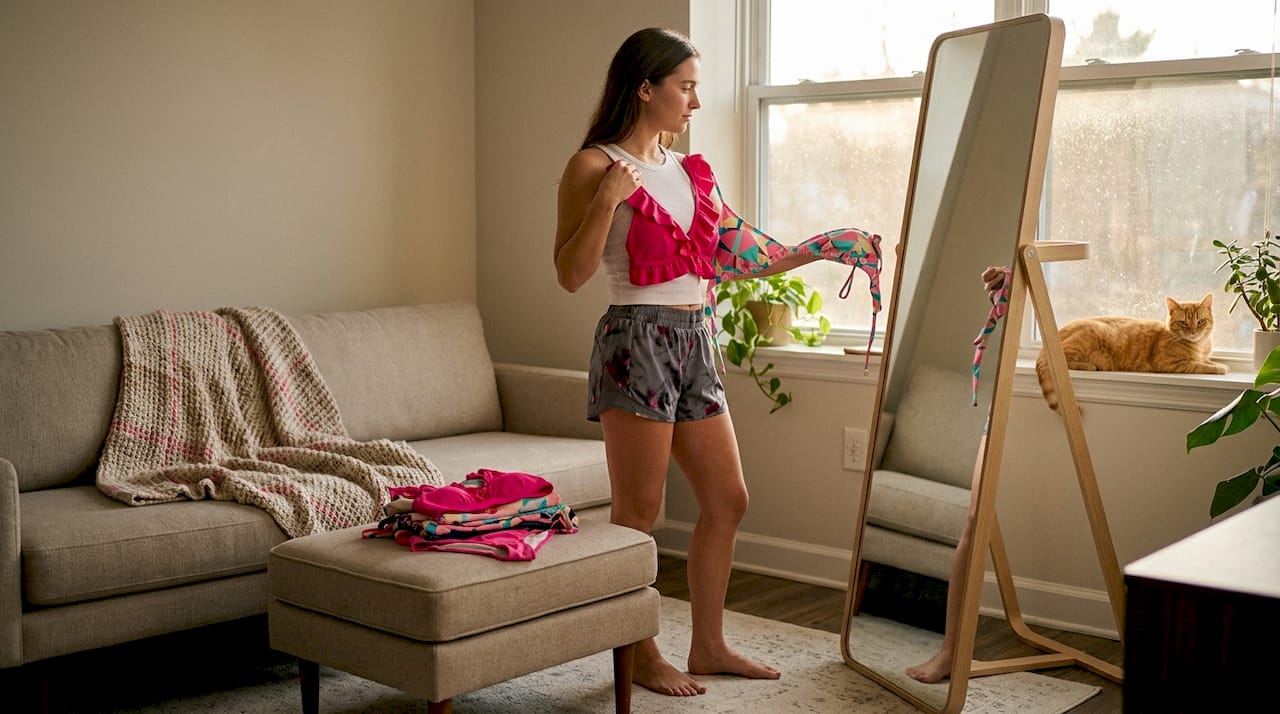
Pro Tip: If you are athletic or regularly swim laps, size down in the top and prioritize styles with thicker straps and secure closures. Active water use puts more stress on fit than lounging does. A top that feels fine on the beach may shift significantly when you are swimming.
Balance trend-forward styles with versatile cuts
Now that you know how to get your fit right, the next challenge is finding a style that turns heads and works for every occasion.
The biggest mistake in trend-driven bikini shopping is building an entire swimwear wardrobe around one seasonal look. Trends shift. What reads as fresh in early summer can feel dated by late August. A smarter strategy, confirmed by major swimwear guides, is to mix one or two trend-forward pieces with reliable base cuts that work across multiple settings.
Think about the scenarios you actually plan for:
- Active beach days: Water sports, volleyball, and swimming require secure tops with minimal movement. Sporty cuts and thick straps work best.
- Poolside lounging: Comfort and visual impact matter more than security. Strappy styles, cut-outs, and bold prints perform well here.
- Beach parties or evening events: Statement pieces with metallic finishes, embellishments, or bold color blocking create the most impact.
- Travel days: Packable, wrinkle-resistant fabrics in neutral or versatile colors make packing easier and offer more outfit combinations.
Here is a direct comparison between trend-forward and staple bikini attributes:
| Attribute | Trend-forward bikini | Staple bikini |
|---|---|---|
| Color/print | Bold, seasonal, statement | Neutral, solid, classic |
| Cut | Fashion-driven, editorial | Flattering, functional |
| Versatility | Limited to trend window | Works across multiple trips |
| Packability | Varies | Usually compact and lightweight |
| Cost per wear | Lower (short trend life) | Higher (long-term use) |
The best swimwear brands consistently recommend combining one or two trend pieces with at least one reliable base cut. That approach gives you visual variety without overspending on styles that may not work next season.
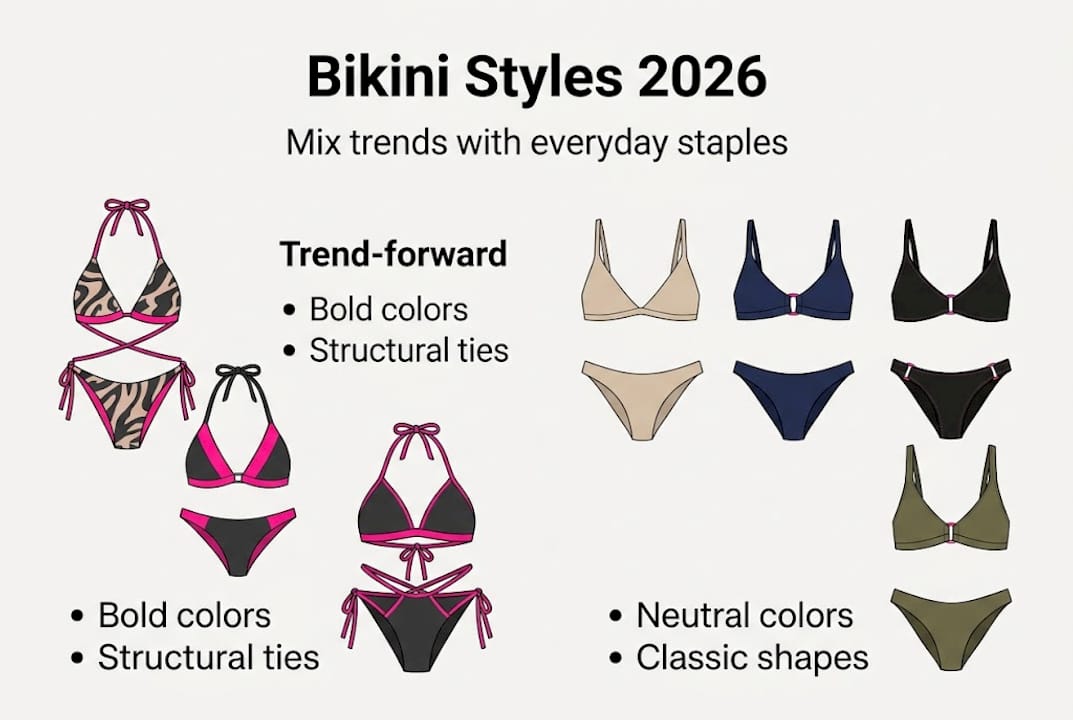
For a solid base option, a versatile classic bikini in a neutral tone gives you a foundation to build around. Add trend pieces on top of that and you have a functional, fashionable swimwear wardrobe that covers every scenario.
Spot current trends and smart shopping shortcuts
With your well-chosen staple and trend pieces, the final step is staying ahead in both style picks and shopping practicality.
For 2026, swimsuit trends are leaning toward bold silhouettes, confident coverage choices, and structural details that add visual interest without sacrificing comfort. Think contrast trims, adjustable ties, playful prints, and cuts that balance minimal and maximal coverage in the same piece. The trend direction is less about one dominant look and more about personal confidence expressed through fit and detail.
A more specific breakdown from current 2026 bikini style guides highlights adjustability as a key feature. Tops with multiple tie points and bottoms with adjustable side ties are trending because they solve the fit problem while still looking fashion-forward. Structural details like boning, underwire, and thick banded edges are also prominent, reflecting a shift toward bikinis that offer real support alongside visual appeal.
Here is a step-by-step shopping process to minimize mistakes:
- Check trend sources first. Review fashion editors, Vogue swimwear coverage, and curated round-ups before browsing product pages. Know what you are looking for before you start.
- Take your measurements. Do this before opening any shopping tab. Have your numbers ready.
- Filter by fit features. Use size filters, adjustability options, and fabric descriptions to narrow results.
- Read reviews for fit feedback. Look specifically for comments about how the piece fits relative to the size chart.
- Verify the return policy. Before purchasing, confirm that the retailer accepts returns or exchanges. This is especially important for online-only purchases.
- Use review round-ups. Sources like Wirecutter’s swimsuit reviews offer tested options across price ranges, which reduces the guesswork significantly.
Watch for these warning signs when evaluating quality:
- Thin, single-layer fabric with no lining in the cup area
- Elastic that feels stiff or rough against the skin
- Stitching that puckers or pulls at the seams
- No fabric composition listed in the product description
- Sizing described only in generic S/M/L with no measurements provided
Pro Tip: Shopping round-ups from trusted reviewers are one of the most efficient ways to buy a bikini online. These guides do the testing work for you. When a review includes specific fit notes, fabric details, and price comparisons, you can make a confident decision in a fraction of the time it takes to browse individual product pages.
What most bikini shoppers miss—and how to actually master the process
Most bikini guides focus entirely on style. They tell you what is trending and show you the best colors for the season. What they rarely cover is the practical reality of building a swimwear wardrobe that holds up across multiple trips, activities, and body changes.
Mechanics-first thinking consistently outperforms trend-first buying. When you start with support, coverage, and stability, you end up with pieces you actually wear. Trend-first buying often results in a drawer full of bikinis that looked great in photos but never made it to the beach.
Buying separates is one of the most underused strategies in swimwear shopping. Most shoppers default to sets because it feels easier. But if your proportions do not match a standard set ratio, separates will always fit better. The upfront effort of finding the right top and bottom independently pays off every time you wear them.
The best bikini wardrobe is not the most trend-forward one. It is the one built on pieces that fit correctly, hold up in water, and work across the widest range of occasions.
Test fit across multiple conditions before committing to a style as a repeat purchase. A bikini that works perfectly for lounging may shift and require constant adjustment during active use. The reverse is also true. Knowing how a piece performs under different conditions is the difference between a smart buy and a regret.
Find your perfect trendy bikini with Doll House
Ready to apply everything in this guide? Doll House Bikinis offers a curated selection of both trend-forward and classic styles, with easy navigation by cut, color, and price range.
Start with a classic swimwear base and add a trend-forward three piece for variety. The product pages include fabric details and size guidance to support the fit-first approach covered in this guide. Free shipping applies to orders over $100. Browse the full range at Doll House Bikinis to find options for every beach and pool scenario on your 2026 calendar.
Frequently asked questions
How do I know if a bikini fits properly?
A bikini fits properly when it holds and stabilizes the bust, stays in place during movement, covers without gaping or spilling, and avoids pinching or digging anywhere along the edges.
Should I always buy the same size across brands?
No. Bikini sizing varies across styles and brands, so compare your actual measurements to each brand’s size chart rather than defaulting to your usual size.
What bikini styles are trending in 2026?
Bold silhouettes, adjustable ties, playful prints, and structural features like contrast trims are the top 2026 trends, with adjustability standing out as a key functional-meets-style feature.
Is it better to buy a bikini set or separates?
Buying tops and bottoms as separates improves fit significantly if your bust and hip measurements fall into different size categories, which is common for many body types.
How can I avoid returns when shopping bikinis online?
Take accurate measurements, consult each brand’s size chart carefully, and read customer reviews specifically for fit feedback before completing your purchase.