
Vintage beachwear covers any swimwear that draws from the silhouettes, prints, and construction of the 1950s through the 1970s, and the fastest way to start shopping is to choose a curated repro retailer like Dollhousebikinis for modern fit and reliability, then layer in authentic vintage finds once you know your measurements.
Two quick pointers before you browse:
- Repro first, authentic vintage second. Repro pieces use modern fabrics, labeled sizing, and returns policies. Authentic vintage offers character but requires more verification work.
- Modern construction matters. Full lining, power-mesh panels, and updated elastic keep a retro silhouette secure in the water. A beautiful 1960s halter with degraded elastic is a display piece, not a swim piece.
Key Takeaways
Vintage beachwear is defined by era-specific silhouettes and construction details, and repro pieces with modern fabrics are the most practical starting point for most shoppers.
| Point | Details |
|---|---|
| Start with silhouette | Identify the era (1950s maillot, 1960s bandeau, 1970s high-cut) before searching listings. |
| Check measurements | Always request torso length for one-pieces; bust and hip alone cause most fit failures. |
| Prefer repro for activity | Modern fabrics with UPF 50 and chlorine resistance outperform authentic vintage in water. |
| Care extends life | Hand wash in cool water, dry flat in shade, and repair small seams before they fail. |
| Dollhousebikinis starting point | Curated vintage-inspired styles with size charts, full lining, and free shipping over $100. |
Table of Contents
- What does vintage beachwear actually look like by era?
- Which silhouettes should you search for?
- What fabrics should you expect in vintage vs. repro pieces?
- How do you shop vintage beachwear safely?
- Where should you look for retro swimwear?
- How do you style retro beachwear without looking like a costume?
- How do you care for vintage and vintage-style swimwear?
- Why do retro silhouettes still work on modern bodies?
- Why vintage-inspired beachwear is worth your attention
- Dollhousebikinis has the vintage-inspired pieces you are looking for
- Sources
What does vintage beachwear actually look like by era?
Early 20th-century swimwear was built for social display, not swimming. Late Victorian and Edwardian seaside fashion centered on hats, parasols, and multiple outfit changes per day. By 1917, the American Association of Park Superintendents had published formal “Bathing Suit Regulations” requiring men’s suits to include a skirted covering over the shorts. Women wore heavy wool or cotton bathing dresses, stockings, and structured bodices. The beach was a stage, not a pool.
That context matters because it explains why the 1950s felt so radical by comparison.
1950s: hourglass glamour
The defining silhouette is the structured maillot or swim dress with a nipped waist, ruched front panel, and modest neckline. Think polka dots, solid jewel tones, and halter ties. Boning or internal boning channels appear in higher-end pieces. Skirt panels attach at the hip rather than the waist. Fabric is dense and matte, usually a heavy knit or early nylon blend. Photos from this era tend toward studio lighting with high contrast, which is a useful clue when evaluating seller images.
1960s: mod shapes and bold graphics
Silhouettes slim down. The bandeau top replaces the structured halter in many styles, and color blocking takes over from solid glamour. Graphic prints, large florals, and geometric patterns dominate. Leg openings cut slightly higher than the 1950s. Some pieces incorporate metal ring hardware at the hip or center front. Fabric weight drops noticeably compared with 1950s pieces.

1970s: surf culture and texture
The 1970s introduced sportier proportions: higher-cut leg openings, narrower straps, and a general move toward lighter, quicker-drying fabrics. Crochet and macramé cover-ups became standard beach accessories. Natural-fiber aesthetics (even when the fiber was synthetic) drove print choices toward earthy tones, paisleys, and tropical motifs. Avant-garde designers pushed boundaries further. Rudi Gernreich’s 1985 pubikini, documented in Metropolitan Museum of Art curatorial records, represents the conceptual extreme of this era’s experimental spirit, though it was never intended as everyday swimwear.

Pro Tip: When evaluating a listing’s authenticity, check the label font and care instructions. Pre-1971 U.S. garments were not legally required to carry fiber-content labels. A piece with a fiber-content tag is almost certainly post-1971, which narrows the era considerably.
Which silhouettes should you search for?
Knowing the name of a silhouette makes filtering marketplace listings much faster. Here are the key shapes and what to look for in each.
- High-waist bikini. The waistband should sit at or above the navel, typically 3–4 inches above the hip bone. Look for structured waistbands with internal boning or wide elastic rather than thin drawstring ties. A ruched front panel is a strong vintage cue.
- Swim dress. Attached skirt panels that fall 4–8 inches below the hip. Authentic vintage swim dresses often have built-in bloomers underneath. Repro versions may use a looser skirt without the inner short, so check the product description carefully.
- One-piece maillot. Period details include princess seaming, underbust shaping, and paneled construction. A maillot with a single center seam and no shaping panels reads as more modern. The vintage swing one-piece at Dollhousebikinis shows how modern construction can replicate this silhouette with full lining and updated elastic.
- Monokini. A one-piece with strategic cutouts, popularized in the 1960s. Look for clean-cut openings at the waist or sides rather than laser-cut edges, which signal a modern piece.
- Halter top. Ties at the neck and back. Vintage halters often have a wide band across the back rather than a single strap. Support depends entirely on the band width and lining, not the tie.
- Bandeau. A strapless tube top. Authentic vintage bandeaus rely on boning or heavy elastic for hold. Modern repros add silicone grip tape inside the top edge, which vintage pieces lack.
For marketplace sellers: the photos that move listings fastest show the front flat-lay, the back flat-lay, a close-up of the label, and a close-up of the elastic at the leg opening. Buyers need to see elastic condition before committing.
What fabrics should you expect in vintage vs. repro pieces?
Original vintage swimwear used wool, heavy cotton, and early rubberized elastic. None of those materials perform well in modern pools or salt water. Wool stretches when wet and takes hours to dry. Early elastic degrades into a brittle, crumbling state that cannot be restored without full re-elastication. Heavy cotton loses its shape after a single swim.
Modern repro fabrics solve all of those problems. The materials to prefer:
| Feature | What to look for | Why it matters |
|---|---|---|
| Fiber content | 80% nylon / 20% elastane or polyester blend | Holds shape, dries fast, resists chlorine |
| Lining | Full lining in cups and seat | Opacity and structure |
| UPF rating | UPF 50 label | Sun protection without a separate rash guard |
| Chlorine resistance | Labeled chlorine-resistant or ECONYL fiber | Survives repeated pool use without fading |
| Elastic type | Covered elastic or power-mesh band | Stays flat against skin, no roll or dig |
Signs of weakened construction in authentic vintage pieces: elastic that has gone stiff or crumbly at the leg openings, lining that has separated from the outer shell, fabric that pills or shreds when gently stretched, and metal hardware that has corroded or left rust marks on the fabric.

Pro Tip: Before buying an authentic vintage piece online, ask the seller to gently pinch and release the elastic at the leg opening on camera or in a short video. Healthy elastic snaps back immediately. Degraded elastic stays compressed or moves slowly.
Shoppers who prioritize pool use or active swimming should lean toward repro pieces with labeled UPF 50 and chlorine-resistant fiber content. Authentic vintage is better suited to beach photography, occasional ocean wading, or display.
How do you shop vintage beachwear safely?
The condition checklist below applies whether you are buying from a marketplace listing, an estate sale, or a thrift shop.
Condition checklist:
- Seams: flat, no puckering or separation at stress points (underarm, crotch, side seams)
- Elastic: snaps back immediately when released; no stiffness, crumbling, or permanent compression
- Stains: check underarm panels, seat, and front lining under natural light, not just flash photography
- Lining: attached at all edges, no bubbling or separation from the outer shell
- Hardware: rings, clasps, and buckles move freely with no rust or corrosion
- Odor: musty smell often indicates storage mold; light vintage smell is normal, heavy mold is not
- Alterations: check seam allowances for re-stitching lines that indicate the piece was taken in or let out
Measurement checklist: When a seller provides flat measurements, use this reference to convert to your body measurements.
| Measurement | How to take it | Typical seller label |
|---|---|---|
| Bust | Fullest part of chest, arms relaxed | “Bust” or “chest” |
| Underbust | Directly under the bust | “Band” or “underbust” |
| Waist | Narrowest point of torso | “Waist” |
| Hip | Fullest part of hips, 7–9 inches below waist | “Hip” |
| Torso length | Shoulder to crotch, front | “Torso” or “rise” |
Torso length is the measurement sellers most often omit, and it is the one that causes the most fit failures in one-piece styles. Always ask for it before purchasing a maillot or swim dress.
When to prefer repro over authentic vintage: any activity involving chlorine, extended sun exposure, or repeated washing. Repro pieces from curated retailers carry returns policies and size charts, which removes most of the sizing risk. For cross-border purchases, U.S. buyers should check domestic buyer protections through their payment provider; the European Commission’s Online Dispute Resolution portal is a parallel resource for EU-based transactions.
Questions to ask sellers before buying authentic vintage: fiber content if no label exists, whether the elastic has been replaced, whether any alterations were made, and whether the piece has been worn in water or is unworn/display only.
Where should you look for retro swimwear?
The shopping channel you choose determines the trade-offs you accept.
Curated repro retailers and boutiques offer predictable sizing, modern materials, labeled care instructions, and returns. The trade-off is that pieces are not authentic vintage. For shoppers who want the look without the condition risk, this is the practical starting point. Dollhousebikinis sits in this category, with high-waist sets, structured one-pieces, and vintage-print styles built on modern swim fabrics.
Vintage marketplaces (online platforms specializing in pre-owned clothing) offer authentic pieces with genuine provenance, but condition varies widely and sizing is rarely standardized. Budget more time for research and more patience for returns that may not be available.
Thrift stores and estate sales are the highest-effort, lowest-cost channel. Finds are unpredictable, but a well-preserved 1960s maillot from an estate sale can cost a fraction of a marketplace listing for the same piece. Bring a tape measure and use the measurement checklist above.
Repro pieces in the $40–$120 range typically offer modern fabrics, full lining, and a returns window. Authentic vintage in good condition runs $30–$80 for common 1970s pieces and $80–$250 or more for well-preserved 1950s structured maillots or swim dresses. Rare or designer vintage can exceed $400 at auction. Estate sales and thrift shops are the exception, where condition-dependent finds can fall well below market rate.
The Strategist at NYMag notes that shoppers prioritizing fit and fabric substance often benefit from mixing formats, combining a structured one-piece base with a separate cover-up rather than relying on a single vintage piece to do everything.
How do you style retro beachwear without looking like a costume?
The difference between a vintage look and a costume is proportion and restraint. Pick one era reference point and keep the rest of the outfit modern.
- Cover-ups: A sarong, pareo, or swing dress reads vintage without committing to a full period look. The Bianca cover-up pairs well with structured one-pieces and high-waist sets. Avoid matching the cover-up print exactly to the swimsuit; a solid cover-up over a printed suit is cleaner.
- Hats: Cat-eye sunglasses and a wide-brim straw hat pair with 1950s silhouettes. Round lenses and a floppy felt hat read 1970s. A structured pillbox or turban-style wrap reads 1960s mod.
- Footwear: Flat leather sandals or espadrilles keep the look grounded. Platform wedges push toward costume territory unless the rest of the outfit is very simple.
- Bags: A woven straw tote or a structured canvas bag fits the aesthetic. Avoid logo-heavy modern bags, which break the visual continuity.
- Hair and makeup: A headscarf tied at the nape, a high ponytail with a bandana, or a low chignon with a tortoiseshell clip all read vintage without requiring period-accurate styling. For makeup, a bold lip in red or coral with minimal eye makeup is the fastest 1950s cue.
For beach days with extended sun exposure, pairing your vintage-inspired swimwear with practical sun protection is worth planning. A beach day guide from Miami Beach Bum covers sun-care and practical packing that works alongside any swimwear style.
How do you care for vintage and vintage-style swimwear?
Both authentic vintage pieces and delicate repros need gentler handling than standard swimwear.
- Rinse immediately after use. Salt water and chlorine degrade elastic and fiber faster than anything else. Rinse in cool, clean water within an hour of leaving the water.
- Hand wash in cool water. Use a small amount of gentle detergent (Woolite or a swimwear-specific wash). Submerge the piece, gently squeeze the fabric, and avoid wringing or twisting.
- Dry flat in shade. Lay the piece on a clean towel away from direct sunlight. Hanging causes elastic to stretch under the weight of wet fabric. Direct sun fades color and degrades elastic faster.
- Store folded, not hung. Fold along the natural seam lines and store in a breathable cotton bag or acid-free tissue. Plastic bags trap moisture and accelerate yellowing.
- Treat light stains before washing. A small amount of diluted white vinegar on a stain, left for 10 minutes before hand washing, handles most organic stains without damaging fabric.
- Repair small seams promptly. A loose seam at the leg opening or underarm, left unrepaired, becomes a full seam failure after one more swim. A basic whip stitch with matching thread holds until a tailor can do a proper repair.
For weakened elastic, a tailor or alterations specialist can replace the elastic channel without altering the outer fabric. This is worth doing for a well-preserved vintage piece where the outer fabric is intact. For major structural damage, a textile conservator is the right call, not a standard tailor.
Pro Tip: Before purchasing any vintage piece, test fabric strength by gently stretching a small area of the body fabric (not the elastic) between two fingers. Healthy vintage nylon or cotton stretches slightly and returns. Fabric that tears or stays stretched is too degraded to wear safely in water.
Why do retro silhouettes still work on modern bodies?
The short answer: structured seaming does the work that modern stretch-and-forget fabrics skip. A 1950s maillot with princess seaming and underbust shaping creates a defined waist and supported bust through construction, not compression. That engineering principle transfers directly to modern repros when the manufacturer uses the same seaming logic with updated materials.
High-waist silhouettes and structured maillots remain popular because they distribute coverage strategically, creating visual proportion through cut rather than relying on the wearer’s body to supply the shape. Modern power-mesh and molded cup technology recreates that effect with far more comfort than the original boning and heavy knit.
Shoppers 55 and older consistently report better outcomes when they focus on engineering features: power-mesh inner bands, wide adjustable straps, and built-in shorts rather than modeled imagery aimed at younger demographics. The vintage silhouette, with its emphasis on structure and coverage, maps well onto those preferences.
The swimwear market has split into two clear segments: aesthetic-led minimal pieces and functional performance pieces. Vintage-inspired silhouettes occupy a useful middle ground, offering coverage and structure without sacrificing style. Features like molded cups, strategic seaming, and power-mesh panels preserve the retro look while solving the comfort problems that made original vintage pieces impractical for actual swimming. The high-waisted bikini style guide at Dollhousebikinis covers this construction logic in detail for shoppers who want to go deeper on fit.
Why vintage-inspired beachwear is worth your attention
Vintage-inspired swimwear is not a trend that peaked and faded. The silhouettes keep returning because they solve real fit problems through construction rather than through compression or coverage alone. A well-made high-waist set or structured maillot flatters a wider range of body types than a minimal triangle bikini, and it does so through seaming and shaping that have been refined over decades.
The shopping challenge is real: authentic vintage requires patience, measurement work, and condition research. Repro pieces remove most of that friction but require a retailer you can trust to get the silhouette right. Size charts, detailed product photos, and clear fabric specs are the minimum standard. Customer reviews that mention fit accuracy are the signal that a retailer is delivering on the vintage promise rather than just using the word in a product title.
Dollhousebikinis has the vintage-inspired pieces you are looking for
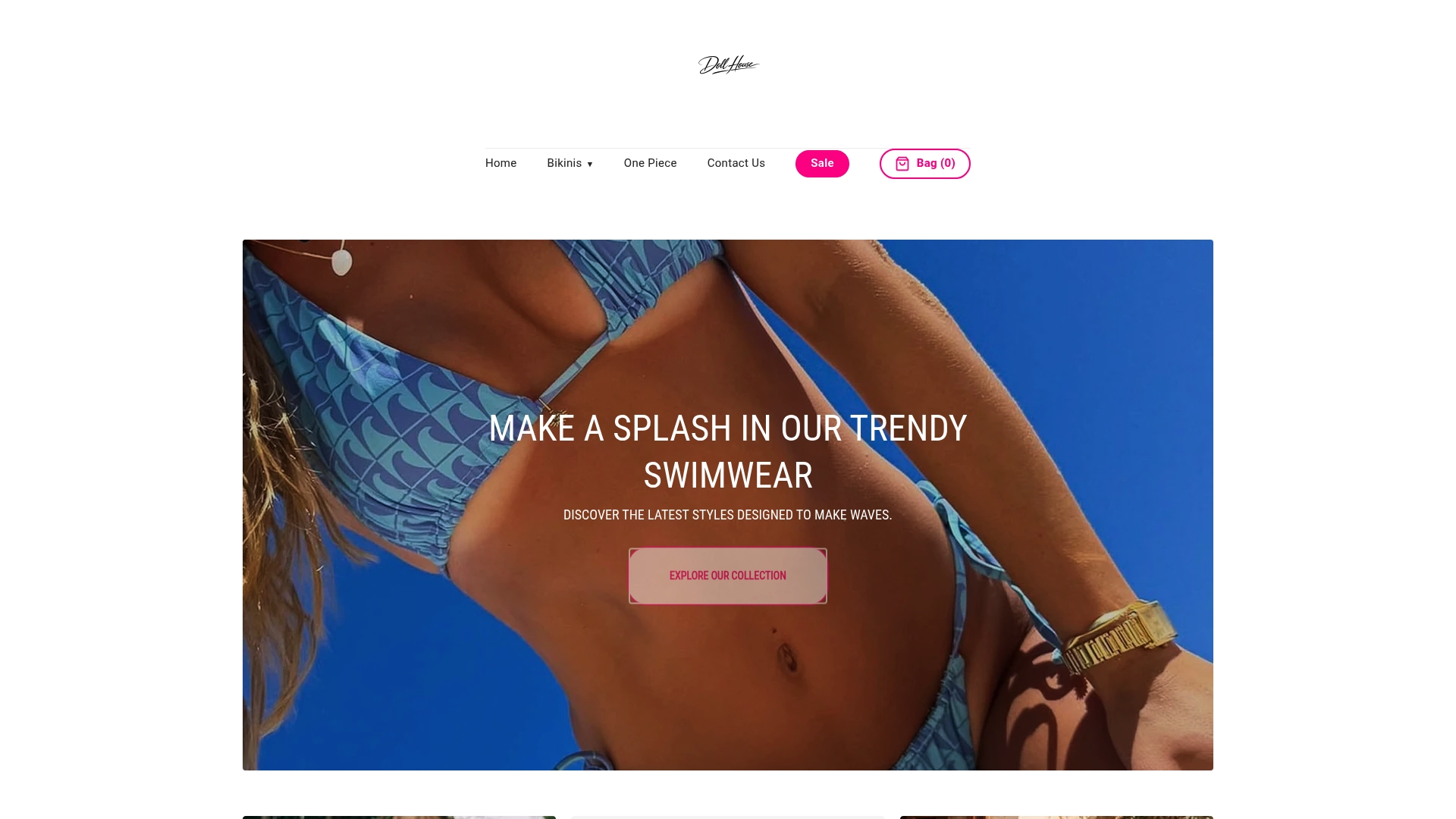
Dollhousebikinis carries a curated range of vintage-inspired swimwear built on modern swim fabrics with full lining, updated elastic, and detailed size charts. The vintage swing one-piece delivers the structured maillot silhouette with a swing skirt panel and modern construction. The high-waist ruched bikini set hits the 1950s waistband height with a ruched front panel and waterproof fabric. The Sally high-waist two-piece offers a cleaner, more streamlined take on the same silhouette. The floral ruched bikini top and tie-side set brings the 1960s print energy with modern tie-side adjustability. Each product page includes fabric and care specs, multiple product photos, and a size chart. Orders over $100 ship free. Browse the full collection and use the size chart before ordering at Dollhousebikinis.
Sources
- Cornell University
- The Metropolitan Museum of Art
- Swimsuits for older women
- My hunt for a flattering swimsuit for women over 60 - The Strategist (NYMag)
- Dressed to De-Stress: Seaside Fashion at the Turn of the Century — Explore Your Archive