
Swimwear is one of the most underestimated categories in retail. Most marketers treat it as a simple seasonal play: stock up in April, discount in August, repeat. The role of swimwear sales is far more complex. This category functions as a merchandising anchor that pulls adjacent product categories forward, signals consumer lifestyle shifts, and exposes exactly how well a retailer manages inventory risk. Analysts who treat swimwear as a commodity miss its real value as a behavioral data source and a test bed for seasonal strategy.
Table of Contents
- Key Takeaways
- The role of swimwear sales across the retail calendar
- Merchandising swimwear as a summer outfitting anchor
- Fit complexity and the economics of mix-and-match
- Broader market trends shaping swimwear demand
- My take on what swimwear sales actually reveal
- Shop Dollhousebikinis: trend-forward and ready for the season
- FAQ
Key Takeaways
| Point | Details |
|---|---|
| Seasonality has multiple waves | About 62% of annual volume concentrates between March and July, with two distinct buying windows requiring separate inventory plans. |
| Mix-and-match drives revenue | Separate top and bottom sizing reduces return rates and lifts average order value by roughly 50% per transaction. |
| Swimwear anchors summer outfitting | Smart retailers bundle swimwear with cover-ups, sandals, and sun-care to build cross-category momentum and increase basket size. |
| Market growth favors lifestyle positioning | The global market is projected to reach USD 26.4B by 2034, driven by fitness culture, tourism, and e-commerce expansion. |
| Trend agility beats annual planning | Retailers who refresh assortments dynamically using real-time trend signals consistently outperform those on static buying calendars. |
The role of swimwear sales across the retail calendar
Swimwear seasonality is not a simple summer curve. It runs in distinct sub-waves, and retailers who plan around a single peak leave money on the table. According to purchasing data, ~62% of annual volume falls between March and July, but that window contains two structurally different buying moments.
The first wave runs January through March. This is the pre-spring break period when consumers are planning vacations and purchasing swimwear well before warm weather arrives locally. The second, more intense wave runs from Memorial Day through mid-June, when purchase urgency peaks. Each wave requires a different inventory posture, pricing strategy, and promotional cadence.
Key seasonal dynamics retail analysts should map:
- January to March: Vacation planning demand. Higher full-price sell-through. Consumers are buying with intent.
- Memorial Day to mid-June: Peak velocity window. Maximize in-stock positions and promote new arrivals.
- Late July through August: Transition to clearance. Discount rates peak near 37% in January and February for prior-season inventory, but end-of-summer discounting erodes margin quickly.
- Q4: Near-zero demand. Any remaining inventory becomes a loss management problem.
Weather variability adds an unpredictable layer on top of this calendar structure. A late spring frost in a major metro market can compress the buying window by two to three weeks and create a downstream inventory glut that forces steep end-of-season discounting. That margin erosion is not recovered through volume.
Pro Tip: Build a weather-adjusted inventory model that ties your regional replenishment triggers to actual temperature data, not just calendar dates. Retailers in Northern markets need later peak inventory dates than those in Sun Belt regions.
Merchandising swimwear as a summer outfitting anchor
The most profitable swimwear retailers do not sell swimwear in isolation. They sell summer. This is the core insight behind how Target became the No. 1 women’s swimwear retailer by volume for ten consecutive years. Swimwear functions as the lead category that brings consumers into the summer assortment, after which they purchase cover-ups, sandals, sunscreen, and beach accessories.
This pull-through effect is measurable. When swimwear is merchandised as part of a lifestyle edit rather than a standalone category, basket sizes grow and repeat purchase rates improve. The shopper who comes in for a bikini and leaves with a cover-up and a pair of sandals has a fundamentally different lifetime value than the one who buys only the bikini.
Trend intelligence is the mechanism that makes this work. Target uses a GenAI platform to identify swim trends over a year in advance, allowing them to refresh vacation edits well before the product hits the floor. Static annual buying plans cannot keep pace with micro-trends that emerge from social media cycles. A color or silhouette can go from niche to mainstream in six weeks if the right influencer posts about it.
The implication for swimwear sales strategies is direct: assortment planning must be modular and updated frequently, not locked in eighteen months before the season.
Practical merchandising tactics that generate measurable results:
- Lifestyle bundling: Display swimwear with cover-ups, sun-care, and sandals in one seasonal shop, both online and in-store.
- Influencer-trend monitoring: Track micro-trend signals on social platforms at least monthly to catch emerging silhouettes and colors before competitors do.
- Editorial curation: Build “vacation edit” or “resort collection” groupings that give consumers a complete outfit context rather than individual SKUs.
- Early launch cadence: Put new swim assortments live in January to capture the pre-spring break buyer before she purchases elsewhere.
Pro Tip: The swimwear design and function details you feature in product descriptions directly influence how well your lifestyle bundles convert. Shoppers making multi-item purchases need functional confidence in each piece before they commit.
Fit complexity and the economics of mix-and-match
Fit is where swimwear retail gets expensive fast. Unlike most apparel categories, swimwear carries a structural sizing problem: 43% of women require different sizes for the top and bottom. When a retailer sells only coordinated sets, nearly half of its customers are wearing the wrong size in at least one piece. The return rate reflects this directly.
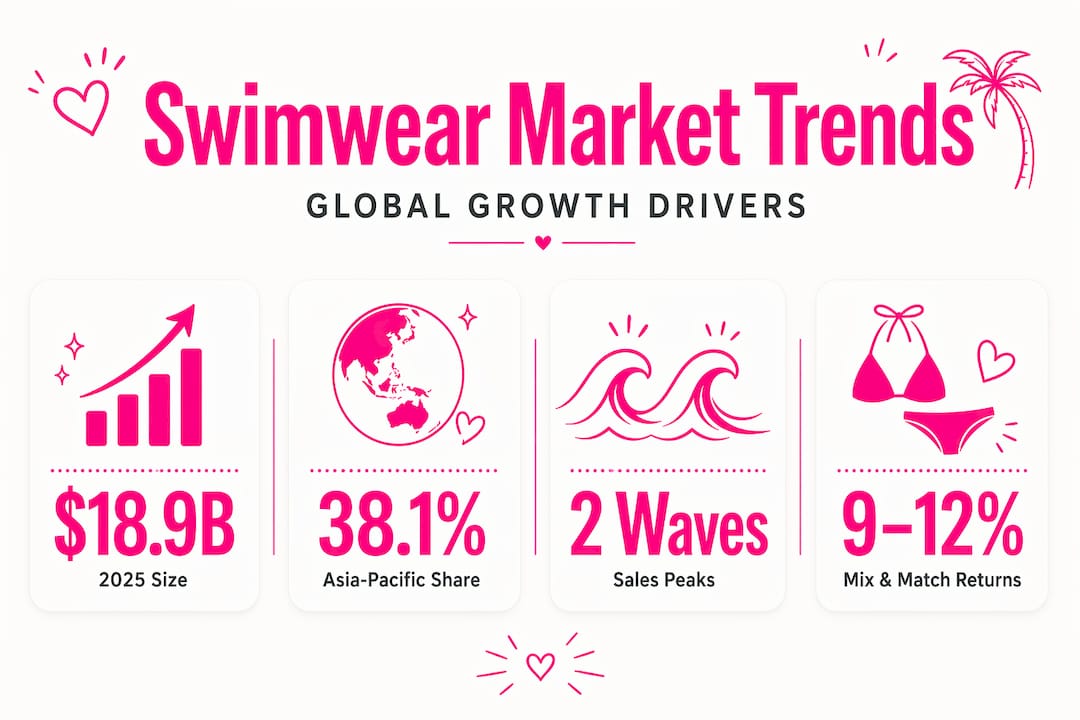
Swimwear sold as sets carries return rates around 18%. When retailers shift to separate top and bottom sizing, that return rate drops to 9 to 12%. That difference compounds significantly at scale. For a retailer processing 50,000 swimwear units per season, cutting returns by even 8 percentage points means thousands fewer units re-entering the warehouse, re-tagged, re-inspected, and repriced.
| Metric | Coordinated Sets | Mix-and-Match Separates |
|---|---|---|
| Return rate | ~18% | 9 to 12% |
| Average order value | Baseline | +~50% per transaction |
| Size fit accuracy | Lower (fixed sizing) | Higher (independent sizing) |
| Customer repeat rate | Moderate | Higher |
The average order value impact is equally significant. When a consumer buys one top and two bottoms in different colors or patterns, the order value lifts by roughly 50%. This is not a promotional discount driving the lift. It is the natural consumer behavior that emerges when sizing flexibility removes the barrier to buying more.
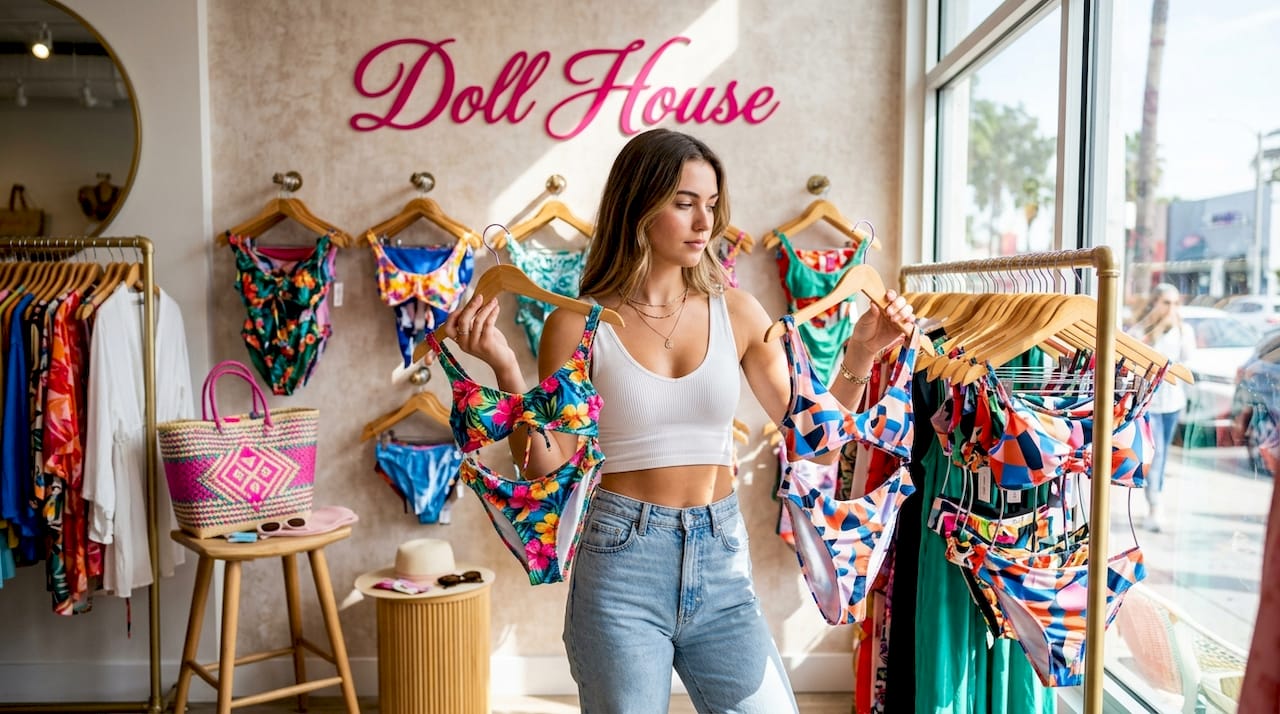
Pro Tip: If you are moving to a mix-and-match assortment, invest in clear size-pairing guidance on your product pages. Customers who are uncertain about their separate sizes will default to not purchasing at all, which is the worst outcome. Detailed size charts reduce both abandonment and returns simultaneously.
Returns are not just a logistics cost. In swimwear retail, where online return rates run near 30% due to fit uncertainty, the margin impact is structural. Getting fit right through assortment engineering is a profitability decision, not just a customer satisfaction metric.
Broader market trends shaping swimwear demand
Swimwear is no longer a purely seasonal, beach-specific category. The global swimwear market was valued at USD 18.9 billion in 2025 and is projected to reach USD 26.4 billion by 2034 at a compound annual growth rate of 3.66%. That trajectory reflects consumer lifestyle shifts, not just population growth.
| Market Driver | Current Impact | 2034 Outlook |
|---|---|---|
| Global market size | USD 18.9B (2025) | USD 26.4B projected |
| Asia-Pacific share | 38.1% (largest region) | Expanding via tourism and e-commerce |
| Online swimwear sales | Growing; ~30% return rate | Improving with virtual fit tools |
| Inclusivity (plus-size) | Fast-growing segment | Mainstream sizing expansion expected |
Asia-Pacific holds 38.1% of global market share, driven by a combination of urbanization, fitness culture, growing tourism infrastructure, and expanding e-commerce access. This is not a temporary trend. It reflects a structural shift in where swimwear consumers live and how they shop.
For U.S. focused analysts, the domestic picture shows e-commerce growing as a channel while in-store shopping remains dominant for fit-critical purchases. Consumers are willing to browse and be inspired online, but many still prefer to try before they buy when it comes to swimwear. This creates a dual-channel demand pattern that requires investment in both virtual fit technology and physical retail experience.
Inclusivity is the other structural trend reshaping assortment strategy. Plus-size swimwear has moved from an afterthought to a high-growth segment. Retailers who extended their size ranges early captured significant share and loyalty. Those who lagged are now playing catch-up in a segment with strong repeat purchase behavior. Understanding how swimwear sales influence fashion trends more broadly means watching inclusivity signals as seriously as silhouette cycles.
Sustainability is entering the category too. Recycled fabrics, ethical production, and longer-lasting construction are increasingly relevant to the consumer who is already paying a premium for fashion-forward swimwear.
My take on what swimwear sales actually reveal
I’ve spent years watching retail marketers treat swimwear as an afterthought until Q1 planning forces it onto the agenda. The category consistently teaches lessons that broader merchandising teams refuse to learn from.
What strikes me most is how swimwear exposes the cost of rigid planning. Every category has seasonality, but swimwear’s compressed selling window makes the consequences of a wrong bet immediate and visible. A buyer who over-indexed on animal print in a year when minimalist solids were trending doesn’t get to hide that mistake across twelve months of gradual markdown. It shows up in six weeks. That visibility is exactly why swimwear is such a useful category for testing your organization’s planning agility.
The fit and returns issue is the one I see most consistently underestimated. Retailers build elaborate acquisition funnels and then allow 18% return rates to quietly undo the economics. Mix-and-match assortments are not a consumer trend to monitor. They are a margin management tool to deploy now.
My broader observation is this: the categories that seem the most niche or the most seasonal are often the ones with the most to teach. Swimwear forces clarity. It demands short cycle times, precise inventory positions, and real consumer insight. Retailers who get it right in swimwear usually get it right everywhere else too.
— Ryan
Shop Dollhousebikinis: trend-forward and ready for the season
Dollhousebikinis puts the insights discussed here into practice across its full catalog. The mix-and-match approach is built directly into the product structure, with separate bikini tops and bottoms offered across multiple silhouettes, colors, and sizing options.
The seasonal assortment at Dollhousebikinis reflects current trend intelligence, with new arrivals timed to the pre-spring break buying window and ongoing refreshes through the summer peak. Styles range from vacation-ready cover-up sets to the original Doll House swimsuit, built for fit, quality, and fashion-forward design. For analysts and marketers researching how a digitally native swimwear retailer structures its assortment, the Dollhousebikinis catalog is a practical reference point. Free shipping on orders over $100.
FAQ
What is the role of swimwear sales in seasonal retail strategy?
Swimwear functions as a merchandising anchor that drives adjacent summer category sales including cover-ups, sandals, and sun-care. Its compressed selling window makes it one of the clearest tests of a retailer’s inventory and trend planning capability.
When do swimwear sales peak during the year?
Two distinct buying waves occur each year: January through March for vacation planning purchases, and Memorial Day through mid-June for peak summer demand. Together, these windows account for roughly 62% of annual volume.
How does mix-and-match sizing affect swimwear profitability?
Offering separate top and bottom sizing reduces return rates from approximately 18% down to 9 to 12%, while lifting average order value by around 50% when customers purchase one top and multiple bottoms in different styles.
What are the biggest growth drivers in the global swimwear market?
Tourism growth, fitness culture, e-commerce expansion, and inclusivity are the primary drivers. The global market is projected to grow from USD 18.9 billion in 2025 to USD 26.4 billion by 2034, with Asia-Pacific holding the largest regional share.
How do online swimwear sales compare to in-store?
Online swimwear sales are growing but carry return rates near 30% due to fit uncertainty. In-store shopping remains dominant for fit-critical purchases, making a dual-channel strategy the most effective approach for managing both volume and returns.