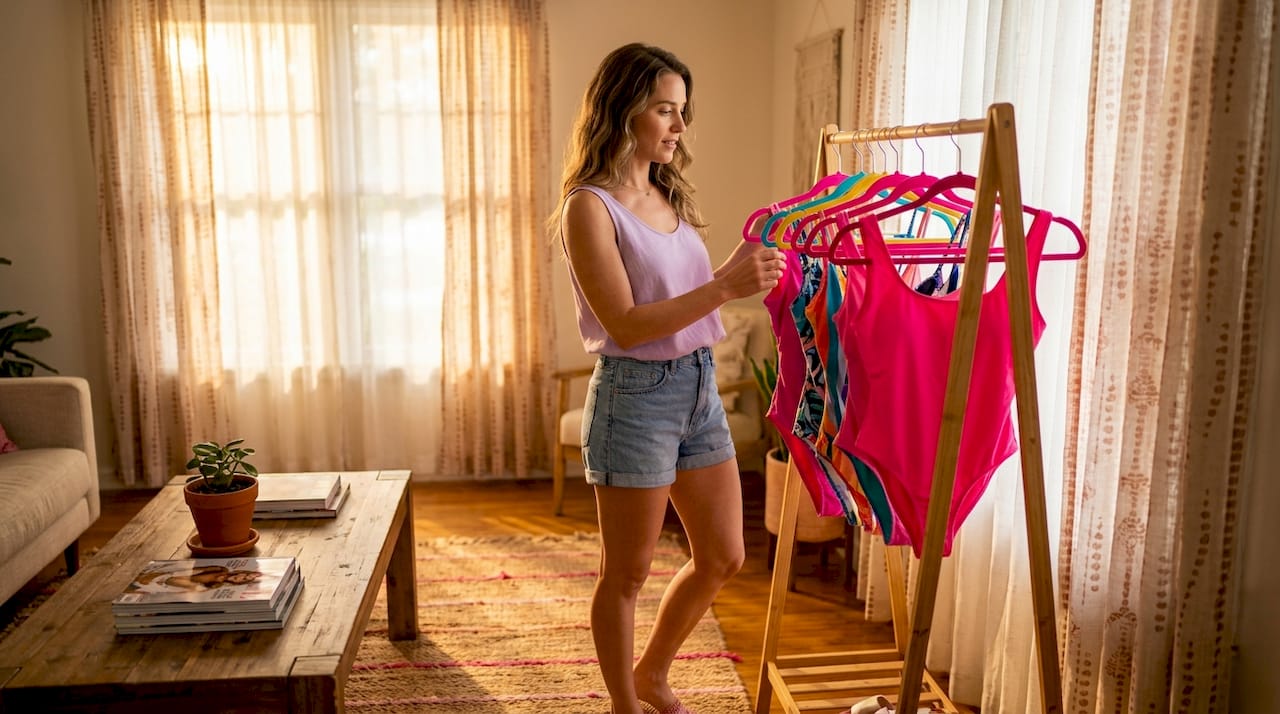
Not all swimsuits are created equal. The features of quality swimwear go far beyond a flattering cut or a trendy print. Many suits look great on the rack but lose their shape, fade, or go see-through after a few wears. Knowing what to look for — fabric blend, lining construction, UPF rating, fit details, and hardware — separates a purchase you’ll regret from a suit you reach for season after season. This guide breaks down every core quality trait worth understanding before you buy.
Table of Contents
- Fabric composition and stretch: the foundation of fit and durability
- Lining and support features: comfort, opacity, and shape retention
- UPF protection: safeguarding skin with certified sun-blocking fabrics
- Fit, compression, and hardware: style meets function
- Sustainability and eco-friendly fabrics: trends with performance and conscience
- Comparing top-quality swimwear features side-by-side: fabric, lining, fit, and protection
- Why the fabric and fit details you overlook matter most in quality swimwear
- Discover high-quality swimwear designed with all these features in mind
- Frequently asked questions
Key Takeaways
| Point | Details |
|---|---|
| Fabric matters most | Look for polyester or nylon blends with 15-22% elastane for durability and stretch retention. |
| Lining adds comfort and opacity | Full double-layer linings prevent transparency and enhance swimsuit support and lifespan. |
| UPF 50+ protects skin | Choose swimwear with certified UPF ratings tested under real-world wet and stretched conditions. |
| Fit features boost confidence | Adjustable straps, tummy control panels, and supportive hardware improve comfort and style. |
| Eco-friendly fabrics perform well | Sustainable materials like ECONYL offer durability and environmental benefits without sacrificing quality. |
Fabric composition and stretch: the foundation of fit and durability
To understand swimwear quality, start with the fabric blend. The mix of fibers used determines how a suit fits, how long it lasts, and how it holds up against chlorine, salt water, and sun exposure.
Most swimwear fabrics fall into two main categories: nylon-spandex blends and polyester-elastane blends. Nylon feels softer against the skin and drapes beautifully, giving it a more luxurious feel. It’s a strong choice for beach days and vacation wear. Polyester blends, on the other hand, hold up significantly better in pool environments. Polyester-elastane blends offer superior chlorine resistance, lasting 5 to 10 times longer than nylon in chlorinated water.
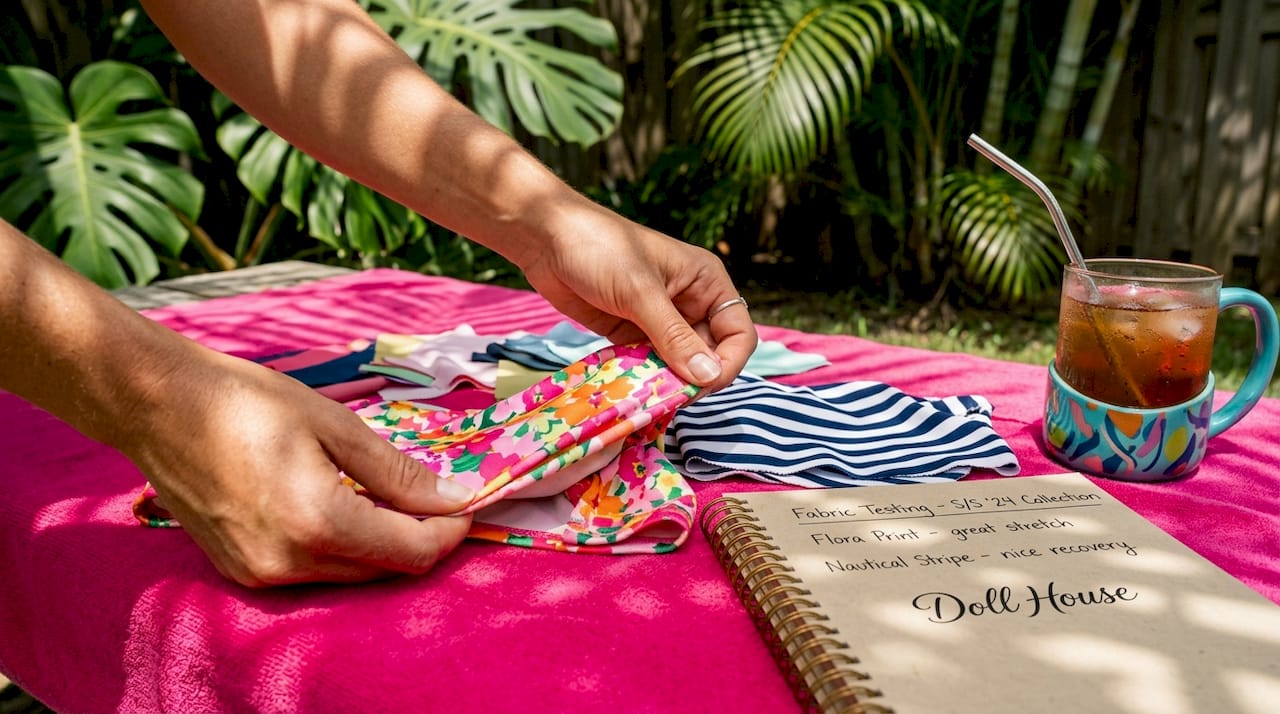
The elastane (also called spandex) percentage matters more than most shoppers realize. Too little and the suit won’t spring back to shape after stretching. Too much and it can feel restrictive. High-quality bikini sets use 15-22% elastane for optimal stretch and recovery, which keeps the fit consistent across dozens of wears.
Key fabric indicators to check:
- Spandex or elastane content listed on the label (aim for 15-22%)
- Fabric weight that feels substantial, not thin or papery
- Tight, consistent weave with no loose threads visible
- Colorfastness, meaning the color should feel sealed, not chalky or rub off
- Recovery after a quick stretch test: the fabric should snap back immediately
How to read a swimwear fabric label:
- Check the fiber percentages listed (nylon, polyester, elastane, spandex)
- Note if any UV or chlorine-resistant finishing is mentioned
- Look for brand certifications like OEKO-TEX or ECONYL on hangtags
- Test stretch by pulling gently in both directions and releasing
- Check that the fabric returns to its original shape without distortion
For a look at how premium swimwear fabric details translate into real style, floral and stripe prints in high-stretch blends show exactly how fabric quality supports bold design.
Pro Tip: Rub the fabric lightly between two fingers. A well-made fabric will feel smooth and even. Pilling or a rough, gritty texture suggests a lower-quality weave that will break down faster with wear and washing.
Lining and support features: comfort, opacity, and shape retention
Beyond fabric blends, quality swimwear depends heavily on the lining and support details for lasting comfort and confidence.
Lining is the inner layer sewn into a swimsuit, and its quality directly affects how the suit looks and feels on your body. The most common issue with cheap swimwear is transparency when wet. A thin or absent lining means your suit becomes see-through the moment it hits the water. Quality swimwear includes full double-layer lining for opacity and support, along with reinforced seams and rust-proof hardware.
Double-layer linings also help the swimsuit keep its shape over time. Single-layer linings stretch out and lose tension faster. The lining fabric itself should be soft and breathable, with a similar stretch ratio to the outer shell so both layers move together without bunching or pulling.
What separates good lining from poor lining:
- Full front lining that extends to the gusset panel for complete coverage
- Soft, breathable fabric that won’t cause chafing during active movement
- Stretch that matches the outer fabric so there’s no internal pulling
- Flatlock seams (stitched flat against the skin) to prevent irritation
- Rust-proof metal hardware on clasps, rings, and closures
One note worth knowing: full gusset lining does extend drying time slightly compared to minimal lining. That’s a worthwhile trade-off for coverage and support.
You can see how thoughtful lined swimsuit features look in practice by examining one-piece designs built with structured inner layers.
Pro Tip: Hold the swimsuit up to a light source and check the lining coverage before buying. If light passes through the front panel easily, the suit will be transparent when wet. A quality lining creates a noticeable visual block.
UPF protection: safeguarding skin with certified sun-blocking fabrics
Protection from the sun is another critical feature high-quality swimwear must provide.
UPF stands for Ultraviolet Protection Factor. It measures how much UV radiation a fabric blocks before it reaches your skin, and it works differently from SPF, which rates sunscreen applied to skin. A UPF rating applies directly to the textile itself. UPF 50+ fabrics block 98% of UV rays, meeting the highest textile standard currently available.
Not all UPF claims are equal. Legitimate ratings require third-party testing under protocols like AATCC TM183 or UV Standard 801. These tests check the fabric stretched and wet, because UV protection can drop significantly when a fabric is pulled taut or soaked. A suit that tests well dry and flat may perform poorly in real swim conditions without this expanded testing.
Dense weaves, synthetic fibers, dark colors, and UV finishes all increase a fabric’s UV protection. Looser weaves and light or white colors tend to offer the least protection.
| UPF rating | UV blocked | Protection level | Suitable for |
|---|---|---|---|
| UPF 15-24 | 93-95% | Good | Short sun exposure |
| UPF 25-39 | 96-97% | Very good | Moderate outdoor activity |
| UPF 40-49 | 97.5% | Excellent | Extended beach or pool use |
| UPF 50+ | 98%+ | Maximum | Daily sun-intensive wear |
Factors that affect UPF performance in swimwear:
- Fiber type: polyester and nylon outperform natural fibers for UV blocking
- Fabric density: tighter weaves block more UV light
- Color depth: darker or brighter colors absorb more UV than pale shades
- Special UV-blocking chemical finishes applied during manufacturing
- Stretch behavior: fabrics tested while stretched reflect real-wear conditions
Explore swimwear with UPF protection to see how sun-safe designs can also deliver strong style.
Pro Tip: UPF ratings are not permanent if the fabric is heavily worn or stretched repeatedly over time. Replace sun-protective swimwear when the fabric thins or loses elasticity, as the protective coverage will have reduced.
Fit, compression, and hardware: style meets function
To complement fabric and protection benefits, fit and construction details elevate both style and comfort.
Fit is where most women either gain or lose confidence in a swimsuit. The best bikini fit and support features come from a combination of elastane concentration, panel design, and hardware choices. Adjustable straps and high elastane content solve common fit issues like torso length mismatches in one-piece styles, giving a custom-feeling result.
Tummy control is a specific construction feature, not just a marketing term. Tummy-control suits use 43-57% elastane power mesh panels in the front panel for compression without restricting movement. That’s a significantly higher elastane concentration than the rest of the suit, engineered specifically to flatten and support.
For larger bust sizes, fit becomes even more specific. Bra-sized fits, molded cups, and wide straps are the construction details that prevent slipping and provide genuine DD+ support. Generic sized swimsuits often lack the internal structure to hold larger busts securely.
“A swimsuit that fits well at the store but shifts constantly in the water has failed at its core job. Construction details, not just sizing, determine real-world fit.”
Fit and hardware features that signal quality:
- Adjustable neck and back straps with secure slider hardware
- Rust-resistant metal rings, clasps, and D-rings that won’t corrode
- Reinforced closures at tie points and back clasps
- Molded or removable cups in tops and one-piece styles
- High elastane power mesh panels in front panels for shaping
How to assess swimwear fit before buying:
- Check that straps are fully adjustable, not fixed
- Test the closure hardware: it should click securely and not slip
- Try the side stretch: a quality suit returns to shape immediately
- Look at the panel seams to confirm they lay flat with no buckling
- Verify cup structure: light molding holds shape without excess bulk
Sustainability and eco-friendly fabrics: trends with performance and conscience
Quality today also means caring for the environment, making sustainable fabric choices a vital feature.
Eco-conscious swimwear has moved from niche to mainstream. Sustainable swimwear uses OEKO-TEX certified, PFAS-free Italian fabrics with UPF 50 ratings, resisting fade, snags, and pilling for two to three full seasons. PFAS (per- and polyfluoroalkyl substances) are industrial chemicals used in some water-repellent fabric finishes that carry health and environmental concerns. Certified PFAS-free fabrics eliminate that risk without compromising performance.
ECONYL is one of the most recognized materials in this space. It’s a regenerated nylon made from reclaimed fishing nets, fabric scraps, and ocean waste. Experts recommend ECONYL nylon as an eco swimwear material that matches virgin nylon in durability while actively diverting ocean waste from landfills and waterways.
What to look for in sustainable swimwear:
- OEKO-TEX certification on fabric or hangtag
- PFAS-free labeling for chemical safety
- ECONYL or other recycled fiber content listed in fabric composition
- Durability claims tested over multiple seasons
- Brand transparency about their supply chain and manufacturing practices
Sustainable construction doesn’t mean sacrificing chlorine resistance or stretch. These fabrics are engineered to perform across beach, pool, and active use while reducing environmental impact.
Comparing top-quality swimwear features side-by-side: fabric, lining, fit, and protection
Bringing these features together, here’s a side-by-side overview to simplify your decision-making.
Polyester and PBT blends lead for chlorine resistance, nylon blends deliver the softest feel, and UPF protection depends on both fabric type and third-party testing. The table below organizes those distinctions clearly.
| Feature | Nylon/spandex | Polyester/elastane | ECONYL recycled nylon | Power mesh panel |
|---|---|---|---|---|
| Chlorine resistance | Moderate | High | High | Moderate |
| Stretch recovery | Excellent | Very good | Excellent | Very high |
| UV protection (UPF) | Variable | Variable | Variable | Varies |
| Softness | High | Moderate | High | Moderate |
| Eco credentials | Low | Low | High | Low |
| Best use | Fashion/beach | Pool training | Eco-conscious | Tummy control |
How to match features to your swimwear needs:
- Fashion and vacation wear: prioritize nylon-spandex for softness and visual appeal
- Pool training or lap swimming: choose polyester-elastane for chlorine durability
- Sun-intensive beach days: confirm UPF 50+ with third-party certification
- Tummy control needs: look for power mesh front panels with high elastane percentage
- Eco-conscious shopping: seek ECONYL or OEKO-TEX certified PFAS-free options
Use this detailed swimwear feature comparison approach when evaluating specific styles to match construction to your actual use.
Pro Tip: If you split time between pool and beach, a polyester-elastane blend with a quality nylon-feel outer finish gives you the best of both. Some high-quality bathing suits layer different fabrics strategically to achieve this.
Why the fabric and fit details you overlook matter most in quality swimwear
Most swimwear shopping focuses on style first, and that’s understandable. Color, cut, and print are what you see from across the room. But the features that determine whether a suit lasts one summer or four are almost always invisible at a glance.
Fabric recovery is the clearest example. A suit that feels soft and stretchy in the store but doesn’t spring back quickly after stretching will sag, bag, and lose its shape within weeks. The recovery speed tells you how much the fabric has retained its elastane integrity. Slow recovery means the elastane is already partially broken down or was under-dosed to begin with.
Lining feel is equally telling. Scratchy, stiff, or mismatched lining causes chafing after an hour in the water. It also suggests the manufacturer treated lining as an afterthought rather than a core part of the suit’s construction. Quick stretch and lining checks take under two minutes but significantly extend suit lifespan by helping you avoid poor-quality construction.
Hardware is the third overlooked factor. Cheap metal rings and sliders rust after their first exposure to salt water, leaving stains on the fabric and causing the hardware to seize or snap. Rust-proof hardware is not optional in a quality suit. It’s a standard feature in well-made designs and a red flag when it’s absent.
Price is not a reliable shortcut here. High price tags can reflect marketing budgets and brand name as much as actual construction quality. A suit at a higher price point with no visible lining, single-layer fabric, and plastic hardware is not worth the investment. Learning to assess insider tips on fabric recovery and seam quality means buying based on what the suit actually delivers, not what the tag claims.
The suits worth investing in are the ones that pass a physical check: firm lining, fast fabric recovery, rust-proof hardware, and flat seams. That two-minute inspection at the point of purchase is the most effective quality filter available.
Discover high-quality swimwear designed with all these features in mind
You now know what separates a swimsuit worth buying from one that won’t last the season. Doll House swimwear is built with these exact standards in mind, combining stretch-retentive fabrics, full linings, and supportive hardware across every style in the collection.
From The Original swimsuit with its clean lines and structured fit, to stylish beach cover-ups that complement your poolside look, the range covers vacation, beach, and leisure needs. Looking for a complete matching set? Browse two-piece swimwear sets that pair quality fabrics with current styles. Free shipping on orders over $100. New arrivals added regularly.
Frequently asked questions
What fabric blend is best for durable swimwear?
Polyester-elastane blends with 15-22% elastane are best for chlorine resistance and maintaining stretch, making swimwear durable and shape-retentive over many wears and washes.
How can I tell if a swimsuit offers good sun protection?
Look for UPF 50+ certification tested under protocols like AATCC TM183 or UV Standard 801. UPF 50+ fabrics block 98% of harmful UV rays, including when the fabric is stretched and wet.
Why is swimwear lining important?
Swimsuit lining enhances opacity, comfort, and durability by preventing transparency, reducing chafing, and protecting the outer fabric layer from direct friction and wear.
What fit features help with bust support in swimsuits?
Quality swimwear uses bra-sized fits and molded cups alongside wide straps and adjustable hardware to provide secure DD+ support and prevent slipping during active movement.
Are sustainable swimwear materials as durable as conventional ones?
Yes. Sustainable premium swimwear uses eco-certified fabrics like ECONYL regenerated nylon and OEKO-TEX certified Italian materials that match virgin nylon in durability while delivering multi-season performance.