
Shopping for a bikini that actually fits well is one of the most frustrating experiences in fashion. Sizing varies between brands, online photos do not always show how a style sits on different body types, and guessing based on your usual clothing size leads to returns and disappointment. This guide walks you through every step, from taking accurate measurements to matching your shape to the right style, so you can shop with confidence and stop settling for a fit that is almost right.
Table of Contents
- What you need before shopping for bikinis
- Step-by-step: how to measure for a perfect bikini fit
- Matching your shape to bikini styles
- Checking fit, troubleshooting, and shopping tips
- Why finding your true fit is more than just size charts
- Find your best bikini fit at Doll House
- Frequently asked questions
Key Takeaways
| Point | Details |
|---|---|
| Measure before shopping | Use a soft tape and take six core measurements for the best fit. |
| Rely on brand charts | Brand-specific size guides are more accurate than generic clothing sizes. |
| Try various styles | Mix and match bikini pieces to find your most flattering look. |
| Check for real fit | Your bikini should feel comfortable, stay put, and move with you. |
What you need before shopping for bikinis
Preparation makes the difference between a bikini that works and one that sits in a drawer. Before browsing any collection, you need a few basic tools and a clear picture of your actual measurements.
Why measurements matter more than guessing
Most shoppers reach for their usual clothing size when buying swimwear. That approach fails consistently. Swimwear sizing does not follow the same logic as tops, pants, or dresses. A size medium in one brand may fit like a size small in another. When shopping online, match measurements to each brand’s specific size chart, because generic size conversions are rough estimates at best.
Taking your own measurements removes the guesswork. It also gives you a baseline to compare across brands, so you can spot patterns in how certain labels run small or large.
The six key measurements you need
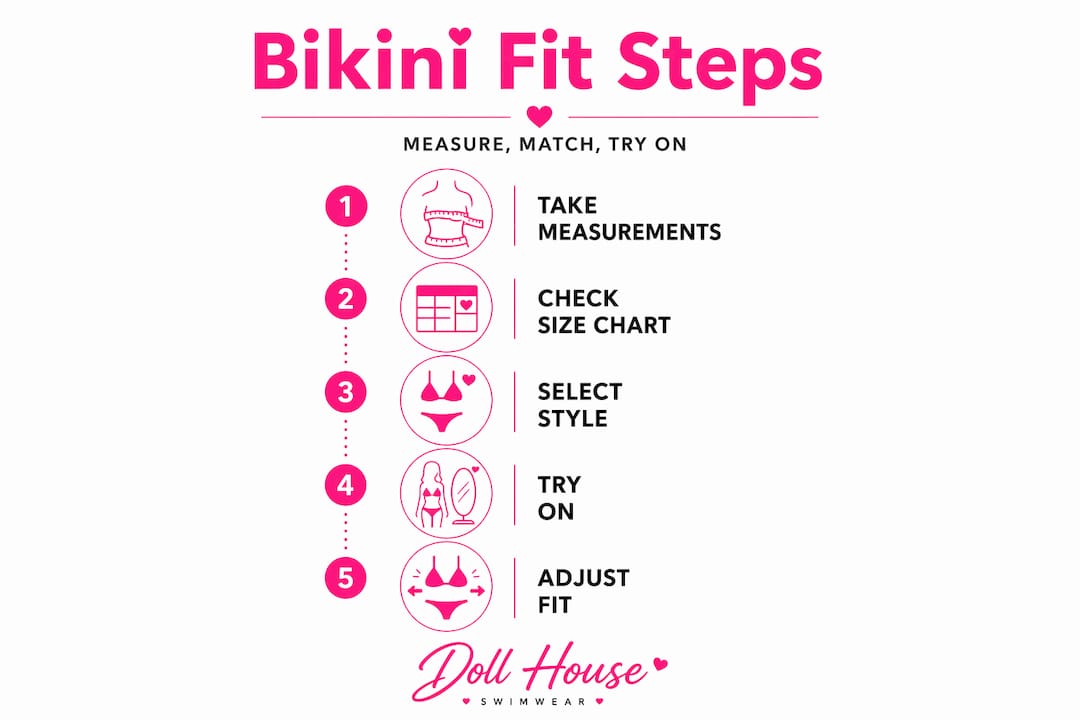
Accurate bikini shopping relies on six core measurements. Each one tells a different part of the story about how a piece will sit and feel on your body.
- Bust: Measure around the fullest part of your chest, keeping the tape parallel to the floor.
- Under-bust: Measure directly under your breasts, snug but not tight.
- Waist: Measure the narrowest part of your torso, usually a few inches above your navel.
- High hip: Measure around the upper hip area, roughly 3 to 4 inches below your natural waist.
- Low hip: Measure around the widest part of your hips and seat.
- Torso length: Measure from your shoulder, over the bust, down through the crotch, and back up to the same shoulder point. This one is critical for one-piece styles and high-neck tops.
Tools to gather before you start
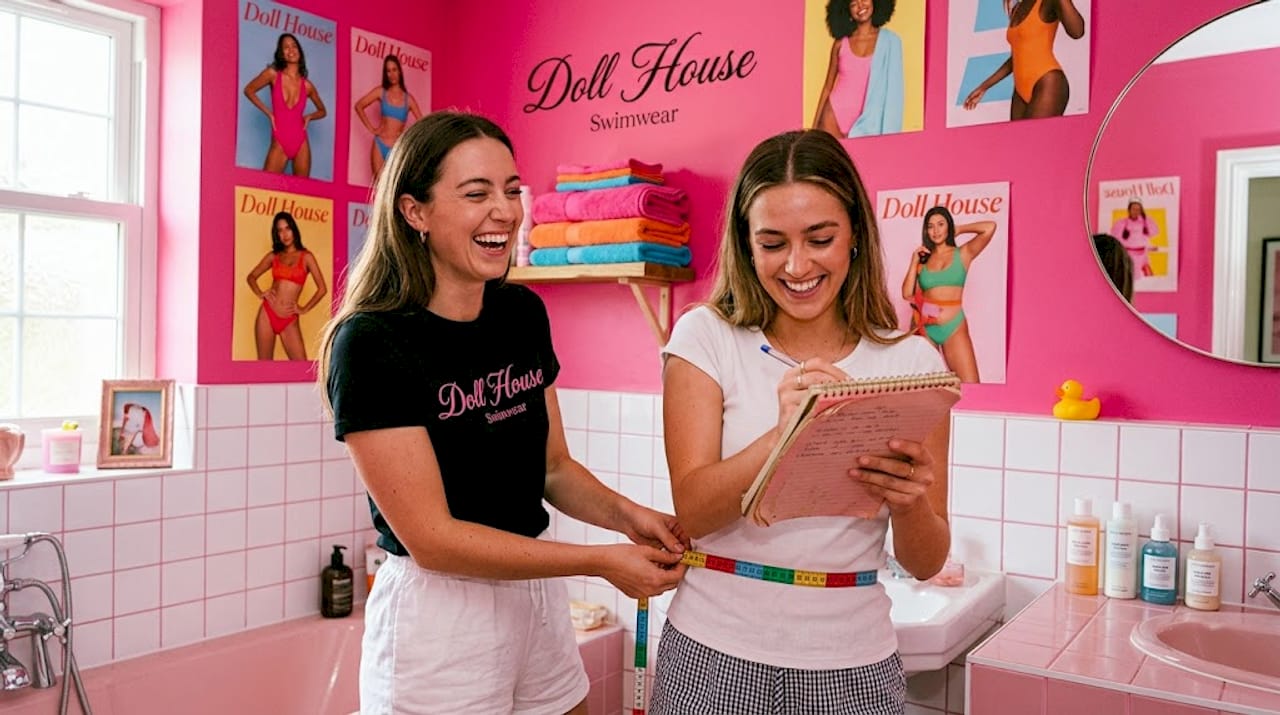
You need a soft fabric measuring tape, a notepad or phone to record numbers, and ideally a trusted friend to help with harder-to-reach spots. Measure in a well-fitted bra or bralette rather than a padded push-up, which can inflate your bust measurement.
| Tool | Why it helps |
|---|---|
| Soft measuring tape | Flexible, follows body curves accurately |
| Notepad or notes app | Keeps all six measurements in one place |
| Fitted bra or bralette | Gives a truer bust and under-bust reading |
| Mirror | Confirms tape is straight and parallel |
Pro Tip: Take each measurement twice and use the average. Bodies are not perfectly symmetrical, and a second reading catches errors that lead to ordering the wrong size.
For a broader look at how to approach trendy bikini shopping before you commit to a purchase, start with a clear style plan alongside your measurements.
Step-by-step: how to measure for a perfect bikini fit
With your tools ready, follow these numbered steps to measure accurately and translate those numbers into the right bikini size.
Measuring each area correctly
- Measure your bust. Stand upright, exhale normally, and wrap the tape around the fullest part of your chest. The tape should be snug without compressing.
- Measure your under-bust. Place the tape directly below your breasts. Note this number separately. The difference between your bust and under-bust measurements determines your cup size for bra-sized swimwear.
- Measure your waist. Stand relaxed, find the narrowest point of your torso, and wrap the tape horizontally. Do not suck in.
- Measure your high hip. Place the tape 3 to 4 inches below your waist and measure around the upper hip curve.
- Measure your low hip. Wrap the tape around the widest point of your hips. For many people, this sits 7 to 9 inches below the natural waist.
- Measure your torso length. Start at your shoulder, run the tape over your bust, down through the crotch, and back up to the starting shoulder point. This measurement is essential for bra-sized swimsuits, where the cup difference and torso length together determine the best fit.
Using measurements for standard vs. bra-sized bikinis
Standard bikini sizing uses one measurement, usually bust or hip, to assign a size like XS, S, M, L, or XL. Bra-sized bikini tops use a band number plus a cup letter, just like a regular bra. Both systems need your full measurement set to work correctly.
| Fit preference | Recommended approach |
|---|---|
| Compression fit (holds everything in) | Size down one level from your measurement result |
| True-to-size sculpted fit | Match measurements directly to brand size chart |
| Looser, casual feel | Size up one level |
Pro Tip: For mix-and-match separates, apply your hip measurement to bottoms and your bust and under-bust measurements to tops independently. When building a bikini wardrobe with separates, this approach gives you more accurate fits across different styles than buying sets based on a single size.
Matching your shape to bikini styles
Knowing your numbers is a strong start, but style choice matters just as much as size. Certain cuts work better for specific proportions, and understanding which ones suit your shape can save you a lot of trial and error.
Bikini styles by body shape
- Triangle tops: Work well for smaller busts because the tie closure allows custom adjustment. Less support for larger cups.
- Underwire tops: Provide structure and lift for fuller busts. Look for bra-sized options with molded or wired cups.
- Bandeau tops: Suit straighter torsos and work best with smaller to medium busts where less vertical support is needed.
- Halter neck tops: Add visual length to the bust area and provide strong support for a range of sizes because the neck strap carries weight.
- High-waisted bottoms: Add coverage at the midsection and work across a wide range of hip sizes. They are particularly useful when there is a significant size difference between waist and hips.
- Tie-side bottoms: Adjustable for changing hip-to-waist ratios. Good option when standard sizing does not sit well.
- Brazilian cut bottoms: Minimal coverage at the rear. Better suited to those comfortable with less fabric and who prioritize a sun-tan-friendly cut.
- Boyshort or skirted bottoms: Maximum coverage. Useful for those wanting more modesty or sun protection on the hips and thighs.
High-waisted bikini bottoms are commonly recommended for staying secure without digging or rolling, while also providing more midsection coverage. Fit preference can vary depending on whether you want compression or a more true-to-size sculpted feel.
High-waisted styles have become a consistent staple because they solve two problems at once: they stay put during activity and they provide coverage that many low-rise styles cannot. They are not just a trend. For many body types, they are simply the most practical cut.
Pro Tip: Mix top and bottom styles across categories. A halter neck top can balance a high-waisted bottom visually, while a triangle top can lighten the look of a fuller boyshort bottom. Browse bikini outfit ideas to see how combinations work across different silhouettes before committing to a look.
Checking fit, troubleshooting, and shopping tips
Measurements and style theory set the foundation, but the real test is how a bikini feels when you move, sit, and stand in it. Here is how to verify fit at home and avoid the most common sizing mistakes.
At-home fit verification checklist
Use this numbered checklist when your bikini arrives:
- Put it on as you would at the beach. No layers underneath. Tie all strings at your usual comfort level.
- Sit down and stand back up. The bottom should not roll, shift, or dig into your skin.
- Walk a few steps and move your arms. The top straps should stay in place without slipping or pulling.
- Bend forward. A top that offers too little coverage will reveal immediately at this step.
- Stretch side to side. The fabric should follow your movement without riding up or bunching.
- Adjust the straps to their tightest and loosest position. A good fit works within the middle range of strap adjustment, leaving room to tighten or loosen as needed.
- Check for fabric gaping or bunching. Cups that gap at the top suggest you need a smaller cup. Fabric that bunches at the crotch of bottoms suggests the torso is too long for your frame.
Common mistakes to avoid
- Sizing by only one measurement. Relying solely on bust or hip ignores the full picture and leads to bottoms that fit but tops that do not, or vice versa.
- Ignoring torso length. This is the most overlooked measurement. A torso that is short relative to a standard-size swimsuit will bunch or gap in unexpected places.
- Assuming your clothing size applies. Clothing sizing in the US has shifted significantly over the decades with vanity sizing, making it an unreliable reference for swimwear.
- Skipping brand-specific charts. Every brand cuts its patterns differently. A medium at one label may be a large at another. When buying bikinis online, always pull up the brand’s actual size chart and compare your six measurements line by line.
- Not accounting for fabric stretch. Swimwear is meant to be worn wet and dry. Some fabrics have more stretch recovery than others, which affects how they hold their shape over time.
Key stat: Fit problems are most common with one-size-fits-all styles, which assume a single body proportion that very few people actually have. Separates, where you size tops and bottoms independently, solve this problem directly and are the smarter choice for most shoppers.
Matching your numbers to the right brand chart is not complicated, but it requires one consistent habit: check each brand’s size chart before adding anything to your cart, every single time.
Why finding your true fit is more than just size charts
Here is something most fit guides will not tell you: the measurements and size charts are tools, not the answer. They get you close. What actually gets you to a bikini you love wearing is a combination of data and experimentation.
Size charts are built around statistical averages. They represent a range of bodies, not your specific proportions. Someone with a 28-inch waist and 40-inch hips will measure into the same size category as someone with a 30-inch waist and 38-inch hips in most standard charts, even though those two bodies will experience very different fits in the same bikini. The numbers get you into the right ballpark. The style choice and fit check get you the rest of the way.
There is also a real factor around personal comfort and mood. Some days a high-waisted bottom feels right. Other days a lower-rise, more relaxed cut feels better. The “perfect fit” is not always the same answer every time. Building a small wardrobe of styles that you know work for your measurements, rather than committing to one formula, gives you flexibility that a single-size-approach cannot.
The biggest mistake in following fit guides is treating them as final authority. Use bikini wardrobe wisdom as a starting point for building a rotation of cuts and coverage levels that you have tested and confirmed work for you. Your measurements open the door. Your lived experience with different styles closes the deal.
Confidence in a bikini comes from how it functions, not just how it looks in a flat-lay photo. A bikini that stays in place, feels comfortable, and works with your proportions will always be more flattering than a trend style that fights your body all day.
Find your best bikini fit at Doll House
Ready to apply these steps to your next purchase? Doll House Bikinis offers a full range of styles, from classic triangle tops to structured underwire sets, tie-side bottoms to full high-waisted coverage, all organized so you can filter by style, coverage, and price.
The gold high waist bikini set is a strong choice for those who measured into high-waisted fits and want a polished, vacation-ready look. For a softer, adjustable option, the floral ruched bikini set combines a ruched top with a tie-side bottom for a customizable fit across a range of measurements. Complete your beach-ready collection with beach cover ups that transition easily from poolside to boardwalk. Free shipping on orders over $100 applies automatically at checkout.
Frequently asked questions
How do I know if my bikini fits correctly when it arrives?
Your bikini should stay in place during movement and not dig in, roll, or need constant adjustment throughout the day. If any of those things happen, the size or style is not right for your measurements.
What are the most important measurements for finding my bikini size?
Bust, under-bust, waist, high hip, low hip, and torso length are essential for an accurate fit across both standard and bra-sized bikini styles.
Should I go by my usual clothing size when buying bikinis?
No. Always use current measurements and match to each brand’s specific bikini size chart instead, because general clothing sizes rely on different cutting standards than swimwear.
Are high-waisted bikini bottoms good for all body types?
High-waisted bikini bottoms provide coverage and stay secure without digging or rolling, making them a practical option for many shapes, though personal comfort and preference should always guide the final choice.
Recommended
- How to Buy Trendy Bikinis: A Step-by-Step Guide for 2026 | News - Doll House
- Build your bikini wardrobe: the step-by-step guide | News - Doll House
- Thong Bikinis Explained: Confidence, Comfort & Style Guide | News - Doll House
- Triangle Bikinis Explained: Stylish Swimwear Options & Trends | News - Doll House