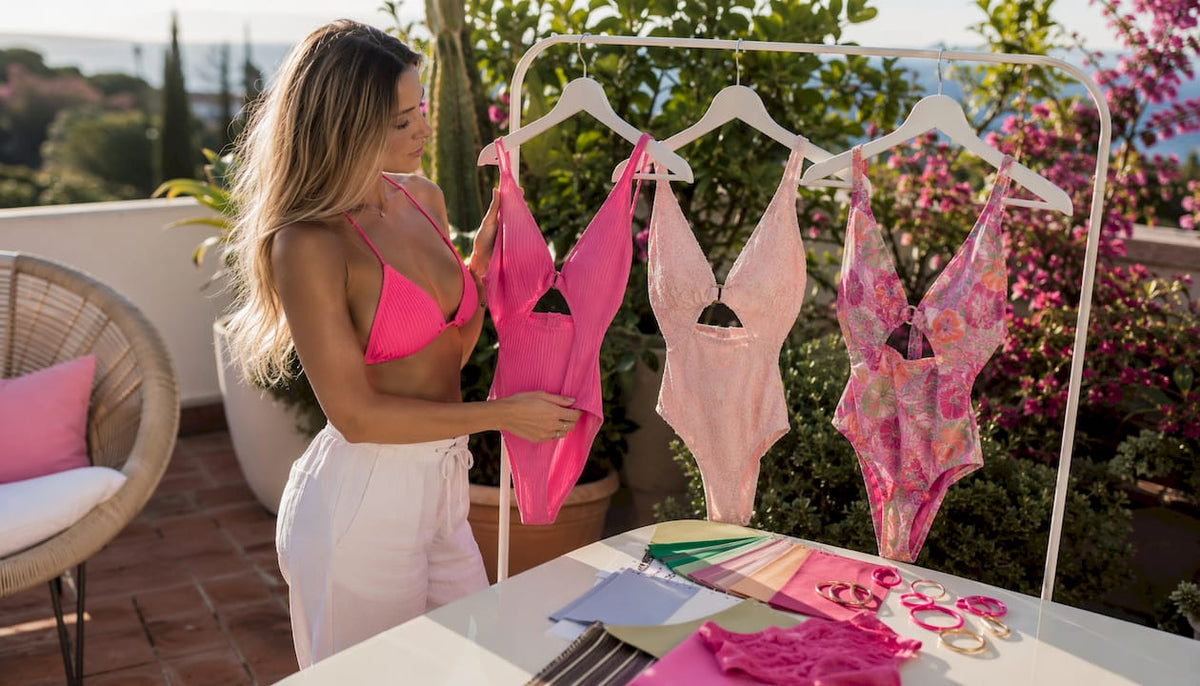
The monokini styling workflow works like this: treat the suit as a sculptural bodysuit, choose one complementary layer, finalize accessories, then confirm fit and fabric care before you leave. That four-part process produces three distinct looks from a single piece.
Three quick outcomes:
- Minimalist Poolside Chic — monokini + linen palazzo + slides + thin gold hoops
- Golden Hour Glam — monokini + silk midi skirt + heeled sandals + statement earring
- Resort-Ready Drama — monokini + sheer maxi or crochet pants + wide-brim hat + layered necklaces
TL;DR steps:
- Define your setting (pool, beach, resort dinner)
- Evaluate cut and fit before adding anything
- Pick one structural layer only
- Add one accessory anchor (hat, earring, or belt)
- Confirm movement and pack your refresh kit
Table of Contents
- How do you choose the right monokini for your workflow?
- How do cutouts change your silhouette?
- What layers actually transform a monokini into an outfit?
- Which accessories complete a monokini look without competing?
- How should a monokini fit, and how do you care for it?
- What is the 7-step styling workflow stylists use?
- Three ready-to-copy outfit recipes
- What are the most common monokini styling mistakes?
- Key Takeaways
- The part most styling guides skip
- Shop monokinis and cover-ups at Dollhousebikinis
- Useful sources and further reading
How do you choose the right monokini for your workflow?
Start with intended use. Pool lounging calls for quick-dry fabrics with strong stretch recovery. A resort dinner setting rewards matte textures like ribbed knit, jacquard, or smocked fabric that read as high-fashion rather than purely athletic. Shiny synthetics photograph well in direct sun but can look flat under artificial light indoors.
Fabric texture shapes the whole look. Matte ribbed and jacquard styles align with the quiet-luxury direction that dominates current resort wear, favoring neutral palettes like charcoal, espresso, and cream. Those tones layer easily with linen and cotton cover-ups without clashing.
Cut and cutout placement directly affect proportion. Side-waist cutouts cinch and define the midsection, making them flattering for hourglass and rectangular figures. A deep V-neckline with ruched midriff panels elongates an apple-shaped torso. High-leg cuts visually lengthen the legs on petite frames. Asymmetric straps add a sculptural, editorial edge without requiring any other embellishment.
Quick fit checklist before you buy or pack:
- Bust support holds without gaping when you lean forward
- Straps lie flat without digging or sliding
- Leg cut sits where intended when standing and sitting
- Fabric recovers fully after stretching (no sagging)
- Bonded edges or reinforced binding around cutouts show no rolling
Pro Tip: Check the cutout perimeters specifically. Garments with bonded edges or reinforced binding hold their sculptural shape under movement; raw edges roll and gap after a few hours of wear. That construction detail is the single most useful buying filter.
Dollhousebikinis carries a curated range of monokini styles across matte, textured, and printed options, with detailed product descriptions and sizing guides to help narrow the choice before purchase.
How do cutouts change your silhouette?
Cutouts define focal points. Decide what you want to emphasize — waist, torso length, or hip balance — then build every other choice around that decision.
Side-waist cutouts draw the eye inward and create an hourglass effect. Central front openings lengthen the torso visually. Asymmetric shoulder cutouts shift attention upward and balance wider hips. Each geometry changes proportion differently, so the cutout placement should guide your layering choices, not the other way around.
Common cutout types and their visual effects:
- Side-waist cutouts — cinch the midsection, ideal for hourglass and rectangular figures
- Central front openings — elongate the torso, work well on petite and athletic frames
- Asymmetric shoulder or one-shoulder — draw attention upward, balance pear shapes
- High-leg cutouts — extend the leg line, flattering on most body types
The practical balancing rule: any bottom or skirt you add should sit above or below the cutout, never crossing through it. A waistband that bisects a side-waist cutout breaks the visual line and makes the outfit look unintentional. High-waisted trousers or skirts that sit above the cutout preserve the focal point cleanly.
Pro Tip: If a bottom keeps crossing your cutout at an awkward point, try a thin belt placed just above the cutout to redefine the waist line visually. It redirects the eye and keeps the cutout’s geometry intact.
What layers actually transform a monokini into an outfit?
One structural layer. That is the rule. Two or more layers dilute the sculptural intent of the suit and bury the cutouts you chose it for.
The fastest cover-up fabrics and why they work:
- Linen — breathable, wrinkle-tolerant, reads as elevated without effort
- Cotton — casual and comfortable for daytime beach settings
- Sheer chiffon or mesh — adds movement and dimension without hiding the monokini
- Crochet — artisanal texture that pairs naturally with cutout swimwear
For cover-up ideas that work across multiple settings, linen and sheer options give the most outfit mileage per piece.
| Layer Type | Best Bottom Pairing | Footwear | Setting |
|---|---|---|---|
| Linen palazzo pants | Worn as the bottom | Leather slides | Beach club, resort lunch |
| Sheer maxi skirt | Skirt is the bottom | Strappy flat sandals | Poolside cocktails, sunset |
| Oversized linen shirt | Denim shorts or bikini bottom | Espadrilles | Casual beach, coastal café |
| Sarong wrap | Worn as skirt | Slides or barefoot sandals | Beach to bar transition |
| Crochet pants | Worn as the bottom | Barefoot sandals | Boho beach, island vacation |
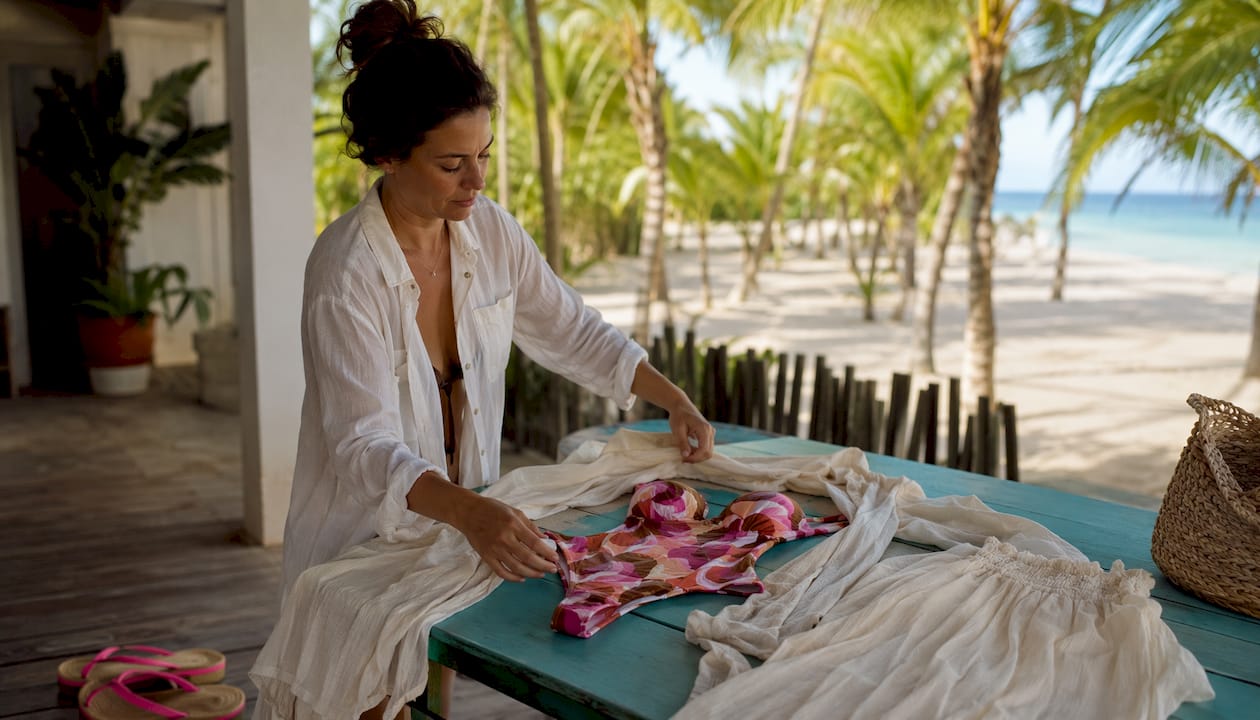
Packing-friendly transition sequence: sarong at the beach → open linen shirt for lunch → lightweight blazer for resort dinner. Three settings, three looks, one monokini.
Pro Tip: Pack one oversized linen shirt. Worn open over the monokini it reads as a beach layer; belted at the waist over wide-leg trousers it becomes a resort top. One piece, two functions.
Which accessories complete a monokini look without competing?
Keep it to one or two pieces. The monokini already carries visual weight through its cutouts and structural lines. Stacking accessories pulls attention away from the suit’s design.
Recommended accessories by category:
- Sunglasses — oversized frames or cat-eye styles; stylish eyewear options add polish without bulk
- Earrings — thin gold hoops for minimal looks; chandelier or statement drops for evening
- Anklet — a simple gold or shell anklet adds a finishing detail at the foot
- Necklace — layered delicate chains work for open necklines; skip necklaces with high halter necks
- Hat — wide-brim straw for sun protection and drama; baseball cap for sporty daytime looks
Footwear shifts the entire tone of the outfit. Leather slides or espadrilles keep the look relaxed for daytime. Strappy heeled sandals move the same monokini into evening territory. Polished flats or embellished slides work for travel days and resort shopping.
For hair and makeup: sleek bun or natural waves both work well. Waterproof tinted moisturizer or BB cream keeps coverage light and sun-safe. A bold lip color adds a focal point without competing with the suit. For a minimal look, a glossy nude lip and defined brows are enough.
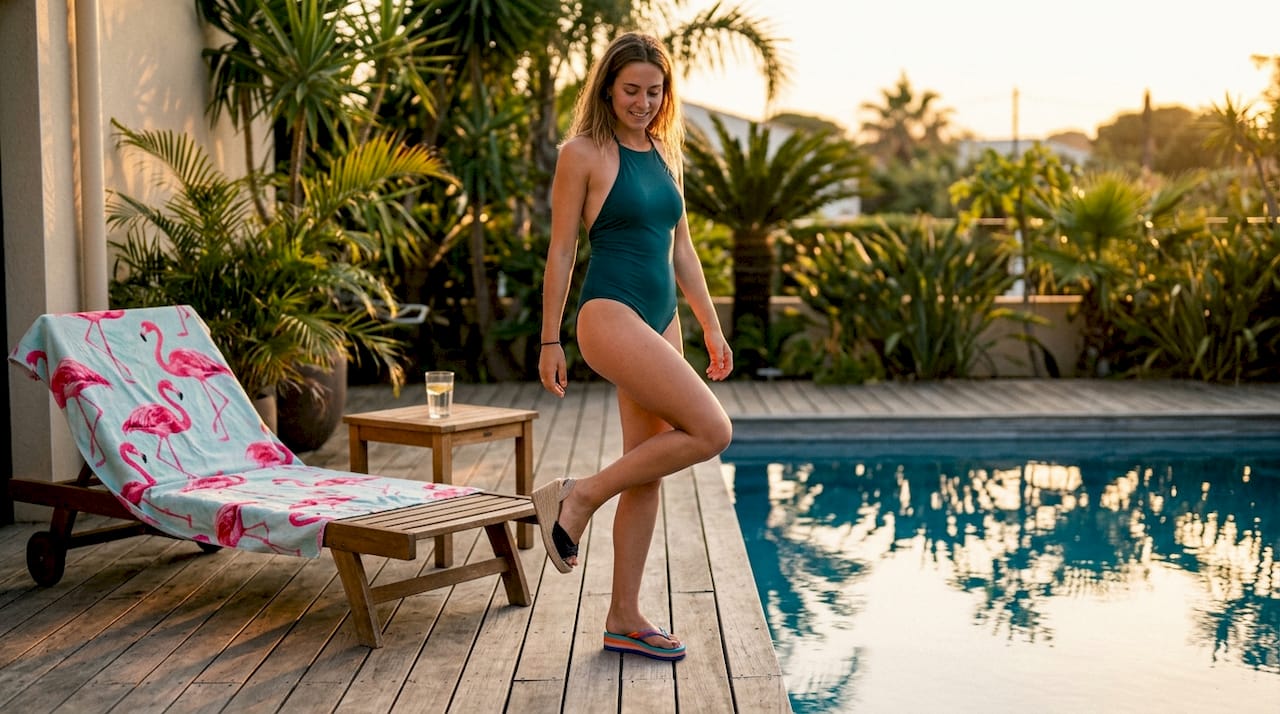
Pro Tip: Match accessory scale to neckline. A halter neck monokini already frames the face — skip the necklace and let earrings do the work. A scoop or V-neck leaves room for a delicate layered chain.
For minimal gold-tone jewelry and anklets that pair well with cutout swimwear, beach accessories retailers carry the kind of understated pieces that complete the look without overpowering it.
How should a monokini fit, and how do you care for it?
Fit determines whether the monokini reads as high-fashion or sloppy. Check these points before any outing:
- Bust cups sit flush against the body with no gaping or overflow
- Straps lie flat at the shoulder without digging
- Leg cut stays in place during movement, not riding up
- Cutout edges lie flat, not rolling or pulling
- The suit holds its shape after sitting, standing, and bending
Quick adjustment fixes:
- Swimwear tape for cutout edges that shift during wear
- Strap adjusters or replacement straps for length issues
- A thin belt placed above the cutout to redefine waist placement
- Thong extenders for leg cut that rides too high
Care instructions for swim fabrics:
- Rinse in cool fresh water after every use to remove chlorine, salt, and sunscreen
- Hand wash with a gentle detergent; avoid wringing or twisting
- Dry flat in shade — direct sun fades color and degrades elastic
- Treat sunscreen stains immediately with a small amount of dish soap before washing
- Never machine dry
Pro Tip: If seams roll or bonded edges are missing on a new piece, return or exchange it. Those construction failures get worse with wear, not better.
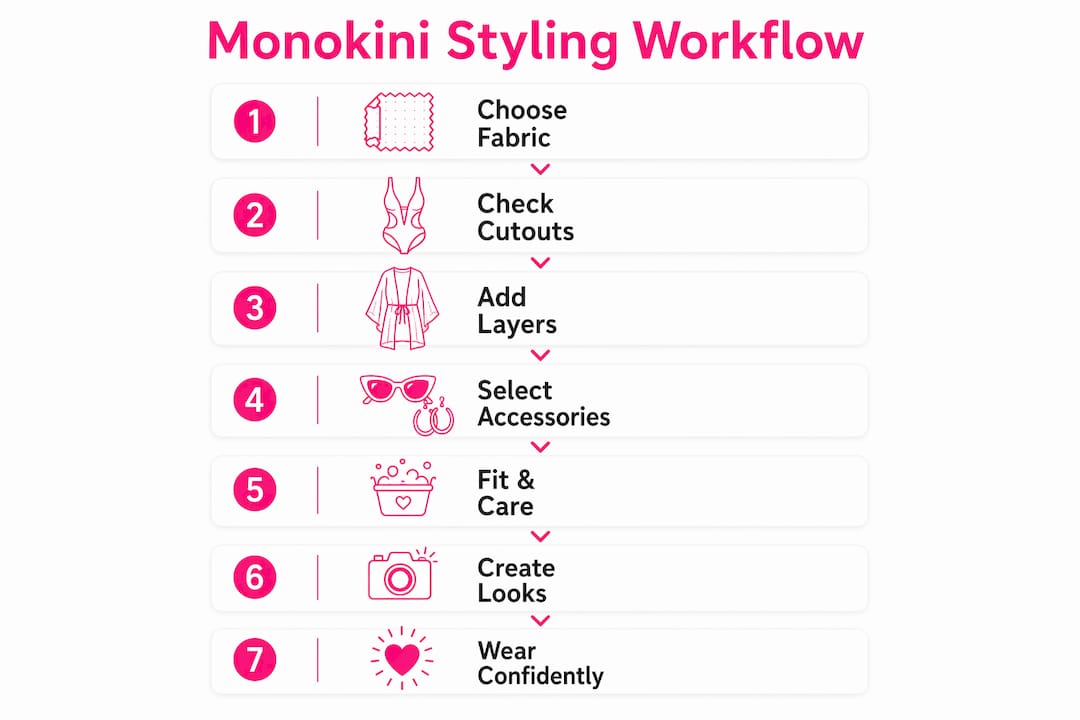
What is the 7-step styling workflow stylists use?
This seven-step process creates three to five distinct looks from one monokini.
- Define use-case and mood — pool lounging, beach day, or resort dinner each requires different fabric weight and coverage choices
- Evaluate cut and fit — confirm the monokini sits correctly before adding anything; a poor fit cannot be fixed with layers
- Choose one structural layer — linen pants, sheer maxi, or sarong; pick one and commit
- Choose a complementary bottom or skirt — if the structural layer is a shirt or kimono, pair it with a deliberate bottom (wide-leg trousers, midi skirt, denim shorts)
- Select one structural accessory — hat, belt, or statement earring; this anchors the look
- Finalize small jewelry and footwear — keep jewelry minimal; let footwear signal the setting
- Test movement and plan your refresh — sit, walk, and reach; confirm nothing shifts; pack a small kit (swimwear tape, safety pin, travel detergent)
Example: A black ribbed monokini with side-waist cutouts → linen palazzo pants (step 3) → no separate bottom needed (step 4) → wide-brim hat (step 5) → thin gold hoops and leather slides (step 6) → Minimalist Poolside Chic, done.
Travel packing checklist:
- Two to three monokinis in complementary colors
- One linen shirt and one sarong (covers three transition scenarios)
- One midi skirt or wide-leg trouser
- Strappy sandals and slides
- Small repair kit: swimwear tape, safety pin, travel detergent pod
Pro Tip: One cover-up, three looks: wear the linen shirt open over the monokini at the beach, tied at the waist over the monokini with slides for lunch, then swap slides for heeled sandals and add a statement earring for an early dinner. Footwear and one accessory do all the work.
Three ready-to-copy outfit recipes
Minimalist Poolside Chic
Clean lines, quiet luxury, zero effort.
- Black or charcoal ribbed monokini with side-waist cutouts
- High-waisted linen palazzo pants
- Leather slides
- Thin gold hoops and a simple anklet
- Sleek low bun or slicked-back hair
- Quick swap for cooler weather: add an oversized linen blazer in cream or sand
- Makeup cue: tinted moisturizer, defined brows, nude gloss
Golden Hour Glam
Elevated resort wear for the transition from pool to dinner.
- One-shoulder or asymmetric monokini in a neutral or metallic tone
- Silk midi skirt or satin wide-leg pants
- Strappy heeled sandals in nude or gold
- Single statement earring (chandelier or drop style)
- Light wrap or sheer kimono for breezy evenings
- Quick swap for more coverage: add a structured blazer instead of the wrap
- Makeup cue: waterproof mascara, bronzed cheek, warm lip
Resort-Ready Drama
Maximum visual impact for beach clubs or sunset events.
- Deep-V or printed monokini with high-leg cut
- Sheer maxi skirt or crochet pants
- Embellished flat sandals or barefoot sandals
- Wide-brim straw hat
- Layered shell or gold necklaces
- Quick swap for evening: swap the hat for a structured clutch and add heeled sandals
- Makeup cue: bold lip, minimal eye, sun-kissed skin
Pro Tip: For any of these looks, a satin mini dress worn over the monokini works as a fast travel-day layer that packs flat and transitions from airport to resort without ironing.
What are the most common monokini styling mistakes?
The three most frequent errors: over-layering, mismatched proportions, and accessories that compete with cutouts.
Common mistakes and quick fixes:
- Too many layers → remove everything except one structural piece; the monokini is the focal point
- Bottom waistband crossing a cutout → switch to a higher-waisted or lower-slung bottom that clears the opening
- Busy accessories with a printed monokini → reduce to one accessory type (earrings only, or hat only)
- Straps shifting during movement → use swimwear tape or adjust strap length before leaving
- Cover-up fabric too heavy → swap for linen or sheer chiffon; heavy fabrics collapse the silhouette
60-second pre-leave review:
- Mirror check front and back — cutouts flat, straps even
- Sit test — nothing rides up or gaps
- Reach test — bust stays in place
- Accessory edit — remove one item if anything feels like too much
- Footwear confirms the setting (slides = casual, heels = evening)
When to alter or tailor: if bonded edges are rolling on a new piece, return it. If straps are the only issue, a local tailor can replace or shorten them for a low cost. Cutout geometry cannot be altered without changing the suit’s proportions, so fit at purchase matters.
Key Takeaways
A monokini outfit system works when you treat the suit as a sculptural bodysuit, commit to one structural layer, and keep accessories purposeful rather than stacked.
| Point | Details |
|---|---|
| Treat it as a bodysuit | Build outfits around the monokini the same way you would a structured top. |
| One structural layer only | A single linen pant, sarong, or sheer skirt preserves the cutout’s focal impact. |
| Accessories: one or two pieces | Oversized sunglasses, thin gold hoops, or a wide-brim hat — not all three at once. |
| Bonded edges are a buying filter | Check cutout perimeters for reinforced binding before purchasing; raw edges roll under tension. |
| Dollhousebikinis for on-trend picks | Browse monokinis, cover-ups, and layering pieces with sizing guides at Dollhousebikinis. |
The part most styling guides skip
Most monokini guides focus on what to wear with the suit. The more useful question is what to remove. The monokini’s value as a fashion piece comes entirely from its cutout geometry and sculptural lines. Every layer, accessory, or cover-up added is a potential distraction from that geometry.
The restraint rule is the actual workflow. One structural layer, one accessory anchor, and footwear that signals the setting. That three-part decision tree produces a polished look faster than any amount of accessory stacking. The suits that look best in resort photos are almost always the ones where the wearer edited down, not up.
Confidence and posture complete every look. Stand tall, move freely, and the monokini does the rest.
Shop monokinis and cover-ups at Dollhousebikinis
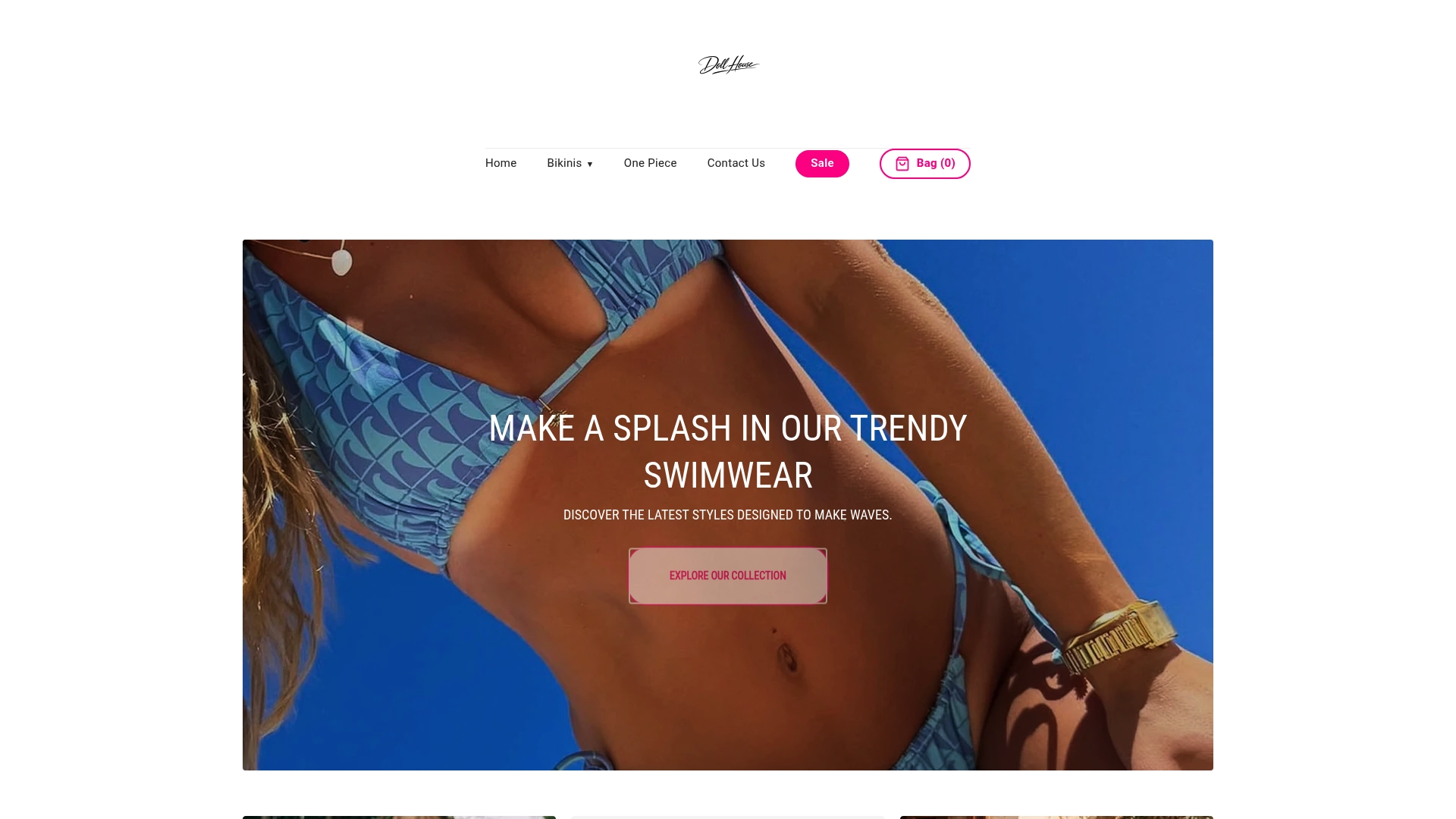
Dollhousebikinis offers a direct path from this workflow to a finished wardrobe. The catalog covers monokinis and one-piece swimsuits in matte, textured, and printed styles, alongside beach cover-ups in lightweight fabrics that pair with every look in this guide.
Three categories worth browsing:
- Monokinis and one-pieces — ribbed, jacquard, and printed styles with sizing guides and detailed product descriptions
- Cover-ups and beach layers — linen, sheer, and printed options that work as the single structural layer the workflow calls for
- Two-piece sets — for days when a coordinated set covers both the swim and the cover-up in one purchase
Free shipping applies to orders over $100. Size guides are available on every product page. Browse the full selection at Dollhousebikinis and use this workflow to build three to five looks before checkout.
Useful sources and further reading
- Monokinis: Trendy Swimwear with Bold, Body-Positive Appeal — Dollhousebikinis editorial on 2026 monokini trends, matte finishes, and neutral palettes
- Examples of Bikini Cover-Ups for Every Beach Look — practical cover-up pairings and layering options
- What to Wear Over Your Bikini: 15 Stylish Cover-Up Ideas — lightweight and travel-friendly layering pieces
- Bikini vs Monokini: Key Differences Explained — fit and silhouette distinctions between swimwear shapes
- How to Wear a Monokini This Summer — ten detailed outfit ideas with accessories and occasion guidance
- 3 Ways to Style Your Monokini for a Resort Dinner — layering and accessory strategies for evening resort settings
Use the Dollhousebikinis blog posts for trend context and internal citations throughout the styling workflow and ready-to-copy looks sections. Use the external sources to support outfit construction claims and accessory guidance.