
A swim dress is defined as a one-piece swimsuit with an attached skirt that covers the hips and thighs while keeping full swimwear functionality. Unlike a casual sundress, it uses quick-drying, chlorine-resistant fabrics built for water. The result is a garment that moves between pool, beach, and shore without a wardrobe change. If you want coverage, comfort, and style in one piece, the swim dress delivers all three. It has become one of the most practical swimwear options for women who want more than a standard bikini or one-piece.
What is a swim dress, exactly?
A swim dress is the industry term for a skirted swimsuit. The design pairs a fitted inner swimsuit with an overlay skirt that falls anywhere from mid-thigh to just above the knee. Modern swim dresses combine performance swimwear functionality with a polished, figure-flattering dress appearance. That combination is what separates them from both traditional one-pieces and casual beach dresses.
The swim dress meaning goes beyond aesthetics. The skirt portion is cut and constructed to move freely in water without billowing or dragging. Fabrics like nylon-spandex blends and polyester-elastane mixes are standard. These materials stay lightweight when wet, which is the key difference between a swim dress and a cotton sundress you accidentally wore into the ocean.

Swim dresses are not just for older demographics. Modern designs attract a broad age range with trendy, figure-flattering silhouettes that appeal to young adults and women seeking modest fashion. Halter necks, ruched bodices, and bold prints are now standard across the category.
What are the key benefits of swim dresses?
Swim dresses solve a specific problem: you want coverage without giving up style or function. The benefits are concrete and practical.
- Coverage and modesty. Swim dresses cover hips and thighs without restricting movement. This makes them a strong choice for women who want more coverage than a bikini or standard one-piece provides.
- Body confidence. The skirt silhouette flatters a wide range of body types. Strategic draping draws attention away from areas you prefer to minimize.
- Sun protection. Many swim dresses include UPF 50+ fabrics that block ultraviolet rays during outdoor activities. That built-in protection reduces reliance on sunscreen reapplication on covered skin.
- Versatility. A swim dress transitions from water to a beach walk or poolside lunch without needing a cover-up. This reduces packing and simplifies your beach day.
- Freedom from constant adjustment. Swim dresses reduce the need for constant adjustment commonly experienced with bikinis. That freedom matters on active beach outings with kids, sports, or long days in the sun.
Pro Tip: Look for swim dresses with a built-in shelf bra or underwire top. That internal structure keeps everything in place without adding bulk, so you get support without sacrificing the clean silhouette.
Swim dress vs swimsuit: how do they compare?
The differences between a swim dress and other swimwear styles are structural, not just visual. Each style serves a different purpose.
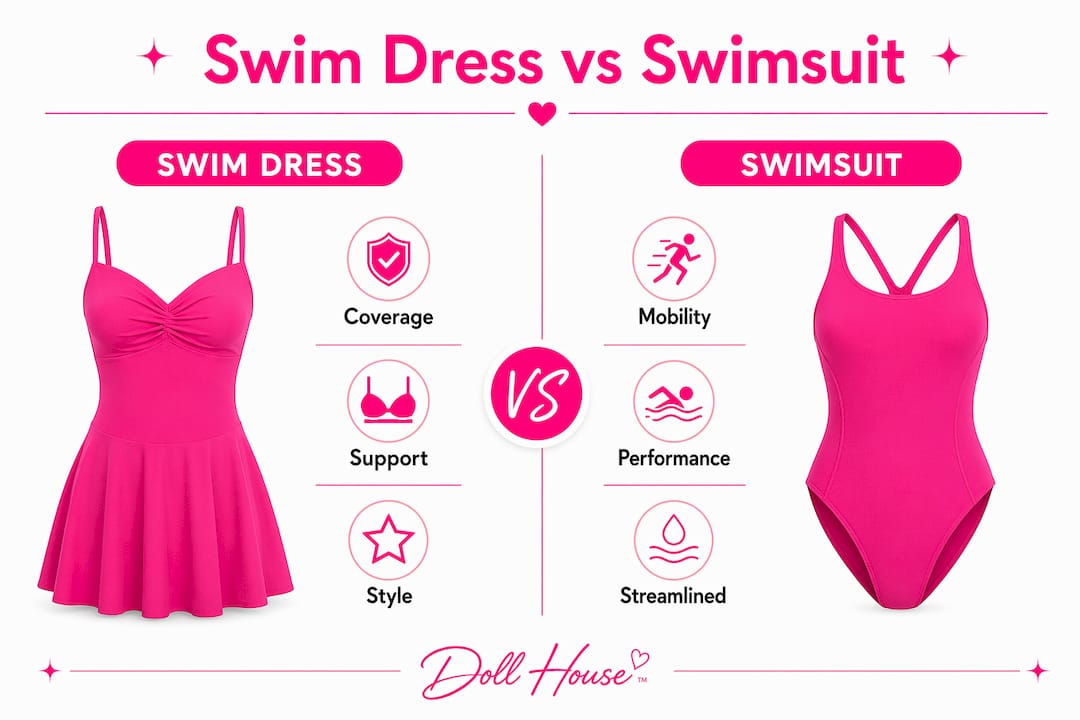
| Style | Coverage | Support | Best for | Water performance |
|---|---|---|---|---|
| Swim dress | Hips and thighs | Built-in bra or underwire | Lounging, light swimming, poolside | Good for casual swimming |
| One-piece | Torso only | Varies | Lap swimming, water parks | Excellent, minimal drag |
| Tankini | Torso, adjustable | Separate top | Flexibility, easy bathroom breaks | Good |
| Bikini | Minimal | Varies by style | Sun exposure, active sports | Excellent, minimal fabric |
A sport bikini and a swim dress sit at opposite ends of the coverage spectrum. The bikini minimizes fabric for maximum movement and speed. The swim dress prioritizes coverage and comfort over hydrodynamics. Neither is wrong. They serve different swimmers with different priorities.
The swim dress vs swimsuit debate often comes down to activity. For lap swimming or competitive water sports, a standard one-piece or sport bikini wins on performance. For a beach vacation, a family pool day, or a resort event, the swim dress wins on versatility and ease.
Tankinis offer a middle ground on coverage but lack the unified, dress-like silhouette. One-pieces offer full torso coverage but stop at the hip. The swim dress is the only style that extends coverage to the thigh while still functioning as proper swimwear.
What should you look for in fit, fabric, and design?
Choosing the right swim dress requires attention to construction details. A poorly built swim dress floats up, sags, or clings uncomfortably. A well-built one stays put and flatters.
- Built-in support. Underwire, shelf bras, and elasticized waistbands keep the garment secure and prevent floating or looseness in the water. Never buy a swim dress without checking what internal structure it offers.
- Fabric technology. The best swim dresses use fabrics that minimize water absorption and cling. Quick-drying, chlorine-resistant materials improve comfort and extend the life of the garment. Avoid anything labeled “cotton blend” for actual swimming.
- Strategic seaming and tummy control. Contemporary swim dresses feature strategic seaming and tummy control panels that shape the silhouette without compressing uncomfortably. Look for ruching at the midsection and vertical seam lines that elongate the torso.
- Skirt length and cut. A skirt that falls too long creates drag and restricts leg movement. Most active swim dresses keep the skirt at mid-thigh. A skirt that is too loose and unstructured will balloon in the water.
- Adjustable straps. Halter and adjustable straps let you customize the fit across the bust and shoulders. This matters especially if you are between sizes or have a longer torso.
Pro Tip: When trying on a swim dress, do a squat and a forward bend in the fitting room. If the skirt rides up or the top gaps, the fit is wrong. The dress should stay exactly where you placed it.
For a deeper look at which swimwear features are worth the investment in 2026, construction quality and fabric technology top the list across all swimwear categories.
When is a swim dress the right choice?
The swim dress is the right choice in specific situations. Knowing where it excels and where it falls short saves you from the wrong purchase.
Best uses for a swim dress:
- Lounging at a resort pool or beach club where you move between water and seating areas
- Family beach days where you want to stay active without worrying about coverage
- Poolside events, brunches, or casual outdoor gatherings where swimwear doubles as an outfit
- Beach walks and shoreline activities where a cover-up would feel excessive
- Travel packing where one piece needs to serve multiple purposes
Swim dresses are ideal for lounging, light swimming, and poolside events but may cause drag for intense swimming or water sports. That is the honest trade-off. If you are training for a triathlon or surfing, a swim dress is not the right tool. If you are spending a week at a beach resort, it may be the only swimwear you need.
The versatility factor is real. Pair a swim dress with flat sandals and a tote bag and you have a complete beach-to-street look. Add a beach cover-up and you extend the outfit into the evening. That dual-purpose function reduces what you need to pack on vacation. For women who want swimwear versatility beyond the beach, the swim dress is one of the strongest options in the category.
Key Takeaways
A swim dress is a one-piece skirted swimsuit built with performance fabrics, internal support, and a figure-flattering silhouette that works from water to shore.
| Point | Details |
|---|---|
| Core definition | A swim dress combines a fitted inner swimsuit with an attached skirt for coverage and style. |
| Fabric matters | Choose quick-drying, chlorine-resistant fabrics to avoid drag, cling, and premature wear. |
| Built-in support is non-negotiable | Look for underwire, shelf bras, or elasticized waistbands to keep the dress secure in water. |
| Best for casual water activities | Swim dresses suit lounging, light swimming, and poolside events better than intense water sports. |
| Versatile beyond the water | A swim dress paired with sandals or a cover-up works as a complete beach-to-street outfit. |
My take on where swim dresses are headed
Swim dresses have shed the reputation of being a conservative, older-demographic choice. The designs I see now from across the market are genuinely fashion-forward. Ruched bodices, cutout details, bold tropical prints, and adjustable halter straps have replaced the boxy, shapeless silhouettes that defined the category a decade ago.
What strikes me most is how the fabric technology has caught up with the design ambition. Early swim dresses felt heavy and slow-drying. Current versions in nylon-spandex blends feel almost identical to a standard one-piece when wet. That shift changes how you can actually use the garment. You stop thinking of it as a compromise and start treating it as a genuine performance option for casual swimming.
The one thing I would push back on is the idea that swim dresses are only for women who want to hide. The best swim dresses I have seen are worn by women who simply prefer a dress silhouette. Coverage and confidence are not the same thing. A woman in a well-fitted swim dress with a bold print is making a style statement, not a concession. That reframe is worth holding onto when you shop.
— Ryan
Swim dresses and cover-ups at Dollhousebikinis
Dollhousebikinis carries swimwear built for women who want style and function in equal measure. The collection includes options that move from water to shore without a second thought.

The swim dress and beach cover-up options at Dollhousebikinis are designed with the same attention to fit and fabric that defines the rest of the catalog. Floral prints, structured bodices, and quick-dry materials are standard across the range. Whether you want full coverage for a family beach day or a resort-ready look that doubles as a poolside outfit, the collection has a clear option for each. Free shipping applies on orders over $100, and new arrivals rotate regularly through the season.
FAQ
What is the difference between a swim dress and a one-piece?
A swim dress includes an attached skirt that covers the hips and thighs, while a standard one-piece stops at the hip. Both offer full torso coverage, but the swim dress adds a dress-like silhouette.
Can you actually swim in a swim dress?
Yes. Swim dresses use quick-drying, chlorine-resistant fabrics designed for water use. They work well for casual swimming and light water activities, though the skirt creates some drag in high-intensity swimming.
Who wears swim dresses?
Swim dresses appeal to a broad age range, including young adults and women who prefer modest swimwear. Modern designs with trendy silhouettes and bold prints have expanded the category well beyond older demographics.
How do I keep a swim dress from floating up in the water?
Choose a swim dress with built-in underwire, a shelf bra, or an elasticized waistband. That internal structure anchors the garment and prevents the skirt from floating or shifting during movement.
What do you wear with a swim dress?
Flat sandals, a tote bag, and a lightweight cover-up are the standard pairing. The swim dress silhouette works as a standalone beach outfit or as a base layer under a cover-up for a more complete look.