
Seamless swimwear is swimwear constructed without traditional stitched seams, using advanced circular knitting or bonded fabric technology to create garments that lie flat against the skin. The result is a suit that eliminates the chafing, digging, and visible lines that traditional cut-and-sew swimwear routinely causes. Nylon, elastane, and Lycra are the core materials, chosen for their stretch, recovery, and durability. For women and young adults who want a flattering silhouette without sacrificing comfort in the water or on the sand, this construction method changes what swimwear can actually feel like.
What is seamless swimwear and how is it made?
Seamless swimwear is defined by its manufacturing process, not just its appearance. Circular knitting machines weave fabric in a continuous tubular shape, producing a garment body without side seams. This is the same technology used in performance athletic wear and compression garments, adapted for swimwear’s specific demands of chlorine resistance, UV exposure, and wet elasticity.
Bonded fabric methods offer a second route to the same result. Here, two fabric layers are fused using heat or adhesive rather than thread, creating flat edges that require no stitching. This technique enables reversible designs, since both sides of the fabric are finished and presentable. Double-layered stretch fabrics bonded at the edges give the garment structure without adding bulk.
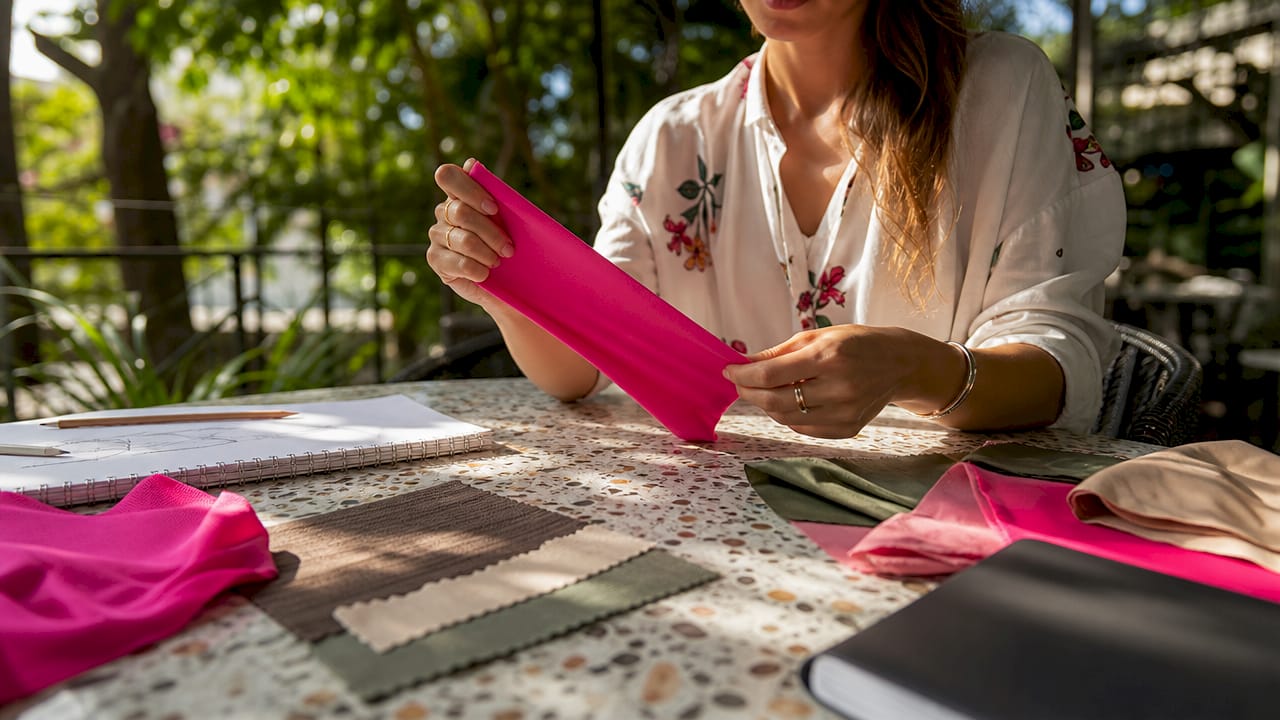
The materials matter as much as the method. Nylon and elastane, also sold under the brand names Lycra and Spandex, are the standard yarn combination. Nylon provides tensile strength and resistance to chlorine and saltwater degradation. Elastane contributes the stretch and snap-back that keeps the suit fitting correctly after repeated wear and washing. Together, they produce a fabric that moves with the body rather than against it.
Pro Tip: When shopping for seamless styles, check the fabric composition label. A blend of at least 80% nylon with 20% elastane is the standard for swimwear that holds its shape through a full season of use.
The manufacturing process also affects how the suit looks under clothing. Because there are no raised seam ridges, the garment sits flush against the skin. This makes seamless styles practical as a base layer under sheer cover-ups or fitted beach dresses, a detail that matters when you are moving between water and a restaurant or bar.
One terminology note worth knowing: “seamless” typically means no side seams, but a garment may still have minimal flat-stitched seams at the crotch lining for hygiene and structure. “Seam-free” is a stricter term, describing garments with no stitching at all, usually achieved entirely through bonding technology. Most products marketed as seamless fall into the first category.
Benefits of seamless swimwear for comfort and style
The most immediate benefit is the elimination of pressure points. Traditional swimwear uses elastic encased in fabric at the waist and leg openings, which creates localized pressure that digs into skin. Graduated compression in seamless construction distributes that pressure evenly across the surface area instead, removing the “muffin top” effect at the waistband and the red marks left by leg elastics after a long beach day.
Users consistently describe the fit as a “second skin” feel with freedom of movement and noticeably less irritation. This matters most during active use: swimming laps, surfing, paddleboarding, or any activity where the suit shifts and rubs repeatedly. The absence of raised seam ridges means there is nothing to catch and chafe against skin during movement.
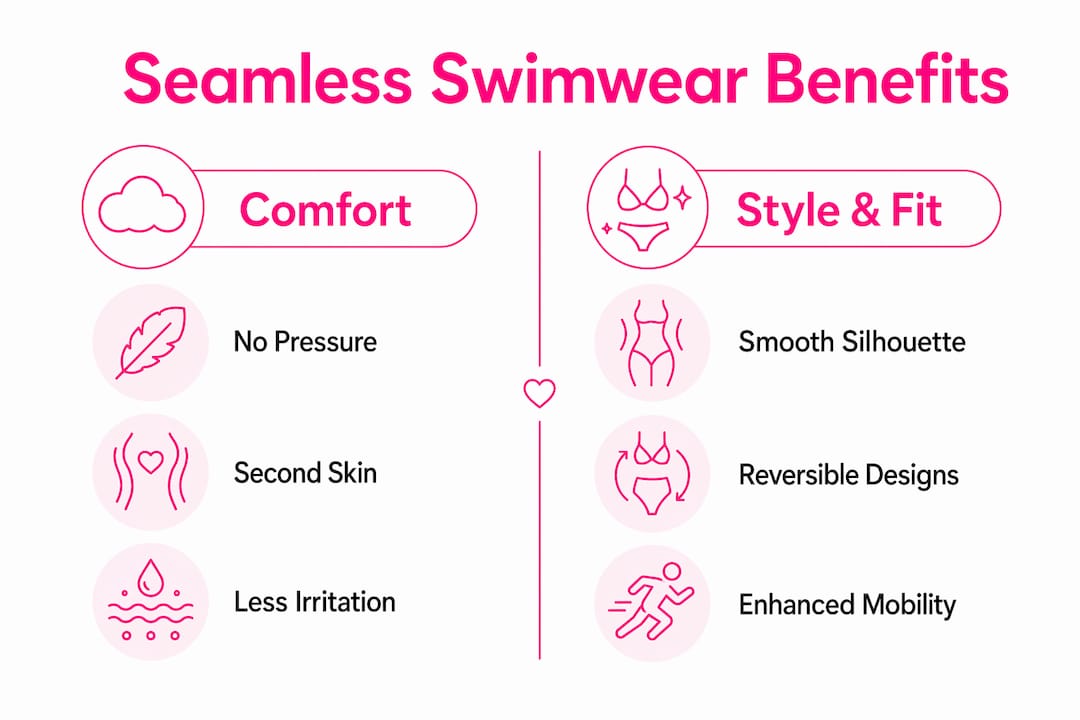
The aesthetic benefits are equally concrete. The smooth, uninterrupted silhouette created by seamless construction lies flat on the body with uniform elasticity, producing a sculpted look without the visual interruptions that stitched seams create. This is why seamless styles photograph well and look polished whether you are poolside or posting to social media.
Here is a breakdown of the core advantages:
- No chafing or digging. The absence of stitched stress points removes the friction zones that cause skin irritation during extended wear.
- Flattering silhouette. Uniform elasticity across the fabric surface creates smooth lines at the waist, hips, and thighs.
- Greater durability. Seams are the first point of failure in any garment. Removing them extends the usable life of the suit significantly.
- Reversible options. Many seamless pieces use double-layered bonded fabric that allows both sides to be worn outward, effectively giving you two styles in one garment.
- Confidence through comfort. Removing restricting seams shifts focus away from fit anxiety, which research links to improved body positivity and confidence at the beach or pool.
Reversible designs deserve specific attention for travel. Packing two looks in one piece reduces luggage weight and gives more outfit flexibility across a trip. For anyone building a travel-friendly swimwear kit, reversible seamless bikinis are one of the most practical choices available.
How does seamless swimwear compare to traditional swimsuits?
The core structural difference is straightforward. Traditional cut-and-sew swimwear is assembled from multiple fabric panels joined by stitched seams. Seams are functional joining lines but they are less flexible than the surrounding fabric and they can fail under repeated stress. Seamless construction eliminates those joining lines entirely, producing a garment with consistent stretch and strength across its entire surface.
Pro Tip: To test a traditional swimsuit for seam quality before buying, stretch the fabric at the seam line. If the stitching puckers or the seam gaps, it will not hold up to regular use in chlorinated water.
The table below compares the two construction types across the features that matter most to buyers:
| Feature | Seamless swimwear | Traditional swimwear |
|---|---|---|
| Skin comfort | No pressure points; even compression | Seams can dig and chafe at waist and legs |
| Silhouette | Smooth, flat lines under clothing | Visible seam ridges possible |
| Durability | No seam stress points to fail | Seams are the first failure point |
| Reversibility | Possible with bonded construction | Not possible with stitched seams |
| Fit flexibility | Uniform elasticity across fabric | Elasticity varies at seam lines |
| Care complexity | Standard cold wash, lay flat to dry | Same, but seams require inspection |
The comparison makes clear why seamless styles have shifted from niche to mainstream. They directly address the most common complaints about traditional swimwear: waistbands that dig, seams that mark the skin, and suits that look worn after one season. For women who have experienced those frustrations, the switch to seamless construction is an immediate, practical upgrade.
One area where traditional swimwear still has an edge is structural support for larger cup sizes. Underwire and boning require stitched channels, which means heavily structured bikini tops are still built with seams by necessity. For moderate support needs, however, seamless construction handles the job well through fabric tension alone.
Practical tips for buying and wearing seamless swimwear
Knowing what to look for makes the buying process faster and more accurate. Here are the key considerations:
- Sizing. Seamless fabrics have more uniform stretch than cut-and-sew styles, so sizing tends to run true to size or slightly generous. If you are between sizes, size down for a snug, supportive fit rather than up.
- Style options. Seamless construction is available across bikini sets, one-pieces, high-waisted bottoms, and bandeau tops. Bikini sets in seamless styles are the most widely available format in 2026, with one-pieces a close second.
- Activity match. For lounging and sunbathing, any seamless style works. For active swimming or water sports, look for a higher nylon content (80% or above) and a closer fit to prevent the suit from shifting during movement.
- Care instructions. Rinse in cold water immediately after use in chlorinated or salt water. Machine wash on a gentle cycle in cold water, or hand wash. Always lay flat to dry. Heat from a dryer degrades elastane fibers and shortens the life of the suit regardless of construction type.
- Reversible styles. Check that both sides of a reversible piece are finished with clean edges and that the fabric color on each side is distinct enough to make the reversal worthwhile. A solid color on one side and a print on the other is the most versatile combination.
- Quality indicators. When evaluating swimwear quality, check that the fabric weight feels substantial rather than thin, that the waistband lies flat without rolling, and that the fabric recovers quickly after stretching.
For anyone new to seamless styles, starting with a bikini bottom is a low-risk way to experience the fit difference. The absence of leg and waist seams is immediately noticeable compared to a traditional cut-and-sew bottom, and it gives a clear reference point for evaluating whether the construction works for your body and activity level.
Key takeaways
Seamless swimwear outperforms traditional cut-and-sew construction on comfort, durability, and silhouette because it removes the stitched seams that cause pressure, chafing, and garment failure.
| Point | Details |
|---|---|
| Construction method | Circular knitting or bonded fabric technology creates garments without side seams. |
| Core materials | Nylon and elastane (Lycra, Spandex) deliver stretch, recovery, and chlorine resistance. |
| Comfort advantage | Graduated compression distributes pressure evenly, eliminating digging and chafing. |
| Style versatility | Bonded construction enables reversible designs that offer two looks in one piece. |
| Buying tip | Size down if between sizes; prioritize 80%+ nylon content for active water use. |
Why seamless swimwear is worth paying attention to in 2026
I have spent years watching swimwear trends cycle through the same silhouettes with minor variations. Seamless construction is different. It is not a trend in the seasonal sense. It is a manufacturing shift that solves real problems, and once you have worn a well-made seamless suit, the friction and pressure of a traditional seamed suit becomes genuinely hard to go back to.
What strikes me most is how the comfort improvement translates directly into confidence. When a suit does not dig, shift, or mark your skin, you stop thinking about it. That mental shift, from managing your swimwear to simply wearing it, is more significant than it sounds. The psychological impact of removing restricting seams shows up in how people carry themselves at the beach and pool.
The reversible format is also underrated. Most people pack more swimwear than they need because they want options. A reversible seamless bikini cuts that number in half without reducing variety. For anyone who travels frequently, that is a practical win that has nothing to do with fashion.
My honest recommendation: if you have not tried seamless construction, start with a bikini bottom. The difference is immediately obvious, and it gives you a clear basis for deciding whether to build out a full seamless bikini wardrobe. The technology has matured enough that quality options exist at multiple price points, so there is no reason to wait for a premium budget to try it.
— Ryan
Shop seamless styles at Dollhousebikinis
Dollhousebikinis carries a selection of swimwear built for both style and practical comfort, including styles that reflect the smooth-fit construction covered in this article.
The original swimsuit is a strong starting point: a flattering one-piece focused on fit and clean lines. For two-piece options, the two-piece set swimwear collection covers bikini sets designed for a smooth, comfortable fit across a range of body types. Orders over $100 ship free. New arrivals and sale collections are updated regularly, so checking back is worth it if a specific style or color is out of stock.
FAQ
What is seamless swimwear, exactly?
Seamless swimwear is swimwear made without traditional stitched side seams, produced using circular knitting machines or bonded fabric technology. The construction eliminates pressure points and visible seam lines for a smoother fit against the skin.
Is seamless the same as seam-free?
No. “Seamless” means no side seams but may include minimal flat stitching at the crotch lining for structure. “Seam-free” describes garments with no stitching at all, typically achieved through heat or adhesive bonding technology.
What fabrics are used in seamless swimwear?
Nylon and elastane (also sold as Lycra or Spandex) are the standard materials. Nylon provides strength and chlorine resistance, while elastane delivers the stretch and recovery that keeps the suit fitting correctly over time.
How do I care for a seamless swimsuit?
Rinse in cold water after each use, wash on a gentle cycle or by hand in cold water, and lay flat to dry. Avoid machine drying, as heat degrades elastane fibers and shortens the garment’s lifespan regardless of construction type.
Are seamless bikinis good for active swimming?
Yes. The absence of seam ridges reduces friction during movement, and the uniform elasticity of the fabric supports a full range of motion. For high-activity use, prioritize styles with 80% or higher nylon content for maximum durability and shape retention.
Recommended
- Features of quality swimwear: key traits for lasting style | News - Doll House
- Designer Swimwear Features Worth Paying For in 2026 | News - Doll House
- Why Swimwear Design Matters for Fit and Function | News - Doll House
- What is statement swimwear? A guide for fashion-forward women | News - Doll House