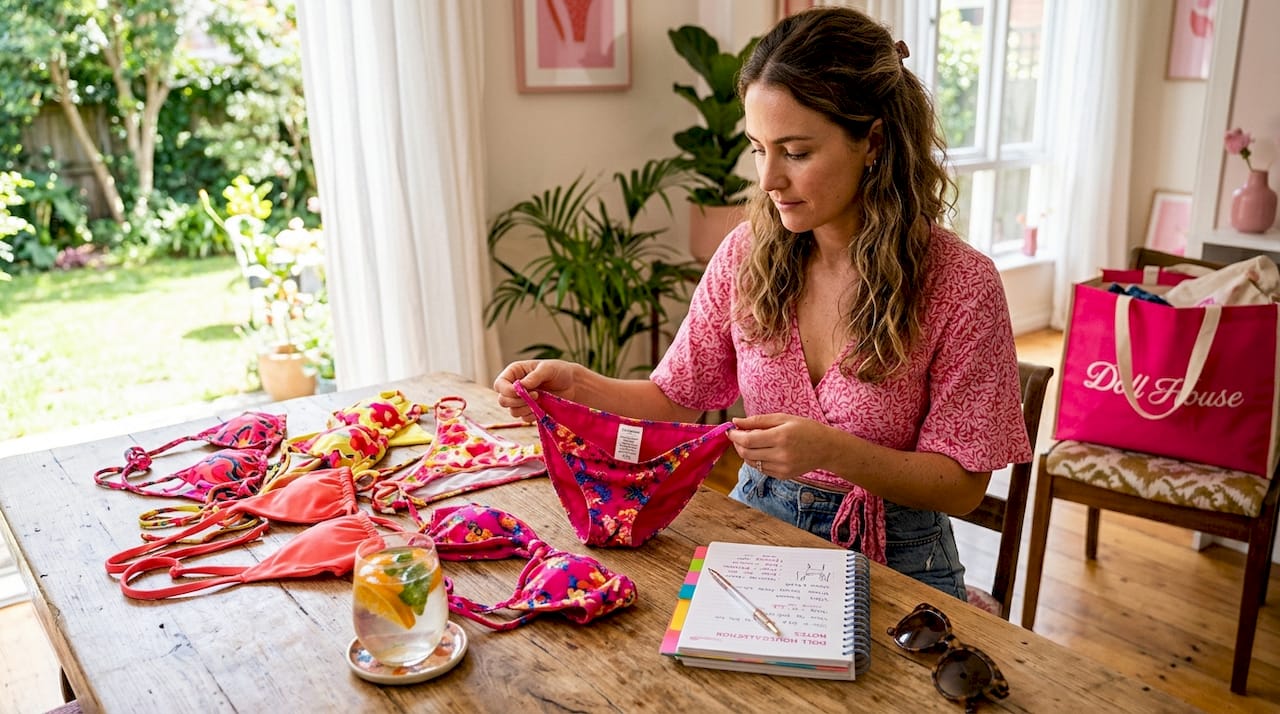
You’ve been there before. A bikini looks perfect in photos, arrives at your door, and falls apart after two beach trips. The stitching unravels, the fabric goes see-through, or the straps lose all their shape. Knowing how to spot quality bikinis before you buy saves you from that cycle entirely. This guide covers the specific fabric blends, construction details, fit markers, and brand signals that separate a bikini worth keeping for three seasons from one that barely survives the first.
Table of Contents
- Key Takeaways
- How to spot quality bikinis: start with the fabric
- Construction quality: lining, stitching, and hardware
- Fit and elasticity: what to check before committing
- Color, care labels, and brand transparency
- My honest take on bikini shopping mistakes
- Shop quality swimwear at Dollhousebikinis
- FAQ
Key Takeaways
| Point | Details |
|---|---|
| Elastane content matters | Look for 15–22% elastane in the fabric blend for proper stretch and shape recovery. |
| Stitching type signals quality | Flatlock stitching lies flat and resists wear; avoid loose threads or uneven seams. |
| Double lining adds durability | A lined bikini bottom provides opacity and support that extends the product’s lifespan. |
| Hardware should feel solid | Metal or reinforced plastic hardware on straps and closures prevents wardrobe failures. |
| Reactive dyes resist fading | Higher-quality bikinis use reactive dyeing for color that holds up against sun, salt, and chlorine. |
How to spot quality bikinis: start with the fabric
Fabric is the single biggest predictor of whether a bikini lasts one summer or three. Before you look at anything else, feel the material. Fabric thickness and softness are the first sensing tests that predict comfort and durability. If it feels thin, papery, or stiff straight out of the package, that is already a warning sign.
The best fabrics for swimwear are nylon/spandex or polyester/elastane blends. 15–22% elastane content is the sweet spot for maintaining shape and giving that satisfying snap-back after stretching. Less than that and the bikini will bag out. More than that can compromise overall strength.
When it comes to chlorine resistance, fabric type matters more than most shoppers realize. Polyester-based blends resist chlorine better than nylon-based ones, which makes them the better pick if you spend significant time in pools. Saltwater and UV exposure are also harsh on fabric. A quality bikini fabric handles all three without fading or degrading fast.
One underrated detail: texture. Crinkle fabrics offer superior elastic recovery and resist pilling better than flat synthetic blends. They tend to hold their fit across multiple seasons, which is exactly what you want from a bikini you plan to wear often.
Pro Tip: Hold the fabric up to a direct light source. Quality bikinis should be opaque. If you can clearly see your hand through the fabric, the weave is too thin to hold up well or provide adequate coverage in the water.
Here is a quick checklist of fabric red flags to watch for:
- Feels thin or lightweight for its size
- Plastic or rough texture that does not soften
- Visible transparency when held to light
- No information on elastane percentage in product details
- Color looks inconsistent or uneven across the fabric surface
For a deeper breakdown of swimwear fabric types, it helps to compare options side by side before deciding.
Construction quality: lining, stitching, and hardware
Once you understand the fabric, the next step in any solid bikini buying guide is construction. Even great fabric can fail if the bikini is poorly sewn or fitted with weak hardware. This is where most cheap bikinis fall short, and it shows up fast.
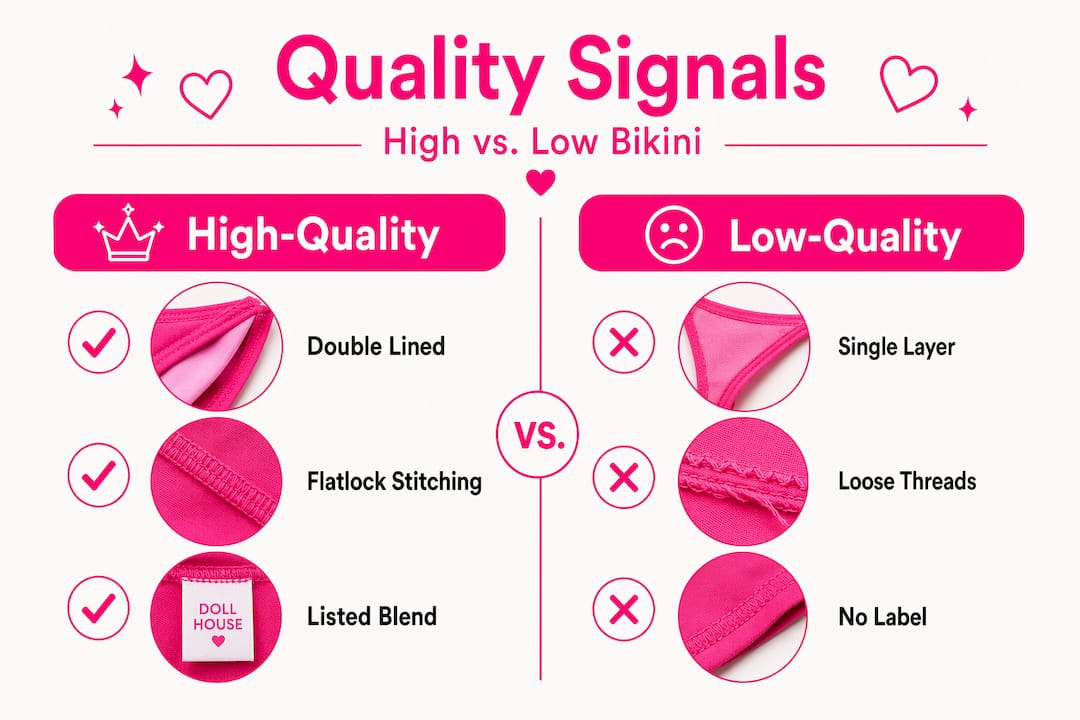
Double lining is one of the clearest markers of construction quality. Double-layer lining prevents bikinis from becoming one-season wonders by maintaining shape and providing consistent opacity through water exposure. A bikini bottom with a single thin layer will quickly become transparent when wet. Run your fingers along the inside of the bottom panel and confirm there are two distinct layers of fabric.
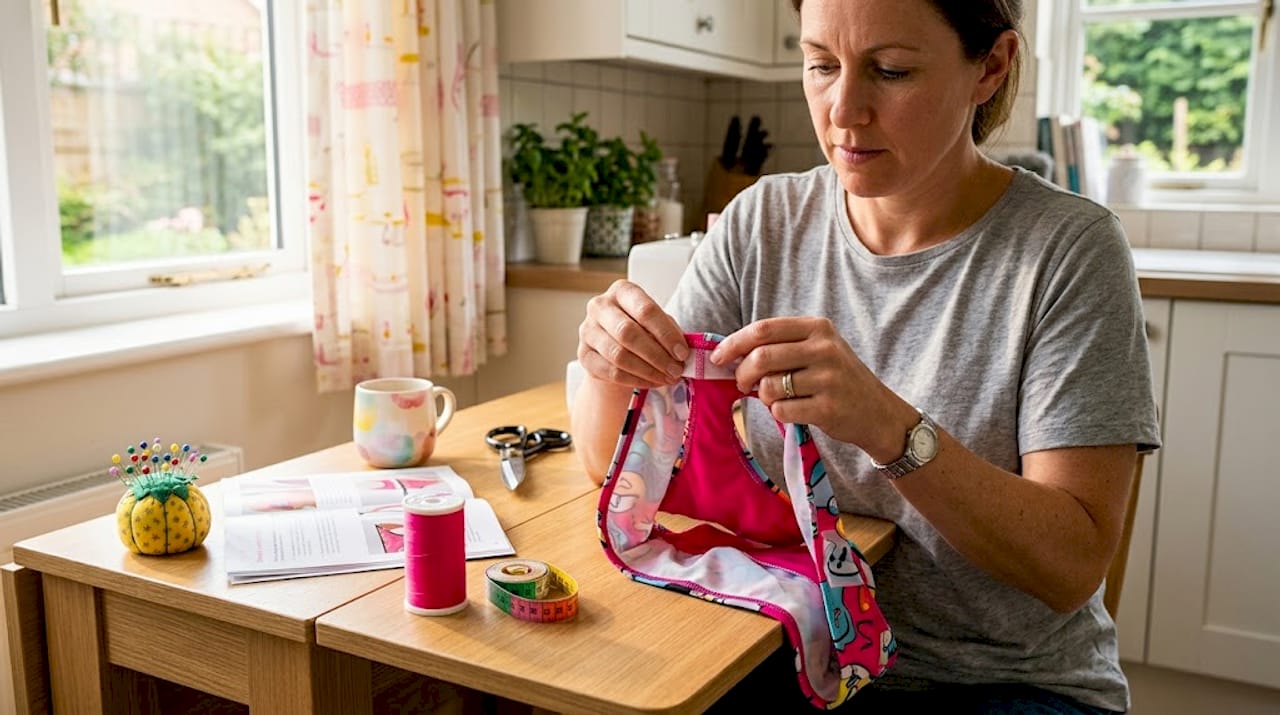
Stitching type tells you a lot about how the bikini was made. Flatlock stitching lies flat against the skin, reduces irritation, and handles repeated stretching and washing without weakening. Zigzag stitching can also be durable when done well. What you want to avoid are loose threads at seams, uneven stitching lines, or areas where the thread puckers under light tension.
Here is a comparison of the most common stitching types:
| Stitch Type | Durability | Comfort | Common Use |
|---|---|---|---|
| Flatlock | High | Best, lies flat on skin | Quality swimwear, athletic wear |
| Zigzag | Medium-High | Good | Standard swimwear, basic bikinis |
| Straight stitch | Low for stretch | Can dig into skin | Low-cost production, avoid in bikinis |
Hardware is the third construction factor that shoppers frequently overlook. Solid metal or reinforced plastic hardware on sliders, clasps, and tie points reduces the risk of breakage. Pull gently on the hardware where it meets the fabric. It should feel anchored, not likely to rip free with moderate tension.
Pro Tip: Check where the ties attach to the fabric body of the bikini. A reinforced tie point, where extra stitching or a fabric panel secures the attachment, is a strong signal of a well-made piece. Loose ties attached with only a single stitch line will fail within a season.
Construction red flags to look for before buying:
- Visible single lining on bikini bottoms
- Loose or skipped stitches along the edge seams
- Metal hardware that looks thin or feels hollow
- Ties that attach with minimal stitching and no reinforcement
- Seams that pucker or pull unevenly when held flat
Fit and elasticity: what to check before committing
Fit is where theory meets reality. A bikini can have excellent fabric and solid construction but still fail if it does not fit the way it should. Knowing what to look for in bikinis when it comes to fit will prevent the most common complaints: straps that dig in, bottoms that slip, or tops that shift the moment you move.
Follow these steps to assess fit and elasticity before you buy:
- Stretch the fabric and release it. Good elastic recovery means the fabric snaps back immediately to its original shape. If it stays stretched out or slowly returns, the elastane content is likely too low for long-term use.
- Check strap tension. Straps should hold firm without digging. If a strap cuts into your shoulder with normal sizing, look for a style with adjustable strap features that let you dial in the exact tension.
- Test the band stability. The underband on a bikini top should sit flat and stay in place when you raise your arms. If it rides up immediately, the band is too loose or the sizing is off.
- Look for comfortable snugness. A well-fitted bikini should feel snug but not restrictive. You should be able to take a full breath and move freely without anything slipping.
- Review the brand’s sizing chart against your actual measurements. Do not guess on sizing. Brands that provide detailed size charts in inches or centimeters, combined with real customer fit reviews, give you the most reliable information for online purchases.
Adjustability in straps and closures is one of the most practical features in swimwear because it accommodates slight differences across body shapes. A tie-side bottom or an adjustable back closure gives you options that a fixed-cut bikini cannot. For a step-by-step guide to nailing your measurements and match, the best bikini fit guide from Dollhousebikinis walks through exactly how to read your measurements against style options.
Pro Tip: Adjustable features do more than fix immediate fit issues. Adaptable features extend a bikini’s lifespan by accommodating slight body changes over time, meaning you can keep wearing the same piece across multiple seasons without it feeling wrong.
Color, care labels, and brand transparency
The qualities of a good bikini extend beyond what you can feel and see at first glance. A few final checks on color quality, care instructions, and brand communication separate genuinely durable swimwear from products that just look good in marketing photos.
Color fastness is a real issue in swimwear. Lower-cost production often uses surface dyes that fade quickly after saltwater or chlorine exposure. Reactive dyes improve colorfastness and UV resistance, meaning color stays true after repeated exposure to sun and water. You can do a quick rub test on the fabric with a damp white cloth. If color transfers, the dye quality is low.
Brand transparency is another practical signal. Transparent product information including fabric composition percentages, care instructions, and country of manufacture correlates with higher consumer trust and actual product quality. Brands that list “80% nylon, 20% elastane” are giving you something to evaluate. Brands that say only “premium fabric” are giving you nothing.
Care instructions also tell you something real. A quality bikini care label will specify:
- Hand wash or delicate machine wash cycle
- Cold water only
- Lay flat to dry, not tumble dry
- No bleach or harsh detergents
If a bikini has no care label or vague instructions, that signals low-quality production standards. Proper care extends durability significantly, and brands that care about their product quality include that information.
Here is a quick comparison to use when evaluating two bikinis side by side:
| Quality Signal | High-Quality Bikini | Low-Quality Bikini |
|---|---|---|
| Fabric composition | Listed with percentages | Vague or missing |
| Color fastness | Reactive dye, no transfer | Surface dye, rubs off |
| Lining | Double-lined bottom | Single or no lining |
| Stitching | Flatlock, even seams | Loose threads, uneven |
| Care label | Detailed, specific | Missing or generic |
My honest take on bikini shopping mistakes
I’ve watched shoppers make the same mistakes repeatedly: they focus on price as the main proxy for quality, or they trust a brand name without checking the actual product details. Neither approach works reliably.
The bikinis I’ve found most worth buying are not always the most expensive ones. What they share is specific fabric composition listed clearly, flatlock stitching you can see and feel, and hardware that does not move when you tug it. Those three things matter more than the brand name on the tag.
Price does give you a rough signal. Very cheap bikinis almost never use adequate elastane content or proper lining. But mid-range products vary enormously. A $50 bikini with listed fabric composition and reinforced seams will likely outlast a $90 bikini that tells you nothing about what it is made from.
The tests I rely on most: the stretch and snap-back test on the fabric, the light transparency check, and the hardware tug test at the tie points. These simple pre-purchase checks take less than two minutes and have saved me from every low-quality purchase I almost made. My advice is to treat buying a bikini like buying any other piece of clothing you plan to wear hard. Check the details. Read the label. Do the quick tests.
Style matters, but a bikini that falls apart after four wears is not stylish. It is just expensive disappointment. For a broader look at the features of quality swimwear, it is worth understanding how construction and fabric work together before you commit to any purchase.
— Ryan
Shop quality swimwear at Dollhousebikinis
Finding a bikini that actually holds up is easier when you know where to look. Dollhousebikinis carries swimwear built with the construction details covered in this guide: listed fabric compositions, double-lined bottoms, reinforced stitching, and adjustable fits across a full range of styles.
Whether you want a two-piece set with solid construction and adjustable ties, a classic swimsuit with transparent fit details, or a beach cover-up to complete your look, the collections at Dollhousebikinis are organized by style, fit, and price range so you can filter directly to what works for you. Orders over $100 qualify for free shipping.
FAQ
What fabric blend is best for a quality bikini?
Look for nylon/spandex or polyester/elastane blends with 15 to 22% elastane. Polyester-based blends offer better chlorine resistance for pool use.
How can you tell if a bikini is well-constructed?
Check for flatlock stitching with no loose threads, a double-lined bottom panel, and solid hardware at all strap attachment points. These are the clearest construction quality markers.
Why does bikini color fade so quickly?
Low-cost production uses surface dyes that break down under sun, saltwater, and chlorine exposure. Bikinis made with reactive dyes hold color significantly longer.
What does the stretch test reveal about bikini quality?
Stretching the fabric and releasing it tells you about elastane content. Quality fabric snaps back immediately. Slow or incomplete recovery means the elastane percentage is too low for lasting shape retention.
How do care instructions indicate bikini quality?
Detailed care labels specifying hand wash, cold water, and flat drying signal that the brand understands its materials and manufactured the product to specific standards. Missing or vague care labels often indicate lower production quality.