
Mesh swimwear is swimwear that incorporates open-weave fabric, known in the industry as mesh or net fabric, either as structural lining, decorative panels, or full overlays to improve breathability, shape support, and style. The global swimwear market is projected to grow from $23.1 billion in 2023 to $36.2 billion by 2030, with mesh-integrated designs driving a significant share of that growth. That number reflects a real shift in what buyers want: swimwear that performs as well as it looks. Mesh delivers on both counts, offering quick drying, reduced fabric cling, targeted compression, and visual texture that solid fabrics simply cannot match.
What is mesh swimwear and how does it work?
Mesh swimwear uses open-weave synthetic fabric, typically nylon or polyester blends, woven into a grid or honeycomb pattern that allows air and water to pass through freely. This structure is what separates mesh from standard swimwear fabrics, which trap water and dry slowly. The mesh can appear as a hidden interior lining, a visible decorative panel, or a full outer layer depending on the design intent.
The core function is straightforward. Mesh linings provide privacy, shape retention, and comfort, maintaining the swimsuit’s silhouette after repeated exposure to saltwater and chlorine. Without a mesh layer, many swimsuit fabrics stretch, sag, or become transparent when wet. The mesh acts as a structural anchor, holding the garment in place against the body.
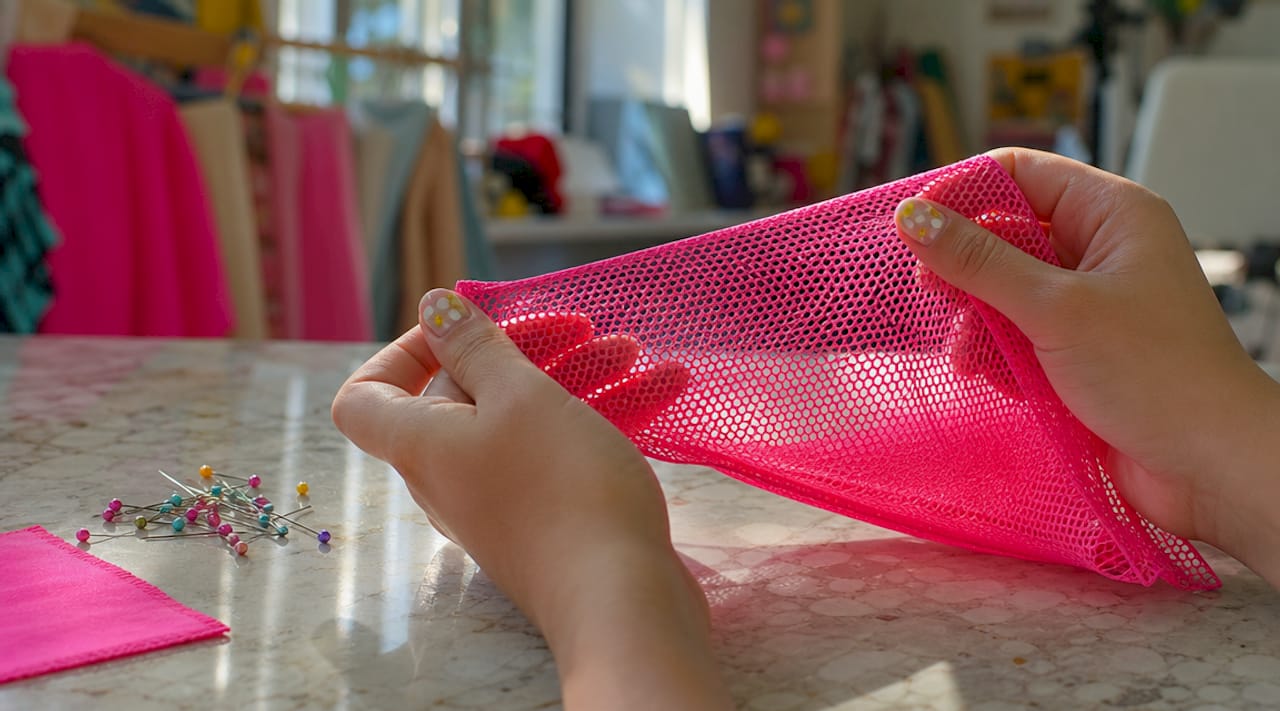
Mesh also appears as an outer design element in what is commonly called a mesh bikini. In this context, the fabric creates visual contrast, sheer texture, and layered depth that solid fabrics cannot replicate. Bali Swim notes that mesh has moved beyond hidden lining to become a foundational fabric in contemporary swimwear design for 2026. That shift means mesh is no longer a construction detail. It is a style statement.
What functional benefits does mesh provide in swimwear?
Mesh delivers four distinct performance advantages over traditional swimwear fabrics, and each one directly affects how comfortable and practical the garment feels in real use.
- Faster drying. Mesh liners reduce the heavy, soggy feeling after swimming by allowing water to drain and air to circulate freely through the fabric. This matters most during active beach days when you move between water and dry land repeatedly.
- Reduced chafing. Soft synthetic mesh prevents skin irritation by eliminating the friction that dense, wet fabric creates against the body. Low-quality mesh, by contrast, can cause chafing and irritation, which is why fabric quality matters significantly.
- Shape retention. Mesh lining uses a power mesh honeycomb structure that provides 360-degree support, preventing the swimsuit from stretching out of shape during wear or after washing.
- Targeted compression. Power mesh, a denser variant, provides stretch in four directions with a return force that supports the tummy and bust areas without adding visible bulk to the garment.
These benefits combine to make mesh swimwear more practical than traditional solid-lined swimwear for active use, whether that means swimming laps, playing beach volleyball, or simply spending a full day in and out of the water.
Pro Tip: Check the interior of any swimsuit before buying. If the lining feels stiff or scratchy against your palm, it will feel worse against your skin after an hour in saltwater. Look for soft, fine-knit mesh with visible stretch in multiple directions.
Understanding these advantages also helps explain why swimwear design matters for fit and function beyond aesthetics alone.
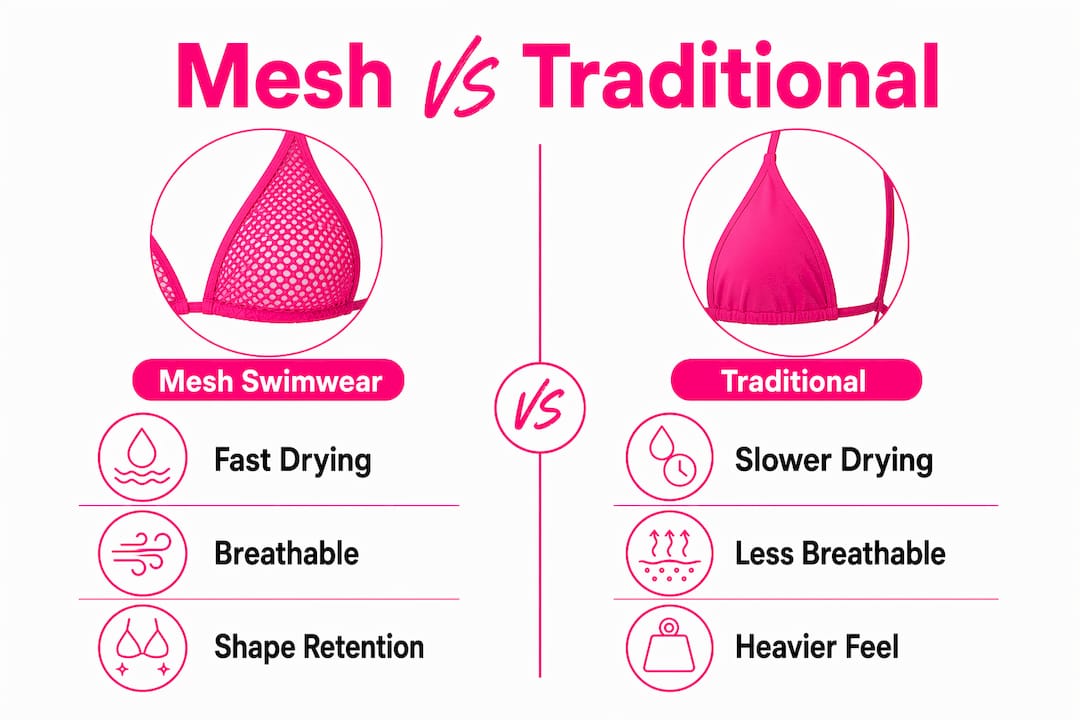
How does mesh swimwear compare to traditional swimwear?
The differences between mesh and traditional swimwear go beyond fabric texture. They affect how the garment performs, how it looks, and how long it lasts.
| Feature | Mesh swimwear | Traditional swimwear |
|---|---|---|
| Drying speed | Fast, due to open-weave structure | Slower, fabric retains water |
| Shape retention | High, mesh lining anchors the garment | Variable, depends on fabric weight |
| Style options | Sheer panels, overlays, textured layers | Solid colors, prints, minimal texture |
| Compression | Available via power mesh lining | Limited unless boned or structured |
| Breathability | High, air passes through mesh freely | Lower, dense fabric traps heat |
Traditional swimwear, typically constructed from solid nylon-spandex or polyester-spandex blends, prioritizes opacity and a smooth surface finish. It works well for casual swimming but offers less ventilation and tends to hold water longer after exiting the pool or ocean. The features of quality swimwear consistently point to mesh lining as a marker of better construction.
Mesh swimwear spans a wide design range. A mesh bikini might use sheer mesh panels at the sides or back for visual interest while keeping the cups and seat in solid fabric. A one-piece swimsuit might use power mesh internally for tummy control while the outer shell remains a standard print fabric. Sporty swimwear styles, such as rash guards or active one-pieces, often use mesh panels under the arms or along the torso for ventilation during high-output activity. Each application solves a specific problem that solid fabric alone cannot address.
What types of mesh fabric are used in swimwear?
Not all mesh is the same, and the type used in a swimsuit determines whether it provides support, breathability, or pure style. Confusing these types leads to buying swimwear that underperforms for your specific needs.
-
Decorative mesh. This is the lightest, most open-weave type. It prioritizes visual effect over function, creating sheer panels, overlays, and cut-out illusions. Decorative mesh breathes well but offers minimal structural support. You find it most often in fashion-forward bikinis and resort wear.
-
Standard lining mesh. A mid-weight option used as interior lining in most quality swimwear. It provides opacity, prevents transparency when wet, and adds a layer of comfort between the outer fabric and skin. Lighter mesh dries faster and adds less bulk, while heavier mesh offers better support for shaping and opacity.
-
Power mesh. The densest and most structured type. Power mesh is a high-modulus, hexagonal-knit textile designed for compression and shaping in targeted swimwear zones. It appears as an internal secondary layer specializing in tummy control or bust shaping without adding external bulk. Many consumers assume all mesh types are equally supportive, but only power mesh delivers true compression benefits.
-
Chlorine-resistant mesh. A performance-oriented variant treated or constructed to resist degradation from pool chemicals. Standard mesh breaks down faster in chlorinated water, losing elasticity and shape over time. Chlorine-resistant mesh extends the garment’s lifespan significantly for regular pool swimmers.
Pro Tip: A well-designed swimsuit uses mesh strategically. Applying power mesh selectively where shaping is needed, rather than throughout the entire garment, prevents discomfort and slow drying. If a swimsuit feels uniformly stiff or takes forever to dry, the brand likely used power mesh indiscriminately.
How to choose comfortable and flattering mesh swimwear
Selecting the right mesh swimwear comes down to matching the mesh type, placement, and fabric quality to your body shape, activity level, and style preferences. These criteria cut through the noise of marketing language and focus on what actually affects how the suit feels and performs.
- Assess mesh placement first. Mesh at the sides or back adds visual interest without affecting coverage. Mesh at the bust or seat requires a solid or power mesh lining underneath for adequate opacity. If a swimsuit uses decorative mesh in high-coverage zones without a backing layer, it will be transparent when wet.
- Match mesh weight to your activity. Decorative mesh suits work well for lounging and resort wear. Power mesh lining suits work better for active swimming, water sports, or any situation where you need the garment to stay in place under movement.
- Check for chlorine resistance if you swim in pools regularly. Standard mesh degrades faster in chlorinated water. Look for product descriptions that specify chlorine-resistant fabric or ECONYL recycled nylon, which holds up better over time.
- Prioritize soft mesh against the skin. Soft synthetic mesh prevents irritation and supports skin breathability. Run your fingers along the interior lining before purchasing. If it feels rough or scratchy, skip it.
- Consider body shape and mesh panel location. Mesh panels placed at the waist create a visual slimming effect. Mesh at the shoulders or neckline draws the eye upward. Mesh overlays on the hips add texture without adding visual weight. Knowing where the mesh sits on the garment helps you predict how it will look on your body.
For more guidance on silhouette and fit, the high leg swimwear guide from Dollhousebikinis covers how cut and panel placement interact with body proportions.
Key takeaways
Mesh swimwear outperforms traditional solid-fabric swimwear in breathability, shape retention, and drying speed when the correct mesh type is applied to the right zones of the garment.
| Point | Details |
|---|---|
| Mesh types differ significantly | Only power mesh provides compression; decorative mesh prioritizes style and breathability. |
| Placement determines function | Mesh in coverage zones needs a backing layer to prevent transparency when wet. |
| Fabric quality affects comfort | Soft synthetic mesh prevents chafing; low-quality mesh causes irritation after extended wear. |
| Activity should guide selection | Decorative mesh suits work for leisure; power mesh lining suits work for active swimming. |
| Chlorine resistance extends lifespan | Pool swimmers should prioritize chlorine-resistant mesh to prevent premature fabric breakdown. |
Mesh swimwear in 2026: what I’ve actually noticed
I have looked at a lot of swimwear construction over the years, and the single most common mistake buyers make is treating mesh as a purely decorative feature. They see a sheer panel and think “style.” They miss the fact that the mesh lining inside the bust cup is doing the structural work that keeps the suit fitting correctly after 30 minutes in the ocean.
The brands getting mesh right in 2026 are the ones using it with intention. Power mesh in the tummy zone, softer lining mesh at the seat, decorative mesh at the sides. Each layer has a job. When you find a suit built that way, it feels noticeably different from a suit where the designer just added mesh for visual effect and called it done.
My honest advice: flip the suit inside out before you buy. The interior tells you more about quality than the exterior ever will. A well-constructed mesh lining should feel smooth, stretch evenly in all directions, and snap back immediately. If it stretches and stays stretched, the mesh is already failing before you’ve worn it once. The designer swimwear features worth paying for in 2026 consistently come back to this kind of interior construction quality.
— Ryan
Shop mesh swimwear at Dollhousebikinis
Dollhousebikinis carries a curated range of swimwear built with breathable fabrics, flattering fits, and modern design details including mesh-enhanced styles across bikinis, one-pieces, and two-piece sets.
The collection covers everything from bold two-piece swimwear sets with mesh detailing to full swimwear and beach cover-up options for days that go from pool to boardwalk. Each piece is selected for construction quality, not just surface style. Free shipping applies to orders over $100, and new arrivals are added regularly across all categories. Browse the full range at Dollhousebikinis to find the right fit for your next beach or pool outing.
FAQ
What is mesh swimwear made of?
Mesh swimwear is made from open-weave synthetic fabrics, typically nylon or polyester blends, knitted into a grid or honeycomb pattern. The specific mesh type, whether decorative, standard lining, or power mesh, determines the fabric’s density and function.
Is mesh swimwear see-through?
Decorative mesh panels are sheer and can be transparent, especially when wet. Quality mesh swimwear uses a solid or power mesh backing layer in coverage zones to prevent transparency, so the outer mesh provides style while the lining provides opacity.
Is mesh swimwear comfortable for all-day wear?
Mesh swimwear is comfortable for all-day wear when constructed with soft synthetic mesh. High-quality mesh liners reduce water retention, dry quickly, and prevent chafing. Low-quality or improperly placed mesh can cause irritation over extended wear.
What is the difference between a mesh bikini and a regular bikini?
A mesh bikini incorporates open-weave mesh fabric as a visible design element or structural lining, while a regular bikini uses solid fabric throughout. Mesh bikinis offer more breathability, faster drying, and additional texture or sheer styling options that solid fabric cannot provide.
How do I care for mesh swimwear?
Rinse mesh swimwear in cold fresh water immediately after use to remove salt or chlorine. Hand wash with a mild detergent and lay flat to dry. Avoid wringing or machine drying, as heat and mechanical stress break down mesh fibers and reduce elasticity over time.