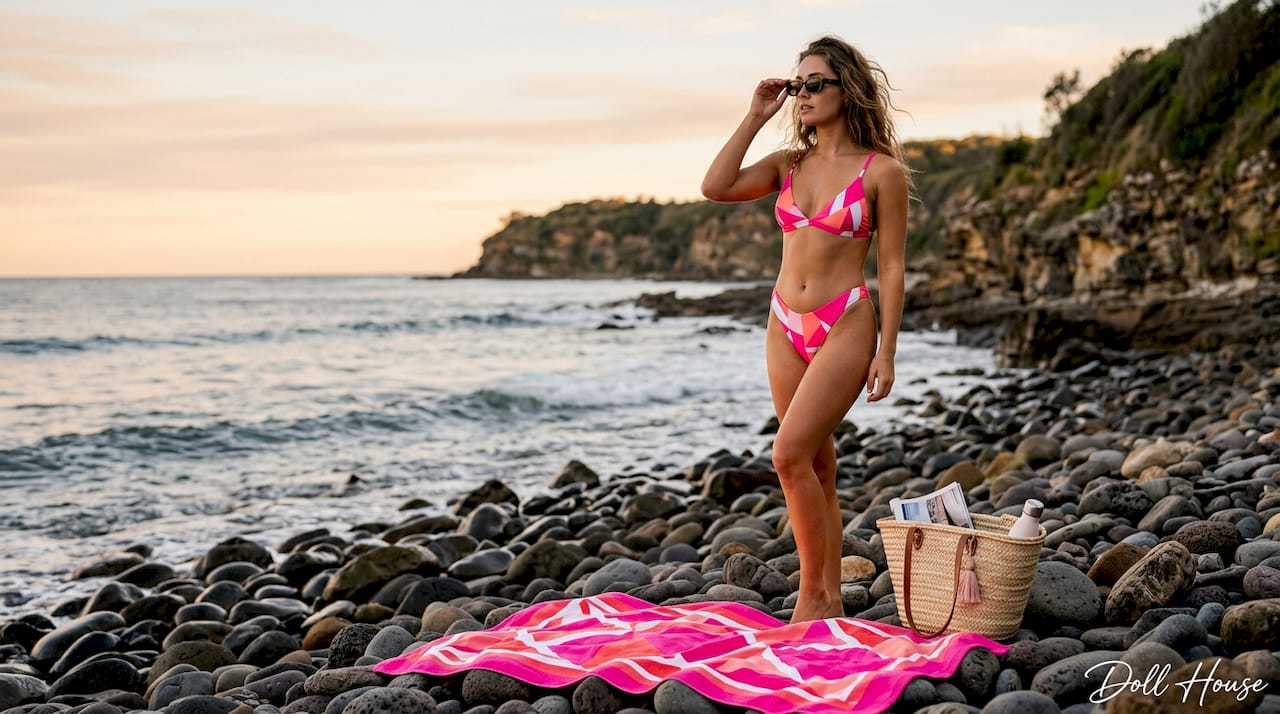
High leg swimwear is defined as swimwear featuring leg openings cut high on the hips, well above the natural bikini line, to visually elongate the legs and create a streamlined silhouette. Known in the industry as a “hi cut” or “high cut” style, this design has roots in 1980s competitive swimwear and runway fashion before becoming a mainstream beach staple. Brands like Summersalt and Billabong have built entire collections around the cut. The appeal is straightforward: more exposed thigh, longer-looking legs, and a silhouette that works across body types. Stretch nylon-spandex blends make the style as comfortable as it is flattering.
What is high leg swimwear, and how does it differ from traditional cuts?
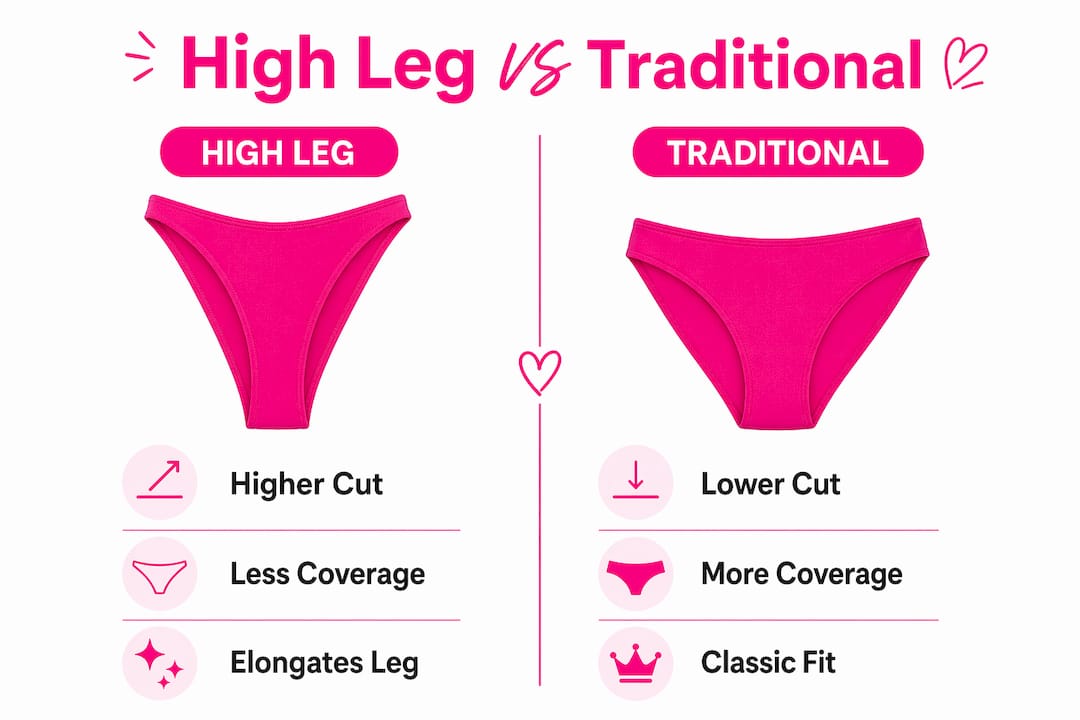
High leg swimwear sits in a category of its own when placed next to standard bikini bottoms or one-pieces. A traditional bikini bottom sits at or just above the hip bone, covering most of the upper thigh. A high leg cut rides several inches higher, exposing the full upper thigh and creating a sharper angle from hip to leg opening. That angle is what drives the leg-lengthening effect.
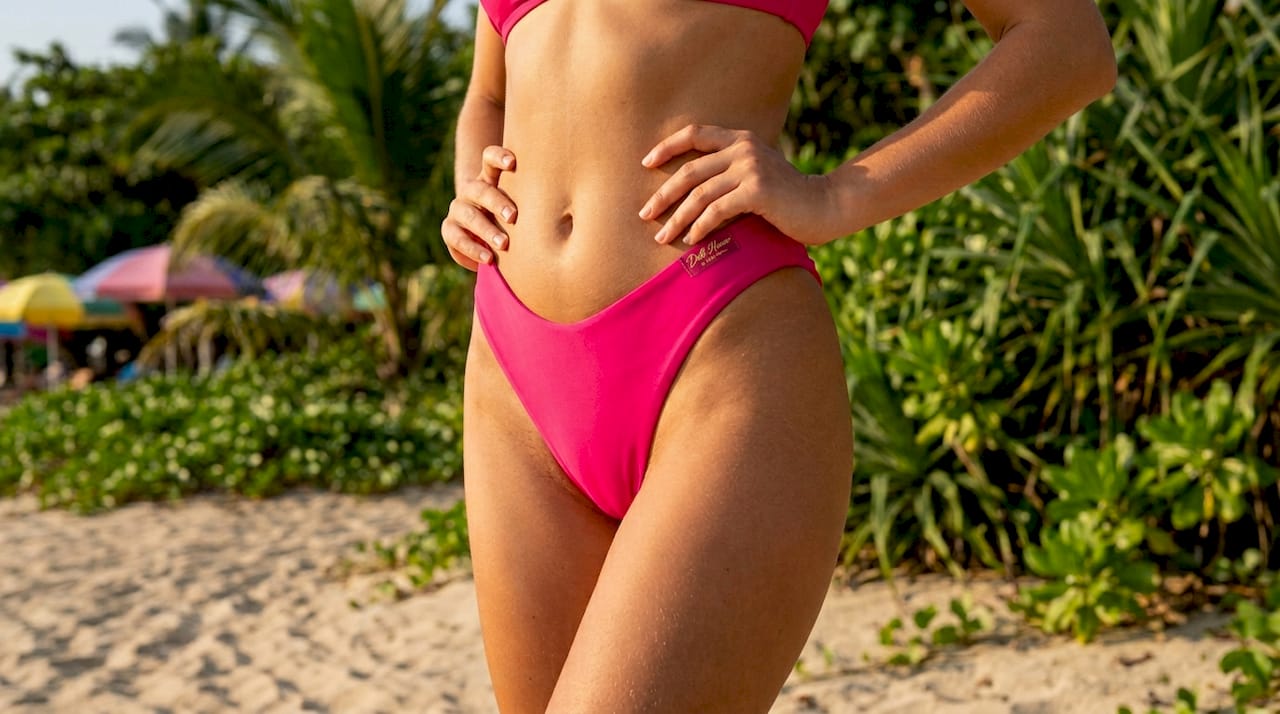
The coverage difference is significant. High leg bottoms have less fabric on the sides and minimal hip coverage, which reads as cheeky and bold. Traditional cuts offer more side coverage and a more modest rear profile. Neither is objectively better. The choice depends on how much coverage you want and which silhouette effect you are after.
Here is a direct comparison of the two styles:
| Feature | High leg swimwear | Traditional swimwear |
|---|---|---|
| Leg opening placement | High on the hip, above bikini line | At or just below the hip bone |
| Thigh coverage | Minimal, full upper thigh exposed | Moderate to full thigh coverage |
| Rear coverage | Cheeky, less fabric | Standard to full coverage |
| Silhouette effect | Elongates legs, defines waist | Neutral to modest silhouette |
| Style reference | Retro 1980s meets modern beach | Classic, versatile |
The retro-modern fusion quality of the high cut is a real selling point. Hi cut bikinis reflect a vintage-meets-modern aesthetic that connects 1980s competitive swimwear with today’s fashion-forward beach culture. That dual identity gives the style staying power beyond seasonal trends.
What are the benefits of high cut leg openings in swimwear?
The most cited benefit of high cut swimwear is leg elongation, but the mechanism behind it is more specific than most people realize. Swimwear designers emphasize that the “legs-for-days” effect comes from where the cut sits on the hips and the angle of the opening, not just how high it goes. A cut that angles sharply upward toward the hip creates a stronger elongation effect than one that simply sits higher with a flat line.
Beyond aesthetics, high cut swimwear offers practical advantages:
- Freedom of movement. Less fabric around the hips and thighs means fewer restrictions during swimming, beach volleyball, or paddleboarding.
- Versatility in styling. High leg bottoms pair with bandeau tops, triangle tops, halter necks, and even cropped cover-ups without visual conflict.
- Flattering across body types. The cut works for petite frames by adding visual height, and for athletic builds by softening the appearance of muscular thighs.
- Breathability. Reduced fabric coverage around the hip and thigh area keeps you cooler on hot beach days.
The versatility point deserves more attention. Adjustable-coverage bikini bottoms popular in Brazilian swimwear allow personalized fit and coverage while maintaining the high leg silhouette. That means you can wear the same bottom at a conservative pool setting or a bold beach vacation by adjusting the coverage level.
Pro Tip: When shopping for high cut bottoms, look for styles where the leg opening angles upward toward the hip rather than cutting straight across. That diagonal line is what creates the most flattering elongation effect on the widest range of body types.
How do construction and materials affect high leg swimwear fit?
The fit of a high leg swimsuit depends almost entirely on two factors: fabric composition and elastic engineering. Get either wrong, and the style fails regardless of how good it looks on a hanger.
Here is what to evaluate in order of importance:
-
Fabric blend. Swimwear fabrics are typically nylon-spandex blends engineered for stretch, shape recovery, and resistance to chlorine, salt, and sunscreen. A higher spandex content (18 to 20 percent) gives better recovery after repeated wear. Cheaper blends lose their shape faster and sag at the leg openings.
-
Negative ease. Swimwear patterns are cut smaller than body measurements before stretch. Elastic is applied with about 10 to 25 percent negative ease, creating a snug seal that prevents shifting or digging in. For high leg cuts, this is especially critical because the leg opening sits on a curved, high-movement area of the body.
-
Elastic tension mapping. Quality brands monitor elastic placement and tension carefully, especially around leg edges for high leg designs. An elastic that is too tight digs into the thigh. Too loose, and the leg opening gaps when wet or during movement.
-
Seam and binding finish. Elastic width, tension, seam type, and binding style all affect comfort and fit stability, particularly for high leg cuts. Flatlock seams reduce bulk and irritation. Binding-finished edges hold their shape better than serged edges over time.
-
Opacity. Thin or low-quality fabrics become see-through when wet. Check fabric weight and opacity before purchasing, especially for lighter colors.
Pro Tip: Before buying, stretch the fabric between your fingers and release it. Quality nylon-spandex snaps back immediately with no distortion. If it recovers slowly or shows stress marks, the fabric will not hold its shape through a full season of wear.
Which high leg swimwear styles suit different body types?
High leg swimwear is not one silhouette. It spans bikini bottoms, one-piece swimsuits, and high-waist combinations, each with different effects on proportion and coverage.
High leg styles complement athletic and curvy frames by balancing proportions and adding feminine shape. The leg-lengthening effect suits muscular legs by drawing the eye upward, while high leg plus high waist combinations enhance the waist-to-hip ratio on curvy or pear-shaped figures.
Here is a breakdown by body type and recommended style:
| Body type | Recommended high leg style | Why it works |
|---|---|---|
| Petite | High leg bikini bottom with triangle top | Adds visual height, avoids cutting the body in half |
| Athletic | High leg one-piece with scoop neck | Softens broad shoulders, elongates the torso |
| Curvy or pear-shaped | High leg plus high waist combo | Defines waist, balances hip-to-shoulder ratio |
| Straight or boyish | High leg with ruched or padded top | Creates the appearance of curves at hip and bust |
| Tall | High leg bikini with wide-band bottom | Proportional coverage without shortening the leg line |
For beach vacations, a high leg one-piece paired with a crochet beach cover-up reads as polished and put-together without sacrificing the swimsuit’s silhouette. For poolside wear, a high leg bikini bottom with a solid-color bandeau top keeps the look clean and modern.
Adjustability matters for comfort across occasions. Tie-side bottoms and styles with adjustable coverage give you control over how much thigh is exposed, which is useful when moving between swimming and lounging. Check out trendy swimwear styles from Dollhousebikinis for current examples of how these variations are styled for different body types and occasions.
Key takeaways
High leg swimwear creates a longer, leaner silhouette through cut placement and elastic engineering, not just by sitting higher on the hip.
| Point | Details |
|---|---|
| High leg swimsuit definition | Leg openings cut high on the hips to expose the upper thigh and elongate the legs. |
| Cut angle matters most | The diagonal angle of the leg opening drives the elongation effect more than height alone. |
| Fabric and elastic quality | Nylon-spandex blends with 10 to 25 percent negative ease keep the fit secure and shape-retentive. |
| Style works across body types | Athletic, curvy, petite, and tall frames all benefit from specific high leg variations. |
| Versatility in styling | High leg bottoms pair with multiple top styles and work for swimming, lounging, and beach outings. |
Why high leg swimwear keeps earning its place in the lineup
I have followed swimwear trends closely for years, and the high leg cut is one of the few styles that has never actually left. It dips in and out of peak trend cycles, but it never disappears. That staying power tells you something real about the style’s function, not just its fashion appeal.
What strikes me most is how the cut rewards quality construction. A poorly made high leg bottom is immediately obvious. The elastic rolls, the leg opening gaps when wet, or the fabric goes thin in exactly the wrong place. But a well-made version, with proper negative ease and a quality nylon-spandex blend, fits like it was cut for your body specifically. That gap between good and bad construction is wider for high leg styles than for almost any other swimwear cut.
The vintage connection also matters more than people give it credit for. The 1980s reference is not just nostalgia. It connects the style to an era when swimwear was designed for athletic performance and visual confidence simultaneously. Modern versions of the cut carry that same dual purpose. You can swim in them, move in them, and look deliberate wearing them.
My honest view: the high leg cut is one of the most flattering options available when the fit is right. It works on more body types than most people assume, and the styling flexibility makes it worth having in any swimwear rotation. The key is not finding the highest cut. It is finding the right angle, the right fabric, and the right elastic tension for your body.
— Ryan
Shop high leg swimwear at Dollhousebikinis
Dollhousebikinis carries a focused selection of high leg swimsuits and bikini sets built for both style and fit performance.
The original high leg swimsuit features a cut designed to elongate the leg line with stretch fabric that holds its shape through repeated wear. For two-piece options, the two-piece high leg set offers mix-and-match coverage with a flattering hip-to-waist ratio. Free shipping applies to orders over $100. Browse the full range at Dollhousebikinis to find the cut, coverage, and color that works for your next beach trip.
FAQ
What is the high leg swimsuit definition?
A high leg swimsuit features leg openings cut high on the hips, above the standard bikini line, to expose the upper thigh and create a leg-lengthening silhouette. The style is also called a hi cut or high cut swimsuit in retail and fashion contexts.
Why try high leg swim bottoms if you have a curvy figure?
High leg styles balance proportions on curvy frames by drawing the eye upward along the leg line. Pairing a high leg bottom with a high waist band further defines the waist and enhances the hip-to-shoulder ratio.
How do I know if a high leg swimsuit fits correctly?
The leg opening should lie flat against the skin without gaping or digging in, both dry and wet. Quality swimwear uses 10 to 25 percent negative ease in the elastic to achieve a snug, secure fit without discomfort.
Are high leg swimsuits suitable for swimming or just for looks?
High leg swimsuits are fully functional for swimming. The reduced fabric around the hips and thighs actually improves range of motion compared to fuller-coverage styles, making them a practical choice for active beach and pool use.
What fabrics work best in high leg swimwear?
Nylon-spandex blends are the standard for high leg swimwear because they offer stretch, shape recovery, and resistance to chlorine and salt. Look for a spandex content of at least 18 percent for reliable fit retention across a full season of wear.