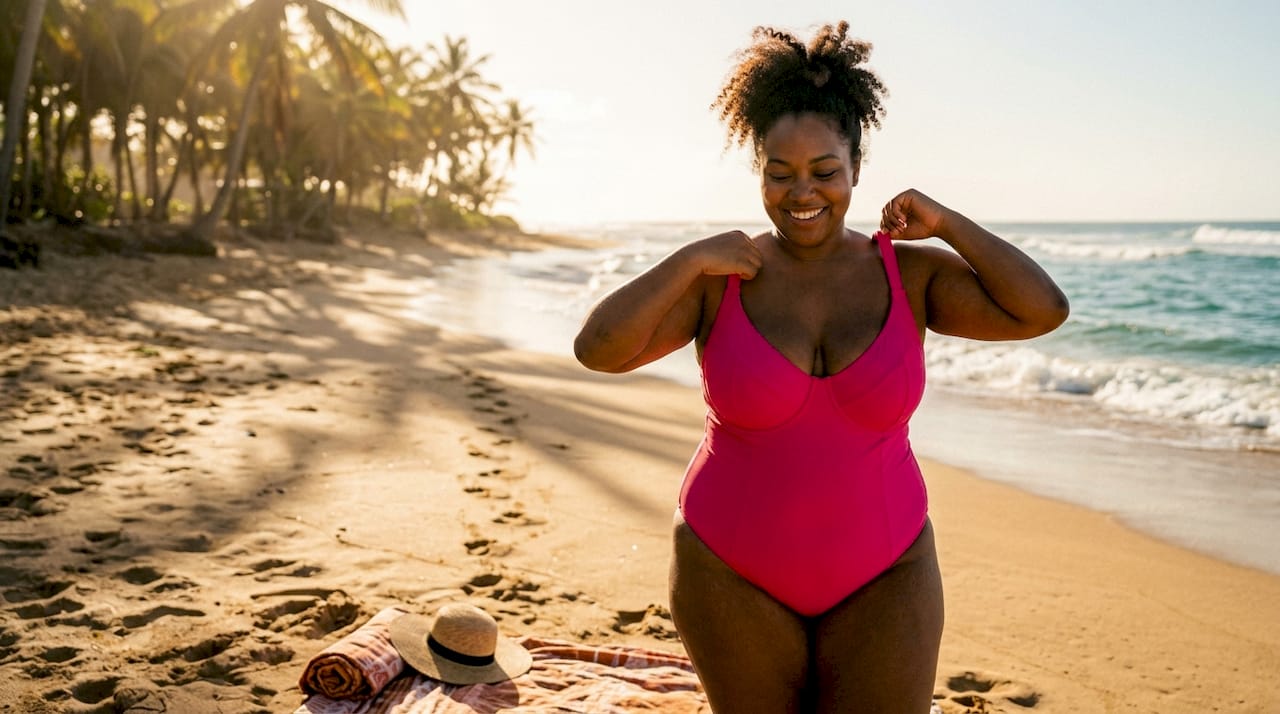
Plus size swimwear is purpose-built swimwear designed to fit and support fuller figures, typically covering US sizes 14 through 32 and beyond, with specialists like Swimsuits For All running up to size 40 and Roaman’s extending to size 44. This is not standard swimwear scaled up. It uses entirely different fit blocks, construction techniques, and fabric engineering to deliver real support and comfort. Brands like Lane Bryant, Torrid, and Swimsuits For All have built their reputations specifically on this distinction. If you have ever bought a regular swimsuit in a larger size and found it gaping at the bust, riding up, or offering zero support, that is the problem plus size swimwear solves.
What is plus size swimwear and how does it differ from regular sizing?
Plus size swimwear is defined by specialized fit blocks built from the ground up for fuller proportions, not by simply grading up a size 8 pattern to a size 22. That distinction matters more than most shoppers realize. A standard swimsuit scaled to a larger size will often have the same cup depth, the same torso length, and the same strap placement as its smaller counterpart. The result is a suit that technically fits around the body but fails at every structural point.
The core engineering differences in plus size swimwear include:
- Bust-cup engineering: Cups are shaped and sized independently of the band, similar to a bra, so a size 20 suit can have a D or DD cup rather than a generic shelf.
- Torso length adjustments: Fuller figures often have longer torsos. Suits built for plus sizes account for this so the crotch seam sits correctly and the suit does not pull down at the straps.
- Strap width and placement: Wider straps set further apart distribute weight more evenly and reduce shoulder strain.
- Power-mesh lining: A layer of firm mesh inside the suit compresses and smooths without restricting movement.
Premium plus size suits often include underwire molded into power-mesh bands, wide adjustable straps, and bra-like hook-and-eye closures. Budget suits typically rely on shelf bras or soft cups with non-adjustable straps. That gap in construction is the gap in comfort you feel after an hour at the pool.
Pro Tip: If your straps dig in or your cups gap within 30 minutes of wearing a suit, the issue is almost always cup depth or torso length, not your overall size. Look for brands that list cup size separately from band size.
What styles and features are available in plus size swimwear?
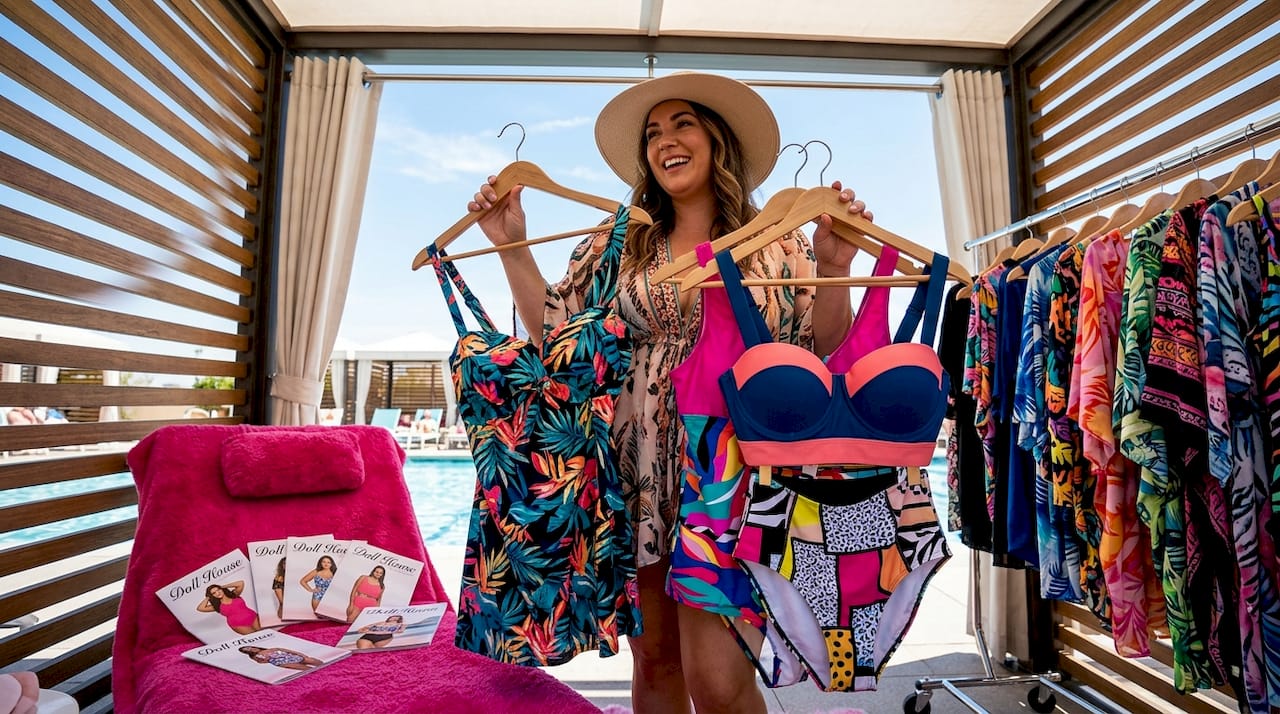
Popular plus size styles include one-piece suits, two-piece bikinis and tankinis, swim dresses, and active options like rash guards and board shorts. Each style serves a different purpose, and knowing which features to look for in each category saves a lot of returns.
| Style | Best for | Key features to look for |
|---|---|---|
| One-piece | Maximum support and coverage | Underwire, power-mesh lining, adjustable straps |
| Bikini / two-piece | Mix-and-match sizing, fashion-forward looks | Separate top and bottom sizing, molded cups, tie closures |
| Tankini | Coverage with easy bathroom access | Longer hem, built-in shelf bra or underwire option |
| Swim dress | Skirt coverage, casual beach days | A-line cut, built-in shorts, non-transparent fabric |
| Rash guard / active | Sun protection, water sports | UPF rating, chlorine-resistant fabric, secure fit |
Beyond style, fabric choice separates a suit that lasts one season from one that holds its shape for three. High-quality plus size swimwear uses a high nylon-elastane blend, often chlorine-resistant, to maintain shape and color longer than budget polyester blends. The compression from a quality fabric also contributes to the smoothing effect that many shoppers associate with tummy control panels. In practice, a well-constructed nylon-elastane suit provides more consistent shaping than a loose polyester suit with a separate control panel sewn in.
Key features worth prioritizing when shopping for plus size bathing suits:
- Tummy control panels: Flat-stitched internal panels that compress the midsection without creating a visible ridge.
- Molded cups: Pre-shaped foam cups that hold their form in water, unlike soft cups that collapse when wet.
- High-waisted bottoms: Sit above the natural waist to smooth the hip-to-waist transition and stay in place while swimming.
- Adjustable straps: Allow you to customize lift and coverage. Convertible straps that go halter, straight, or cross-back are especially useful.
The design of a swimsuit directly affects how it performs on a fuller figure in motion, not just standing still. A suit that looks great in a flat photo can shift, bunch, or lose coverage the moment you move. Construction details are what prevent that.
How does sizing work for plus size swimwear?
Swimwear sizing runs smaller than streetwear because compression fabrics need a tight fit to support the body when wet. A 2X in everyday clothing may correspond to a 3X or 4X in swimwear depending on the brand and style. This is not a flaw. It is how the fabric is designed to work. Ordering one or two sizes up from your regular clothing size is standard practice, not a sign that something is wrong.
Size ranges also vary significantly by brand. Lane Bryant centers on sizes 14 to 28. Swimsuits For All runs from size 4 to 40. Roaman’s lists up to size 44. That spread means a size 30 shopper has real options, but only if they know which brands to check. Relying on a single retailer’s size chart without comparing it to your measurements will lead to poor fits.
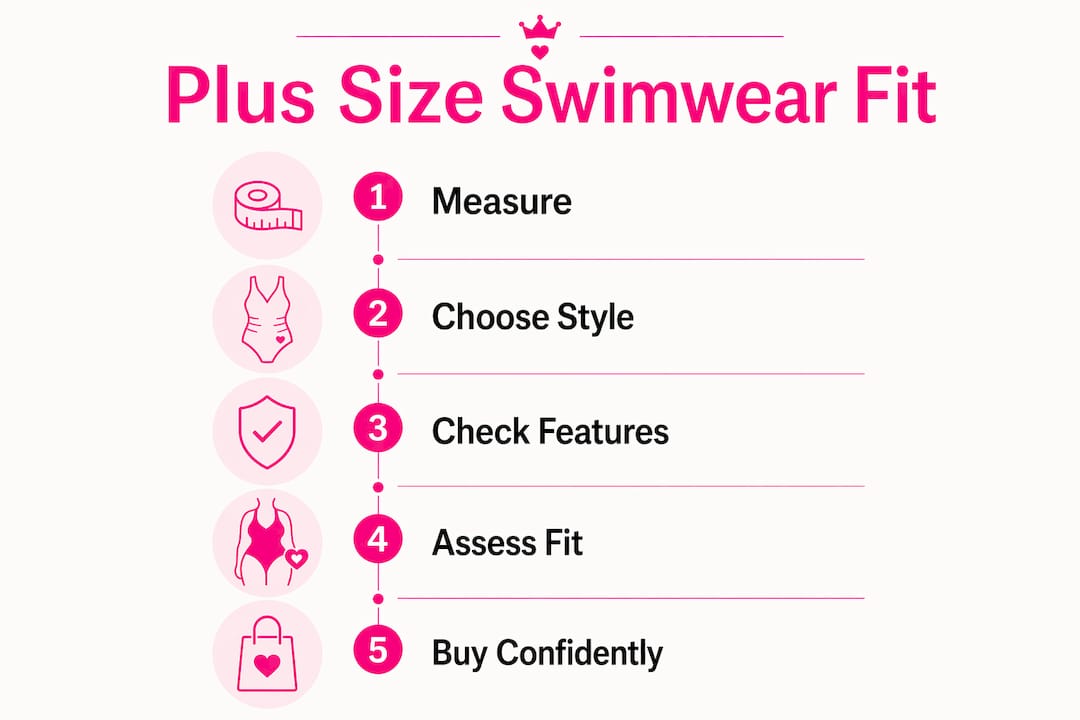
Follow these sizing steps before placing any order:
- Measure your bust, waist, and hips in inches, wearing only a bra or nothing. Use a soft measuring tape and measure at the fullest point of each area.
- Check the brand-specific size chart, not a generic one. Swimsuits For All and Lane Bryant each publish detailed charts that differ from each other.
- Note your torso length from shoulder to crotch. If you are above average height or have a long torso, look for brands that offer long-torso options.
- Order two sizes when trying a new brand for the first time. Return policies at most online retailers make this practical.
- Read customer reviews for fit notes. Reviewers who share your measurements are the most reliable source of real-world sizing data.
Shopping for swimwear online offers far greater size and style variety than physical stores, but it requires exact measurements and careful brand research to avoid fit issues. The brands that invest in plus-specific fit blocks are also the ones most likely to publish detailed size guides and offer generous return windows.
Where to buy plus size swimwear: brands and what they do well
The plus size swimwear market splits into two categories: specialists that build the entire fit block for plus sizes, and broader brands that extend plus sizes from standard patterns. That split directly affects fit consistency.
| Brand | Size range | Fit approach | Best for |
|---|---|---|---|
| Lane Bryant | 14–28 | Plus-specific fit block | Underwire support, bra-sized cups |
| Swimsuits For All | 4–40 | Plus-specific engineering | Wide size range, tummy control |
| Torrid | 10–30 | Plus-first design | Fashion-forward styles, two-pieces |
| Lands’ End | 6–26 | Extended from standard | Modest coverage, active swimwear |
| Athleta | XS–3X | Extended from standard | Performance fabrics, active fit |
| Aerie | XS–4X | Extended from standard | Budget-friendly, inclusive sizing |
Specialists like Lane Bryant and Swimsuits For All produce suits where the photos match the actual fit on a plus size body because the garment was designed on a plus size form. Broader brands like Lands’ End and Athleta offer quality fabrics and construction, but fit consistency can vary more across their plus size range because the base pattern was not originally built for those proportions.
Emerging brands are also worth watching. Several newer labels focus specifically on fuller busts and fashion-forward designs, offering two-piece plus size options that go beyond the conservative cuts that dominated the category for years. The shift toward bolder prints, cut-outs, and high-leg silhouettes in plus sizes reflects a broader change in how the category is designed and marketed. You can also explore curated swimwear collections that bring together fashion-forward plus size options across multiple brands.
Pro Tip: When evaluating a new brand, check whether their product photos use plus size models in the actual size range you are shopping. Brands that photograph a size 14 model for a size 14 to 28 range are not showing you how the suit fits at size 24.
Key takeaways
Plus size swimwear works because it uses purpose-built fit blocks, specialized construction, and compression fabrics designed specifically for fuller figures, not scaled-up standard patterns.
| Point | Details |
|---|---|
| Definition and sizing | Plus size swimwear starts at US size 14 and extends to 44 depending on the brand. |
| Fit block engineering | Specialist brands build separate fit blocks for plus sizes, covering bust cups and torso length. |
| Construction features | Look for underwire, power-mesh lining, molded cups, and wide adjustable straps for real support. |
| Sizing runs small | Order one to two sizes up from your regular clothing size due to compression fabric requirements. |
| Brand selection matters | Specialists like Lane Bryant and Swimsuits For All offer more consistent plus size fit than brands extending standard patterns. |
What I have learned from years of watching plus size swimwear evolve
The single biggest mistake shoppers make is treating size as the primary filter. They search for “size 20 swimsuit” and buy whatever appears first. Size is just the starting point. The construction underneath is what determines whether you spend the day adjusting your suit or actually enjoying the water.
I have seen shoppers in technically correct sizes spend an entire beach day uncomfortable because the suit had a shelf bra designed for a B cup on a body that needed a DD. The size label said it fit. The engineering said otherwise. Fit issues with plus size swimwear almost always trace back to torso length and cup sizing rather than overall size. That is the detail most generic size guides skip entirely.
My honest recommendation: prioritize brands that publish cup-specific sizing, offer long-torso options, and use plus size fit models in their product photography. Those three signals tell you more about a brand’s commitment to plus size fit than any marketing copy. Also, always check the return policy before ordering. A brand confident in its fit offers free returns. That confidence is worth something.
The quality features in a swimsuit are not just about longevity. They are about whether the suit actually does its job on a real body in real water. Spend the extra time on construction details before you spend the money.
— Ryan
Shop plus size swimwear styles at Dollhousebikinis
Dollhousebikinis carries swimwear built for fashion-conscious shoppers who want style and fit in the same suit. The catalog includes bikini sets, two-piece swimwear, one-piece suits, and cover-ups across a range of sizes and prints.
The two-piece swimwear sets are designed for mix-and-match sizing, so you can pair a larger top with a smaller bottom without compromise. The swimwear and cover-up collection brings together coordinated beach looks in one place. Free shipping applies to orders over $100, and new arrivals are added regularly across all categories. Browse the full selection at Dollhousebikinis to find styles that match your size, fit preference, and beach aesthetic.
FAQ
What size range counts as plus size swimwear?
Plus size swimwear in the US generally starts at size 14 to 16. Depending on the brand, sizes extend to 26, 28, 32, or higher, with specialists like Swimsuits For All reaching size 40 and Roaman’s listing up to size 44.
Why does swimwear sizing run smaller than regular clothing?
Compression fabrics used in swimwear require a tighter fit to support the body when wet. A 2X in streetwear may correspond to a 3X or 4X in swimwear, so ordering one to two sizes up from your regular size is standard practice.
What is the difference between plus size and extended size swimwear?
Plus size swimwear uses a fit block built specifically for fuller proportions, including adjusted cup depth and torso length. Extended size swimwear is a standard pattern graded up to larger sizes, which often results in less consistent fit at the bust and torso.
What features should I look for in a supportive plus size bathing suit?
Look for underwire or molded cups, power-mesh lining, wide adjustable straps, and a high nylon-elastane fabric blend. These construction details provide support and shape retention that soft-cup, polyester suits cannot match.
Is it better to buy plus size swimwear online or in store?
Online shopping offers a far wider range of plus size swimwear styles and sizes than most physical stores carry. The key is to take precise measurements, use brand-specific size charts, and confirm the return policy before ordering.