
Picking flattering swimsuits is about matching your precise body measurements with designs that use optical illusions and functional support to enhance your natural shape. The right swimsuit does not hide your body. It works with your proportions. Three core measurements, bust, waist, and hips, plus a torso loop for one-pieces, form the foundation of every great fit. Pair those numbers with the right cut, fabric, and support features, and you get a suit that looks good in the mirror and stays put in the water.
How to pick flattering swimsuits: start with accurate measurements
Accurate body measurements are the single most reliable way to find a swimsuit that fits. Standard clothing sizes vary widely between brands, and size charts differ by manufacturer. A size medium at one label can fit like a small at another. Skipping measurements and guessing your size is the fastest route to a poor fit.
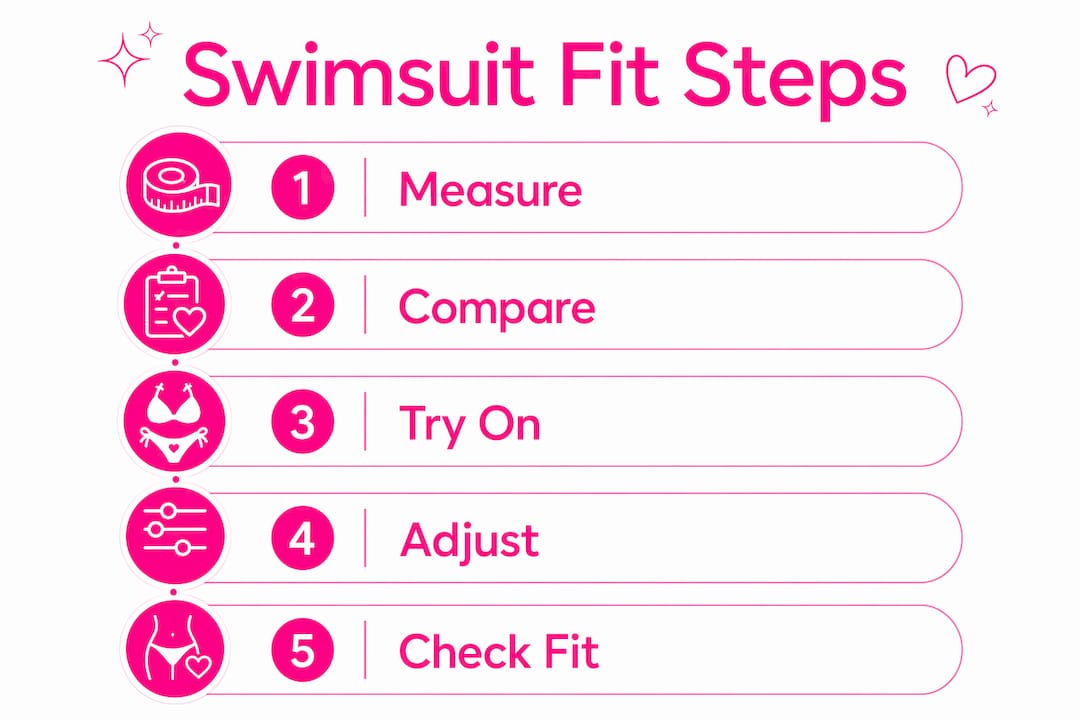
Follow these four steps to measure correctly:
- Measure your bust. Wrap a soft measuring tape around the fullest part of your chest. Keep the tape parallel to the floor. Do not pull it tight.
- Measure your waist. Find the narrowest part of your torso, usually just above your belly button. Keep the tape snug but not compressed.
- Measure your hips. Stand with your feet together and measure around the fullest part of your hips and seat.
- Measure your torso loop (for one-pieces). Start at the top of one shoulder, run the tape down the front of your body, between your legs, and back up to the same shoulder. This measurement prevents sagging and bunching in one-piece suits. Torso loop measurement is the step most shoppers skip, and it explains why so many one-pieces fit poorly.
Once you have your numbers, compare them directly to each brand’s size chart. Do not assume your measurements translate the same way across brands. Check the Dollhousebikinis swimwear sizing guide for a detailed walkthrough of how to match measurements to specific styles.
Pro Tip: Measure yourself first thing in the morning, before exercise or a large meal. Your body is at its most neutral state then, and your measurements will be the most consistent.
A common mistake is measuring over bulky clothing or pulling the tape too tight. Both give you inaccurate numbers. Wear a thin, fitted top or measure directly against your skin for the best results.
What swimsuit features create flattering optical illusions?
Specific design elements shift how the eye reads your body. High-cut leg openings and wrap-style designs elongate the legs and define the waist. These are not tricks. They are deliberate cuts that change visual proportion.
Here is how key features work for common body shapes:
- Pear shape (wider hips, narrower shoulders): Choose bold prints or bright colors on top and solid, darker tones on the bottom. This draws the eye upward and balances the silhouette. Ruffled or embellished bikini tops add visual width to the shoulders.
- Hourglass shape (balanced bust and hips, defined waist): Almost any style works, but wrap bikinis and one-pieces with a cinched waist highlight your natural proportions best.
- Inverted triangle (broader shoulders, narrower hips): Use V-necklines and wide vertical straps to draw the eye downward. Avoid halter-style thin straps, which emphasize shoulder width. Patterned or ruffled bottoms add visual volume to the hips.
- Rectangle shape (similar bust, waist, and hip measurements): Side ruching, wrap styles, and belted one-pieces create the appearance of a defined waist. High-waisted bikini bottoms add curve to the hip line.
Color choices matter as much as cut. Brighter tops paired with darker bottoms work well for pear shapes. Color blocking across the midsection creates the illusion of a narrower waist for rectangle shapes. Skin tone also plays a role. Warm skin tones tend to pop against earthy oranges, corals, and warm whites. Cool skin tones look sharp in navy, jewel tones, and true white.
Pro Tip: Side ruching is one of the most versatile flattering features available. It gathers fabric at the sides of the torso, pulling attention to the center and creating the look of a more defined waist on almost every body shape.
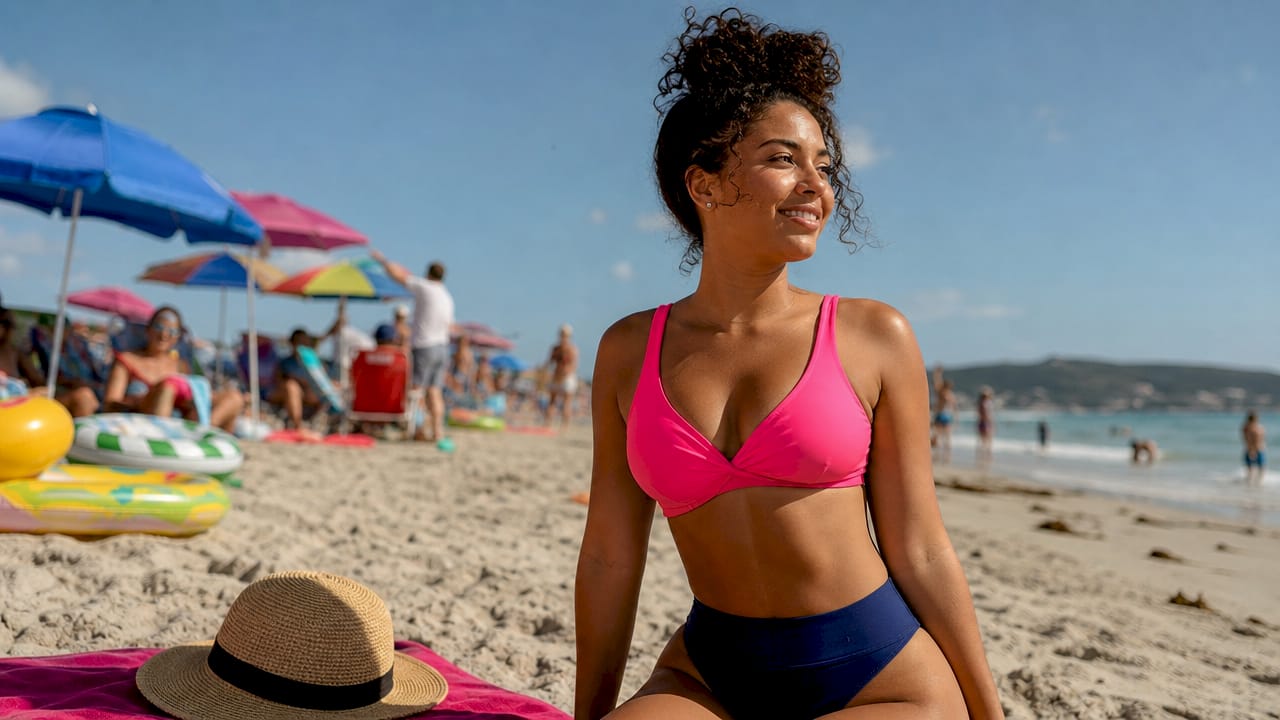
The goal is balance. You are not hiding anything. You are directing attention to the proportions you want to highlight.
Does fabric quality affect how flattering a swimsuit looks?
Fabric quality directly affects how a swimsuit fits, moves, and holds its shape over time. Fabrics with 18%–22% elastane offer the right balance of stretch and support. Too little elastane causes the fabric to ripple and sag. Too much restricts movement and creates an uncomfortable, compressive feel.
Look for these support features when shopping:
- Underwire: Provides lift and shape for fuller busts. It keeps the suit in place during activity.
- Adjustable straps: Let you customize fit across the shoulders and back. Fixed straps rarely work for every body.
- Power-mesh lining: A firm inner layer that smooths and supports without adding bulk. Built-in support features like power-mesh and invisible gripper tape keep the suit secure without constant adjusting.
- Lined cups: Add shape and coverage, and prevent the fabric from becoming see-through when wet.
A suit should feel snug when dry. Water adds weight and stretch to the fabric, so a suit that fits loosely on land will sag in the pool. If you are constantly pulling the suit up or adjusting the straps, the fit is wrong regardless of how it looks in the dressing room.
Testing movement matters. Sit down, bend forward, and raise your arms while trying on a suit. A well-constructed suit stays in place through all of these motions. The Dollhousebikinis guide on quality swimwear features breaks down exactly what construction details to look for before you buy.
Pro Tip: Choose lined suits whenever possible. Lining adds a layer of coverage and structure that unlined suits simply cannot match, especially after repeated exposure to chlorine or saltwater.
Practical swimsuit shopping tips that actually work
The most flattering swimsuit is the one that fits your body and supports your activity. These steps make the selection process faster and more reliable.
- Try multiple styles. Do not commit to one silhouette before testing others. A style you dismissed in theory may fit your proportions better than expected.
- Check fit in motion, not just in the mirror. Sit, bend, and move during the try-on. A suit that looks perfect standing still may shift, pinch, or gap the moment you move.
- Read fit notes and reviews. Many brands include notes like “runs small in the bust” or “fits true to size.” Customer reviews often flag fit issues that size charts miss.
- Buy multiples once you find the right fit. If a style fits your measurements and feels comfortable in motion, buy it in two or three colors. Finding a suit that fits well is harder than finding a new color.
- Follow fabric care instructions. Rinse your suit in cold water after every use. Avoid wringing it out. Lay it flat to dry. Proper care preserves elasticity and keeps the suit fitting the way it did on day one.
Common pitfalls to avoid: buying a suit based on how it looks on a model without checking measurements, choosing a style purely for trend appeal without considering support, and ignoring the torso measurement for one-pieces. Each of these leads to a suit that looks great in the cart and disappoints at the beach.
Shopping swimwear online works well when you have accurate measurements and understand how to read a brand’s size chart. Without those two things, online purchases become a guessing game.
Pro Tip: If you are between sizes, size up for the top and use adjustable straps or ties to customize the fit. Sizing down compresses and restricts. Sizing up with adjustable features gives you control.
Key Takeaways
Flattering swimsuit selection depends on accurate measurements, style features that balance proportions, and fabric quality that holds its shape in and out of the water.
| Point | Details |
|---|---|
| Measure before you shop | Record bust, waist, hips, and torso loop to match brand-specific size charts accurately. |
| Use optical illusions | High-cut legs, ruching, and color blocking shift visual proportion for every body shape. |
| Prioritize support features | Underwire, adjustable straps, and power-mesh lining keep suits in place and looking sharp. |
| Test fit in motion | Sit, bend, and move during try-on to confirm the suit stays put during real activity. |
| Care extends fit life | Rinse in cold water and lay flat to dry to preserve elasticity and shape over time. |
Why fit beats size every time
The conventional advice to “dress for your body type” misses the point. Body types are not fixed categories. They are rough descriptions that rarely match any one person exactly. What actually works is fit, and fit starts with measurements.
I have watched shoppers spend an hour in a dressing room trying on suits in their usual clothing size, getting frustrated, and leaving empty-handed. The problem was never their body. The problem was that they skipped the tape measure. Once you know your bust, waist, hip, and torso numbers, the process gets much faster. You stop trying on suits that were never going to work and start focusing on the ones that will.
The mindset shift that matters most: there are no problem areas, only suits that do not fit your proportions. A suit with the right support and cut does not hide anything. It fits the shape you actually have. That distinction changes how you shop and how you feel wearing the result.
Swimwear is also worth treating as a quality investment. A well-made suit with good fabric and construction outlasts three cheap ones and looks better doing it. The cut stays true, the lining holds, and the straps do not stretch out after two wears. Spend more once on something that fits correctly rather than less repeatedly on suits that never quite work.
— Ryan
Flattering swimwear at Dollhousebikinis
Dollhousebikinis carries swimwear built around the features this guide covers: adjustable straps, quality fabric blends, and cuts designed to work across body types.
The core swimsuit collection includes supportive one-pieces and structured bikini sets with the lining and strap adjustability that make a real difference in fit. For shoppers who want versatility, the two-piece swimwear sets let you mix top and bottom sizes independently, which solves one of the most common fit problems in swimwear. Free shipping applies to orders over $100, and new arrivals are added regularly across all categories.
FAQ
What measurements do I need to find a flattering swimsuit?
You need four measurements: bust at the fullest point, waist at the narrowest, hips at the fullest, and torso loop for one-pieces. Compare these numbers to each brand’s specific size chart, not a generic size guide.
How do I choose a swimsuit style for my body shape?
Match design features to your proportions. Pear shapes benefit from bold tops and darker bottoms. Inverted triangles do well with V-necklines and patterned bottoms. Wrap styles and ruching define the waist for rectangle shapes.
What fabric should I look for in a flattering swimsuit?
Choose fabrics with 18%–22% elastane for the right balance of stretch and support. Look for power-mesh lining and lined cups, which add structure and prevent the suit from sagging or becoming see-through when wet.
How do I know if a swimsuit fits correctly?
A well-fitting suit feels snug when dry, stays in place when you sit and bend, and does not require constant adjusting. If straps slip or fabric gaps at the chest or seat, the fit is off.
Can I shop for flattering swimsuits online without trying them on?
Yes, if you have accurate body measurements and read each brand’s size chart carefully. Check customer reviews for fit notes, and when in doubt between sizes, size up and use adjustable features to customize the fit.