
Scrunch (ruched), Brazilian/cheeky, and high-cut bottoms create the most visible lift for a flat butt, and none of them work without the right fit: snug at the seam and waistband, never loose enough to droop or so tight it cuts in. Doll House Bikinis carries all three cuts along with sizing guides built for exactly this shape question.
TL;DR:
- Proper fit is critical, with snug support supporting and shaping the buttocks without cutting in or causing gaps.
- Cheeky, Brazilian, and ruched bottoms are most effective because they create visible curves through strategic coverage and fabric gathering.
- High-cut legs visually lengthen the legs and balance the overall silhouette, especially when combined with the right bottom style.
- Avoid full-coverage, loose-legged styles that can fold and draw attention to flat areas, and prioritize fabrics with double lining and reinforced seams.
- Accurate measurements, checking stretch and lining, and proper care extend the shape-maintaining qualities of well-constructed bikinis over time.
Table of Contents
- What Bikini Cuts Actually Flatter a Flat Butt?
- How Do You Know If a Bikini Bottom Actually Fits?
- Which Patterns and Colors Add the Most Visual Volume?
- Why Fabric and Seam Construction Matter More Than the Print
- A Step-by-Step Checklist for Buying Bikinis for a Flat Butt
- Styling Moves That Boost the Look Beyond the Bikini
- How Do You Keep a Bikini Bottom’s Shape Over Time?
- Why the Right Cut Beats Any Trick or Accessory
- Doll House Bikinis Picks Built for a Flatter Backside
- Sources
What Bikini Cuts Actually Flatter a Flat Butt?
The mechanics behind each cut matter more than the label on the tag. A bottom either adds visual curve or it flattens what’s already there, and the difference usually comes down to coverage, seam placement, and where the fabric sits on your hip.
Brazilian and cheeky cuts work because they expose more skin at a higher hip point. Less fabric coverage combined with a higher rear cut creates a visible curve where a fuller-coverage bottom would just read as flat fabric stretched over flat ground. This is the most-cited fix for a flat backside, and it’s the one most women try first for good reason: it works fast and needs no accessories.
Scrunch or ruched bottoms take a different approach. The gathering along the center seam pulls fabric into the gluteal cleft, and that gathering does two things at once: it tightens the fabric so it can’t droop, and it forces a rounded shape where the fabric bunches. The effect only looks intentional when the fabric density and seam placement are right. A thin, cheap fabric scrunched the same way looks like a mistake, not a style choice, because the fabric can’t hold its gather.
Thong and minimal-coverage styles solve the problem by removing the issue entirely. There’s no extra fabric to sag or fold because there’s barely any fabric there. Thong-style bottoms minimize coverage enough that the eye has nothing to read except the shape of your body, which for a flat butt often reads cleaner than a fuller cut ever could. This style asks for more confidence than the others, and it demands a correct fit since there’s zero margin for error.
High-cut leg openings work on the legs, not the rear directly. A high leg line creates a Y-shaped angle at the hip that lengthens the leg visually and pulls the eye upward and outward, which balances an athletic or straight torso even when the bottom itself is standard coverage.
What to avoid: full-coverage bottoms with loose, boy-short style legs. Extra fabric has to go somewhere, and on a flat butt it usually goes into folds and creases that draw attention to the exact area you’re trying to enhance.
- Brazilian/cheeky: higher hip cut, less coverage, visible curve
- Scrunch/ruched: center-seam gathering creates rounded shape
- Thong/minimal: removes excess fabric entirely, cleanest line
- High-cut legs: lengthens legs, balances proportion at the hip
How Do You Know If a Bikini Bottom Actually Fits?
Fit is not the same as tight. A bottom that fits correctly supports and shapes; a bottom that’s just tight cuts into skin and creates its own set of unflattering lines. Choosing a size with snug support rather than compression is the single rule that matters more than any cut choice.
Run through this checklist before you commit to a bottom:
- Waistband placement. It should sit flat against your skin with no gap and no dig. A waistband that rolls or folds over is too small.
- Rear snugness. The fabric across the seat should feel secure, not loose. If you can pinch extra fabric away from your skin at the rear, size down.
- Leg opening position. It should sit at the crease of your leg, not below it. Too low and the leg opening droops; too high and it cuts.
- Movement test. Sit down, stand up, walk a few steps. A correctly fitted bottom stays put. One that rides down or bunches at the back needs a different size.
Shopping online adds a layer of guesswork, so measure your hip and waist against the brand’s actual size chart rather than your usual size in other swimwear. Check the stretch percentage listed in the product description, and look at customer photos when they’re available since they show real fit on real bodies, not just the mannequin shot.
Pro Tip: Read the return policy before you buy anything with scrunch detailing. Scrunch effects vary wildly between brands, and a bottom that reads as flattering on a model can look completely different depending on your torso length. A flexible return window takes the risk out of trying a new cut.
Watch for these red flags: sagging elastic that’s lost its shape after a few washes, excess fabric pooling at the rear seam, or a bottom that rides down after ten minutes of actually moving in it. Baggy, oversized bottoms create the exact folds you’re trying to avoid, so when in doubt, size down rather than up.
Which Patterns and Colors Add the Most Visual Volume?
Print does real work here, not just decoration. High-contrast patterns like zebra, gingham, and checkered prints create apparent width and dimension because the eye reads contrast as shape, even on flat fabric. A busy, high-contrast print across the rear panel gives the illusion of curve where a solid color would just lie flat.
Bright, saturated colors do something similar, especially in color-blocked designs that draw the eye directly to the bottom half instead of letting it slide past. This is a deliberate styling technique, not an accident: contrast and texture create contours that aren’t physically there.
A few pairing rules keep this from looking chaotic:
- Put the pattern on the bottom, keep the top solid, so attention lands where you want it
- Choose gingham or checkered prints in medium scale, since tiny prints can flatten out at a distance
- Save vertical stripes for tops or coverups; horizontal or geometric prints on bottoms read better for volume
- When you already have a scrunch or ruched bottom, skip heavy pattern and let the texture do the work instead
Texture and pattern rarely need to compete. If the fabric is already doing the shaping through a scrunch seam, a loud print on top of that can actually undercut the effect by distracting from the silhouette the construction already built.
Why Fabric and Seam Construction Matter More Than the Print
The print gets the attention, but construction is what actually holds a shape through a full day at the beach. Fabric that’s too thin stretches out fast, loses its structure, and stops doing any shaping work within a season. Look for medium-to-heavy-weight blends with double lining, since that combination resists sag far longer than a single layer of thin nylon-spandex.

The scrunch mechanic depends entirely on this. Gathering fabric into the gluteal cleft only produces a rounded, intentional-looking shape when the fabric density and seam placement are engineered for it; a slightly higher-elastic center seam paired with medium-weight, double-lined fabric produces the most reliable result. Cheaper construction with a thin center seam just puckers instead of gathering.
Elastic placement matters just as much. A reinforced waistband holds its shape wash after wash, while thin, loose elastic stretches out within a few wears and stops supporting anything. Doll House Bikinis builds its scrunch and Brazilian styles around reinforced seams for this exact reason, and the brand’s style and fit guide breaks down which fabric weights hold shape longest.
When you’re reading a product description, look for these specific signals:
- “Double-lined” or “fully lined” fabric, which resists see-through and sag
- Named fabric composition (nylon-spandex blends generally outperform pure polyester for recovery)
- “Reinforced waistband” or “elasticized seam,” which points to structure built in at the construction stage
- Center-seam or scrunch detail called out explicitly, not just implied by a photo
Pro Tip: If a product page doesn’t mention lining or fabric weight at all, that’s usually a sign the listing is generic. Brands that engineer for shape tend to talk about it directly, because it’s a selling point they want you to notice.
A Step-by-Step Checklist for Buying Bikinis for a Flat Butt
Getting the fit right takes four steps, whether you’re shopping in a store or scrolling a product page at midnight.
- Measure your hips and waist first. Compare those numbers directly against the brand’s size chart rather than guessing from your usual size, since cut and rise vary enough between brands to throw off a guess by a full size.
- Check the stretch percentage and lining before adding to cart. Medium stretch with secure double lining holds a scrunch or Brazilian cut far longer than a bargain fabric that stretches once and stays stretched.
- Do the full fit test if you’re trying on in person. Sit down, stand up, walk a few steps, and check the mirror from behind. A bottom that shifts, rides up, or bunches during any of those movements is the wrong size, not the wrong style.
- Save your photos and read the return policy before you buy online. Take a quick photo in decent lighting once it arrives, before tags come off, so you have proof of fit if a return is necessary. When measurements land you right between two sizes, size down for scrunch and Brazilian cuts (they’re built to stretch snug) and size up for thong styles where minimal fabric means less margin for error.
Doll House Bikinis’ cheeky versus Brazilian breakdown is worth a read before you commit, since the two cuts fit differently enough that the wrong pick can undo all of this checklist.
Styling Moves That Boost the Look Beyond the Bikini
The bottom does most of the work, but a few styling choices around it can push the effect further. A short coverup or cropped shorts that frame the bottom without fully hiding it keeps the shape visible while still giving you a transition piece for walking around.
Wedges do something specific for posture and leg line: they add a slight lift that shifts your stance and lengthens the leg visually, which pairs well with the Y-shaped angle a high-cut leg opening already creates. Standing with a slight arch rather than flat-footed does the same thing without shoes at all.
A few temporary tricks round this out:
- Self-tanner or body oil adds sheen, and sheen catches light in a way that emphasizes curve and dimension
- Waist jewelry or a chain draws the eye to your midsection, which helps balance proportion top to bottom
- Placement of ties and side straps on a bottom can visually narrow or widen the hip depending on where they sit
Soft padding or shaped swim bottoms exist for readers who want more structure than fabric and fit alone provide, and they’re worth considering if you’ve tried the cuts above and still want more lift. For most women, though, the right cut in the right size gets you there without needing padding at all.
How Do You Keep a Bikini Bottom’s Shape Over Time?
A scrunch or reinforced-seam bottom only keeps working if you take care of it the way the construction demands. Chlorine and salt water both break down spandex fibers faster than fresh water, so rinse your bikini in cool fresh water immediately after swimming, before the fabric has a chance to dry with salt or chlorine still in it.
Skip the washing machine and skip the dryer entirely. Hand wash in cool water with a mild detergent, then lay the piece flat to dry out of direct sunlight. Heat from a dryer and prolonged UV exposure both degrade the elastic fibers that hold a scrunch seam or reinforced waistband in shape, and once that elastic loses its memory, no amount of careful wearing brings it back.
Rotate between two or three bikinis if you’re at the beach or pool often. Elastic recovers between wears, but it doesn’t recover well if it’s stretched out day after day with no rest. A bottom worn every single day for a week will lose its shape faster than the same bottom worn every other day across two weeks.
Store bikinis flat or loosely folded, not balled up in a bag, since a tight ball can crease fabric permanently and stress the seams right where the scrunch detail needs to stay intact. A little care here extends the life of exactly the construction details this article has been describing.

Why the Right Cut Beats Any Trick or Accessory
Most style advice on this topic treats a flat butt like a problem to disguise, and that framing is backwards. The cuts that work, scrunch, Brazilian, high-cut, aren’t disguises. They’re construction choices that use fabric mechanics to build a shape that solid, full-coverage fabric physically can’t create on its own.
What gets underestimated is how much fit ruins good cuts. A woman buys a scrunch bottom expecting the seam to do its job, sizes up out of habit or nerves, and ends up with a bottom that puckers instead of gathers. The cut wasn’t wrong. The size was. Doll House Bikinis has watched customer feedback shape which cuts and sizes become repeat best-sellers, and the pattern holds: Brazilian and ruched styles sell well specifically when paired with sizing guidance, not despite it.
The accessories, the tanning oil, the wedges, they help at the margins. But no amount of styling fixes a bottom that’s the wrong size for the cut it’s built around. Get the fit right first, and the rest is polish, not repair.
— Ryan
Doll House Bikinis Picks Built for a Flatter Backside
If you’ve read this far, you already know what to look for: scrunch seams, higher-cut Brazilian styles, reinforced waistbands, and a fit that’s snug without cutting in. Doll House Bikinis built its bottoms collection around exactly that criteria, so you’re not stuck cross-referencing fabric weights across five different product pages.
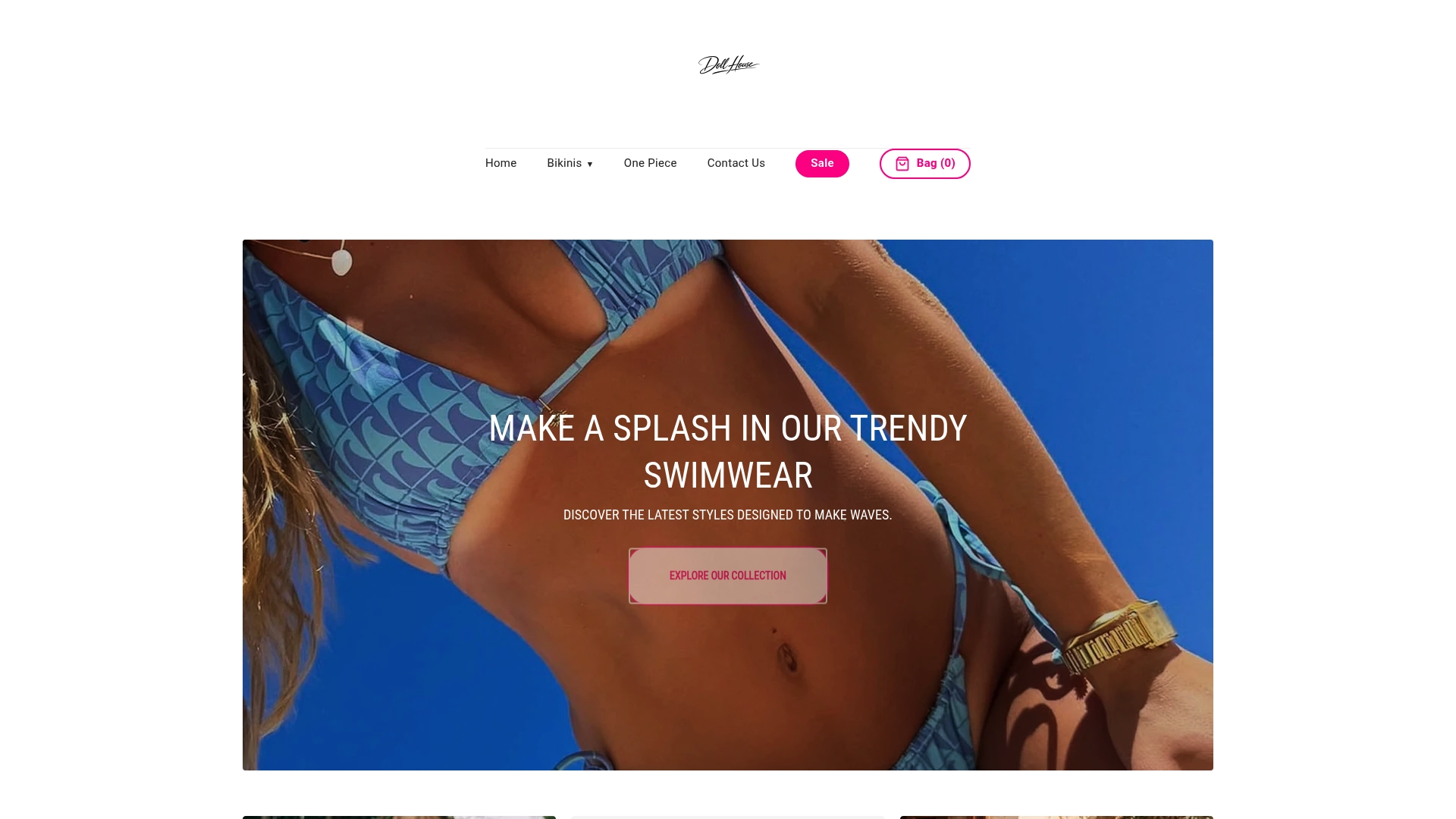
The Brazilian two-piece cut hits the higher hip line this article covers in the cuts section, with the seam placement that creates real curve rather than flat coverage. If minimal fabric fits your comfort level better, the thong bottom collection removes the excess fabric entirely. For scrunch detail specifically, the ruched bikini top and tie-side bottom set pairs the gathering effect with a matching top so the whole look reads intentional.
Every listing includes a sizing note, and returns are straightforward if a cut doesn’t sit right the first time. Start with the core swimsuit collection to compare cuts side by side before you commit to one.
Sources
The style mechanics behind scrunch and Brazilian cuts in this article draw on Sports Illustrated Swimsuit’s flat-bottom bikini guide, which breaks down why coverage and gathering create visible curve. Sizing guidance on avoiding droop or overcorrection comes from Bliss Tulle’s swimsuit fit advice, a useful supplemental read on choosing size by fit rather than by number. For deeper cut-by-cut comparisons, Doll House Bikinis’ bikini cuts guide expands on rise and coverage details referenced throughout this piece.