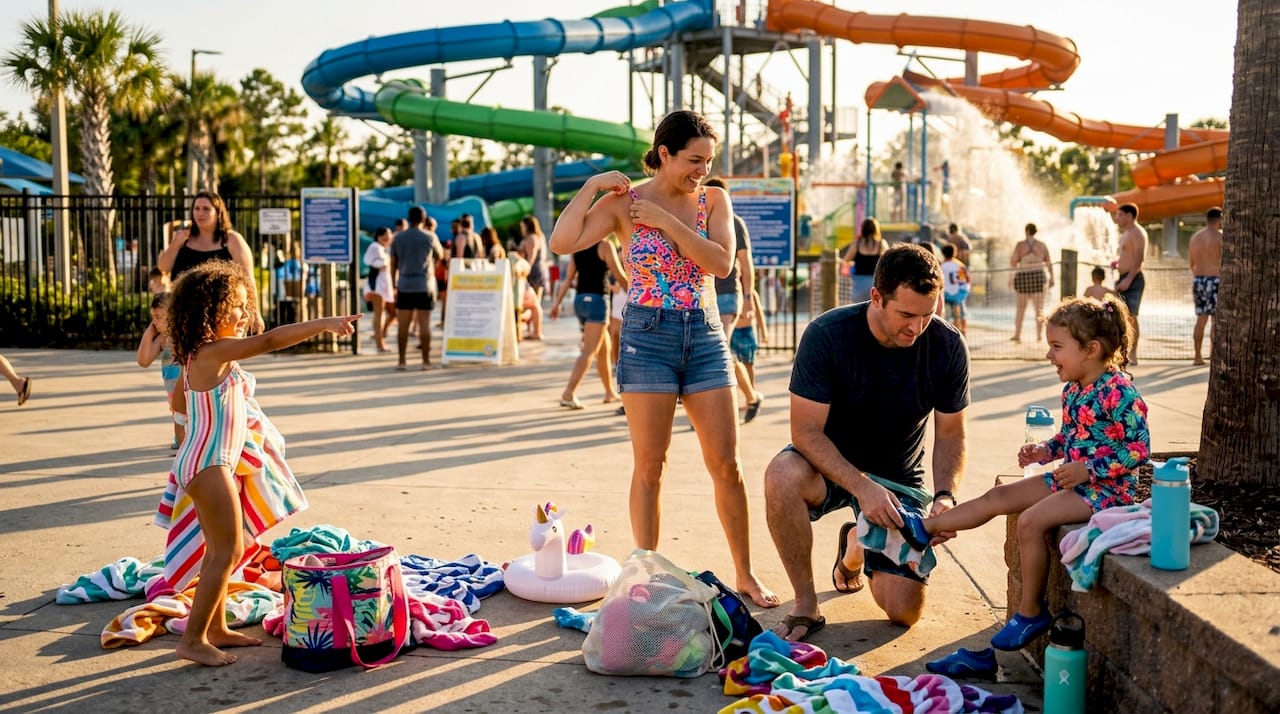
Swimwear for water parks is defined as specialized athletic swimwear made from synthetic fabrics like nylon, polyester, and Lycra blends, engineered to stay secure, dry fast, and resist chlorine damage during active rides and slides. Unlike casual beach swimwear, water park swimwear must meet dress code standards set by park operators to protect water quality, filtration systems, and rider safety. The right choice combines a secure fit, UPF 50+ protection, and construction that holds up under high-speed water pressure. Knowing what separates functional water park gear from ordinary swimwear saves you from wardrobe malfunctions, park entry refusals, and a long, uncomfortable day.
What is swimwear for water parks, and why does it differ?
Water park swimwear is a category of performance swimwear built around three priorities: secure fit, material compliance, and sun protection. Standard beach bikinis and casual swimsuits are designed for lounging. Water park swimwear is designed for movement, speed, and repeated submersion.
Water park dress codes prioritize functionality to maintain water quality and safety rather than purely aesthetic considerations. Parks enforce these codes because non-compliant clothing directly affects water chemistry and mechanical filtration. A guest wearing a cotton T-shirt in the wave pool is not just breaking a rule. They are introducing fibers and contaminants that force maintenance shutdowns.
The industry standard term for this category is “performance swimwear” or “athletic swimwear.” Both terms appear in retail and park policy contexts. The phrase “water park swimwear” is the common consumer search term, but the underlying product is the same: a garment built from stretch-resistant synthetic fabric with a construction that stays put under pressure.
Families planning a full day at a water park need to treat swimwear selection the same way they treat footwear for a hike. The wrong choice creates real problems. The right choice disappears into the background and lets everyone focus on having fun.
Why are specific fabrics required in water park swimwear?
Fabric choice is the single most regulated aspect of water park swimwear. Cotton and denim are prohibited in pools because they shed fibers that clog filtration systems and absorb contaminants, reducing chlorine’s effectiveness. This is not a preference. It is a water safety standard enforced at the entry gate.
Acceptable fabrics fall into three categories:
- 100% Nylon: Lightweight, quick-drying, and highly resistant to chlorine degradation. Nylon holds its color and shape through repeated wash and wear cycles.
- Polyester: Slightly heavier than nylon but exceptionally durable. Polyester resists fading from UV exposure and chlorine, making it the top choice for long-term value.
- Lycra/Spandex blends: Added to nylon or polyester to provide stretch and recovery. Lycra elastane blends maintain shape under high-speed water forces, which is why competitive swimwear brands use them as a base.
The practical impact of fabric choice goes beyond compliance. A polyester-Lycra blend swimsuit dries in minutes between rides. A cotton suit stays wet and heavy for hours, causing chafing and discomfort. Synthetic fabrics also resist the bacterial growth that wet cotton encourages.
Pro Tip: Check the fabric label before you buy. If the tag lists cotton as a primary fiber, the suit will likely fail a water park dress code check at the gate.
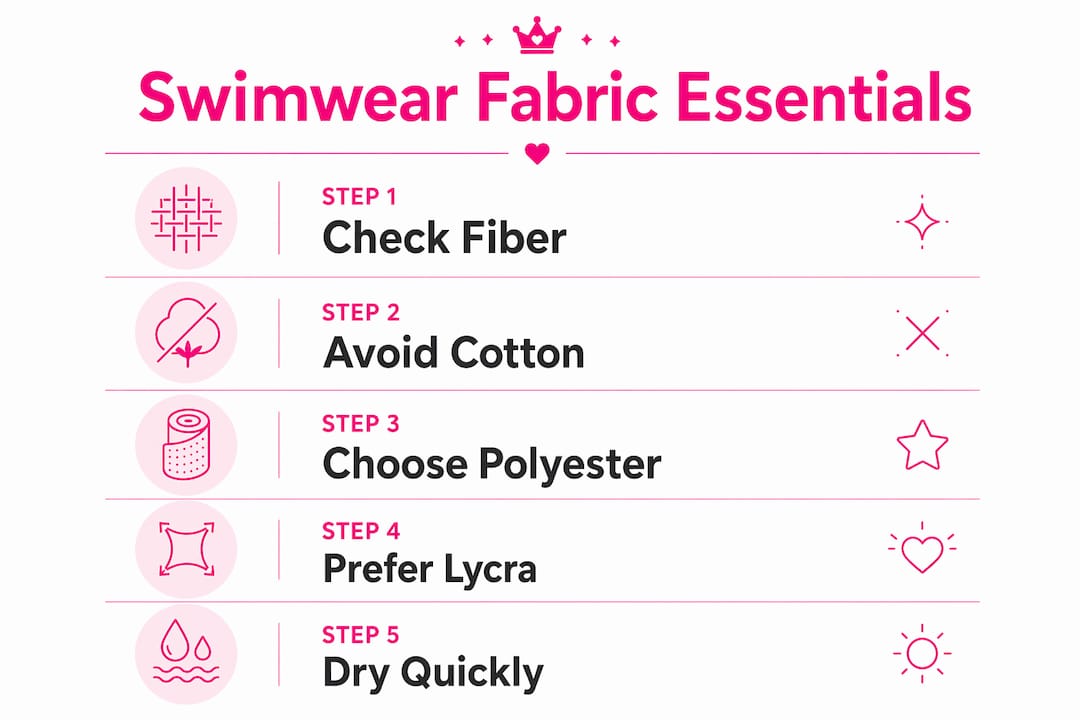
Learning more about swimwear fabric choices helps you identify compliant options before you shop, saving time and money.
What swimwear styles work best on water park rides?
Style selection determines whether your swimwear stays in place or causes a problem mid-slide. One-piece swimsuits, athletic tankinis, and high-waisted bikinis are the top choices for active water park use. Traditional bikinis with loose side ties are the most common source of wardrobe malfunctions on high-speed rides.
The features that matter most for secure fit include:
- Adjustable straps: Allow you to tighten the fit before each ride. Racerback and cross-back designs eliminate strap slippage entirely.
- Shelf bras or built-in support: Provide structure without underwire. Underwire and metal components are frequently prohibited because metal elements scratch water slides and can cause injury.
- High necklines and compression fabrics: Keep everything in place during barrel rolls and steep drops.
- No metal hardware: Zippers, decorative rings, and beaded embellishments are banned at most major water attractions.
High-waisted bikinis deserve specific mention. The waistband creates a second anchor point that keeps the bottom from shifting under water pressure. A high-waisted bikini style guide covers the fit details that make this style work for active use, not just aesthetics.
Layering adds another level of security. A tight-fitting athletic rash guard provides friction protection and helps prevent swimwear from slipping under high water pressure. Rash guards also add UV coverage on the upper body, which matters during a six-hour outdoor park day. Swim shorts over a bikini bottom serve the same anchoring function for the lower half.
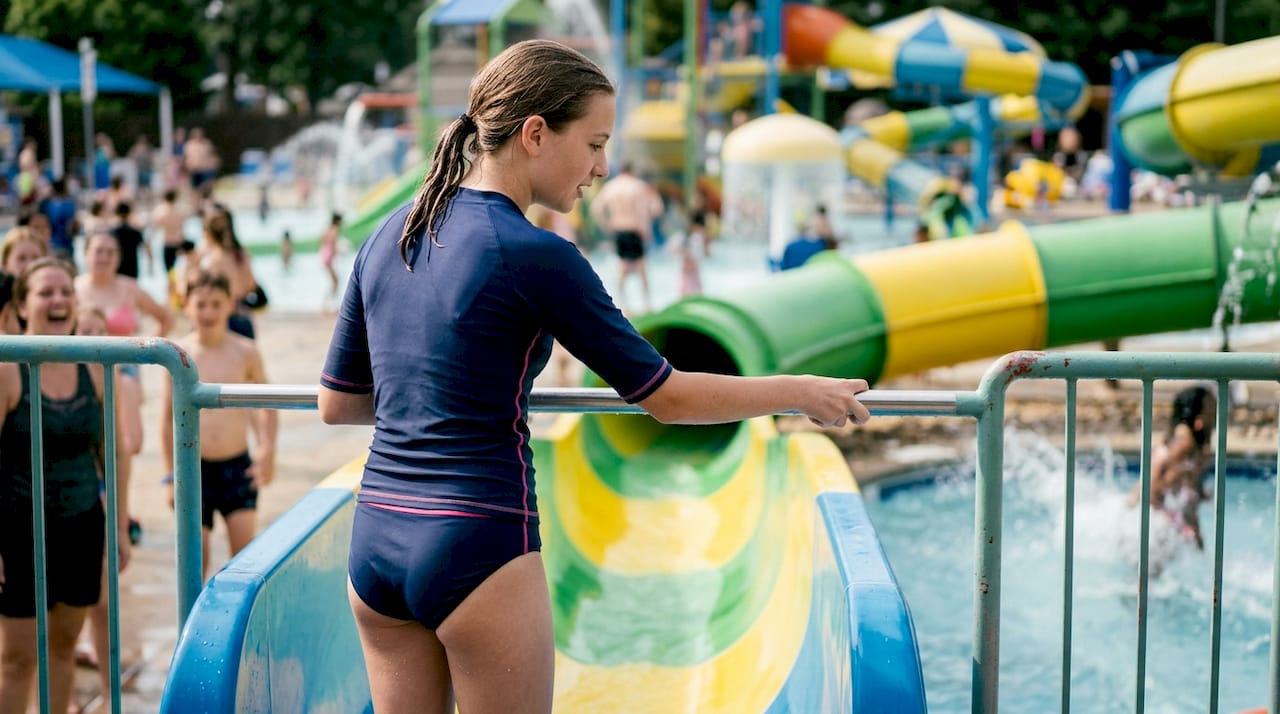
Pro Tip: Test your swimwear at home before the trip. Do a few jumping jacks and bend forward. If anything shifts significantly, it will not hold on a water slide.
How do you balance style, sun protection, and function all day?
A full day at an outdoor water park means six to eight hours of direct sun exposure, often without shade. Sun protection built into your swimwear is the most reliable defense because it does not wash off.
- Choose UPF 50+ rated swimwear. A UPF 50+ fabric rating blocks over 98% of UV radiation. This rating applies to the fabric itself, not a coating, so it does not degrade with washing.
- Add a long-sleeve rash guard. Long-sleeve rash guards cover the shoulders, upper arms, and chest, which are the areas most exposed on open-air slides. Look for rash guards labeled UPF 50+ for full coverage.
- Apply broad-spectrum SPF 30+ sunscreen. Sunscreen covers exposed skin that swimwear cannot reach: face, neck, hands, and feet. Reapply every two hours and after each pool exit.
- Wear a wide-brim hat between rides. A hat protects the scalp and face during walking time between attractions. Straw hats work for shade. Bucket hats with chin straps stay on in windy conditions.
- Use UV-blocking sunglasses. Eyes need protection too. Look for lenses rated UV400, which block both UVA and UVB rays.
Quick-drying fabric ties all of this together. A suit that dries fast between rides prevents the chafing and skin irritation that come from staying in wet fabric for hours. Polyester-Lycra blends dry fastest. Nylon blends are close behind. Both outperform any natural fiber by a wide margin.
What footwear and gear complete a water park kit?
Footwear is as critical as swimwear for safety at a water park. Slip-resistant water shoes or aqua socks reduce injury risk on hot, slippery pool decks and provide hygiene protection in high-traffic areas. Walking barefoot on concrete that has been wet all day is one of the fastest ways to pick up a foot infection.
The right gear list for a water park day includes:
- Water shoes with rubber soles: Grip wet surfaces and protect feet from hot pavement. Choose a snug fit so they do not slip off in the water.
- Aqua socks: A lighter alternative to water shoes. They dry in minutes and pack flat in a bag.
- Swim cap: Required at some parks for long hair. Also reduces drag in lazy rivers and wave pools.
- Waterproof pouch or dry bag: Keeps your phone, keys, and cash dry while you ride. A wrist-strap pouch is the most practical format.
- Microfiber towel: Dries faster than a standard cotton beach towel and takes up less space in a bag.
Footwear improves traction and hygiene protection in a high-traffic environment where thousands of visitors walk the same surfaces daily. This is not optional for families with young children, who are more vulnerable to slips and surface-borne bacteria.
Key Takeaways
The best swimwear for water parks combines synthetic fabric compliance, a secure construction, and built-in sun protection to keep you safe and comfortable through a full day of active rides.
| Point | Details |
|---|---|
| Fabric compliance is mandatory | Use 100% Nylon, Polyester, or Lycra/Spandex blends; cotton and denim are prohibited at most parks. |
| Secure fit prevents malfunctions | Choose one-pieces, athletic tankinis, or high-waisted bikinis with adjustable straps and no metal hardware. |
| UPF 50+ adds real sun defense | UPF-rated fabric blocks over 98% of UV rays and does not wash off like sunscreen does. |
| Rash guards add a second layer | A tight athletic rash guard prevents swimwear from slipping and adds UV coverage on slides. |
| Footwear is part of the kit | Slip-resistant water shoes protect against injury and surface bacteria on wet pool decks. |
What I have learned from watching people get this wrong
Ryan here. After years of watching families show up to water parks in the wrong gear, the pattern is always the same. Someone prioritized how the swimsuit looked in the mirror over how it would perform at 40 miles per hour down a slide. The result is a day spent adjusting, covering up, or worse, being turned away at the gate.
The most common mistake I see is the loose-tie bikini bottom. It looks great on the beach. It is a liability on a body slide. The water pressure at the start of a high-speed ride is enough to shift a loosely tied bottom by several inches in under a second. A high-waisted style or a one-piece removes that risk entirely without sacrificing style.
The second mistake is skipping footwear. People pack carefully for the rides and then walk barefoot on pool decks all day. Water shoes are not glamorous, but they prevent the kind of foot injury or infection that ends a trip early.
My practical recommendation: treat your water park swimwear like athletic gear, not vacation fashion. Buy a suit with compression fabric, no metal, and a UPF rating. Add a rash guard for the slides. Wear water shoes between attractions. Then pick whatever color or print makes you happy, because the functional decisions are already made.
The features of quality swimwear that matter for water parks are the same ones that make a suit last three seasons instead of one. Durability and safety point in the same direction.
— Ryan
Dollhousebikinis has the styles built for active water days
Dollhousebikinis carries swimwear built for exactly this kind of day. The catalog includes one-piece suits, high-waisted bikini sets, and long-sleeve options in quick-drying synthetic fabrics that meet standard water park dress codes.
The original swimsuit is a strong starting point for anyone who wants a secure, clean-lined one-piece. For families who want coordinated looks, the two-piece swimsuit sets offer the coverage and fit of athletic swimwear with fashion-forward prints. Orders over $100 ship free. Browse the full range at Dollhousebikinis and filter by style, coverage, and price to find the right fit before your next park visit.
FAQ
What fabrics are allowed at water parks?
Most water parks require swimwear made from 100% Nylon, Polyester, or Lycra/Spandex blends. Cotton and denim are prohibited because they shed fibers that clog filtration systems and reduce chlorine effectiveness.
Are bikinis allowed at water parks?
Bikinis are allowed at most water parks, but styles with loose side ties or metal hardware are frequently restricted. High-waisted bikinis and sets with secure closures are the safest choice for active rides.
What does UPF 50+ mean on swimwear?
UPF 50+ is a fabric rating that indicates the material blocks over 98% of UV radiation. Unlike sunscreen, a UPF rating is built into the fabric and does not wash off with water exposure.
Do I need water shoes at a water park?
Water shoes are strongly recommended and required at some parks. Slip-resistant soles reduce injury risk on wet pool decks, and closed-toe designs protect against surface bacteria in high-traffic areas.
Can I wear a rash guard on water park slides?
Yes. A tight-fitting athletic rash guard is permitted at most water parks and adds friction protection that prevents swimwear from shifting under high water pressure on slides.