
For most women, a supportive one-piece or athletic two-piece with racerback or thick crisscross straps, underbust support, and a gusseted bottom is the best swimwear for paddle boarding. These three features keep a suit in place through paddling strokes, balance shifts, and water entry.
Why these features matter on a SUP:
- Racerback and wide straps distribute load across the back and shoulders, not the neck, so straps stay put through repeated arm movements.
- Underbust elastic or a shelf bra keeps the torso section anchored, preventing the suit from riding up mid-session.
- A gusseted crotch and reinforced seat stitching stop bottoms from rolling or shifting during squats, falls, and remounts.
- Quick-dry fabric means less weight and drag when you’re back on the board after a swim.
Dollhousebikinis carries one-piece and two-piece styles that check these boxes. The Azina one-piece swimsuit and Ava one-piece swimsuit are good starting points for shoppers who want full-torso coverage and a secure fit.
Key Takeaways
A supportive one-piece or athletic two-piece with racerback straps, underbust support, and a gusseted bottom is the most reliable swimwear choice for paddle boarding, and proper care after each session extends suit life significantly.
| Point | Details |
|---|---|
| Three non-negotiable features | Racerback or wide straps, underbust support, and gusseted/reinforced bottoms keep a suit in place on the water. |
| Style by use case | One-piece for high-activity sessions; athletic two-piece for long outings where bathroom access matters. |
| Price range | Functional paddle-ready suits typically fall in the $60–$150 range for mid-tier performance materials. |
| Care priority | Rinse in fresh water immediately after every session to prevent salt crystals from degrading elastic. |
| Dollhousebikinis picks | One-piece and two-piece styles at Dollhousebikinis cover the stay-put criteria; use the size chart and free-shipping threshold on orders over $100. |
Table of Contents
- What features keep a swimsuit secure for paddle boarding?
- Which swimsuit style works best for paddle boarding?
- How to pick the right fit for paddle boarding
- Layering and sun protection for all-day paddling
- Which fabrics last longest in saltwater and chlorine?
- Dollhousebikinis picks for paddle boarding
- Pre-purchase checklist for paddle boarding swimwear
- What experienced paddlers say about swimwear
- The case for buying function first, then style
- Dollhousebikinis: swimwear built for the water and the look
- Sources
What features keep a swimsuit secure for paddle boarding?
REI’s expert swimwear guidance recommends racerback or thick crisscross straps for active water sports because they keep straps off the shoulders and help suits stay in place during paddling and falls. Here is what to check on each design element before buying.
Strap design
Racerback, crisscross, and wide adjustable straps all move the load off the neck and onto the upper back and shoulders. Thin halter straps concentrate force on the neck, which causes fatigue and slipping during repetitive paddle strokes. For larger busts, Forbes recommends wider straps and internal support rather than thin halter styles to reduce neck strain and maintain support during extended activity.

Support systems
A shelf bra with underbust elastic is the most reliable internal support for active use. Fixed powermesh panels outperform removable cups for paddle boarding: The Inertia’s test panel found that removable pads can fold during heavy wipeouts, while internal powermesh or shelf bras held their shape. If you prefer removable cups for fit customization, check that the cup pockets are snug enough to prevent shifting.
Bottom construction
Look for a gusseted crotch, reinforced stitching at the seat, and a higher-rise or fuller-coverage cut. These details prevent the bottom from rolling down at the waistband or riding up during squats and remounts. Tester reports confirm that gusseted bottoms and reinforced stitching performed best at staying put through active paddling and wipeouts.

Closures and adjustability
Back closures and internal drawcords add security. Tie-side bottoms and string bikini tops can loosen in saltwater, especially during a long session with multiple water entries. If you prefer ties, double-knot them before launching.
Pro Tip: Run your fingers along the inside of any suit before buying. Feel for a firm underbust band, a powermesh or shelf bra panel, and strap tension that does not stretch out easily. If the interior feels flimsy, the suit will shift on the water.
Which swimsuit style works best for paddle boarding?
Style choice depends on how long you paddle, how often you fall, and whether bathroom access matters. GearJunkie’s editorial roundups identify one-piece and compression-style two-piece suits as top choices for paddle sports because they balance mobility and secure coverage.
One-piece suits offer the best stay-put performance. A single connected piece cannot separate at the waist, which matters most during falls and remounts. Choose a one-piece for high-activity sessions, frequent water entry, or any time you want zero wardrobe management.
Athletic two-piece and tankini sets work well when the top is built as a performance piece with a shelf bra and wide straps. REI notes that two-piece athletic tops can be fine for active use when designed as performance styles, and they remove far faster than one-pieces for bathroom breaks on long outings. A tankini top that covers the midriff gives extra coverage without sacrificing that convenience.
Swim leggings and board shorts layer over a suit for sun protection and chafe prevention on longer paddles. They do not replace a supportive base layer but add coverage and warmth when water temperature drops.
| Style | Stay-put | Bathroom ease | Sun coverage | Best use case |
|---|---|---|---|---|
| One-piece | High | Low | Moderate | High-activity, frequent falls |
| Athletic two-piece | Moderate-high | High | Low-moderate | Long sessions, bathroom access needed |
| Tankini | Moderate | Moderate | Moderate | Casual paddling, midriff coverage |
| Swim leggings + suit | High | Moderate | High | Sun protection, cooler water |
Pro Tip: If you paddle for more than two hours at a stretch, a two-piece with a performance top is often more practical than a one-piece. The bathroom-access advantage becomes significant on long flat-water sessions.
How to pick the right fit for paddle boarding
Getting the fit right before you hit the water saves returns and prevents mid-session adjustments.
Measuring for a paddle-ready fit:
- Measure your bust (fullest point), underbust (directly under the bust), and high hip (widest point of the hips). Match all three to the brand’s size chart, not just one measurement.
- When measurements fall between sizes, size down for a more secure fit in the torso and up if the hip or bust measurement is the limiting factor.
- For plus-size shoppers, prioritize suits with adjustable straps and a defined underbust band. For petite shoppers, check torso length specs to avoid excess fabric at the seat.
Try-on checklist before committing:
- Raise both arms overhead as if paddling. Straps should not pull away from the shoulders.
- Squat to simulate a low-board stance. The seat should not gap or pull down.
- Bend forward at the waist. The neckline should not gape and the back should not ride up.
- Simulate a fall by twisting side to side quickly. The torso should not shift.
- Check the underbust band: it should feel firm but not painful. If it rolls up, the suit needs a larger size or a different cut.
Pro Tip: Check internal support without removing the suit. Press gently on the bust area and feel for a firm shelf or powermesh panel underneath. Pinch the strap near the shoulder and pull lightly — it should snap back without stretching out. These two checks take ten seconds and tell you more than the product description.
Suits with fixed sport-bra styles and no removable pads tend to be more secure in active sessions, as The Inertia’s multi-body-type test panel found. If you are between sizes, size down in the torso for paddle boarding specifically.
Layering and sun protection for all-day paddling
A supportive base suit is the foundation. Layering adds sun protection, temperature control, and comfort for longer sessions.
- Rash guard over a one-piece or two-piece: A UPF 50+ long-sleeve rash guard covers the shoulders and arms, the areas most exposed during paddling. Remove it when the sun is lower or the temperature drops.
- Board shorts over a two-piece bottom: Adds coverage and reduces thigh chafe on the board surface. Choose a lightweight, quick-dry fabric that does not hold water.
- Swim leggings: Useful for cooler water or extended sun exposure. Pair with a performance top and a rash guard for full coverage.
- Sunscreen on exposed areas: Apply SPF 30+ to the back of the neck, ears, and any skin not covered by UPF fabric. Reapply every 90 minutes on the water, where reflection intensifies UV exposure.
- Footwear: Water shoes or neoprene socks improve grip on a wet board and protect against rocky launches. Barefoot paddling is fine on smooth surfaces.
- Lightweight neoprene or spring suit: When water temperature falls below 65°F, a 2mm spring suit over a swimsuit adds warmth without restricting paddle range of motion.
Industry testers note that layering a supportive suit with a removable rash guard or board shorts gives the most flexible setup for all-day paddling, allowing quick temperature adjustments without changing the base layer.
Which fabrics last longest in saltwater and chlorine?
Nylon/spandex blends are the standard for active swimwear. They provide four-way stretch, hold shape through repeated use, and dry quickly. Recycled nylon and recycled polyester blends offer comparable stretch with a lower environmental footprint. Lightweight neoprene (such as Yulex) adds warmth but reduces breathability and takes longer to dry.
Durability signals to check on a product page:
- Four-way stretch fabric
- Reinforced panels at the seat and gusset
- Salt and chlorine resistance noted in the product specs
- Flatlock or reinforced seam stitching
Care steps that extend suit life:
- Rinse in fresh water immediately after every session. Outside Online’s testing confirms that rinsing salt out promptly preserves elastic longevity, because salt crystals accelerate elastic wear when left to dry in the fabric.
- Hand wash with a gentle, soap-free detergent or plain water.
- Lay flat to dry out of direct sunlight. UV exposure degrades spandex fibers over time.
- Never tumble dry. Heat breaks down elastic faster than saltwater does.
Active swimwear tested across multiple seasons lasted longer when users followed freshwater rinsing and avoided machine drying. Quick-dry suits designed for active water sports can dry relatively quickly in warm, dry conditions, which is useful for planning multi-hour sessions where you want a dry suit for the drive home.
| Fabric | Stretch | Salt/chlorine resistance | Drying time | Best for |
|---|---|---|---|---|
| Nylon/spandex | Four-way | Good | ~1 hour | Most paddle boarding conditions |
| Recycled nylon blend | Four-way | Good | ~1 hour | Eco-conscious shoppers |
| Recycled polyester blend | Four-way | Moderate | ~1–2 hours | Budget-friendly durability |
| Lightweight neoprene (Yulex) | Moderate | Excellent | 2–4 hours | Cold water, added warmth |
Dollhousebikinis picks for paddle boarding
These Dollhousebikinis styles match the stay-put criteria covered above. All are available with free shipping on orders over $100.
- Best one-piece for stay-put performance: The Azina one-piece swimsuit and Ex Bandit one-piece swimsuit offer structured torso coverage. Check the product page for underbust band details and size chart before ordering.
- Best one-piece for full coverage: The Ava one-piece swimsuit and Omira sleeveless one-piece cover the shoulders and torso with a sleeveless cut that keeps straps secure.
- Best two-piece for long sessions: The Dollhousebikinis bikini sets collection includes athletic-style two-piece options. Pair with a rash guard for sun coverage. Suits in this range typically fall within the $60–$150 band that GearJunkie identifies as the functional mid-range for paddle-ready swimwear (typically priced between $60 and $150).
- Best for style plus function: The Daliaa one-piece swimsuit and Helena comfortable one-piece balance fashion-forward design with the coverage needed for active use.
Pro Tip: Use the Dollhousebikinis size chart on each product page before ordering. Measure bust, underbust, and high hip, then match all three. If one measurement falls between sizes, size down for paddle boarding specifically.
Pre-purchase checklist for paddle boarding swimwear
Screenshot this before you shop or unbox.
- Straps are racerback, crisscross, or wide adjustable (not thin halter)
- Underbust band feels firm when pressed; does not roll or stretch out easily
- Gusseted crotch confirmed in product description or spec sheet
- Seat seams are reinforced (flatlock or double-stitched)
- Fabric is nylon/spandex or recycled nylon blend with four-way stretch
- Care label shows no tumble dry
- Size chart checked against bust, underbust, and high hip measurements
- Return window noted (check the retailer’s policy before ordering)
- Price falls within the $60–$150 functional range or above for premium materials
Fashion suits without structural elements cost less but shift during active use. The price difference between a fashion bikini and a performance suit is usually $30–$60, and the performance suit will last multiple seasons with proper care.
What experienced paddlers say about swimwear
Feedback from paddlers who use their suits in real conditions consistently points to the same priorities. The most common complaint is a suit that looked great on the rack but shifted constantly on the water, requiring mid-session adjustments that break focus and balance. Paddlers with larger busts specifically flag thin halter straps as a problem on sessions longer than an hour, noting that neck and shoulder fatigue sets in well before the paddle session ends.
Paddlers who switched to one-piece or athletic two-piece suits with shelf bras report fewer adjustments and more confidence during falls and remounts. The consensus from active paddlers mirrors what REI’s expert fit advice states directly: the most common mistake is choosing fashion swimwear without structural elements, which leads to wardrobe issues during repetitive paddling movements.
Board shorts and rash guards come up repeatedly as additions that experienced paddlers consider non-optional for sessions over two hours, both for sun protection and for reducing board-surface chafe.
The case for buying function first, then style
Most swimwear advice for paddle boarding focuses on what to avoid: thin straps, string ties, removable pads. That framing is useful but incomplete. The more productive question is what a suit needs to do, and then whether the suit you are considering actually does it.
The conventional advice to “just size down” for a more secure fit misses the point. Sizing down in a fashion suit without structural support gives you a tighter fashion suit. It still shifts. The fix is construction, not size. A shelf bra, a gusseted bottom, and a racerback strap pattern are design decisions, not sizing decisions. No amount of sizing adjustment replaces them.
What is genuinely underrated in most buying guides is the try-on checklist. Paddlers who test a suit through paddling-specific movements before committing return far fewer suits and report fewer mid-session problems. The five-move test described above takes two minutes and catches fit problems that a mirror check misses entirely.
Style matters too. A suit you actually want to wear gets used more, which means more time on the water. The best approach is to filter first by the structural features, then choose the color and cut you like from what remains. Dollhousebikinis offers enough variety in one-piece and two-piece styles that both criteria are achievable without compromise.
Dollhousebikinis: swimwear built for the water and the look
Functional paddle boarding swimwear does not have to mean plain or utilitarian. Dollhousebikinis carries one-piece and two-piece styles with the coverage, strap structure, and fabric quality that active paddlers need, in designs that hold up on the board and look good off it.
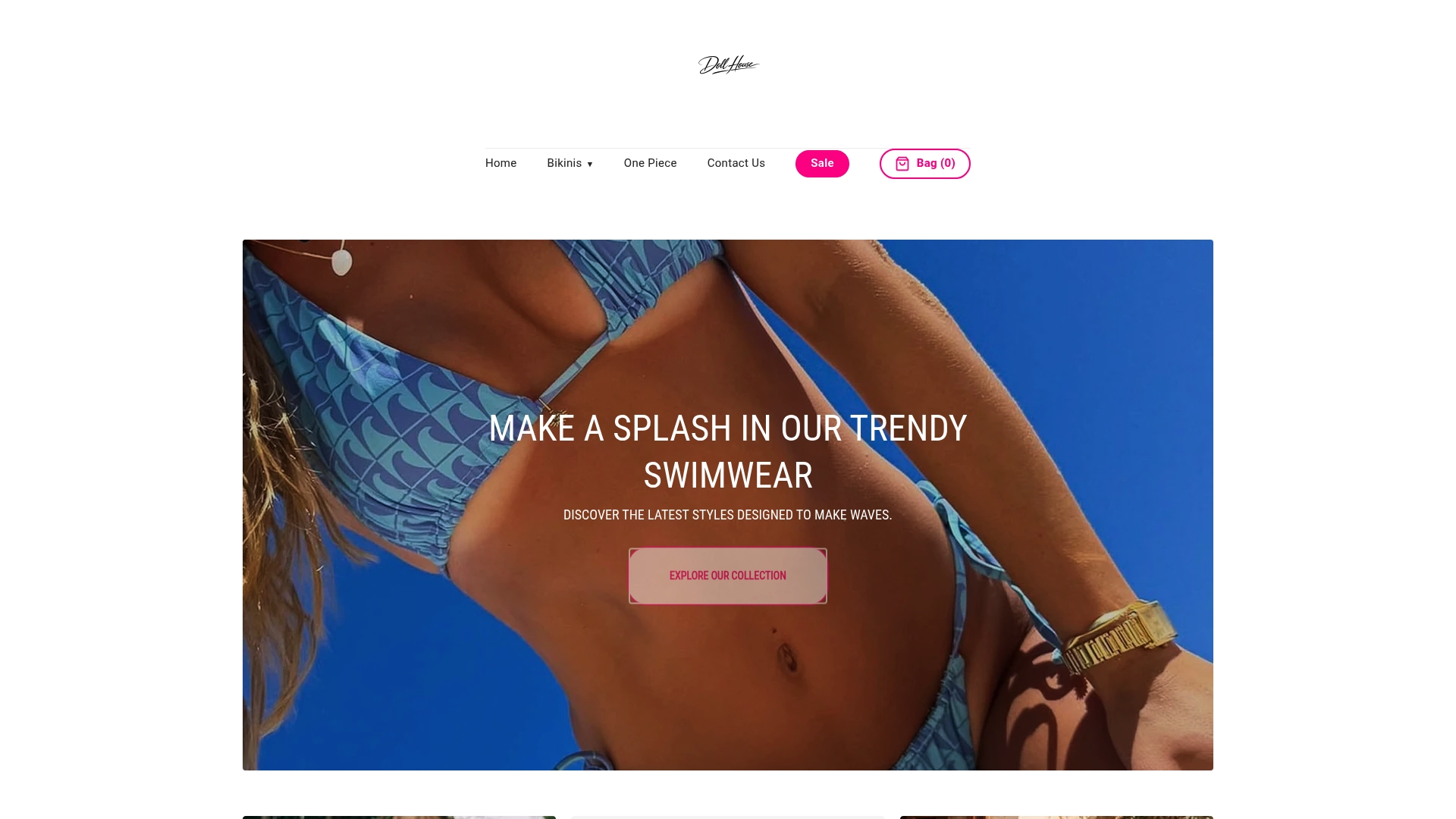
The one-piece swimsuit collection covers the full range from sleeveless structured cuts to fashion-forward styles with internal support. The bikini sets collection includes athletic two-piece options suitable for long sessions. Orders over $100 ship free. Size charts are on every product page. Check the return window on your order confirmation before your first paddle session, and use the try-on checklist above when the package arrives.
Sources
- Swimsuits: How to Choose | REI Expert Advice
- The Best Women’s Swimsuits for Surfing, Paddling, and More | Outside Online
- The Best Women’s Swimsuits for Surfing | The Inertia Tested
- The Best Swimsuits for Surfing, Paddling, and More | GearJunkie
- Best tummy-control swimsuits | Forbes
Dollhousebikinis product pages include size charts, fabric details, and care instructions for each style. Filter by one-piece or bikini sets to find options that match the spec checklist above.