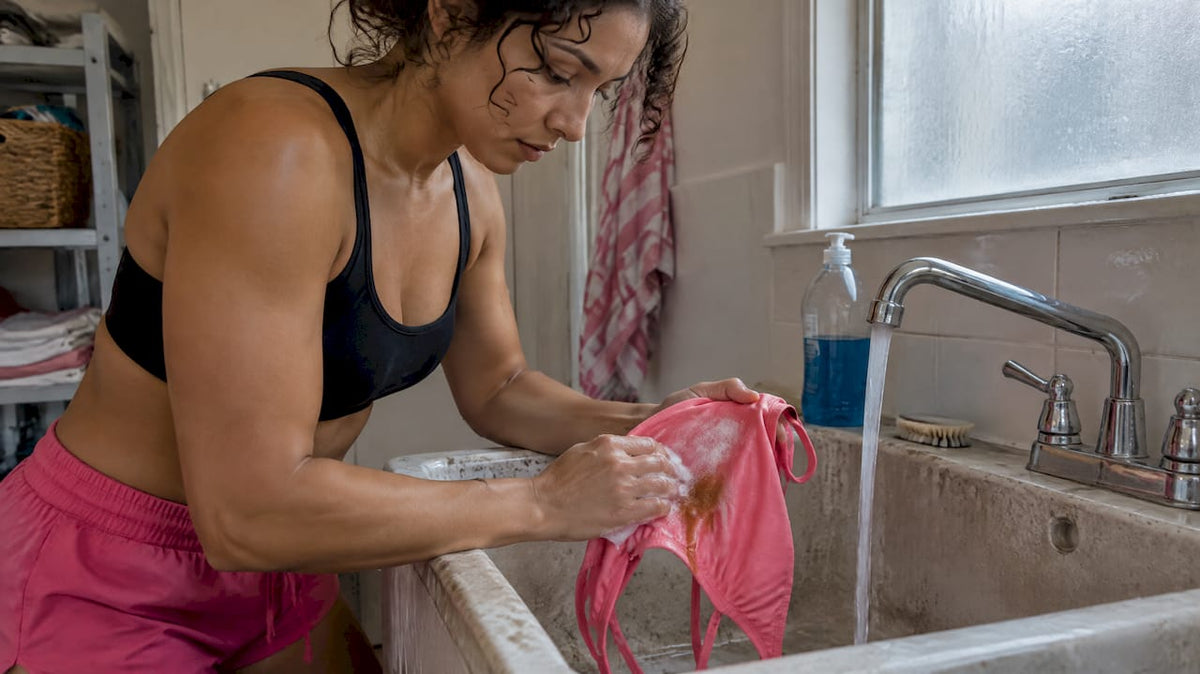
Yes, wet self-tanner can transfer onto a swimsuit, and the first move matters more than any product you reach for next. Flip the fabric inside out and flush the stained area with cold running water from the back, pushing the pigment out rather than deeper in. Skip the dryer, the iron, and direct sun until the mark is completely gone: heat locks self-tanner dye into fibers.
TL;DR:
- Treat fresh transfer within an hour by blotting diluted liquid dish detergent into the stain, then rinse thoroughly before laundering with enzyme detergent.
- If color remains, soak white fabric in oxygen bleach and colored fabric in a color safe oxygen product, testing a hidden seam first.
- Swimsuits need mild detergent, short enzyme wash cycles, and gentle oxygen soaks; avoid chlorine bleach and scrubbing, and consult a cleaner if two treatment cycles fail.
- Apply thin layers with a mitt, follow development time, and avoid sweat, tight straps, and swimming until the tan has fully developed.
- Swimming may rinse off temporary guide color, but it usually will not remove a developed DHA tan; chlorine, salt, sunscreen, and friction can speed fading.
Table of Contents
- Quick Prevention Checklist for Swimsuit-Safe Tanning
- Step-by-Step Stain Removal for Swimsuits and Other Garments
- Caring for Swimsuit Fabrics Without Damaging Stretch or Print
- Does Swimming Remove Self-Tanner or Just the Guide Color?
- Application and Dry Time Habits That Prevent Staining
- Our Swimwear Care Guidance for Everyday Stains
- Home Remedies for Self-Tanner Stains, and What to Skip
- Weighing a Fresh Tan Against a Favorite Swimsuit
- Find Swimwear Built for Beach Days, Not Just Photos
- FAQ
- Sources
Quick Prevention Checklist for Swimsuit-Safe Tanning
A few habits cut transfer risk before it starts. Self-tanner sits on skin as a thin film at first, and anything that rubs against it while it develops carries color away with it.
- Apply with a tanning mitt in thin, even layers rather than one heavy coat.
- Wipe off excess guide color if the product label allows it.
- Follow the manufacturer’s development time exactly, and wear loose, dark clothing during that window.
- Skip sweating, tight straps, and swimming until the product has fully developed.
- Use a barrier like a disposable pad or hygiene liner in high-rub spots such as underarms and waistbands; our guide to swimsuit hygiene liners covers how these work.
Step-by-Step Stain Removal for Swimsuits and Other Garments
Self-tanner stains behave like a combination of oil and dye, so a single rinse rarely finishes the job. Laundry sources point to a layered approach instead of one strong chemical.
- Turn the garment inside out and flush the back of the stain under cold running water to push the pigment out of the fibers.
- Blot from the outer edge inward with a diluted liquid dish detergent to break down the oily carrier, then rinse thoroughly. The Spruce recommends this degreasing step before any washing.
- Machine wash on the warmest setting the care label allows, using an enzyme (biological) detergent.
- If color remains, soak white fabric in an oxygen-based bleach per the package directions, or use a color-safe oxygen product on colored fabric after testing a hidden seam. Repeat the soak if needed.
- Never put the item in the dryer or in direct sun until the stain is fully gone. If the garment is dry-clean-only, bring it in promptly and point out the stain.
This sequence mirrors the American Cleaning Institute’s stain removal framework: pretreat, launder according to the label, and repeat as many times as it takes rather than reaching for hotter water or a dryer cycle. Laundry specialists at Speed Queen describe self-tanner as a dual stain, oil first, then dye, which is why degreasing before the oxygen soak makes a real difference.
Pro Tip: Keep a small bottle of liquid dish soap in your beach bag; treating a fresh stain within the hour beats any product you apply after it sets.
Caring for Swimsuit Fabrics Without Damaging Stretch or Print
Swimsuits are built from nylon, polyester, and elastane or spandex blends, and those stretch fibers and printed designs tolerate less aggressive treatment than cotton. A hidden seam or the inside of a tag is the right spot to test any stain treatment for 15 minutes before applying it to the visible stain.
- Stick to short enzyme wash cycles, color-safe oxygen soaks, and mild detergent on swimwear.
- Avoid chlorine bleach and hard scrubbing, both of which break down elastane and fade prints.
- Stop the DIY process and take the piece to a professional cleaner if the stain survives two full treatment cycles.
Swimwear fabric survives repeated gentle treatment far better than it survives one aggressive one. A 2026 systematic review of sunless tanning notes that DHA, the active ingredient in most self-tanners, reacts with skin proteins rather than sitting as a simple surface dye, which is part of why stains from it resist a single wash.
Does Swimming Remove Self-Tanner or Just the Guide Color?
Most self-tanners include a temporary guide color so you can see where you’ve applied product, separate from the dihydroxyacetone (DHA) that develops your actual tan over several hours. DermNet NZ explains that DHA reacts within the skin’s outer layer, while guide bronzers sit more loosely on the surface. That difference means a swim can rinse away guide color fairly easily but usually won’t strip a fully developed DHA tan right away. Chlorine, salt water, sunscreen, and friction from a swimsuit can still accelerate fading and raise the odds of transfer over repeated wet and dry cycles.

Application and Dry Time Habits That Prevent Staining
Most swimsuit stains trace back to putting on a suit before the tan has finished developing. A mitt applied in thin layers blends more evenly and leaves less excess product sitting on the skin’s surface.
- Blend carefully at the edges (wrists, ankles, hairline) where product tends to pool.
- Apply the night before you plan to swim so development finishes with hours to spare, and remove excess guide color first if your product allows it.
- Wear loose clothing during development, skip anything that causes sweating, and only rinse or shower according to the product instructions before pulling on a pale swimsuit.
Our Swimwear Care Guidance for Everyday Stains
Self-tanner isn’t the only thing that stains a swimsuit. Sunscreen, color bleed between fabric panels, and slow drying all shorten the life of a suit the same way a set-in tan mark does, and the same rules apply: test first, go gentle, skip the heat.
- Our guide to removing sunscreen stains walks through saving elasticity while treating oil-based marks.
- Our color bleeding guide covers how to stop dye transfer between panels in 15 to 30 minutes.
- Our swimsuit drying tips explain how to cut drying time without reaching for heat.
- Our bikini care guide rounds out a full routine for keeping suits looking new.
Following the care label and testing a hidden seam before any stronger treatment protects both the stretch and the print, whether you’re dealing with self-tanner, sunscreen, or just regular wear.
Home Remedies for Self-Tanner Stains, and What to Skip
A few household items show up often in stain advice, and some genuinely help. Liquid dish detergent is the most reliable one: it’s formulated to break down grease, and self-tanner formulas carry an oily base that plain water alone won’t lift. Applying it directly to the stain and letting it sit for a few minutes before rinsing gives the degreaser time to work.
A stain-lightening treatment isn’t a fit for colored swimwear, where it risks lightening the dye along with the stain.
Baking soda paste gets mentioned often online as a scrubbing agent, but swimwear fabric doesn’t hold up well to abrasion, so it’s worth skipping on anything with elastane or a printed design. White vinegar diluted with water is sometimes suggested as a mild pretreat, though it works better as a deodorizer than a stain lifter and shouldn’t replace the dish soap and enzyme wash combination. For stretch fabric specifically, the gentler the ingredient list, the better the odds the suit keeps its shape.

Weighing a Fresh Tan Against a Favorite Swimsuit
Nobody wants to skip self-tanner before a beach trip, and nobody wants to ruin a swimsuit doing it. The honest trade-off is that a little extra patience during application and a fast reaction to any transfer protect the suit far more reliably than any stain remover does after the fact. Two rules cover most situations: act within the hour, and keep the fabric away from heat until the mark is gone.
— Ryan
Find Swimwear Built for Beach Days, Not Just Photos
We offer swimwear selections intended for beach and poolside wear, along with care guidance to help extend the life of each piece.

Browse our full swimwear collection or shop bikini sets, tops, and bottoms to find your next suit, and pair it with a few prevention habits to keep self-tanner off the fabric from day one. If you’re also rethinking how you wash other stretch fabrics in your rotation, Contour’s guide to washing boxer briefs covers similar principles for preserving fit in elastic garments.
FAQ
Does swimming make self-tanner come off?
Swimming can rinse away temporary guide color fairly easily, but it usually won’t strip a fully developed DHA tan right away. DermNet NZ notes that DHA reacts within the skin’s outer layer, making it more resistant to water than surface bronzers.
Will self-tanner stain clothes?
Yes, wet or freshly applied self-tanner can transfer to fabric, especially light-colored swimsuits and clothing. Acting quickly with a cold-water flush and a degreasing step gives you the best chance of fully removing it.
What takes off self-tanner stains?
A cold-water flush from the back of the stain, followed by a liquid dish detergent treatment and an enzyme detergent wash, handles most fresh stains. The American Cleaning Institute recommends this pretreat-then-launder sequence, repeating as needed rather than increasing heat.
Does Dawn dish soap remove fake tan?
Liquid dish detergent, including grease-cutting formulas, helps break down the oily base in self-tanner stains, which is why The Spruce recommends it as a pretreatment step. It works best applied promptly and rinsed thoroughly before machine washing.
How do I handle an older, set-in self-tanner stain on a swimsuit?
Older stains typically need repeated oxygen-based soak cycles rather than a single treatment, and a hidden-seam colorfastness test is essential before applying any stronger product to swimwear. If two full cycles don’t lift it, a professional cleaner is the safer next step for delicate or printed fabric.
Sources
- Stain removal guide | The American Cleaning Institute
- How to get self-tanner stains out of clothing | The Spruce
- Triumph Over Self-Tanner Stains | Speed Queen
- Dihydroxyacetone — DermNet NZ
- Clinical use and safety of topical DHA: systematic review (ResearchGate entry)