
Three habits stop most swimsuit fading before it starts: rinse the suit in cool fresh water right after you get out, hand-wash it with a mild detergent instead of tossing it in the laundry, and air-dry it flat in the shade instead of the sun. Skip these steps and the damage compounds fast. Lab testing on swimwear fabric found breaking force dropped by roughly 65% after about 300 hours of chlorine exposure, which sounds abstract until you realize that adds up over a single active summer.
Do this after every swim:
- Rinse in cool water within 30 minutes of getting out, before chlorine or salt dries into the fibers.
- Hand-wash with a residue-free detergent, or use a short vinegar soak if the suit has no metallic trim.
- Press out water in a towel and lay the suit flat in the shade. Rotate suits so no single one takes daily abuse.
Key Takeaways
Rinsing within 30 minutes, hand-washing with mild detergent, and air-drying flat in shade together prevent most of the chlorine and UV damage that causes swimsuit fading.
| Point | Details |
|---|---|
| Rinse fast, rinse always | Chlorine and salt keep reacting with fabric until flushed out with fresh water. |
| Chlorine hours add up quickly | Breaking force drops sharply after 200 to 300 hours of cumulative chlorine exposure. |
| Hand-wash beats the machine | Cool water and mild detergent protect elasticity better than any wash cycle. |
| Never wring, never hang wet | Both cause permanent stretching that flat drying avoids entirely. |
| Rotate suits, retire tired ones | Giving fabric recovery time and knowing when to stop washing and start replacing saves money long term. |
Ready to swap in a suit built to hold its color? Browse the bikini sets collection or start with the original swimsuit, and pair it with the care routine above to keep it looking new for seasons, not weeks.
Table of Contents
- Why Swimsuits Fade: The Chemistry Behind Color Loss
- The 0 to 30 Minute Routine That Matters Most
- How to Wash a Swimsuit Without Fading or Stretching It
- Drying and Storing Swimsuits the Right Way
- Small Habits That Add Up to Big Fading Prevention
- Dollhousebikinis’ Care Resources for Longer-Lasting Swimwear
- What Actually Moves the Needle on Swimsuit Care
- Sources
Why Swimsuits Fade: The Chemistry Behind Color Loss
Fading isn’t just sun exposure wearing down dye. It’s a chemical breakdown happening at the fiber level, and three forces drive it: chlorine oxidation, UV chain scission, and heat.
Chlorine attacks the polymer chains in spandex and elastane, breaking bonds that give swimwear its stretch and snap-back. A study in the journal Polymers tracked this decline directly: breaking force fell notably after 200 hours in chlorinated water and dropped sharply by 300 hours. Two hundred hours translates to several weeks of regular swimming sessions with consistent chlorine exposure
“Exposure time to chlorine is the dominant factor in fabric weakening,” according to the aging study’s findings, more so than temperature or mechanical stress alone.
Polyester tends to resist UV-driven color loss better than polyamide (nylon) blends, though both degrade under repeated sun exposure. UV light breaks apart the same polymer chains from a different angle, snapping them into shorter fragments in a process called chain scission. That’s why dye starts looking dull and washed out long before the suit visibly falls apart.
Sunscreen and body oils make the problem worse. They trap chlorine and salt against the fabric surface, holding those chemicals in contact with the fibers longer than a quick swim would on its own. Watch for warning signs: elastic that’s slow to snap back, a yellowish tint creeping into whites and pastels, or a stiff, crunchy texture where the suit used to feel soft.
The 0 to 30 Minute Routine That Matters Most
What you do in the first half hour after swimming determines whether your suit lasts one season or five. Textile scientists point to immediate rinsing as the single most protective habit, because chlorine and salt keep reacting with fibers as residue dries on the fabric. Leave it wet and salty on a towel for an hour, and you’ve already lost ground.
Here’s the sequence:
- Rinse under cool, running water for a full minute, working the fabric gently with your fingers to flush out trapped chlorine or salt.
- If you swam in heavily chlorinated water or a hot tub, follow with a brief soak in a mild vinegar and water solution to help neutralize residual chlorine. Skip this step on suits with metallic hardware or delicate printed finishes, since vinegar’s acidity can dull metallic trims over repeated use.
- For ocean swims, a plain cold rinse is usually enough. Salt crystallizes as it dries and works into the weave, but it doesn’t demand the same chemical neutralizing that chlorine does.
- Never let a wet suit sit balled up in a beach bag for hours. That combination of heat, moisture, and trapped chemicals is exactly what accelerates fiber breakdown.
Pro Tip: Keep a small spray bottle of fresh water in your beach bag. A quick rinse-down the moment you towel off buys your suit real time before you get to a sink.
How to Wash a Swimsuit Without Fading or Stretching It
Hand-washing beats machine washing for one simple reason: it removes chlorine and oils without the friction that pulls at seams and stretches elastane past its recovery point.
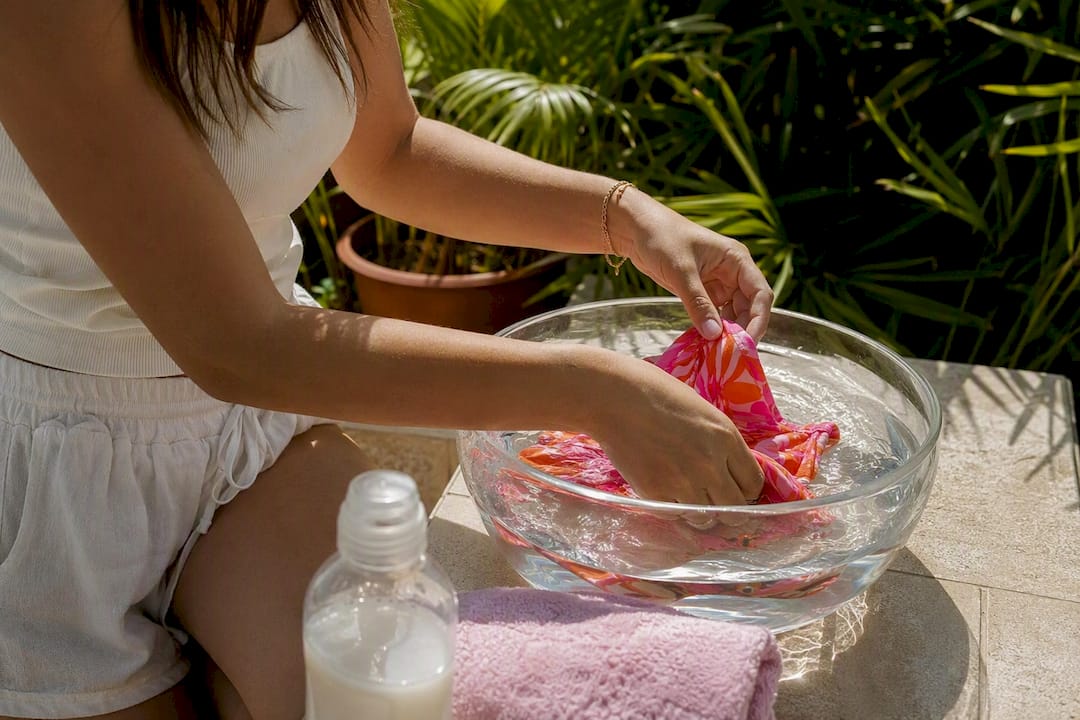
Fill a sink or basin with cool water, add a small amount of a pH-neutral or sport-specific swim detergent, and let the suit soak for five to ten minutes. Swish it gently rather than scrubbing, then rinse two or three times in clean water until no suds remain. Editors who cover swimwear care consistently point to cold water and mild detergent as the combination that best protects both color and elasticity.
Regular laundry detergent is too harsh for swimwear because most formulas contain brighteners and enzymes built for cotton, not spandex blends. A dedicated care guide notes that hand-washing in cool water and never wringing the fabric can stretch a suit’s usable life from one or two seasons to three to five years.
If you must machine wash:
- Use a mesh lingerie bag every time, no exceptions.
- Select the coldest, gentlest cycle available.
- Skip the spin cycle if your machine allows it, or use the lowest spin setting.
Never use bleach. It doesn’t just dull color, it breaks down elastane at the molecular level. Skip fabric softener too. It coats fibers with residue that traps heat and reduces the fabric’s stretch recovery over time. For a full walkthrough of wash settings and label symbols, Dollhousebikinis has a step-by-step washing guide worth bookmarking.
Drying and Storing Swimsuits the Right Way
Direct sun and heat are as damaging as chlorine, just slower to show it. UV rays keep breaking down dye and elastane long after you’ve left the pool, and a tumble dryer’s heat can permanently weaken spandex fibers in a single cycle.
The right method:
- Press excess water out in a towel. Never wring or twist.
- Lay the suit flat on a dry towel in a shaded, well-ventilated spot.
- Flip it once mid-dry so both sides get even air exposure.
- Once fully dry, store it in a cool, dark drawer, never in a sealed plastic bag, which traps moisture and invites mildew.
- Packing for a trip? Roll the suit in a breathable pouch rather than folding it tightly against zippers or buckles that can snag the fabric.
Hanging a wet suit by its straps seems harmless, but the weight of the water pulls the fabric down over time and causes permanent sagging that never bounces back. For lingering chlorine smell, a diluted baking soda rinse before the final rinse cycle usually clears it without any harsh chemicals.
| Point | Details |
|---|---|
| Dry flat, not on a hanger | Straps take the water weight and stretch permanently out of shape. |
| Shade beats sun every time | UV exposure keeps breaking down dye and elastane even after the swim ends. |
| Skip sealed storage bags | Trapped moisture invites mildew; a breathable drawer or pouch works better. |
Small Habits That Add Up to Big Fading Prevention
Cumulative wear is the real enemy, and small daily choices decide how fast it catches up with your suit.
- Rotate between two or three suits if you swim often. Giving elastane a day to fully recover between wears helps it hold its shape longer.
- Use a towel between your suit and pool decks, sand, or rough concrete. Abrasion wears down fabric surface fibers just as fast as chemical exposure.
- If sunscreen gets on the fabric before you’re in the water, rinse the spot immediately rather than letting it sit and oxidize under sun.
- Retire a suit once elastic stops snapping back, fabric feels brittle, or color loss doesn’t improve after a gentle wash. No amount of careful laundering restores fiber that’s already broken down.
Fabric choice matters here too. Some blends simply resist color loss better under repeated UV and chlorine exposure, which is worth knowing before your next purchase, not just during care season.
Dollhousebikinis’ Care Resources for Longer-Lasting Swimwear
Dollhousebikinis built a full Bikini Care Guide that walks through wash, dry, and storage steps specific to bikini construction, including seams and trims that need extra attention.
For readers who want more detail before or after this article, a few pages worth bookmarking:
- The swimwear fabrics guide breaks down which materials hold color better under UV and chlorine.
- The quality swimwear features guide covers construction details that affect durability beyond fabric alone.
- The seasonal wardrobe refresh guide helps you decide when rotation should turn into replacement.
This piece was reported and written by Ryan for Dollhousebikinis, drawing on published aging-test data and swimwear care research cited throughout.
What Actually Moves the Needle on Swimsuit Care
Most swimwear care advice treats every step as equally important, and that’s where it goes wrong. The lab data makes clear that chlorine exposure time, not one bad wash or one sunny afternoon, is what wears fabric down. That reframes the whole problem: you’re not trying to avoid a single mistake, you’re trying to reduce total hours of chemical contact over a season.
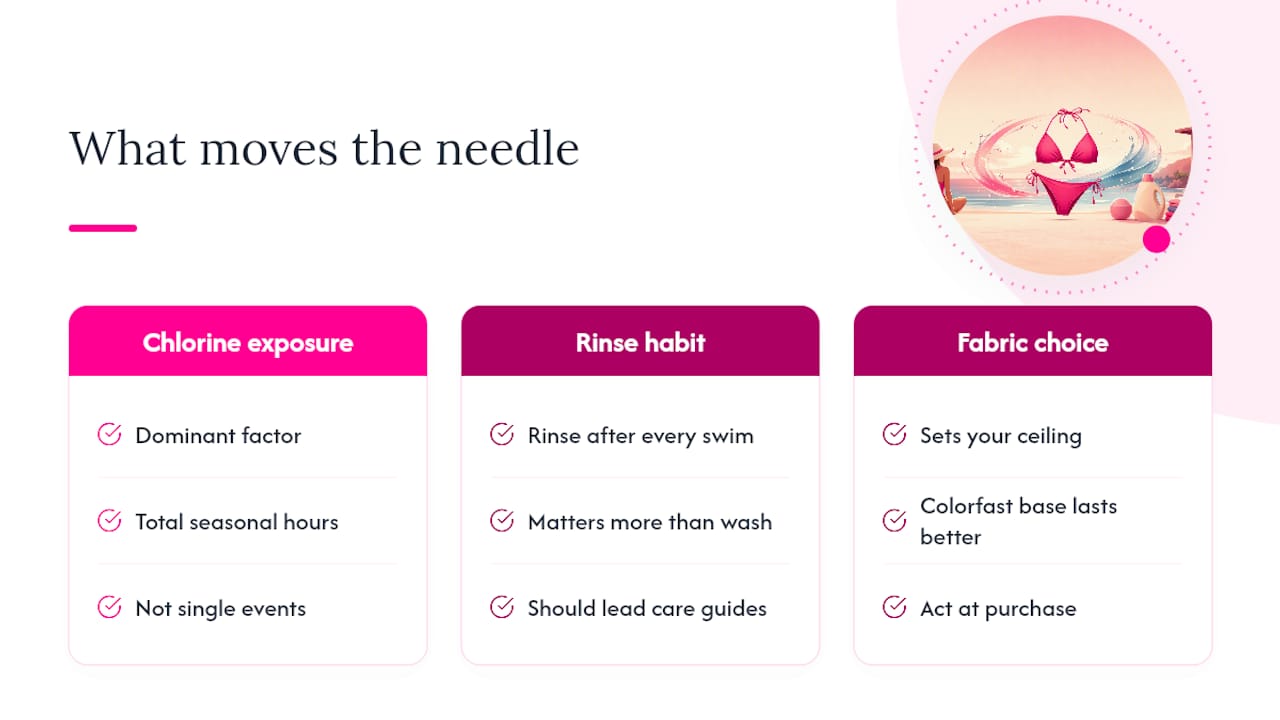
That means the rinse habit matters more than the wash habit. A suit rinsed immediately after every swim but machine washed occasionally will likely outlast one that’s hand-washed perfectly but left to dry chlorine-soaked in a beach bag for hours. Most care guides bury the rinse step under washing instructions, when it should lead.
The other overlooked point: fabric choice sets your ceiling before care even starts. A suit with a colorfast, well-built base fabric responds better to good habits than a cheaper blend ever will, no matter how careful you are. If you’re already following the vinegar soaks and flat drying, and your suit still fades fast, the fabric itself may be the limiting factor. That’s worth acting on at the point of purchase, not just at the sink.
— Ryan
Sources
- PMC article on swimwear exposure
- Polymers journal aging study on swimwear materials
- Forbes: How to care for swimwear