
A hygienic liner is a disposable adhesive guard stuck inside a swimsuit’s crotch panel so shoppers can try it on in a store; a sewn-in lining is the permanent fabric layer built into the suit itself. If your suit has one of these adhesive guards, peel it off and wash the suit before wearing it in water. Check the fit first with underwear on, and look the fabric over for any leftover residue.
TL;DR:
- Removing hygienic liners is essential before water exposure, and peeling them in one motion followed by washing helps prevent fabric damage.
- Sewn-in linings provide opacity, support, and fabric protection, and choosing the right material like tricot or power mesh affects comfort and durability.
- Most hygiene risks come from wearing wet suits for long periods or skipping pre-wear washing, not from the liners themselves.
- Proper suit care involves rinsing in cool water after use, hand washing in mild detergent, and avoiding dryers or damp storage to extend lifespan.
- Always test and remove retail liners before wearing new suits, and opt for quality suits with built-in linings to ensure long-lasting fit and support.
Table of Contents
- Swimsuit Hygiene Liners Explained: Retail Guards vs. Sewn-In Linings
- Why Permanent Linings Exist and When They Actually Matter
- Swimwear Hygiene Tips: What’s Actually Risky and What Isn’t
- How to Remove Sticky Liner Residue Without Ruining the Fabric
- Caring for Swimsuits and Linings So They Actually Last
- A Buyer’s Checklist Before and After You Order
- A Straight Answer From Someone Who’s Looked at a Lot of Swimsuits
- Lined Swimsuits Built to Handle Real Wear
- Where This Advice Comes From
- Sources
Swimsuit Hygiene Liners Explained: Retail Guards vs. Sewn-In Linings
Retail hygienic liners are thin, often plastic-backed pads with an adhesive strip that sticks to the inside of a swimsuit’s gusset. Stores add them so multiple customers can try on the same suit before it sells, and manufacturers like True Fit Try On design them specifically for that fitting-room function, not for ongoing wear. A permanent sewn-in lining, by contrast, is stitched into the suit as part of its construction and stays there for the life of the garment.
Telling them apart takes a quick look and a touch:
- A retail liner has a pull tab, a plastic or film backing, and a tacky adhesive surface.
- A sewn-in lining is fabric, usually tricot, attached with a stitched seam rather than glue.
- If it peels away in one motion, it’s a hygienic liner; if it’s sewn into the seam allowance, it’s staying put.
Why Permanent Linings Exist and When They Actually Matter
Sewn-in lining isn’t decorative. It keeps the suit opaque when wet, which matters more than most shoppers realize since wet spandex without lining goes see-through fast. It also cuts down on chafing against seams and, in structured styles, adds shape that the outer fabric alone can’t hold. According to Spandex Warehouse, a quality lining also absorbs body oils, acting as a buffer that protects the outer fabric and extends the suit’s life.
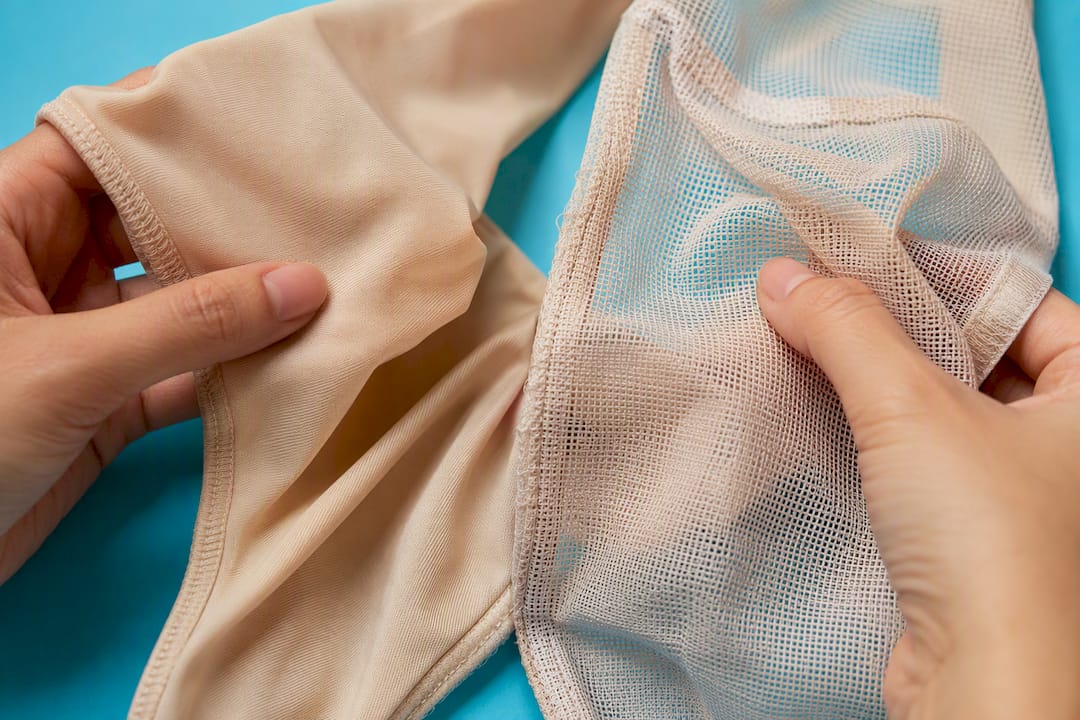
Lining fabric choice changes what you feel against your skin. Soft tricot lining prioritizes comfort, while power mesh adds targeted support and better recovery after stretching, according to Fabric + Flow. Many well-made suits combine both: tricot where it touches skin, power mesh where the body needs holding in place. The stretch and recovery of the lining should roughly match the shell fabric, or one layer will sag ahead of the other over time, as explained in Top Designer Swimwear — Urbalenti™ NYC.
Pro Tip: Stretch the lining and the outer shell side by side before buying. If the lining recovers less well than the shell, sagging may occur over time.
Swimwear Hygiene Tips: What’s Actually Risky and What Isn’t
Damp swim fabric is a reasonable place for skin bacteria and yeast to hang around briefly, and staph is among the organisms that can colonize skin and contaminated garments, according to Mayo Clinic. That doesn’t mean every worn swimsuit is a health hazard. Ordinary washing handles most of the risk, and hygienic liners themselves were never designed as a medical infection barrier. They’re a courtesy layer, not a shield, according to WomensSwim.
A few conditions raise the stakes:
- Wearing a wet suit for hours without rinsing it.
- Buying a returned suit that shows visible soil or an odor the tag can’t explain.
- Skipping the pre-wear wash entirely on a brand-new suit.
If a suit shows visible discoloration, a persistent smell after washing, or you develop redness or swelling after wearing it, that’s your cue to stop wearing it and, if symptoms don’t clear up, talk to a doctor rather than guess.
How to Remove Sticky Liner Residue Without Ruining the Fabric
Fresh adhesive comes off easiest. Here’s the order that works without damaging spandex:
- Peel the liner off in one slow motion, then soak the spot in warm water for a few minutes to loosen what’s left.
- Rub a small amount of baby oil or plain cooking oil into the residue, let it sit for a couple of minutes, then wipe.
- Spot-test any oil or cleaner on a hidden seam first, since dye reactions vary by fabric.
- Skip acetone and nail polish remover unless you’ve confirmed on a hidden patch that they won’t degrade the elastane or lift the dye, according to Chance Loves Swimwear.
- Hand wash the whole suit afterward to clear any oily film before wearing it in water.
Pro Tip: If residue still shows after two removal attempts, stop. Repeated scrubbing on the same spot weakens spandex faster than the glue itself does.
When residue won’t budge or leaves a visible mark on light-colored fabric, professional cleaning or simply replacing the suit beats risking a hole in your favorite piece.
Caring for Swimsuits and Linings So They Actually Last
Rinse in cool water right after you get out, before chlorine or salt sets into the fibers. Then hand wash every one to three wears in cold water with a mild detergent, soaking for 15 to 30 minutes. Wirecutter and other testing-based guides back cold water and gentle handling as the standard for both hygiene and fiber longevity.
Skip the dryer and the wringing. Press excess water out in a towel, then lay the suit flat in the shade, since Forbes notes that leaving wet suits in plastic bags or damp hampers speeds up mildew growth and fiber breakdown.
A few more habits worth building in:
- Use a mild detergent made for delicates, not your regular laundry soap.
- Avoid fabric softener and bleach, both of which break down spandex fibers.
- Rotate between two or more suits so each one dries fully before its next wear.
- Never store a suit while it’s still damp, even folded in a drawer.
For more on keeping colors from fading during this routine, Dollhousebikinis has a guide to preventing swimsuit fading worth bookmarking alongside your wash routine.
A Buyer’s Checklist Before and After You Order
Before buying: check for a sewn-in gusset, try the suit on over underwear, and read the care label for fiber content. After it arrives: remove any retail liner, wash the suit before its first swim, and keep at least two suits in rotation. Dollhousebikinis builds construction guidance into resources like its breakdown of quality swimwear features, covering the same lining and fabric details that determine how a suit holds up season after season.
A Straight Answer From Someone Who’s Looked at a Lot of Swimsuits
Most of the anxiety around hygiene liners comes from not knowing what they are. Peel it off, wash the suit, wear it with confidence. The fabric science matters more than the sticker ever did.
— Ryan
Lined Swimsuits Built to Handle Real Wear
Skip the guesswork on lining quality. Dollhousebikinis constructs its suits with proper sewn-in linings from the start, so you’re not left wondering whether a suit will hold up past one season at the beach.

The original swimsuit is built with lining that supports coverage and shape wash after wash, while styles like the floral two piece set pair soft lining with the structure a bikini top needs to actually stay put. If you’re shopping for a bottom with a proper gusset lining, the lace bikini set is a solid place to start. Pair any new suit with the care routine above, rinse it after every wear, and it’ll outlast a suit that skipped the lining details entirely. Browse the current collection and check sizing before your next order.
Where This Advice Comes From
The construction claims here draw on Spandex Warehouse’s explainer on sewn-in lining and Fabric + Flow’s comparison of lining materials. Health context comes from Mayo Clinic’s staph infection page, and manufacturer specifics on retail liners come from True Fit Try On’s product documentation.
Sources
- The practical importance of swimsuit liners, explained — Spandex Warehouse
- Staph infections — Mayo Clinic
- Sew This or That: Swim Lining vs. Power Mesh — Fabric + Flow