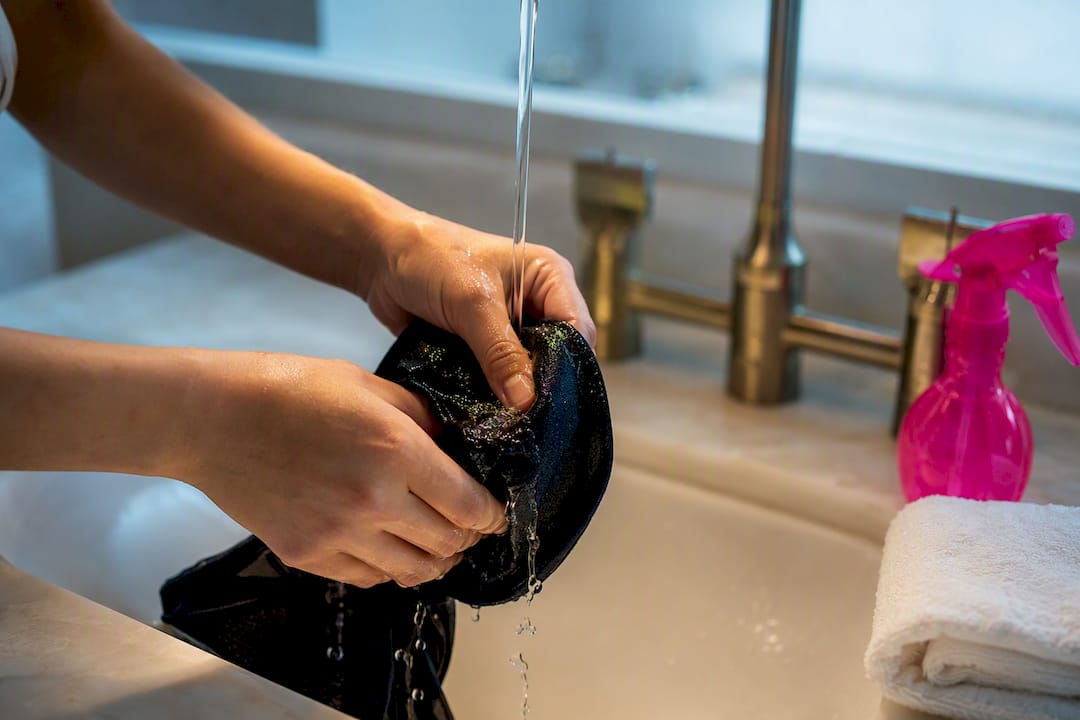
Rinse the swimsuit in cold water immediately and separate it from every other garment. That single move stops most color bleeding swimwear problems before they become permanent stains. Some bleeding is unfixable if the dye or fabric fiber has already broken down, but a cold soak with a color-catcher sheet resolves the majority of cases within an hour.
TL;DR:
- Immediate cold water rinsing and soaking with a color-catcher sheet can resolve most dye bleed issues within an hour, but some damage may be irreversible.
- Protecting swimwear from damage requires rinsing right after swimming, avoiding hot water and bleach, and drying in the shade to preserve fabric elasticity and color.
- Chlorine, saltwater, and UV exposure significantly weaken fabric over time, with up to 66% strength loss after prolonged chlorinated and sunlit conditions.
- Fading dye indicates fiber damage, and suits with lost elasticity or torn fabric should be replaced instead of repaired.
- Using polyester-blend suits, rotating multiple suits, and avoiding heat-based drying extend swimwear lifespan and colorfastness.
Table of Contents
- What To Do the Moment You Spot Color Bleeding Swimwear
- Washing and Drying Habits That Stop Bleeding Before It Starts
- Home Remedies That Actually Pull Dye Out
- Why Swimwear Bleeds and When the Damage Is Permanent
- Deciding Between Repair, Redye, or Replacement
- Dollhousebikinis Care Tips Backed by Textile Research
- What Actually Protects a Swimsuit Long Term
- Ready for a Colorfast Replacement or Backup Suit
- Sources
- FAQ
What To Do the Moment You Spot Color Bleeding Swimwear
Stop the washing machine the second you notice color running. Every extra minute in warm, agitating water pushes more dye into the fibers of whatever it touched.
Work through these steps in order:
- Kill the cycle. Pull the swimsuit and anything it stained out of the machine before it advances.
- Rinse under cold running water. Hold the suit under the tap until the runoff turns clear, not just lighter.
- Soak for 15 to 30 minutes. Use cold water with a dye-trapping sheet or a small amount of mild detergent.
- Skip the heat and bleach entirely. Hot water reopens dye that’s already loosened, and chlorine bleach attacks both color and elastane.
- Air-dry in shade. Never wring the fabric or toss it in the dryer. Lay it flat away from direct sun.
- Check and repeat. If other clothes still show tint, soak them again in fresh cold water and a new color-catcher sheet. If a stain survives two soaks, it’s time for a professional cleaner or a replacement suit.
Pro Tip: Keep a color-catcher sheet in your beach bag. Tossing one into a cold rinse the moment you get home catches loose dye before it ever reaches a washing machine.
Washing and Drying Habits That Stop Bleeding Before It Starts
Most color bleeding swimwear complaints trace back to habits, not bad luck. Chlorine, salt, sunscreen, and body oils all sit on the fabric after a swim, and every hour they stay there they work the dye loose and weaken the fibers underneath.
A short, consistent routine solves this:
- Rinse in cold or lukewarm water right after swimming, before the suit even dries.
- Hand wash with a gentle, pH-neutral detergent whenever possible.
- If you must machine wash, use a cold gentle cycle inside a mesh bag, and never mix the suit with other laundry.
- Never use chlorine bleach, and avoid high heat in both washing and drying.
- Dry flat in the shade. Direct sun bleaches color and breaks down fiber elasticity at the same time.
- Rotate between two or three suits instead of wearing one every day, and never leave a wet suit balled up in a closed bag.
- Follow the care label’s temperature guidance. It’s calibrated to the specific fabric blend.
Dollhousebikinis’s care guide on preventing swimsuit fading walks through this same rinse-first routine in more detail.
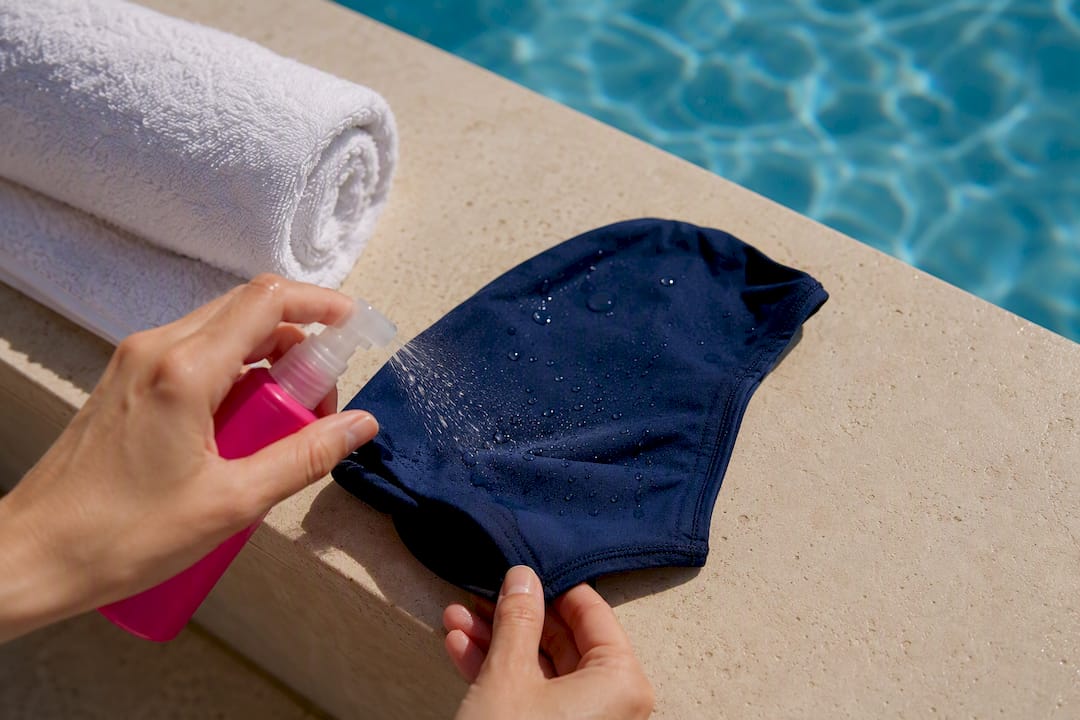
Pro Tip: If you swim daily, keep a spray bottle of cold water at the pool deck. A quick spritz-and-blot right after you towel off buys you time until you can do a full rinse at home.
Home Remedies That Actually Pull Dye Out
A few kitchen-cabinet fixes work better than most people expect, but each one has limits worth knowing before you reach for it.
- Vinegar soak. Mix about one tablespoon of white vinegar per quart of cold water and soak for 20 to 30 minutes. It helps set loose dye on some fibers, but skip it on suits with metallic trims or fading elastane, and expect a faint vinegar smell until the next wash.
- Salt soak. A tablespoon of salt per quart of cold water can help on freshly dyed fabric that hasn’t fully cured, though it does little for a suit that’s already been worn and washed several times.
- Oxygen-based color-safe bleach. Follow the product’s stated ratio, use cool or lukewarm water only, and never exceed the label’s soak time. This is the strongest of the three options for lifting set-in stains without stripping color.
- Color-catcher sheets. Drop one into any soak or wash cycle. They trap loose dye in the water instead of letting it land on other fabric, though they can’t undo dye that’s already bonded wrong.
What to avoid entirely: chlorine bleach, any hot-water soak, and scrubbing the fabric hard enough to fray it. Aggressive cleaning is a fast way to wreck the elastane that gives a suit its stretch.
Why Swimwear Bleeds and When the Damage Is Permanent
Dye holds onto swimwear fabric with different strength depending on the fiber. Polyester bonds dye through a heat-set process, making it the most colorfast material to begin with. Polyamide, better known as nylon, absorbs dye more loosely, which is why nylon-heavy suits fade and bleed faster. Elastane carries almost no dye of its own and just stretches around whatever fiber it’s blended with.
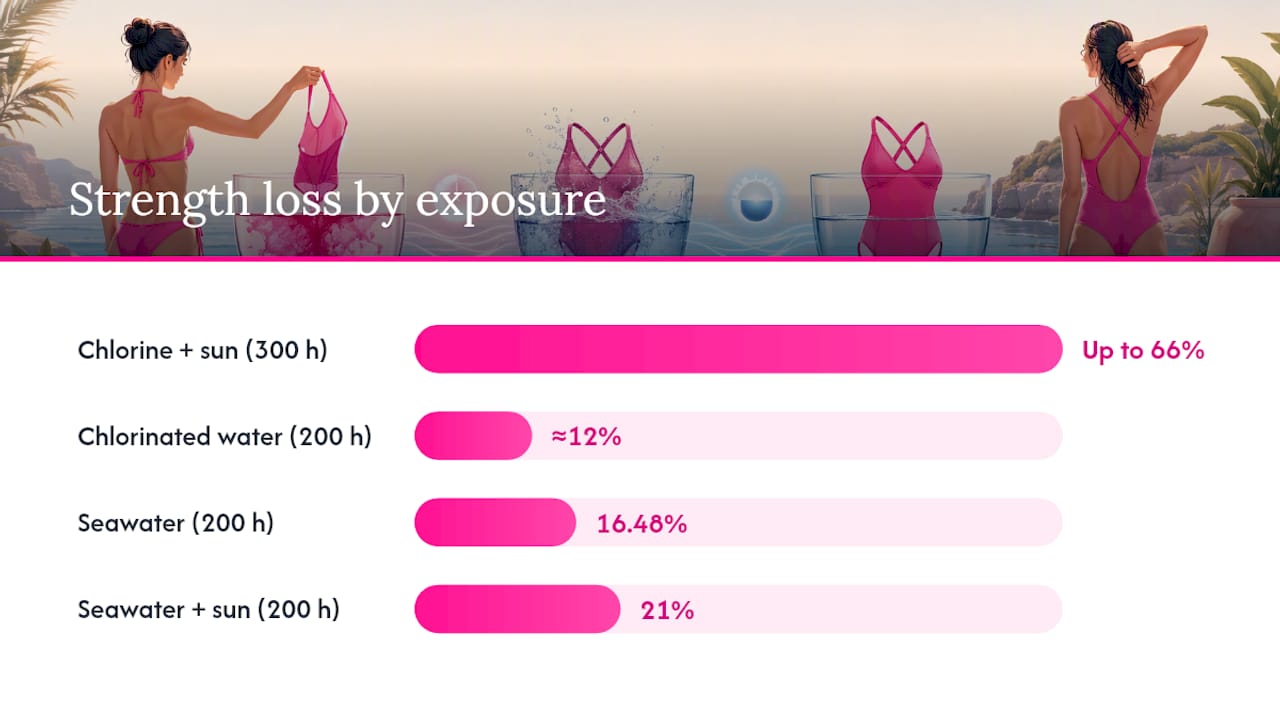
Chlorine and ultraviolet light speed up both dye loss and physical breakdown. Laboratory aging tests found that swimwear fabric exposed to chlorinated water and sunlight for 300 hours lost up to 66% of its breaking force, and separate accelerated aging trials recorded a roughly 12% strength drop after just 200 hours, climbing sharply from there. Seawater causes similar damage: fabric aged in natural seawater plus sunlight showed breaking-force reductions of 16.48% after 200 hours and 21% when sun exposure was combined with saltwater.
Pool chemistry matters too. Fabric degradation accelerates sharply when pool pH drops below 5.0, while a properly balanced pool sits between 7.0 and 7.2.
| Exposure factor | Effect on fabric | Approximate strength loss |
|---|---|---|
| Chlorine + sun, 300 hours | Fiber breakdown, dye loss | Up to 66% |
| Chlorinated water, 200 hours | Early tensile weakening | Roughly 12% |
| Seawater, 200 hours | Moderate strength reduction | 16.48% |
| Seawater + sun, 200 hours | Combined UV and salt damage | 21% |
Fading dye is one problem. Reduced stretch, visible thinning, or fabric that starts to pill or tear is another, and it means the fiber itself is compromised, not just the color sitting on top.
Deciding Between Repair, Redye, or Replacement
A suit with fading color but intact elastic is worth saving. One that’s lost its stretch or developed thin spots is not.
- Replace it if the elastic has gone slack, the fabric feels noticeably thinner in high-stress areas, or you spot holes near seams.
- Try an at-home redye on cotton-blend cover-ups or low-elastane pieces. It’s cheap and fast, but results are uneven on synthetic swim fabric.
- Send it to a professional dyer for a suit you genuinely love and that still has structural integrity. Expect a better, more even result than a home kit, at a higher cost.
- Repurpose or donate suits that are faded but still functional. A stained bikini top can become a workout crop or a dye-project piece instead of landfill waste.
Dollhousebikinis Care Tips Backed by Textile Research
Two research-backed habits do more for color retention than anything else: rinsing within the first minute after swimming, and keeping suits away from prolonged heat and direct sun. Both habits directly counter the chlorine and UV damage documented in textile aging research.
Dollhousebikinis’ own care guide for washing and maintaining a bikini and its longer guide on making swimwear last both build on this same principle.
A few shopping habits help before a stain ever happens:
- Look for higher polyester-blend suits when you want bold prints that stay bright over many wears.
- Save nylon-heavy or delicate elastane pieces for occasional wear rather than daily laps.
- Rotate suits if you swim in chlorinated pools often, since heavy chlorine exposure is the fastest route to both fading and fiber fatigue.
What Actually Protects a Swimsuit Long Term
Rinse within 30 to 60 seconds of getting out of the water. Rotate at least two suits so no single piece takes daily chlorine or sun damage. That’s the one habit that separates a suit that lasts two summers from one that fades by July.
The mistakes I see repeated in customer questions are almost always the same: a hot-water rinse “to get it really clean,” or a few minutes in the dryer “just to speed things up.” Both moves undo more color and structural integrity than an entire season of pool visits. Skip them, and a suit will genuinely outlast its warranty against fading.
— Ryan
Ready for a Colorfast Replacement or Backup Suit
If your current suit is past saving, a colorfast swimsuit built from a solid polyester blend is a better bet than another round of redye kits and dye-trapping sheets. The company offers fashion-forward styles alongside care guides so a new suit doesn’t end up in the same soak-and-rinse cycle a year from now.
The Swimsuit is a starting option if you want a piece that holds its color through repeated pool or beach days. If you’d rather build out a rotation so no single suit takes the brunt of chlorine or sun exposure, a two-piece swimsuit set gives you mixable pieces to alternate through the week. Browse either page, check sizing against the guide, and add a backup suit to your cart before your next trip.
Sources
- Do I have to rinse out my swimsuit after the pool? A textile scientist has the answer
- The Impact of Chlorinated Water and Sun Exposure on the Durability and Performance of Swimwear Materials
FAQ
How do you fix color bleed on a swimsuit?
Rinse it immediately in cold water, then soak it for 15 to 30 minutes with a color-catcher sheet or a small amount of oxygen-based color-safe bleach. Skip hot water and chlorine bleach, since both set the stain instead of lifting it.
What is a pubikini?
A pubikini refers to a very low-rise bikini bottom style cut to sit below the natural waistline. It’s a style choice unrelated to fabric composition or colorfastness.
How do you get color bleed out of already-dry clothes?
Re-wet the stained item and soak it in cold water with a color-catcher sheet or color-safe oxygen bleach for 20 to 30 minutes, checking progress periodically. Dried-in stains take longer to lift than fresh ones, and some discoloration may not fully release if it has set for several days.
Does blood leak out of period swimwear?
Period swimwear is built with an absorbent, leak-resistant layer designed to hold light flow without leaking during normal swimming, though it isn’t rated for heavy flow days. Rinse it promptly after wear using the same cold-water routine recommended for any colored swimsuit to protect both hygiene and dye retention.