
The fastest safe way to dry swimsuits fast is mechanical extraction, either a towel roll or a brief spin in a salad spinner, followed by flat drying in front of a fan. Skip the tumble dryer and skip direct sun; both speed things up while quietly wrecking spandex and fading color. Expect a fully dry suit in a few hours, depending on fabric and airflow, not minutes.
TL;DR:
- Mechanical extraction methods like towel rolling or short spins in a salad spinner remove most surface water without stressing seams or elastic.
- Airflow drying with a fan in shade is the fastest safe way to dry swimsuits, avoiding heat and direct sunlight which damage fabric and cause fading.
- Heat sources such as tumble dryers or radiators degrade spandex bonds, leading to sagging and loss of elasticity over time.
- Fabrics like nylon dry slightly faster and feel softer but are more vulnerable to chlorine and UV damage compared to polyester, which maintains shape and color longer.
- Combining towel extraction with fan-assisted flat drying significantly reduces total drying time and prolongs swimsuit lifespan.
Table of Contents
- Fast, Safe Methods to Dry Swimsuits Fast, Ranked
- Salad Spinner Tricks, Towel Presses, and Travel Fixes
- The Real Reason Heat and Sun Wreck Swimsuits
- Does Fabric Type Change How You Should Dry It?
- A Step-by-Step Routine for Right After You Swim
- Using Microfiber Cloths to Pull Moisture Fast
- What Actually Helps Swimsuits Last Between Washes
- Why Extraction Beats Heat Every Time
- Sources
- FAQ
Fast, Safe Methods to Dry Swimsuits Fast, Ranked
Not every method that promises quick drying swimwear actually protects the fabric. Some just move the damage to next month, when the elastic gives out or the color goes patchy. Here is how the realistic options stack up when you weigh speed against what they do to the suit over time.
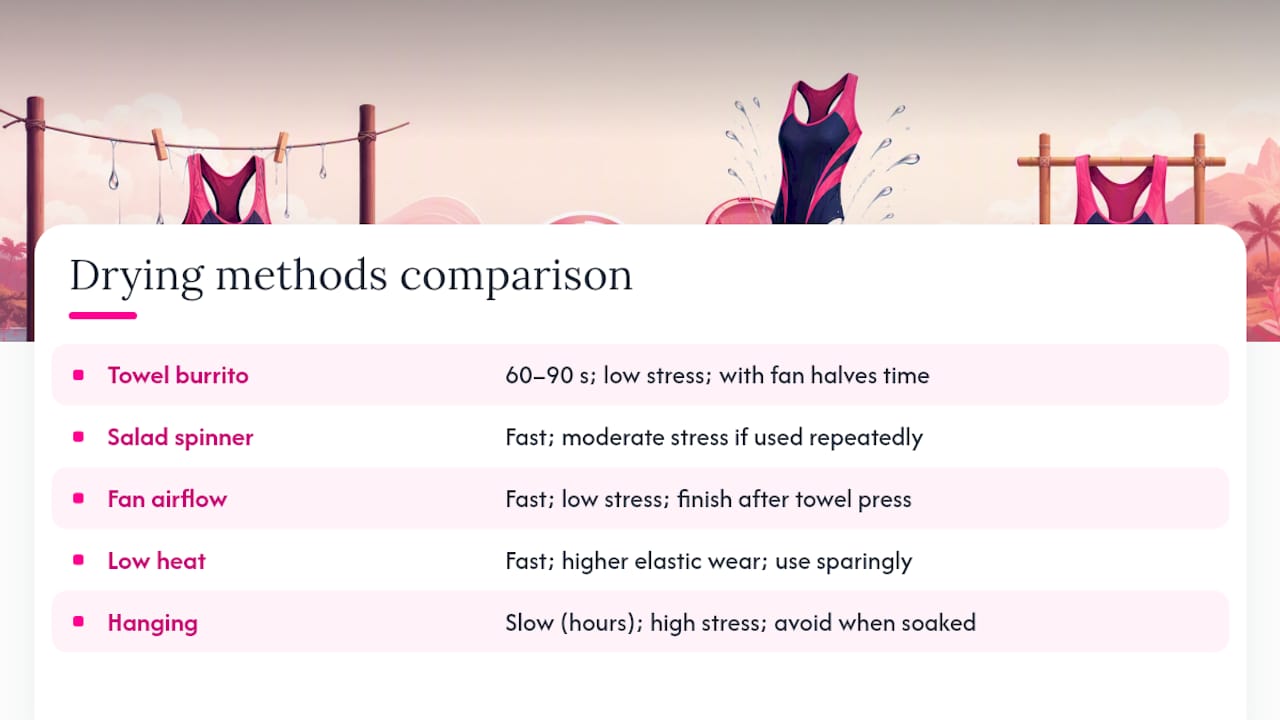
Towel burrito. Lay the suit flat on a clean, dry towel, roll it up tight like a burrito, and press down firmly along the length of the roll. This pulls water out through gentle compression rather than twisting, so there’s no stress on the seams or elastic. It takes about 60 to 90 seconds and removes a surprising amount of surface water before the suit ever touches open air.
Salad spinner or centrifuge alternative. A kitchen salad spinner works as a low-force centrifuge. Place the rinsed suit inside, close the lid, and spin in short bursts of 10 to 15 seconds rather than one long cycle. Consumer testing and pool-industry write-ups on drying a swimsuit fast confirm this trick pulls out water quickly, though repeated heavy spinning on any device accelerates fiber wear over time.
Fan and airflow. Laying a suit flat in front of a box fan or near an open window cuts drying time dramatically compared to still air. Moving air evaporates surface moisture without adding heat, which is the whole point: airflow dries, heat damages.
Low heat, used carefully. Draping a suit near a radiator or using a dedicated pool-deck swimsuit dryer can work in a pinch, but these tools trade longevity for speed. Reporting on rapid drying devices notes they get suits wearable fast but wear down elastic faster over repeated use.
Pro Tip: Combine methods for best results: towel-press first to remove the bulk of the water, then finish with fan-assisted flat drying. You’ll cut total drying time nearly in half compared to air-drying alone.
Skipping extraction and going straight to hanging is the slowest and most damaging option on this list, since a soaked suit left to air-dry on its own can take most of a day and stretches out under its own weight the whole time.
Salad Spinner Tricks, Towel Presses, and Travel Fixes
Getting a wet suit dry when you’re at the beach, on the road, or crammed into a hotel bathroom comes down to technique, not equipment. Here’s a repeatable protocol.
- Rinse first, always. Cold water only, no wringing. Wringing twists spandex fibers in ways they don’t recover from.
- Load the spinner correctly. Don’t overfill it. One suit at a time, positioned so it doesn’t bunch against the sides.
- Spin in short intervals. Ten to fifteen seconds, check the suit, repeat if needed. Long, uninterrupted spins create localized fiber drag exactly where the fabric presses hardest against the spinner wall.
- Towel-press as a backup. No spinner available? Roll the suit tightly in a bath towel and stand on it, or press with both hands, for 30 seconds.
- For travel, use the sink. Hand-press the suit against the basin, then roll it in a hotel towel. A compact travel spinner, if you pack one, does the same job in less space than a full-size version.
The warnings matter as much as the technique. Never wring a swimsuit like a dish rag. Never put it anywhere near a metal-drum home dryer, even on a no-heat setting, since the tumbling action alone stresses seams. And resist the urge to over-spin “just to be sure.” Once the bulk of the water is out, more spinning just adds wear for no real drying benefit.
The Real Reason Heat and Sun Wreck Swimsuits
Heat and mechanical stress attack spandex at the fiber level. Forbes Vetted’s swimwear care guidance is blunt on this point: sustained heat from a tumble dryer permanently degrades elastane, and even low-heat settings can damage the thermoplastic fibers that give a suit its stretch. That’s why a suit that’s been through the dryer a few times starts sagging in the seat or gaping at the straps.
Sun does different damage. UV light breaks down dye molecules through a process called photolysis, fading bright colors faster than ordinary wear would. Care guidance for spandex garments also flags a second sun-related problem: hanging a dripping suit in direct light adds gravitational stretch on top of UV fade, stretching straps and waistbands out of shape while they’re most vulnerable, fully saturated with water.
- Tumble dryers: heat breaks down spandex bonds permanently.
- Direct sun: UV fades dye and accelerates fiber breakdown.
- Hanging wet: gravity stretches saturated fabric before it sets back into shape.
A suit dried flat in shade, away from both heat sources, keeps its shape and color through many more wears than one dried on a clothesline in full sun.
Does Fabric Type Change How You Should Dry It?
Yes, and the difference is bigger than most swimmers realize. Nylon and polyester blends respond to water, chlorine, and sun in noticeably different ways, according to fabric research from RailTec. Nylon feels softer and dries a bit faster on its own, but it holds up worse against chlorine and UV exposure over repeated swims. Polyester takes slightly longer to dry but keeps its shape and color better under the same conditions.
Either way, any suit with spandex or elastane in the blend needs gentle extraction and zero heat, full stop. That’s true whether it’s 100% nylon or a polyester blend.
- Rinse in cold water immediately after swimming, never hot.
- Add an optional rinse with a splash of distilled white vinegar in the water to help neutralize chlorine residue.
- If machine washing, use a mesh laundry bag on the delicate cycle, never a regular spin.
- Lined suits and padded cups trap more water in the seams, so they need a longer, gentler press rather than a quick spin.
Construction matters as much as fiber content. A heavily lined bikini top holds water in the padding long after the outer fabric feels dry, which is why it’s worth checking the inside layer before declaring a suit ready to pack.
A Step-by-Step Routine for Right After You Swim
- Rinse immediately in cool, fresh water. Chlorine and salt residue left on the fabric accelerates elastic breakdown, so don’t let a wet suit sit in a bag.
- Add a quick vinegar rinse if you’ve had heavy chlorine exposure, a splash in a basin of cool water for a minute helps neutralize the chemical before it sets into the fibers.
- Squeeze gently, no wringing, to release the first wave of water.
- Choose your extraction method. Towel burrito for convenience, salad spinner for speed.
- Lay flat in a ventilated spot, ideally with a fan running nearby, and flip the suit halfway through drying so both sides get even airflow.
Pro Tip: If you need to pack a suit before it’s fully dry, roll it in a dry towel inside a breathable mesh bag rather than a sealed plastic one. Sealed bags trap moisture and invite mildew within hours.
For a deeper walkthrough of wash cycles and detergent choices, Doll House Bikinis’ guide on how to wash and care for your bikini covers the steps between swims, not just the emergency dry.
Using Microfiber Cloths to Pull Moisture Fast
A microfiber cloth does a job a regular bath towel can’t quite match: it grabs water at the fiber level instead of just pressing it around. Microfiber’s split-fiber structure creates far more surface area than cotton terry cloth, so it lifts moisture out of a swimsuit’s weave rather than pushing it deeper into the seams.
Press, don’t rub. Lay the suit flat on a microfiber cloth, fold the cloth over the top, and press down firmly for a few seconds at a time, moving across the whole suit. Rubbing creates friction that can pill delicate fabric or loosen decorative trim, especially on suits with beading or metallic thread.
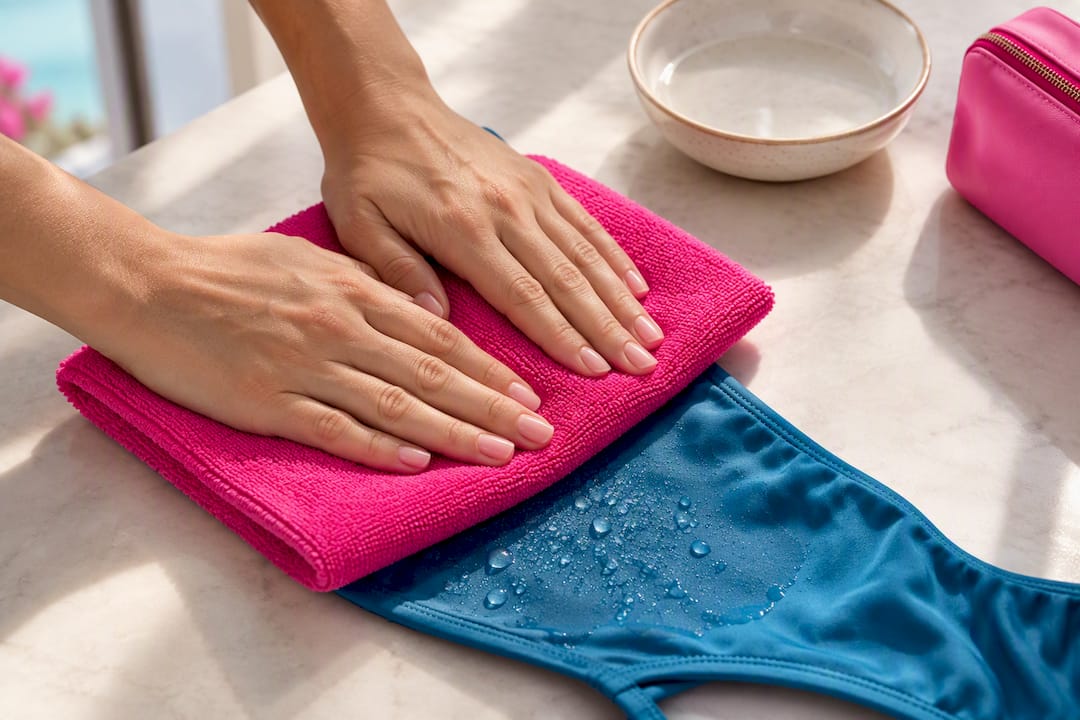
Keep a dedicated microfiber cloth in your beach bag for this exact purpose. It packs flat, dries fast itself, and does double duty catching sunscreen drips before they stain fabric. Because microfiber absorbs so much water on contact, one pass often removes as much moisture as a full minute of air-drying would on its own, which matters most in that first critical stretch right after a swim when the suit is heaviest and most prone to stretching.
For suits with sunscreen residue mixed into the moisture, a quick pretreat before the wash cycle helps more than people expect. A packable pretreat kit for sunscreen stains works well for travelers who don’t want to deal with set-in stains once they’re home, since sunscreen oils bond to fabric fast if they sit too long between the beach and the wash.
What Actually Helps Swimsuits Last Between Washes
The right products matter less for drying speed than for what happens to the fabric over a full season of wear. A mesh laundry bag is the single cheapest upgrade most swimmers skip. Used on a delicate machine cycle, it stops zippers, clasps, and rings from snagging delicate weave while still letting water and detergent through.
A gentle, chlorine-neutralizing swimwear wash beats regular laundry detergent for suits that see pool time often. Standard detergents are formulated to strip oils and residue aggressively, which is fine for cotton but rough on spandex blends over dozens of washes. A dedicated swimwear wash cleans just as well without the accelerated fiber breakdown.
A drying rack designed for flat drying, rather than a hanger, protects shape better than anything else in a swimmer’s routine. Hangers put all the stress on two thin straps; a flat rack spreads the suit’s weight evenly and keeps waistbands from sagging.
Between wears, a fabric-safe UV protectant spray can slow the color fade that comes with repeated sun exposure, though it’s a supplement to shade drying, not a replacement for it. For anyone building a rotation of suits that need to survive a whole vacation without losing shape, Doll House Bikinis’ swimwear care guide walks through storage and washing habits that extend a suit’s life well past a single season.
Why Extraction Beats Heat Every Time
Most people treat drying a swimsuit as an afterthought, something to rush through with whatever’s fastest. That instinct is backwards. The suits that last a full season of real wear are the ones where drying gets treated as part of the care routine, not an obstacle between the pool and the closet.
The mechanical extraction plus airflow approach isn’t a compromise between speed and safety. It’s genuinely the fastest method that doesn’t quietly cost you a suit’s shape three weeks later. Heat feels faster because you can see steam and feel warmth working, but that sensation is exactly what’s frying the elastane bonds that keep a suit snug. A well-chosen swimsuit built with quality fabric holds up to this kind of care far longer than a bargain suit will, which is one reason material choice matters as much as the drying method itself.
Anyone shopping for suits built to handle repeated swims and quick-dry routines can browse Doll House Bikinis’ full swimwear collection for styles designed with both fashion and fabric durability in mind, or check the bikini sets for pieces that pack easily between drying sessions on a trip.
— Ryan
Sources
Recommendations here draw on textile-care reporting from Forbes Vetted, Sportek’s spandex-care research, Martha Stewart’s wash-and-dry method, and fabric-behavior data from RailTec.
- How To Care For Swimwear 2026 - Forbes Vetted
- How to dry swimsuit fast - USA Today
- Swimwear fabric material - RailTec/FTA
FAQ
What Bathing Suit Dries the Fastest?
Thinner nylon-based suits without heavy lining dry fastest since nylon absorbs less water than polyester blends. Fabric weight and lining thickness matter more than brand, so a light, single-layer nylon suit will always beat a padded, lined polyester one for speed.
How Do I Dry My Swimsuit Quickly?
Extract water with a towel roll or a brief salad-spinner spin, then lay the suit flat near a fan in shade. Avoid the tumble dryer and direct sun since both damage spandex even though they speed up drying.
How Fast Do Bathing Suits Dry?
A suit typically dries in a few hours after proper extraction and fan-assisted flat drying, though the exact time depends on fabric thickness and lining. Left to air-dry without extraction, the same suit can take most of a day.
What Are the Fastest Drying Swim Shorts?
Swim shorts made from lightweight polyester or nylon mesh with minimal lining dry faster than cotton-blend or heavily lined trunks. The same towel-press and fan-drying routine used for suits works just as well for shorts.