
A strappy bikini is defined as a two-piece swimsuit featuring additional decorative or functional strap detailing beyond standard bikini construction. Those extra straps are not just visual. They create a sculpted silhouette, distribute support across the torso, and give you far more styling range than a basic string or bandeau top. From cage designs to criss-cross backs, strappy bikini styles have become a staple in fashion-forward swimwear collections. Dollhousebikinis carries a full range of these designs, and this guide covers everything you need to choose and wear one with confidence.
What is a strappy bikini and how is it different?
A strappy bikini is a two-piece swimsuit where the top, bottom, or both feature multiple intersecting straps that go beyond the standard two-strap construction. The industry term you will see in swimwear retail is “multi-strap bikini,” though strappy bikini is the widely used consumer term for the same category. The defining feature is strap placement that serves both a structural and aesthetic purpose.
Standard bikini tops use one set of shoulder straps and a back tie. A strappy design adds elements like cage framing, cross-back ties, ladder straps, or wraparound detailing. These additions change how the garment fits, how it looks on the body, and how much support it delivers during activity.
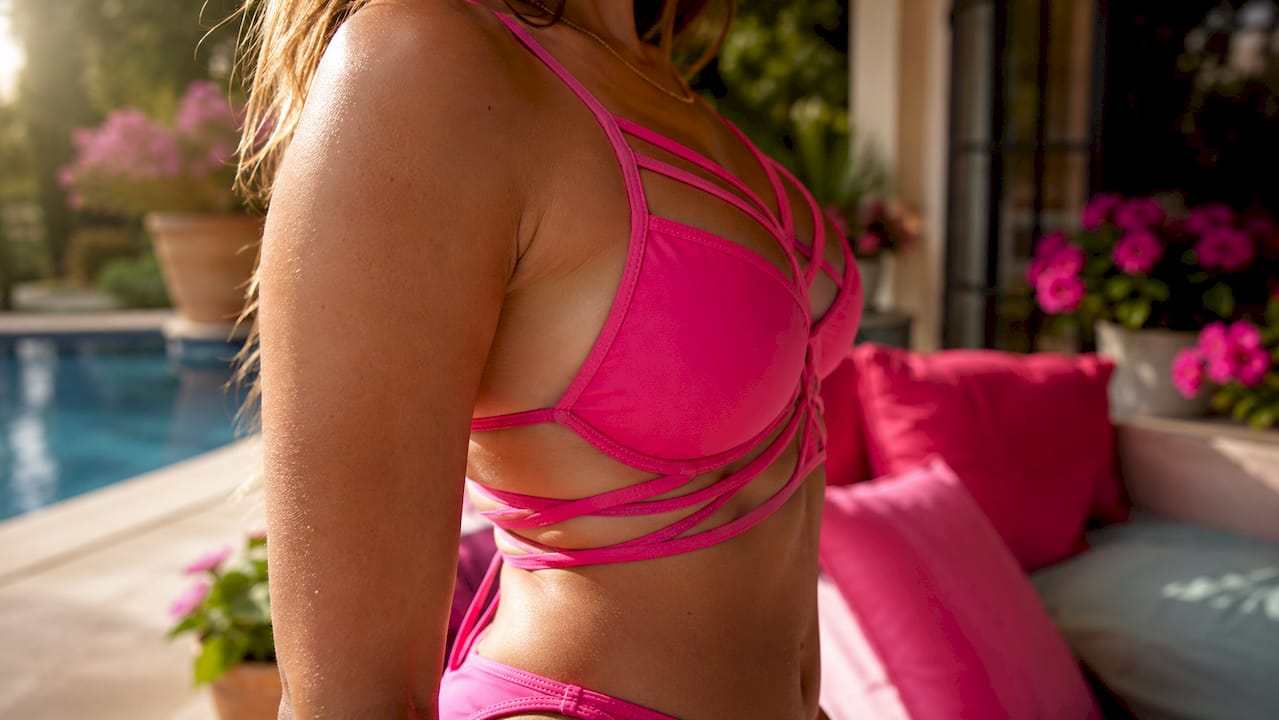
The multiple straps distribute pressure evenly across the torso, which prevents slipping and increases comfort during movement. That is the key functional difference between a strappy design and a minimalist string bikini. String styles rely on tension at a single tie point. Strappy styles spread the load across several anchor points, which makes them more stable for swimming, beach volleyball, or any active use.
What fabrics are used in strappy bikinis?
Strappy bikinis are made from high-elasticity fabrics like spandex, nylon, and polyester to maintain shape and comfort during active wear. Each material plays a specific role in how the finished garment performs.
- Spandex (Lycra): Provides the stretch and recovery that keeps straps snug without digging in. A fabric with 15–20% spandex content holds its shape after repeated use and washing.
- Nylon: Lightweight, soft against skin, and resistant to chlorine and saltwater degradation. Nylon-based fabrics dry faster than cotton blends, which matters when you are moving between pool and beach.
- Polyester: Adds durability and color retention. Polyester resists fading from UV exposure, which is why most printed strappy bikinis use a polyester-heavy blend.
The combination of these three materials gives strappy bikinis their stretch, softness, and quick-drying properties. For 2026, designer swimwear features worth noting include recycled nylon (often labeled Econyl) and chlorine-resistant spandex blends, both of which extend garment life significantly. Fabric weave density also affects UV protection. A tighter weave blocks more UV radiation, which matters when the straps leave sections of skin exposed to direct sun. BANZ Carewear notes that fabric weave affects UV protection in ways that go beyond SPF ratings on sunscreen alone.
Pro Tip: Check the fabric label for at least 15% spandex content before buying. Anything lower will lose its shape quickly, and loose straps on a multi-strap design look and feel sloppy after a few wears.
What are the most popular strappy bikini styles?
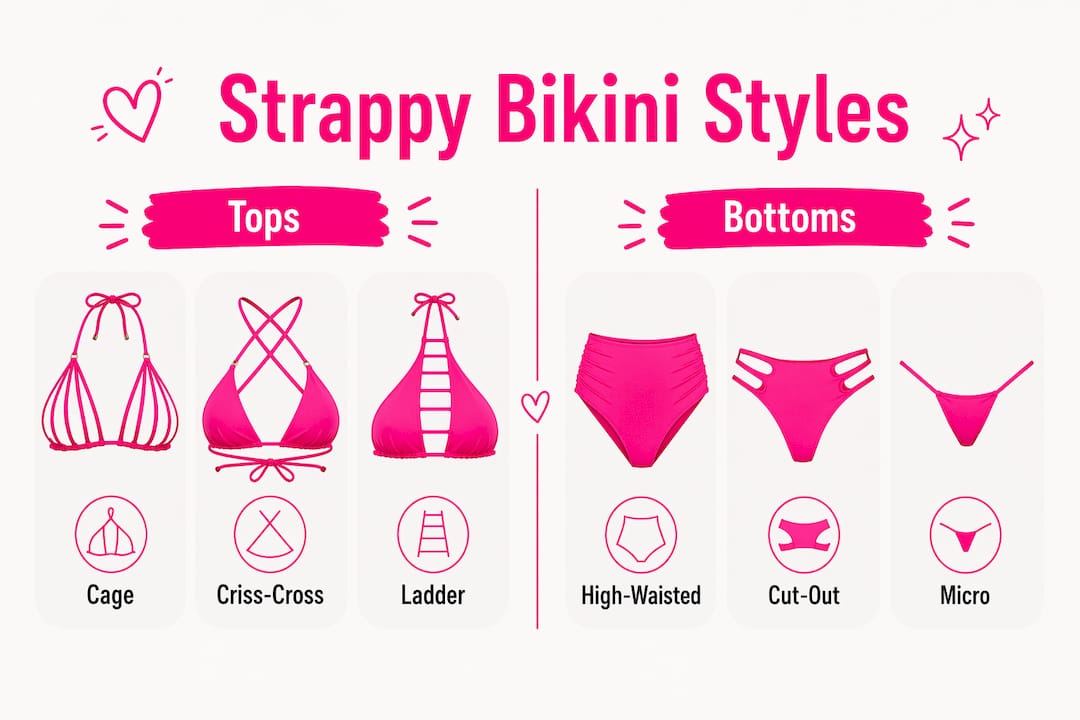
Strappy bikinis come in styles including micro, high-waisted, criss-cross, cage, and cut-out, each suited to different preferences and occasions. Understanding the differences helps you pick the right design for your body type and the setting you are dressing for.
Cage and ladder strap tops
Cage designs use geometric strap patterns across the chest or back to create a structured, editorial look. Ladder straps run parallel horizontal bands between two vertical straps. Both styles work best for pool parties, resort wear, and beach events where the visual impact of the design is part of the outfit.
Criss-cross and cross-back styles
Criss-cross tops feature straps that cross at the front, back, or both. They are the most wearable entry point into strappy designs because the strap pattern is subtle enough for everyday beach use but still more interesting than a standard top. Cross-back ties also add a practical benefit: they prevent straps from slipping off the shoulders during activity.
High-waisted strappy sets
Pairing a strappy top with a high-waisted bottom creates a defined waist and a retro-modern silhouette. This combination is one of the most flattering across a range of body types because the high waist creates a visual break that emphasizes the narrowest part of the torso.
| Style | Best For | Key Feature |
|---|---|---|
| Cage top | Resort, pool parties | Geometric strap pattern |
| Criss-cross top | Everyday beach use | Subtle, secure strap crossing |
| High-waisted set | All body types | Defined waist, retro silhouette |
| Micro strappy | Sun-focused tanning | Minimal coverage, bold look |
| Cut-out strappy | Fashion-forward occasions | Strategic skin exposure |
The trendy swimwear styles guide at Dollhousebikinis covers how these cuts translate into current collections, including which silhouettes are trending for 2026.
How to wear a strappy bikini for fit and comfort
Wearing a strappy bikini well comes down to three things: correct strap adjustment, smart styling choices, and sunscreen strategy. Get all three right and the design works exactly as intended.
- Start with the underband. The underband of the top should lie flat against your ribcage. If it rides up or gaps, the straps above it will not sit correctly either. Adjust the underband first before touching any other strap.
- Tighten straps evenly. Ties that are too tight cause discomfort and distort the silhouette. Work through each strap from the base up, snugging each one just enough to feel secure without pinching.
- Check strap placement in a mirror. The strategic lines of strappy designs visually sculpt the body by highlighting the waist and bust. A strap sitting even a centimeter off its intended position changes the visual effect entirely.
- Plan your sunscreen application. Apply sunscreen before putting on the bikini, then again after. Pay close attention to the skin directly under and around each strap. Beach activities require extra UV protection because reflected light from water and sand increases UV exposure significantly.
- Style with a cover-up or wrap. A lightweight cover-up or sarong transitions the look from poolside to lunch without changing outfits. The swimwear beach cover-up options at Dollhousebikinis are designed to layer over strappy tops without catching on the strap detailing.
Pro Tip: Geometric tan lines from intersecting straps are one of the most common complaints from first-time wearers. Apply a broad-spectrum SPF 50 sunscreen in thin, even layers over every strap edge before sun exposure. Reapply every 90 minutes.
Strappy bikini vs. regular bikini: benefits and considerations
A strappy bikini provides better structural reinforcement than a minimalist string bikini when properly fitted. That is not a style opinion. The mechanics of load distribution explain it. Multiple anchor points spread tension across a larger surface area, which reduces the chance of any single tie slipping or failing during movement.
Key benefits
- Support: Multi-strap construction holds the top in place during swimming and active beach use without requiring underwire.
- Versatility: The same strappy top reads differently depending on the bottom you pair it with. High-waisted bottoms create a covered, retro look. Cheeky or micro bottoms shift the same top into a bolder register.
- Visual shaping: Strap lines draw the eye along specific paths across the body, creating definition at the waist and bust that a plain bandeau or triangle top does not provide.
- Style range: From understated criss-cross to full cage construction, the category covers swimwear patterns and styles that suit casual beach days and resort fashion alike.
Considerations to know before you buy
| Factor | Strappy Bikini | Standard Bikini |
|---|---|---|
| Support level | Higher (multi-point anchor) | Lower (single tie points) |
| Tan lines | Complex geometric patterns | Simple, minimal lines |
| Fit adjustment | More steps, more precision needed | Quick and straightforward |
| Style impact | Bold, fashion-forward | Minimal, classic |
| Activity suitability | Strong for active use | Better for lounging |
The main trade-off is tan lines. Multiple intersecting straps create complex tan lines that require careful sunscreen application to avoid uneven tanning. If you are spending a full day in direct sun, plan your sunscreen routine around the strap pattern before you head out.
Key takeaways
A strappy bikini delivers better support and more visual shaping than a standard bikini because multiple straps distribute tension evenly and create deliberate lines across the body.
| Point | Details |
|---|---|
| Core definition | A strappy bikini adds decorative or functional straps beyond standard two-piece construction. |
| Fabric matters | Look for spandex, nylon, and polyester blends for stretch, durability, and quick-drying performance. |
| Style variety | Cage, criss-cross, high-waisted, micro, and cut-out styles each suit different body types and occasions. |
| Fit is foundational | Start with the underband flat against the ribcage, then adjust each strap evenly from the base up. |
| Tan line planning | Apply SPF 50 sunscreen along every strap edge before sun exposure and reapply every 90 minutes. |
Why strappy bikinis are worth the attention in 2026
I have followed swimwear trends for years, and strappy bikinis are one of the few styles that have genuinely earned their staying power. Most trend-driven swimwear fades because it prioritizes looks over function. Strappy designs are different. The structural logic behind them is sound. More anchor points mean better fit. Better fit means more confidence in the water and on the sand.
What I find most interesting about where this category is heading in 2026 is the shift toward cleaner strap geometry. The maximalist cage designs of a few years ago are giving way to more precise, architectural strap placements. Two or three well-placed straps are doing more visual work than six or eight overlapping ones ever did. That restraint is a sign of a style maturing rather than fading.
My advice for anyone new to strappy styles: start with a criss-cross top before committing to a full cage design. The criss-cross gives you the support and visual interest without the complexity of adjusting multiple strap layers. Once you understand how strap tension works on your body, you can move into more elaborate designs with confidence. The double straps halter neckline bikini at Dollhousebikinis is a good starting point. It delivers the strappy aesthetic without overwhelming a first-time wearer.
— Ryan
Shop strappy bikinis at Dollhousebikinis
Dollhousebikinis carries a full selection of strappy bikini sets built from the spandex, nylon, and polyester blends covered in this guide. The catalog includes criss-cross tops, halter neckline styles, high-waisted sets, and cage designs across a range of prints and solid colors.
Browse the two-piece swimwear sets to find styles that match your fit preferences and occasion. Orders over $100 ship free. New arrivals are updated regularly, so the selection reflects current 2026 trends rather than leftover seasonal stock.
FAQ
What makes a bikini “strappy”?
A bikini is strappy when it features additional decorative or functional straps beyond the standard construction of a two-piece swimsuit. These extra straps typically appear as cage framing, criss-cross ties, or ladder detailing on the top or bottom.
Are strappy bikinis good for swimming?
Yes. Strappy bikinis are designed for active beach use, with adjustable straps and reinforced stitching that keep the suit in place during swimming and beach sports. They outperform string bikinis in stability during physical movement.
How do i avoid bad tan lines in a strappy bikini?
Apply broad-spectrum SPF 50 sunscreen along every strap edge before sun exposure and reapply every 90 minutes. First-time wearers often miss the skin directly under each strap, which creates sharp geometric tan lines.
What body types suit strappy bikinis?
Strappy bikinis suit all body types because strap placement can be chosen to create specific visual effects. High-waisted strappy sets define the waist for hourglass and pear shapes. Cage tops add structure and visual volume to the bust for straighter silhouettes.
How is a strappy bikini different from a string bikini?
A string bikini uses single tie points at the shoulders and sides. A strappy bikini uses multiple anchor points that distribute tension more evenly, providing better support and a more defined silhouette during active wear.
Recommended
- How to Buy Trendy Bikinis: A Step-by-Step Guide for 2026 | News - Doll House
- Different Bikini Cuts Explained: Your Style and Fit Guide | News - Doll House
- Why bikinis are popular: style, trends, and social influence | News - Doll House
- 20 Bikini Outfit Ideas for Effortless Beach Style | News - Doll House