
A list of swimwear patterns covers every silhouette, print, and texture design available in modern swimwear, from the classic maillot to bold geometric prints and hand-crocheted bikinis. Choosing the right pattern goes beyond aesthetics. It determines fit, function, and how well a suit performs at the beach, pool, or resort. The types of swimwear patterns in 2026 are organized into two main families: silhouette patterns (the cut and structure of the suit) and decorative patterns (the prints, textures, and embellishments applied to the fabric). Knowing both categories makes shopping and styling far more precise.
1. List of swimwear patterns by silhouette type
Swimwear silhouettes are the foundation of any pattern list. They define the shape, coverage, and structural design of a suit before any print or texture is applied.
| Silhouette | Coverage | Best Use |
|---|---|---|
| Classic maillot | Full torso | Lap swimming, resort wear |
| Monokini | Cutout torso | Beach, fashion-forward looks |
| Plunge one-piece | Full with deep V | Poolside, tanning |
| Triangle bikini | Minimal | Tanning, casual beach |
| Bandeau bikini | Minimal, strapless | Even tan lines |
| Tankini | Moderate | Active water use |
| High-waist bikini | Moderate | Retro style, coverage |
| Swim dress | Full | Family outings, coverage |
| Rash guard set | Full | Sun protection, surfing |
| Burkini | Full body | Modest coverage, sport |
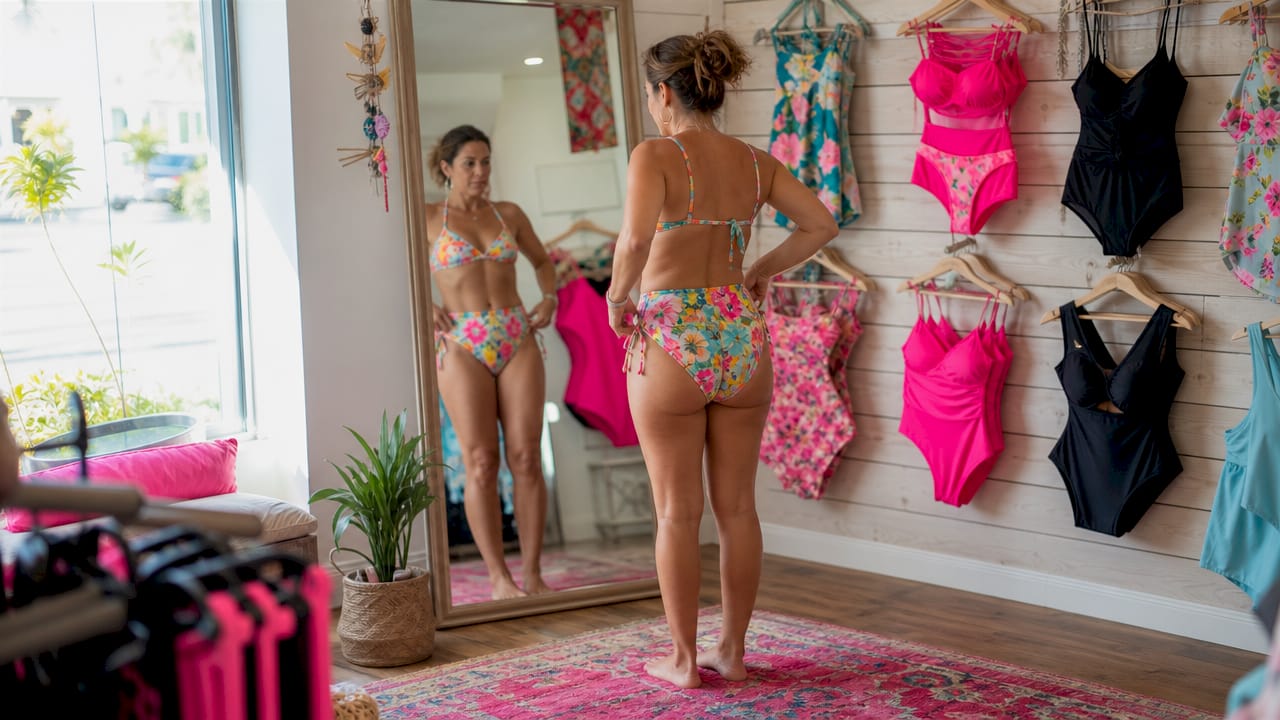
The one-piece family includes the maillot (a smooth, uninterrupted torso cut), the monokini (which uses cutouts to create visual interest while staying connected), and the plunge style (which features a deep V neckline for a bolder look). Each serves a different purpose. The maillot is the go-to for lap swimmers. The monokini suits fashion-forward beach days. The plunge works well poolside when tanning is the priority.
The two-piece family is broader. The triangle bikini is the most minimal option, using two triangular fabric panels tied at the neck and back. The bandeau top removes straps entirely for clean tan lines. The tankini pairs a tank-style top with bikini bottoms, offering more coverage without the commitment of a one-piece. The high-waist bikini brings retro structure back with a waistband that sits above the hip.
Specialized styles like the swim dress, rash guard, and burkini serve functional needs. The rash guard set provides UPF sun protection and is standard in surfing and water sports. The burkini covers the full body while remaining water-safe and comfortable for active use.
Pro Tip: When selecting a silhouette pattern, match the cut to your primary activity first. A rash guard set for surfing and a plunge one-piece for resort lounging are two completely different tools.
2. Floral prints
Floral prints are the most consistently popular swimwear print design across every season. They appear on triangle bikinis, one-pieces, and cover-ups in both micro and oversized bloom formats. Small, scattered florals read as classic and versatile. Large, painterly florals make a stronger visual statement and work well on bandeau tops or high-waist sets where the print has room to show fully.
Florals pair naturally with ruffled edges or tie details, which amplify the feminine silhouette. For 2026, Vogue’s swimwear trend coverage highlights bold graphical motifs alongside retro elements, and oversized tropical florals fall squarely into that category.
3. Geometric prints
Geometric prints use repeating shapes: stripes, chevrons, color blocks, and grid patterns. They are the most structured of all swimwear print designs and read as modern and graphic. Vertical stripes are a well-known tool for creating the visual impression of length. Color-blocked geometric panels serve the same purpose by directing the eye along specific lines of the body.
Geometric prints work across all silhouette types but are especially effective on one-pieces and high-waist sets where the larger surface area lets the pattern read clearly. In 2026, contrast trim details noted in Vogue’s trend report align directly with geometric color-blocking as a key print direction.
4. Animal prints
Animal prints, including leopard, zebra, snake, and cheetah, are a recurring category in best swimsuit prints lists. They read as bold and confident and work best in small doses. A leopard-print triangle top paired with a solid bottom is a standard styling formula that keeps the look balanced. Full-coverage animal print one-pieces make a stronger statement and suit beach settings over pool environments.
Snake print in particular has grown as a unique swimsuit pattern option because its irregular scale reads differently from traditional leopard spots, offering a more abstract graphic quality.
5. Abstract and graphic prints
Abstract prints include watercolor washes, brushstroke patterns, tie-dye, and digital graphic designs. Tie-dye remains a strong category in 2026 swimwear, particularly in earthy tones and sunset gradients. Brushstroke prints give a hand-painted quality that reads as artistic and one-of-a-kind.
These prints suit shoppers who want a unique swimsuit pattern that does not follow a predictable repeat. Abstract designs are especially effective on one-pieces and monokinis where the uninterrupted fabric surface lets the print read as intended.
6. Texture and embellishment patterns
Texture is a pattern category that operates through physical construction rather than print. Ruching gathers fabric along the torso or sides, creating a textured surface that also shapes the fit. Hardware details like gold rings and chain links add structured visual interest at the waist or between cups. Crochet overlays create an open-weave texture that reads as artisanal and beachy.
These embellishments change how a suit looks and feels in ways that flat prints cannot. A ruched one-piece in solid black reads as a completely different garment from a smooth maillot in the same color. Texture is the pattern element most often overlooked when shoppers focus only on print.
7. Crochet swimwear patterns
Crochet swimwear patterns are a distinct category that spans both fashion and craft. A 2026 roundup of 27 free crochet bikini patterns organizes them by yarn weight, skill level, and practical use, separating decorative lace styles from lined bikinis built for actual swimming. This distinction matters. A decorative crochet top is not the same as a lined crochet bikini designed to hold its shape in water.
Crochet patterns that use mercerized cotton yarn with weighted drawstrings provide better wet fit and wearability than decorative-only designs. Mercerized cotton holds its structure when wet and resists stretching out of shape. Dollhousebikinis carries ready-to-wear options like the Ava crochet three-piece set and the Nealle crochet mesh set for shoppers who want the crochet aesthetic without the crafting time.
| Pattern type | Skill level | Coverage | Fabric/yarn |
|---|---|---|---|
| Lace motif bikini | Intermediate | Decorative | Mercerized cotton |
| Lined crochet bikini | Intermediate | Functional | Cotton with lining |
| Crochet cover-up | Beginner | Partial | Lightweight cotton |
| Sewn one-piece (maillot) | Beginner | Full | Stretch knit, nylon blend |
| Sewn triangle bikini | Beginner | Minimal | Lycra, spandex blend |
8. Sewn swimwear patterns
Sewn swimwear patterns are digital or paper sewing templates used to construct suits from scratch. Mood Fabrics’ Antikythera One-Shoulder Bikini is a beginner-friendly seven-piece sewing pattern designed for light to medium weight stretch knit fabrics. It includes size charts and technical drawings, making it one of the most accessible free options available. The Flow Swimsuit from Fabric + Flow is a minimal one-piece digital pattern available in sizes XXS to 4XL, designed for swim fabrics with stretch and recovery.
Elastic application is one of the most technical aspects of sewn swimwear. Swimwear elastic at 6mm or 1/4 inch width maintains fit after the suit has been stretched and wet repeatedly. Using the wrong elastic width causes the suit to lose its shape after just a few wears. Sewn patterns give full control over fabric choice, which matters when selecting for chlorine resistance and durability. PBT polyester blends outperform standard spandex in pool environments, retaining color and shape through repeated chemical exposure.
9. How to choose the right pattern for your needs
Matching a swimwear pattern to your body shape and activity is more practical than following trends alone. Here is a direct breakdown by use case:
- Tanning: Triangle bikini or bandeau top with minimal coverage. Avoid thick straps and wide waistbands that create tan lines.
- Active swimming: Maillot or tankini with PBT polyester fabric. Look for chlorine-resistant fabric labels, not just dry UPF claims.
- Support needs: Underwire one-piece or structured bandeau with boning. Avoid unlined crochet tops for high-activity use.
- Beach vacation: High-waist bikini or monokini with a bold print. Florals, animal prints, and abstract designs all work well here.
- Water sports: Rash guard set or full-coverage one-piece with UPF 50+ rated fabric.
- Resort lounging: Plunge one-piece or cut-out monokini in a solid color or geometric print.
Pro Tip: UPF ratings listed on swimwear labels are measured on dry, unstretched fabric. When wet and stretched, UPF protection degrades significantly. Always check whether a fabric has been tested in wet conditions before relying on its sun protection claim.
Body shape is a practical guide, not a rule. Vertical stripe prints and high-waist silhouettes create length. Ruching at the waist draws the eye inward. Bold prints on top draw attention upward. Mixing a patterned top with a solid bottom, or vice versa, is the most reliable formula for balancing any silhouette. The goal is to match the pattern to what you want the suit to do, whether that is support, coverage, style, or all three.
Key takeaways
Swimwear patterns fall into two categories: silhouette patterns that define the cut and structure, and decorative patterns that apply print, texture, or embellishment to the fabric. Knowing both gives you full control over style and function.
| Point | Details |
|---|---|
| Silhouette is the foundation | Choose your cut first: one-piece, two-piece, or specialty style before selecting a print. |
| Print type affects styling | Florals, geometrics, and animal prints each suit different occasions and body styling goals. |
| Crochet patterns vary by function | Lined crochet bikinis with mercerized cotton are built for water; decorative lace styles are not. |
| Fabric matters as much as pattern | PBT polyester blends outperform spandex for chlorine resistance and long-term shape retention. |
| UPF claims need scrutiny | Dry UPF ratings drop when fabric is wet and stretched, so verify wet-condition testing before buying. |
Why pattern knowledge changed how I shop for swimwear
I spent years buying swimwear based on how it looked on a hanger or a model, and I consistently ended up with suits that looked great in the dressing room and fell apart at the beach. The problem was not the print. It was the fabric and the construction underneath the print.
The shift came when I started treating silhouette and fabric as the primary decision and print as the secondary one. A high-waist bikini in a PBT polyester blend with a geometric color-block print is a completely different purchase from the same silhouette in a thin spandex with a floral screen print. The first holds its shape after 20 pool sessions. The second fades and stretches out after five.
The crochet category taught me the most. Most shoppers assume crochet is purely decorative, but a properly constructed lined crochet bikini using mercerized cotton with drawstring closures is genuinely functional swimwear. The difference between a decorative crochet top and a swim-ready one is not visible at a glance. You have to know what to look for in the pattern construction details.
My advice: read the fabric content label the same way you read a food nutrition label. The pattern on the outside tells you the style. The fabric content tells you whether it will still look like that after a summer of actual use. Pair that knowledge with a clear sense of your silhouette preference, and you will stop buying suits that disappoint.
— Ryan
Shop pattern-inspired swimwear at Dollhousebikinis
Dollhousebikinis carries swimwear across every major silhouette and print category covered in this article.
The catalog includes two-piece sets in geometric prints and solid colorways, high-waist bikinis, monokinis, and crochet-inspired styles that reflect the texture and embellishment trends covered above. For shoppers who want a complete beach look, the floral beach cover-up pairs directly with bikini sets and one-pieces from the collection. The signature swimsuit is a standout option for shoppers looking for a clean, minimal one-piece silhouette. Free shipping applies to orders over $100.
FAQ
What are the main types of swimwear patterns?
Swimwear patterns fall into two categories: silhouette patterns (maillot, triangle bikini, monokini, tankini, high-waist) and decorative patterns (florals, geometrics, animal prints, abstract graphics, and texture embellishments like ruching and crochet).
What swimwear prints are most popular in 2026?
Florals, geometric color blocks, and bold abstract graphics are the leading swimwear print designs in 2026, with Vogue’s trend coverage also highlighting contrast trims and retro-inspired graphical motifs.
Are crochet swimwear patterns suitable for actual swimming?
Lined crochet bikinis made with mercerized cotton yarn and drawstring closures are functional for swimming. Decorative lace crochet styles are not designed for water use and are better suited as cover-ups or beach accessories.
What fabric should I look for in a swimwear pattern?
PBT polyester blends are the best choice for frequent swimmers because they resist chlorine degradation and retain shape and color longer than standard spandex blends.
How do I match a swimwear pattern to my body shape?
Match the silhouette to your coverage and support needs first, then use print strategically. Vertical stripes and high-waist cuts add visual length, while ruching at the waist creates definition. Bold prints draw attention to the area where they appear.