
You can feel confident in a bikini today. Confidence is a set of choices, not a body requirement, and it comes down to three things: fit, mindset, and a few small prep hacks. Start small: try on one supportive top at home for five minutes before you buy anything, and pay attention to what actually feels good, not what you think should feel good.
TL;DR:
- Fit is more important than body shape, so measure yourself carefully and choose bikinis that stay snug without digging or riding up.
- Prioritize support and comfort with features like adjustable straps, secure ties, and fabrics with high stretch recovery for active beach days.
- Building confidence is more effective through small habits like mirror practice, exposure stages, and focusing on body function rather than appearance.
- Proper fitting suits ease physical discomfort and mental distraction, leading to more natural photo poses and relaxed beach experiences.
- Focus on style choices such as high-waist bottoms and structured tops, and improve posture instantly for a more flattering and confident look.
Table of Contents
- 1. Bikini Confidence Tips That Work Fast and Last
- 2. How to Choose a Bikini That Actually Fits
- 3. Mindset Shifts That Reduce Bikini Anxiety
- 4. Comfort Hacks for Beach and Pool Days
- 5. Styling and Photo Confidence Tips
- 6. Why This Advice Holds Up
- 7. Staying Comfortable During Beach Sports and Swimming
- Bikini Confidence Tips: What Actually Moves the Needle
- If You Want Ready-to-Shop Options: Curated Doll House Bikinis Picks
- Sources
- FAQ
1. Bikini Confidence Tips That Work Fast and Last
Building real bikini body confidence isn’t about one big mindset shift. It’s a stack of small, specific actions that add up. Here’s the order that actually works, based on what fitting rooms, therapists, and swimwear editors all agree on.
- Fit before fashion. Buy for how the suit feels, not the size on the tag. Swimwear sizing runs inconsistently across brands, so measure yourself and check the swimwear sizing guide before you order anything.
- Pick silhouettes that match your comfort goals, not someone else’s trend cycle. High-waist bottoms, molded or underwire tops, and one-piece cuts all deliver different levels of coverage and support without sacrificing style.
- Run a two-minute mirror practice daily. Look at your reflection and name one thing you like, out loud. It sounds small. It rewires the running commentary in your head faster than you’d expect.
- Use exposure in stages. Wear the suit around your house first, then your backyard or a private pool, then the beach. Anxiety fades with repetition, not with willpower.
- Clean up your social feed. Unfollow accounts that make you compare and follow a mix of body types that actually look like the people at your beach, not a curated ideal.
A few of these tips deserve backup on the day itself:
- Keep double-sided fashion tape in your beach bag for straps that shift or gape.
- Choose silicone strap grips if you have narrow or sloped shoulders, so nothing slides.
- Pack a lightweight coverup you can throw on between the walk to your chair and actually getting in the water.
- Test your suit’s stretch and recovery by doing a squat in the fitting room, not just standing still.
Pro Tip: Try your new suit on with wet hair and no makeup under bathroom lighting, the least flattering light you’ll encounter all summer. If it still feels good there, the beach will feel easy.
One writer who worked through years of bathing suit anxiety found that combining role models who looked like her, consistent habits, daily affirmations, and buying suits that actually fit did more for her confidence than any single “fix” ever did, according to The Everygirl. That combination approach, not a silver bullet, is the real playbook.
2. How to Choose a Bikini That Actually Fits
Fit problems cause most bikini anxiety, not body shape. A bikini that digs, gaps, or rides up will make anyone feel exposed, regardless of size.
Start with a tape measure. Compare your bust, waist, and hip numbers against the brand’s actual size chart rather than guessing from your regular clothing size. A good fit sits snug but never pinches; a bad fit leaves red marks, rides up constantly, or gapes when you move.
Run this checklist during try-on:
- Straps: lie flat, don’t dig, and don’t slip when you raise your arms.
- Band: stays put without bouncing when you jump lightly.
- Cups: fully cover with no spillage or empty fabric pooling.
- Bottoms: sit where you want them after a squat and a few steps, not just standing still.
- Movement test: raise both arms, sit down, bend forward. Everything should stay in place.
For a full walkthrough, the step-by-step bikini fit guide breaks down exactly what to check by body area and suit style.
3. Mindset Shifts That Reduce Bikini Anxiety
Forcing yourself to “love” your body on command rarely works, and it often backfires. The Cleveland Clinic recommends body neutrality instead: focusing on what your body does rather than how it looks. That framing tends to be more sustainable, since it doesn’t require constant positive feeling to hold up.
A simple daily routine builds this over time:
- Say one or two affirmations focused on function (“my legs carried me on that hike”) rather than appearance.
- Spend two to five minutes in front of a mirror without judging, just observing.
- Take small public outings in swimwear, building from your backyard to a quiet beach morning.
Model Denise Bidot has said that growing up around diverse body types and repeated exposure to swimwear shaped her own comfort in it, as she told PopSugar. Curating your feed to include people who look like you does real psychological work, not just aesthetic comfort.
Pro Tip: Screenshot three swimwear photos of people whose body type resembles yours. Save them in a folder you actually open before shopping trips, not just once.
4. Comfort Hacks for Beach and Pool Days
Physical distractions kill confidence faster than any mental spiral. Fix the small stuff before you leave the house.
- Use strap clips or a racerback converter to stop shoulder straps from sliding.
- Double-knot any tie-side bottoms or halter straps; a single knot never survives a wave.
- Choose quick-dry, chlorine-resistant fabrics that don’t cling or sag once wet.
- Pack a spare bottom if you’re swimming, since stretched-out fabric feels different dry versus soaked.
- Bring shade, snacks, and sunscreen so you’re not managing discomfort on top of everything else.
5. Styling and Photo Confidence Tips
Posture does more for how you look in photos than the suit itself. Roll your shoulders back, distribute your weight slightly onto your back leg, and tilt your chin down just slightly instead of straight at the camera.
Skip the stiff hands-on-hips pose. Try a slight walk, a hand brushing hair back, or sitting with knees bent toward the camera. These read as natural instead of posed.
Coverups and accessories give you optional coverage without hiding your style. A sarong, oversized shirt, or beach cover-up works for the walk to your chair, then comes off when you’re ready. A wide-brim hat or layered necklace also shifts visual attention and adds polish without changing a thing about your body.
6. Why This Advice Holds Up
This guidance comes from combining fitting-room fundamentals with mindset research, not guesswork. The bikini fit guide and most flattering bikinis guide from Dollhousebikinis walk through measurements and silhouette matching in more depth than a single article can cover.
What you get from those pages:
- Exact measuring steps compared against real size charts.
- Style suggestions sorted by support, smoothing, or highlighting goals.
- Curated picks so you’re not scrolling hundreds of options blind.
7. Staying Comfortable During Beach Sports and Swimming
Active bikini days need a different fit strategy than lounging by the pool. A suit that looks great standing still can shift, gap, or ride up the moment you’re diving, paddleboarding, or playing volleyball.
Choose tops with adjustable straps and a secure band, ideally with a clasp or tie closure you can tighten before getting active. Underwire tends to shift during high-impact movement, so a molded or bralette-style top with good stretch recovery usually holds up better through swimming and sports. Bottoms should sit snug at the hip without digging, since loose ties are the first thing to give during a wave or a dive.
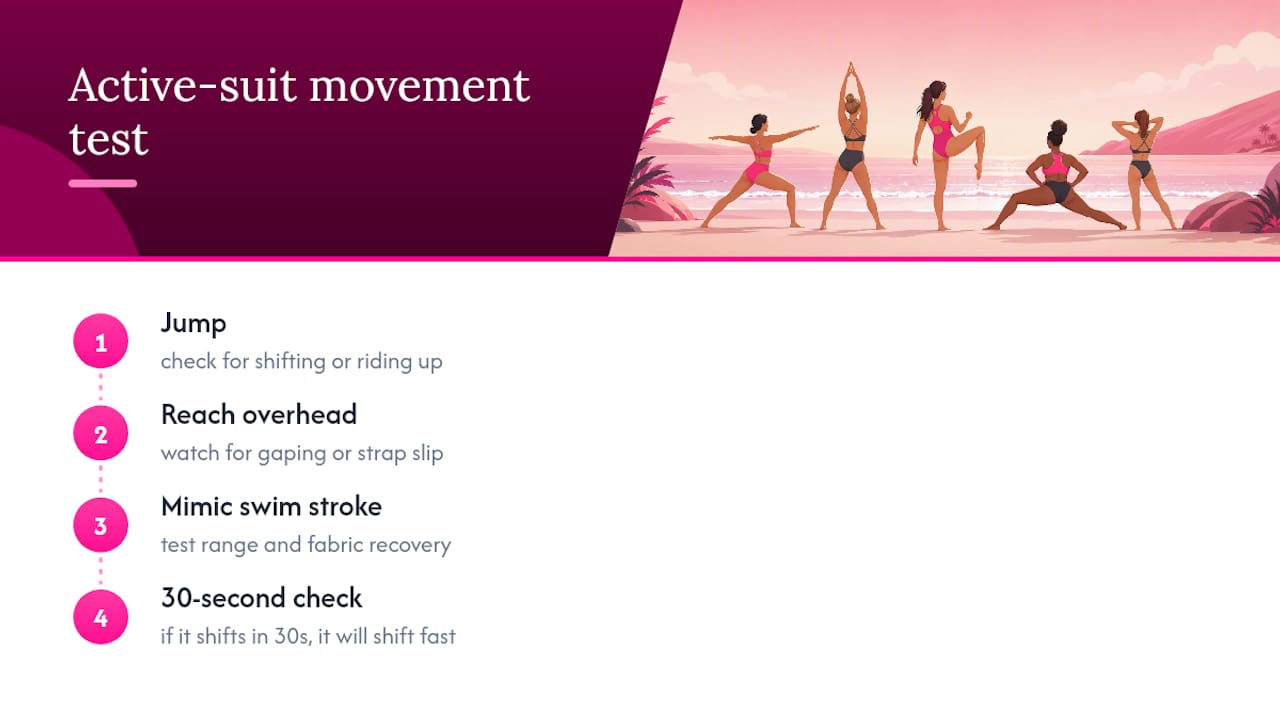
Do a real movement test before you commit to a suit for an active day. Jump, reach overhead, and mimic a swim stroke in the fitting room or at home. If anything shifts noticeably in thirty seconds, it will shift within the first five minutes at the beach.
For swimming specifically, tie-side bottoms with a double knot and a top with a back closure you trust are worth the extra thirty seconds to secure. For beach volleyball or running games, a bottom with slightly more hip coverage reduces the number of times you’re readjusting instead of playing.
Fabric matters more here than people expect. Suits with at least some spandex or elastane blend recover their shape faster after getting wet, which matters when you’re moving in and out of the water repeatedly over a few hours. Stiffer, low-stretch fabrics tend to sag by the third swim.
Bikini Confidence Tips: What Actually Moves the Needle
The research on this topic points to something the wellness industry doesn’t love to admit: mindset work alone rarely fixes bikini anxiety, and fit work alone rarely fixes it either. It’s the combination that works, and most advice columns pick one lane and stay there.
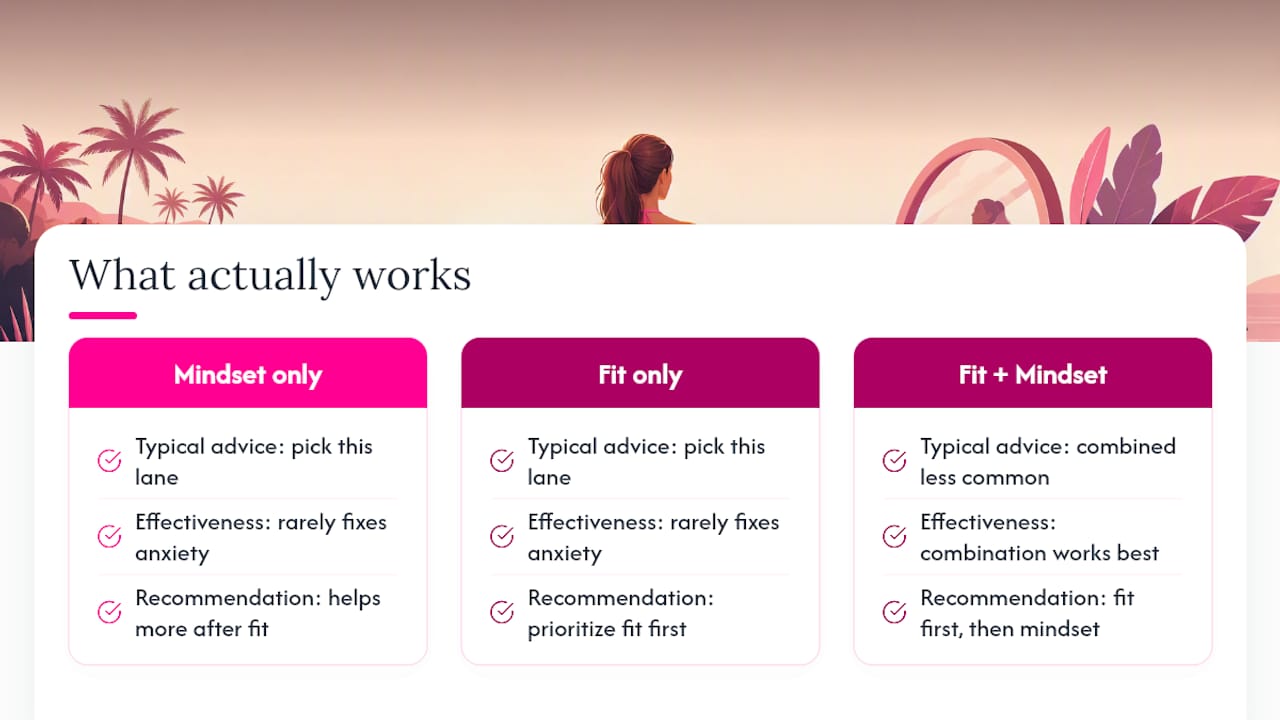
Where conventional advice falls short is the assumption that confidence should come before you buy the suit. In practice, it’s often the opposite. A suit that fits correctly, one that passes the movement test and doesn’t need constant adjustment, does more for your mental state on the beach than a week of affirmations. The Cleveland Clinic’s case for body neutrality over forced positivity backs this up: you don’t need to feel amazing about your body to function comfortably in it.
If you’re prioritizing one thing first, prioritize fit. Everything else, the mindset habits, the styling tricks, the photo posture, works better once you’re not physically distracted by a suit that doesn’t sit right.
— Ryan
If You Want Ready-to-Shop Options: Curated Doll House Bikinis Picks
Dollhousebikinis gives you a wide range of trendy, premium swimwear styles built for exactly the fit priorities covered above, without wading through a hundred generic listings to find them.
If you’re shopping for support, browse the bikini tops collection for structured and bralette-style options that hold up during active days. Want more coverage without losing style? Check bikini bottoms in high-waist cuts, or shop matched bikini sets if you’d rather not mix and match. Every collection filters by style, price, and popularity, so narrowing down options takes minutes, not an afternoon. Before you check out, run your measurements against the sizing guide first. Orders over $100 ship free, and signing up for emails gets you 10% off your first order. Start with the bikini sets collection and check sizing before you buy.
Sources
- Body positivity vs. body neutrality: What’s the difference? — Cleveland Clinic
- I used to feel insecure in a bathing suit—Here’s exactly how I changed that — The Everygirl
- Denise Bidot on how to be confident in a swimsuit — PopSugar
- Every body is a beach body: Rethinking summer body standards — Allure
FAQ
How can I feel confident in a bikini at any size?
Focus on fit first: a suit that doesn’t gap, dig, or ride up removes most of the physical discomfort driving self-consciousness. Pair that with body neutrality, focusing on what your body does rather than how it looks, which the Cleveland Clinic recommends as more sustainable than forced positivity.
What are some tips for wearing a bikini comfortably?
Choose fabric with good stretch recovery, secure straps with clips or double knots, and always run a movement test (jump, reach, sit) before wearing a new suit out. Pack a coverup and spare bottoms for beach days to remove extra friction.
Should a 40 year old wear a bikini?
Yes. There’s no age requirement for swimwear, and the “beach body” framing that suggests otherwise treats bodies as seasonal projects rather than something to simply exist in, as Allure points out. Fit and personal comfort matter far more than age.
How can I look more flattering in a bikini?
Silhouette choice matters more than any single trick: high-waist bottoms, structured tops, and well-fitted one-pieces all shape differently depending on your goals. Posture also does a lot of work, shoulders back, slight weight shift onto your back leg, and a relaxed pose instead of a stiff stance.
What size bikini should I buy if I’m between sizes?
Size up rather than down, since a slightly loose fit is more comfortable and safer than one that digs or rides up during movement. Check the swimwear sizing guide for exact measurements before ordering, since sizing varies by style and brand.