
The most reliable swimwear poses are the three-quarter turn, popping the hip, and stretching the arms up to elongate the torso, since they create flattering lines for most body shapes and photograph well in natural light. Start on the beach or by the pool with the three-quarter turn if confidence is the goal. Save more energetic movement shots for once the model feels comfortable in front of the camera.
TL;DR:
- Most flattering swimwear poses include the three-quarter turn, hip pop, and stretching upward, which create natural, elongated lines that suit most body types.
- Conduct the shoot during the narrow 20 to 30 minutes before sunset in golden hour for ideal warm, soft lighting, or use shade and overcast conditions as alternatives.
- Starting with relaxed poses like lying or sitting helps build confidence, while simple cues and mirror practice improve model comfort and natural expression.
- Prioritize fitted swimwear in muted tones like white, blush, or terracotta, and incorporate props such as hats or cover-ups to add variety without overcomplicating photography.
- Ensuring safety, comfort, and proper wardrobe fit with waterproof makeup, secure ties, and hazard checks enhances shot quality and reduces on-set disruptions.
Table of Contents
- Swimwear Photoshoot Ideas: 12 Poses to Try First
- Pose Categories That Keep a Swimwear Photo Shoot Dynamic
- What to Wear and What Colors Work Best in Swimwear Photos
- When to Shoot: Golden Hour Timing and Backup Plans for Bad Light
- Photographer Tips: Framing, Angles, and Directing a Nervous Model
- Makeup and Hair That Hold Up in Water and Sun
- Getting Ready: Warm-Ups That Build Confidence Before the Shoot
- Choosing a Location and Background for a Swimwear Shoot
- Editing Swimwear Photos Without Losing the Natural Look
- Staying Safe and Comfortable During a Swimwear Shoot
- What Actually Works on Set
- Shop the Swimwear That Photographs Best
- Sources
- FAQ
Swimwear Photoshoot Ideas: 12 Poses to Try First
These poses cover the range from beginner-friendly to editorial, and each one gives you a specific place to put your hands, feet, and gaze so nothing feels stiff on camera.
- Three-quarter turn. Angle the body 45 degrees from the camera, shift weight onto the back leg, and turn the face toward the lens. This slims the silhouette and works for almost every body type.
- Pop the hip. Stand with feet slightly apart, push one hip out toward the camera, and rest a hand on the raised hip. It creates a natural curve that reads as relaxed rather than posed.
- Stretch up. Raise both arms overhead as if reaching for the sun. This lengthens the torso and lifts the chest line.
- Lying on the side. Prop up on one elbow, bend the top knee slightly, and let the bottom leg extend. Forgiving for every body type since gravity does the work.
- Lying on the back. Arms relaxed above the head, one knee bent, eyes closed or looking off camera. Excellent for soft, editorial-style shots.
- Booty shot. Stand facing away, look back over one shoulder, and shift weight onto the back foot. Keep the chin down slightly to avoid a strained neck.
- Peek over the shoulder. Face away from the camera, turn only the head, and let hair fall naturally. Works well walking away from the lens too.
- Kneeling. Kneel on one knee with the other foot planted, hands resting on the front thigh. Great for sand or grass locations.
- Sitting cross-legged. Sit tall, shoulders back, hands resting lightly on the knees. Simple and calm, ideal for warming up a shoot.
- Sitting with knees up. Knees bent toward the chest, arms wrapped loosely around the shins, chin resting on one knee.
- Walking toward camera. Mid stride, arms swinging naturally, eyes on the lens or off to the side. Adds movement without complexity.
- Water splash. Standing in shallow water, one foot kicking gently, head tilted back. Keep hands relaxed rather than clenched.
Pose Categories That Keep a Swimwear Photo Shoot Dynamic
Grouping swimwear photo poses into categories makes it easier to build a full set without repeating the same shape twice.
Standing poses anchor most shoots. Try weight on the back leg with a slight hip pop for curvier frames, or a straight-on stance with one foot forward for a leaner, athletic look. Photographers get the most flattering standing shots at a slightly lower angle, camera near hip height, using a short telephoto lens (around 85mm) to compress the frame and avoid the distortion a wide lens can cause up close.
Sitting poses work almost anywhere: a beach towel, a pool ledge, porch steps. Cross-legged sitting suits a relaxed mood, while sitting with legs extended and hands planted behind the body opens the chest and shoulders for a more confident frame.
Lying poses are the most forgiving category. On the side, on the back, or propped on forearms in the sand all smooth the midsection naturally since gravity pulls skin taut. Shoot these from slightly above, angling down, to avoid an unflattering upward angle.
Kneeling poses bridge standing and sitting. One knee down with a straight back photographs well from eye level or slightly below.
Back and booty shots rely on the turn of the head and shoulders more than the body position itself. A slight arch in the lower back reads as natural rather than exaggerated.
Couple and group poses need coordinating outfits and staggered positioning. Have one person stand while the other sits or kneels to avoid a flat, side-by-side line.
- Rotate through categories rather than shooting five standing poses in a row.
- Let the model choose which pose feels natural before pushing for something more technical.
- Check the frame edges for cropped feet or hands before moving to the next setup.
Pro Tip: Start every set with a lying or sitting pose. It builds confidence before more energetic stances, and the photos usually look more natural once the model relaxes into the shoot.
What to Wear and What Colors Work Best in Swimwear Photos
The suit matters less than the color and fit. Warm, muted tones consistently photograph better against sand, water, and sky than loud prints do.
Recommended color palettes include white, ivory, soft blue, sage, blush, terracotta, and warm coral. Burnt orange and dusty rose look especially striking during golden hour, when the warm light amplifies those tones. Skip neon shades and busy small-scale patterns, since both tend to distract from the face and can cast unflattering color onto the skin.
Fit matters as much as color. A suit that moves with the body, rather than fighting it, photographs better in motion shots and lying poses. Ruching, side ties, and stretch fabric all help a suit hold its shape through a full shoot.
Props add variety without much effort:
- A wide-brim hat for shade and texture
- A sarong or lightweight cover-up for transition shots
- A woven blanket for lying and sitting poses
- A parasol for shade and a pop of color
- A surfboard or beach ball for movement and playful energy
Quick packing checklist: two to three suits in complementary tones, one cover-up, a hat, a blanket, and a small mirror for touch-ups between setups. Readers looking for coordinated pieces that hold up through movement can browse bikini sets built for exactly this kind of shoot.
When to Shoot: Golden Hour Timing and Backup Plans for Bad Light
Golden hour is not the entire hour before sunset. The window that actually produces soft, warm, flattering light is much narrower.
The sweet spot: 20 to 30 minutes, inside the 45 to 60 minutes before sunset. That’s the window photographers rely on for the warm, low-angle light that flatters skin tones and softens shadows.
Sunrise works just as well for the same quality of light, with the added benefit of fewer crowds and calmer water. Flytographer notes that shooting at sunrise gives a fresher feel and more breathing room on a busy beach, while blue hour just after sunset offers a moodier, cooler alternative for portrait-style shots.
Midday sun is the hardest condition to work with. Move to open shade, use a reflector to bounce light back into the face, or add a touch of fill flash to soften harsh shadows under the eyes and chin. Overcast skies, despite their reputation, act like a giant softbox and can produce even, flattering light with none of the squinting midday sun causes.
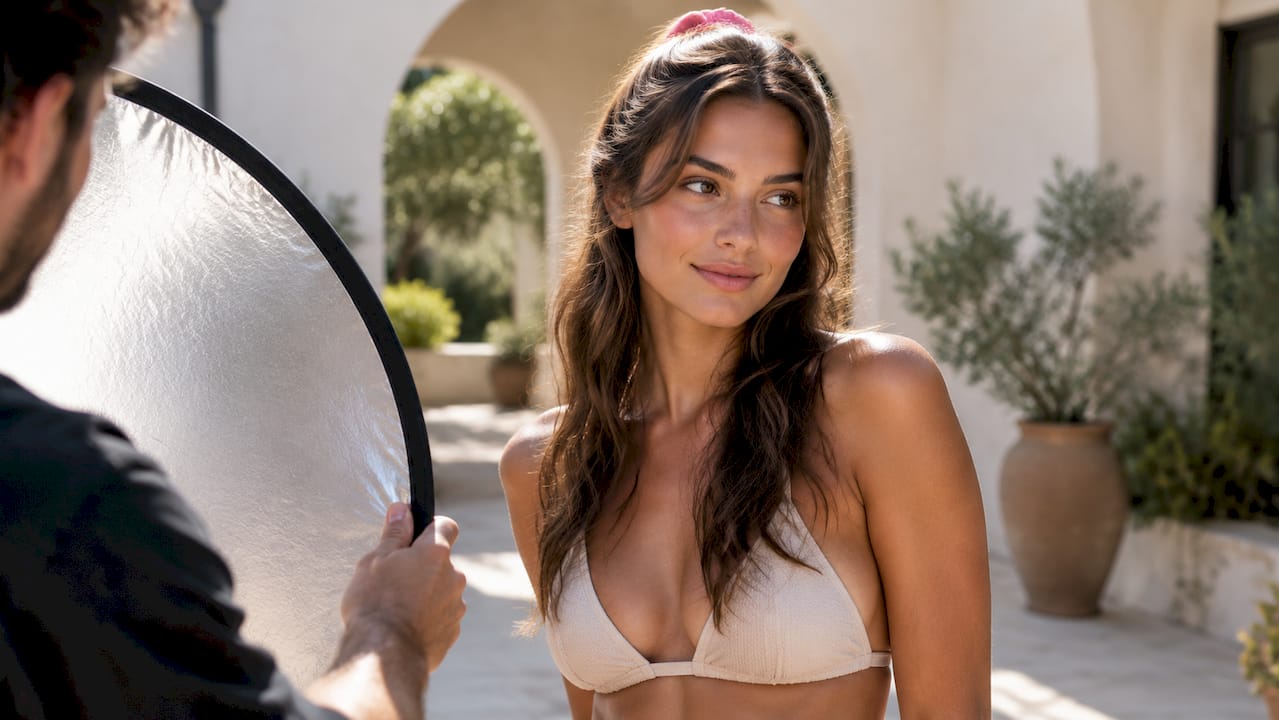
Photographer Tips: Framing, Angles, and Directing a Nervous Model
A short telephoto lens, roughly 85mm, flatters the body by compressing the frame and avoiding the stretching effect a wide-angle lens creates up close. Shoot standing poses from slightly below eye level to lengthen the legs, and shoot lying poses from slightly above to smooth the midsection.
Directing a model works best in short, simple cues rather than long explanations. A few that work every time:
- “Weight on your back foot, chin down a little.”
- “Relax your hands, don’t make fists.”
- “Look past my shoulder, not at the lens.”
- “Take a breath, shoulders down.”
The mirror technique helps before the camera even comes out: have the model practice a few poses in front of a mirror to find which angles feel natural. It saves time on location and builds familiarity with the shapes before the pressure of a lens is added.
Pro Tip: Ask the model to shift weight to the back leg in every standing pose. It automatically creates a more relaxed line through the hips and avoids the stiff, flat-footed look that ruins otherwise good shots.
For water shots, keep suits secure with ties or built-in linings, and always confirm footing before backing into waves or wet rocks.
Makeup and Hair That Hold Up in Water and Sun
Waterproof formulas are non-negotiable for any shoot near a pool or ocean. A waterproof mascara, a long-wear tinted sunscreen or cream foundation, and a cream blush that won’t slide in humidity form the base of a swimwear-ready look.
Keep the overall look lighter than usual. Bronzer along the cheekbones and collarbones adds a sun-kissed glow that photographs better than heavy contouring, which can look muddy in bright natural light. A slick of clear or tinted lip balm reads more natural on camera than matte lipstick, which tends to catch harsh light and look flat.
Hair depends on the wind and water plan. Loose waves photograph beautifully in motion shots but can hide the face in a strong breeze, so a low braid or twist works better for windy locations or any shot involving actual swimming. For poolside or sand-based shoots with less wind, leaving hair down gives movement and softness in candid frames.
Bring a small touch-up kit: blotting papers, a travel-size setting spray, and a compact mirror. Salt water and humidity undo makeup fast, and a two-minute refresh between setups keeps every shot consistent.
Getting Ready: Warm-Ups That Build Confidence Before the Shoot
Confidence in front of the camera is a skill, not a personality trait, and it responds to a few minutes of preparation. Practicing poses at home, in front of a mirror, takes the guesswork out of the actual shoot and lets the model find flattering angles without a camera watching.
A short warm-up routine helps: stand tall, roll the shoulders back, and take a few slow breaths before the first frame. Trying two or three simple poses, like sitting cross-legged or standing with a hip pop, before the photographer even lifts the camera removes the stiffness that shows up in a first cold shot.
Confidence also comes from starting with the most forgiving poses first. Sitting and lying positions ease a model into the shoot before moving toward standing or walking poses that require more visible body language. For readers who want a broader confidence framework before shoot day, Doll House’s guide on how to look good in a bikini covers posture and mindset tips that pair well with these warm-ups.
Choosing a Location and Background for a Swimwear Shoot
The background does as much work as the pose. A busy boardwalk full of people competes for attention, while a stretch of open sand, a quiet dock, or a pool edge with clean lines keeps focus on the subject.
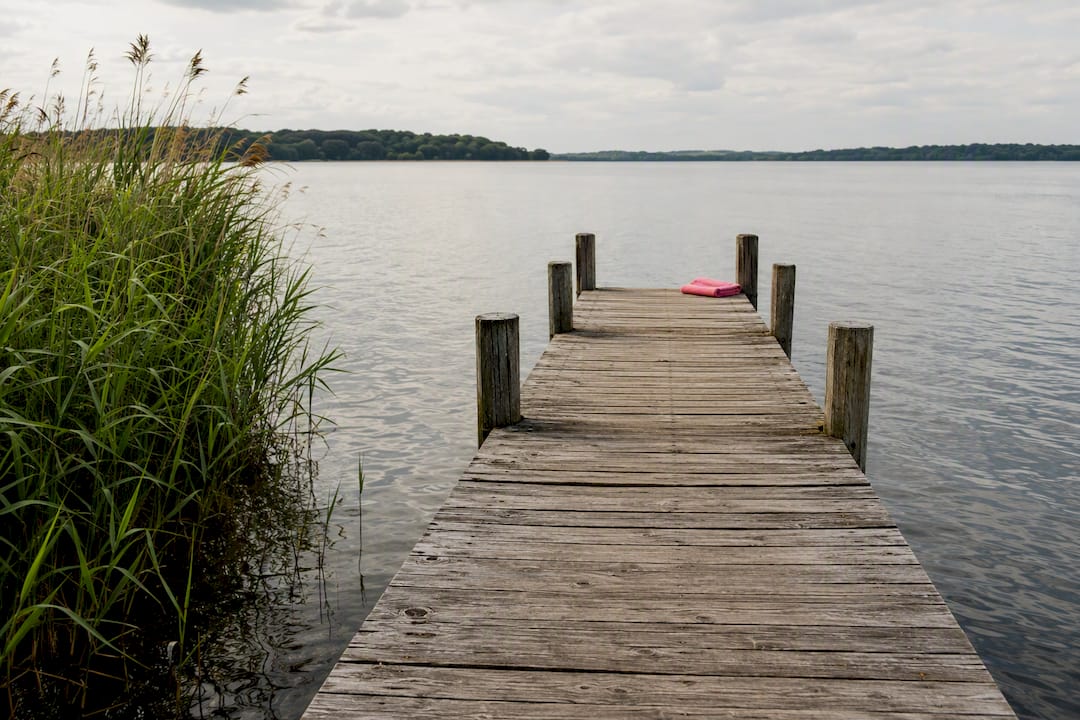
Texture adds visual interest without distraction: weathered wood, rock formations, tall grass, or a plain stucco wall all give the frame depth. Water itself, whether ocean, lake, or pool, adds reflection and movement that a plain backdrop can’t match.
Scout the location at the same time of day the shoot will happen, since shadows and crowd patterns shift throughout the day. A spot that looks perfect at noon might sit in flat shade by 5 p.m., and a quiet corner in the morning could be packed with people during peak afternoon hours. If a beach location is not an option, a backyard pool, a rooftop, or even a bathtub filled with petals can double for a swimwear set with the right styling and framing.
Editing Swimwear Photos Without Losing the Natural Look
Editing should smooth and enhance, not reconstruct. Start with basic exposure and white balance corrections, since swimwear shoots often involve bright reflective light off sand or water that throws off a camera’s automatic settings.
Skin tones need the most attention. Warm the overall color grade slightly to match the golden hour tones discussed earlier, and use light frequency separation or a gentle healing tool to even out sunburn lines or blotchiness without erasing texture. Avoid heavy skin smoothing, since over-processed skin reads as fake immediately, even to a casual viewer.
Boost saturation on the water and sky just slightly to make blues and greens pop, but keep skin tones and swimwear colors closer to true to life. A subtle vignette can draw the eye back to the subject in a busy background. Crop carefully. Cutting off hands, feet, or the top of the head at odd points is one of the most common mistakes in swimwear photo editing, and it’s fixable at the shoot stage by leaving a little extra room in the frame.
Staying Safe and Comfortable During a Swimwear Shoot
Comfort shows up on camera even when no one names it directly. A model who is cold, sunburned, or worried about a suit shifting will look stiff no matter how good the pose is.
Sun protection matters for shoots that run long. Reapply sunscreen between outfit changes, and take breaks in shade whenever the schedule allows. For any pose involving rocks, docks, or waves, check footing before every shot and avoid backing up blindly toward the water. A second person on set to hold towels, watch belongings, and flag hazards makes the whole shoot move faster and safer.
Suit security is worth checking before every setup. Ties should be double knotted, and linings should sit correctly before movement shots or water poses, since a wardrobe malfunction mid-shoot costs time and comfort. Photographers planning any shots underwater or in deeper water should also review fabric and fit considerations in Doll House’s underwater photography swimwear guide, since certain fabrics behave differently once submerged.
Temperature matters too. Cold water or a breezy evening shoot can visibly affect posture and expression within minutes, so keep a cover-up or towel on hand between takes.
What Actually Works on Set
Most advice about swimwear posing overcomplicates things. The models who look most natural on camera usually aren’t executing a complicated pose. They’re relaxed, breathing normally, and working with a photographer who gives short, clear direction instead of a paragraph of instructions between every shot.
Start simple. A sitting pose or a slow walk toward the camera will almost always outperform an ambitious pose attempted before anyone feels warmed up. Build from there. For more pose breakdowns and photo examples, the Doll House blog’s bikini pose guide is worth a look before your next shoot.
— Ryan
Shop the Swimwear That Photographs Best
Doll House Bikinis carries the styles that actually work for the poses above: coordinated bikini sets, one-pieces with clean lines, and lightweight coverups for the transition shots between setups. Fit and color do more for a swimwear photo than any pose alone, and a suit that moves with the body instead of against it makes every angle easier to shoot.

Look for solid colors or the muted palettes covered earlier, and check that ties and linings sit securely before a shoot involving water or movement. The bikini sets collection groups coordinated tops and bottoms by color story, which saves the guesswork of matching pieces separately. Readers who prefer mixing and matching can shop tops and bottoms individually to build a custom fit. Orders over $100 ship free, and signing up for emails unlocks 10% off a first order. Start browsing the current swimwear collection and pick out a suit or two before the next golden hour rolls around.
Sources
- 11 Flattering Bikini Poses for Sexy Beach Pictures
- 13 Flattering Bikini Poses for a Beach Photoshoot
FAQ
What is the best color to wear for a beach photoshoot?
Warm, muted tones like white, ivory, sage, blush, terracotta, and coral work best, with burnt orange and dusty rose standing out especially well during golden hour. Avoid neon shades and busy prints, since both distract from the face and can reflect unwanted color onto the skin.
What are the swimsuit trends for 2026?
Muted earth tones, ruched and textured fabrics, and coordinated bikini sets with matching coverups remain the most photo-friendly choices this year. Doll House’s guide on swimwear layering breaks down how to build looks that transition from beach to street.
What are good beach photoshoot ideas?
Start with forgiving poses like sitting cross-legged or lying on your side, shoot during the 20 to 30 minute golden hour sweet spot before sunset, and add props like a hat, blanket, or parasol for variety. Detail shots of footprints in the sand or shells nearby add narrative depth without needing a new pose.
How do I pose in swimwear if I feel nervous on camera?
Practice a few poses in front of a mirror beforehand to find flattering angles without the pressure of a lens, then start the actual shoot with sitting or lying poses before moving to standing shots. A short warm-up of shoulder rolls and slow breathing right before the first frame also helps ease visible tension.
How many poses should a swimwear photoshoot include?
Ten to fourteen poses across standing, sitting, lying, and kneeling categories give enough variety without repeating the same shape. Mixing categories throughout the shoot, rather than clustering similar poses together, keeps the full set looking dynamic.