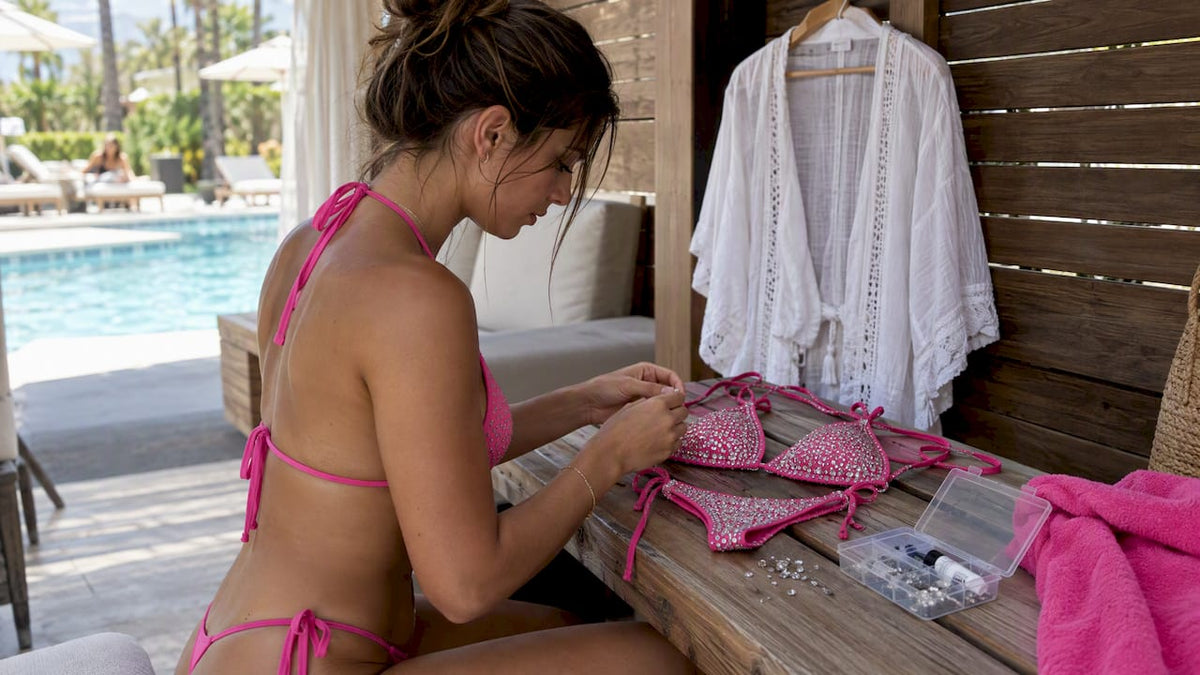
Rinse your rhinestone bikini in cool water right after wearing it, spot-clean any stones, then handwash gently with mild detergent. Lay it flat to dry in the shade. That routine helps remove chlorine, salt, sunscreen and oils from the fabric.
TL;DR:
- Chlorine exposure reduced swimwear breaking force by about 12% after 200 hours and 65% after 300 hours, so rinse immediately after swimming.
- Machine washing is appropriate only when the care label permits it; use a mesh bag, cold water, a delicate cycle, and minimal spin.
- Spot-treat rhinestones only after washing, using diluted detergent and a soft cloth or brush; avoid soaking glued settings and test a hidden area first.
- Store the suit completely dry in a cool, breathable container; protect the stones with tissue and keep the suit away from zippers, hooks, and rough fabrics.
- For repairs, match the method to the setting: use fabric glue for glued stones, matching thread for sewn stones, and a professional for widespread loss.
Table of Contents
- What to do after every wear
- How to clean your rhinestone bikini step by step
- How to dry and reshape without heat or sun
- How to store rhinestone swimwear so it keeps its stretch
- Which common mistakes wear out embellished swimwear fastest?
- How do you fix loose or missing rhinestones at home?
- Why prevention beats repair for embellished swimwear
- Shop swimwear built to be cared for
- FAQ
- Sources
What to do after every wear
Treat this list as a habit, not a one-time fix. Make this a habit after each swim to help care for the fabric and stones.
- Rinse in cool water promptly of taking the suit off. Removing chlorine, salt and sunscreen limits fiber breakdown.
- Handwash with a mild detergent. Skip hot water, bleach and fabric softener.
- Lay it flat to dry in shade, and reshape the straps and cups while the fabric is still damp.
- Don’t wring it out, and keep it out of the dryer.
- Handle the rhinestone areas gently.
- Don’t store it damp or folded against rough fabrics like denim or towels.
Our own bikini care guide covers the same basics if you want a second walkthrough.
How to clean your rhinestone bikini step by step
The order matters here. Rinse first, wash second, and only then spot-treat the stones.
Chlorine is the reason the rinse comes first. A materials-aging study found that swimwear breaking force dropped about 12% after 200 hours of chlorine exposure and about 65% after 300 hours. A textile scientist calls an immediate cold or lukewarm rinse the single most important tip, because elastane is the most vulnerable part of the suit.
- Rinse the bikini under cool running water until it runs clear.
- Fill a clean basin with cool water and add a small amount of mild detergent.
- Soak for a few minutes, then swish gently. Never twist or scrub.
- Rinse again until no suds remain.
- Press the water out against a towel without wringing.
- Spot-clean the stones last. Dampen a soft cloth or soft-bristle toothbrush with diluted detergent, work from the edge inward, and avoid soaking glued areas. Test a hidden spot first.
Pro Tip: Check the care label before using a machine. If it allows machine washing, use a mesh bag, cold water, a delicate cycle and minimal spin, then lay the suit flat right away.
For label-reading help, see our guide on how to wash and care for your bikini.
How to dry and reshape without heat or sun
Avoid heat and strong sunlight when drying the suit. The same study kept its samples air-dried in the shade for a reason. Colorfastness testing under ISO 105-E03 includes active chlorine levels of 50 mg/l and 100 mg/l intended for swimwear.
Press out excess water with a clean towel, then lay the suit flat on a dry surface in the shade. Ease the straps and cups back into shape while the fabric is damp.

Need it dry faster? Roll it in a towel and press, or try the gentle methods in our post on drying swimsuits fast. Never tumble-dry, and never set an embellished suit out in direct sun.
How to store rhinestone swimwear so it keeps its stretch
Storage is where many embellished suits get damaged without anyone noticing.
For short-term storage, fold the suit flat and lay tissue paper over the stones. Keep it away from zippers, hooks and rough fabrics that can snag.

For long-term storage, pick a dry, cool spot away from heat. Skip sealed plastic bags, which trap moisture. Breathable fabric bags or boxes lined with acid-free tissue work better.
Hang only structured one-pieces, and only on padded hangers. For flimsy or heavily embellished bikinis, consider storing them flat.
Which common mistakes wear out embellished swimwear fastest?
Most damage traces back to a few habits. Each one has a simple fix.
- Hot water or bleach: Avoid them when caring for your suit. Rinse in cool water and keep heat out of your routine from here on.
- Scrubbing or soaking the stones: Handle the area gently. Pat it dry, then reattach single stones with a tiny dab of clear fabric glue where it suits the setting.
- Leaving the suit bunched or damp: Air it out and dry it completely, flat, before storing.
How do you fix loose or missing rhinestones at home?
First, work out how each stone is attached: glued, sewn or prong-set. The repair depends on it.
- Collect any loose stones before they disappear.
- For glued stones, dab a small amount of clear fabric glue on the back of the stone and press it into place.
- Hold it lightly for a moment, then let it cure fully, following the glue’s instructions.
- For sewn stones, restitch with matching thread.
- For prong-set stones, bend the prongs back gently with tiny jewelry pliers.
Pro Tip: Fix one stone at a time and let it cure before touching the next. Rushing creates glue smears you can’t undo.
If many stones are gone, the fabric looks weak, or the pattern is intricate, take it to a tailor or a professional embellishment repair shop.
Why prevention beats repair for embellished swimwear
Repairs work, but they never match a stone that stayed put. In my view, the three habits above do more for an embellished suit than any fix you can make later. A quick rinse, a gentle wash and shade drying take minutes, and they spare you the fiddly glue work. Read the care label on each suit before you wash it, and check our care guides for product-specific notes.
— Ryan
Shop swimwear built to be cared for
Once your routine is set, a new suit is easier to look after. We carry a wide range of bikini sets, plus tops and bottoms to mix and match, and our care guides explain how to keep each one looking its best. Free shipping and an email-list discount are available. Check the offer terms when you shop. Browse our collections, then read our care posts for product-specific instructions.

FAQ
How often should I wash my rhinestone bikini?
Rinse it after every wear, and handwash it after every swim in a chlorinated pool or the ocean. A rinse-only routine is fine after a short, dry-land wear, such as lounging in the sun.
Can I put a rhinestone bikini in the washing machine?
Only if the care label allows it. If it does, use a mesh bag, cold water, a delicate cycle and minimal spin, then lay the suit flat right away. Handwashing is the gentler choice for embellished areas.
Why is chlorine so hard on swimwear?
Chlorine breaks down elastane and weakens fabric over time. A materials-aging study found breaking force fell about 65% after 300 hours of chlorine exposure, which is why prompt rinsing matters.
What glue should I use to reattach a rhinestone?
Use a clear fabric glue, and apply a very small amount to the back of the stone. Let it cure fully before you wear or wash the suit.
Sources
- Do I have to rinse out my swimsuit after the pool? A textile scientist has the answer
- The Impact of Chlorinated Water and Sun Exposure on the Durability and Performance of Swimwear Materials
- ISO 105-E03:2010 - Textiles — Tests for colour fastness — Part E03: Colour fastness to chlorinated water (swimming-pool water)