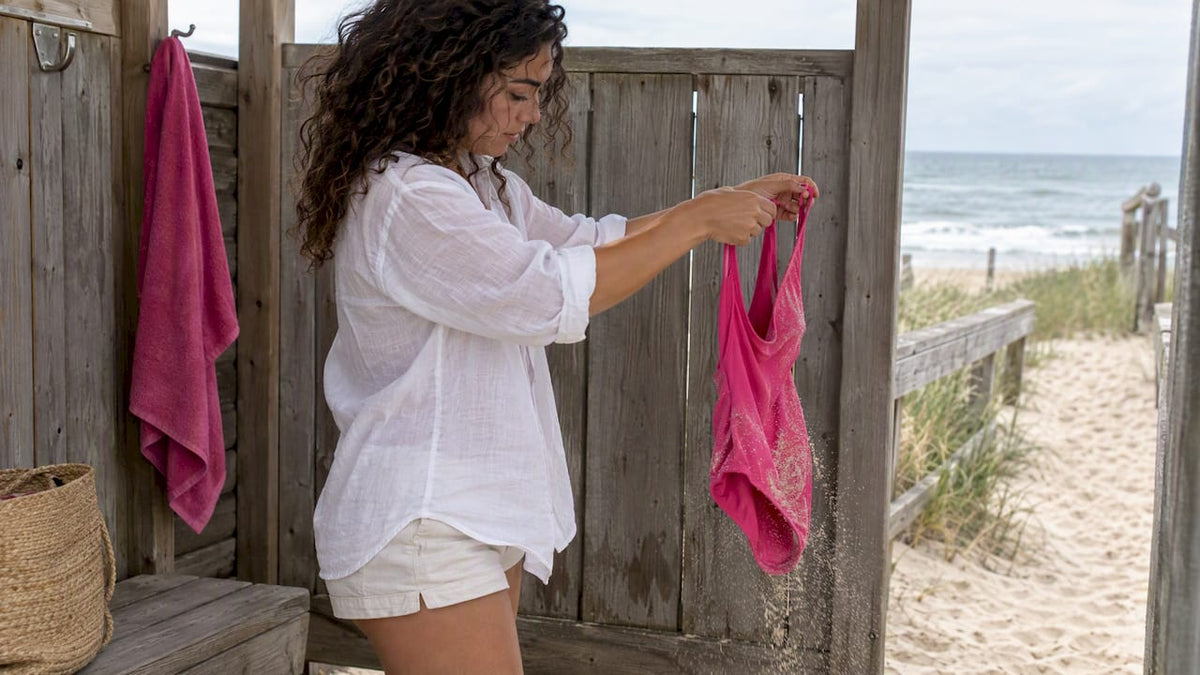
Shake the suit out, then rinse it in cold water while rubbing the fabric gently between your fingers. If grains remain, soak the piece for 20 to 30 minutes and hand-wash it, or lift dry sand off with a lint roller or tape. These methods clear most sand without damaging elastic or fiber.
TL;DR:
- Shake the suit inside out before rinsing; use cold water and gentle rubbing, then soak it for 20 to 30 minutes if grains remain.
- For lined suits, flush pockets and seams from the inside; sewn linings tolerate gentle soaking, but avoid prolonged soaking with glued linings to protect adhesive.
- Once the suit is dry, use a lint roller or tape for loose grains; a low suction vacuum with a padded brush can clear fabric.
- Hand wash with gentle detergent, press water out between towels, and dry flat; avoid wringing, hot water, and machine washing delicate suits.
- Smooth nylon and polyester blends shed sand more readily than textured or looped fabrics; rinsing soon after swimming helps keep grains from setting.
Table of Contents
- Immediate Beach Fixes: How to Get Most Sand Out Before You Leave
- At-Home Cleaning Steps for Stubborn Sand
- Removing Sand From Between Layers, Linings, and Seams
- Preventive Care and Fabric Guidance for Less Sand Next Time
- Brand-Sourced Swimwear Care Tips From Doll House Bikinis
- What Customers Ask Us Most About Sand and Swimsuits
- A Lower-Maintenance Option: Cover-Ups and Quick-Dry Styles
- FAQ
- Sources
Immediate Beach Fixes: How to Get Most Sand Out Before You Leave
Most sand comes out before you ever reach a washing machine. For a one-piece, hold it by the straps and shake it hard, letting gravity pull grains through the fabric. For bikini tops and bottoms, flip each piece inside out and snap it like a towel to knock sand loose from the seams.
A beach towel doubles as a cleaning tool. Lay the suit on a dry section of towel and rub the fabric against it in small circles to lift surface grit before it sets into the weave. A soft brush or a clean, soft toothbrush works the same way on stubborn spots, especially around the elastic edges where grains tend to collect.
Skip anything that uses heat or force. Hair dryers and compressed air push sand deeper into the fibers instead of out, and very hot water can warp elastic and spandex.
- Shake and snap the suit inside out before folding it away.
- Rub against a dry towel to lift surface grains.
- Use a soft brush or toothbrush on elastic edges and seams.
- Rinse briefly under a cold public shower if one is available.
- Avoid hair dryers, compressed air, and hot water on wet fabric.
Pro Tip: Rinse in cold water and rub gently rather than scrubbing hard, since cold water helps rinse away salt, sand, and sunscreen without stressing the fabric.
At-Home Cleaning Steps for Stubborn Sand
A quick beach rinse handles loose grains, but embedded sand needs a proper soak once you’re home.
- Fill a clean basin with cold water and let the suit soak for a short period, agitating it gently every few minutes to loosen trapped grains.
- Hand-wash with a gentle, swimwear-safe detergent, working the fabric between your fingers rather than twisting or scrubbing it.
- Rinse thoroughly under cold running water until no detergent or grit washes out.
- Press out excess water between two towels instead of wringing, since wringing stretches fibers and can damage elastic over time.
- Lay the suit flat to dry, checking seams and lining for any sand that resurfaces as the fabric settles.
If sand reappears after drying, repeat the soak rather than reaching for a washing machine, which can be harder on delicate trims and linings.
Dry fabric responds to different tools than wet fabric. A lint roller or a strip of wide tape lifts loose, dry grains from the surface, and a vacuum on low suction with a padded brush nozzle can pull sand from texture weaves without snagging threads.

Pro Tip: Check elastic edges and seams after every wash, since that’s where leftover grains tend to hide and work their way back out days later.
Removing Sand From Between Layers, Linings, and Seams
Lined bottoms and padded tops trap sand where rinsing alone cannot reach. Turn the piece inside out carefully, supporting the seams with your fingers so you’re not pulling against the stitching.
Before soaking, check whether the lining is sewn or glued. Sewn linings tolerate a gentle soak well, while glued linings need lighter handling since prolonged soaking can loosen the adhesive.
- Turn the suit inside out and angle it under a gentle stream of cold water to flush grains from pockets and folds.
- Soak the inside-out layer separately for a few extra minutes if sand is still visible.
- Use a soft toothbrush or a silicone brush to coax particles out of corners and seams without pulling at the stitching.
- Stop and set the suit aside for repair if seams start separating or threads loosen, rather than continuing to work the area.
Preventive Care and Fabric Guidance for Less Sand Next Time
Fabric choice changes how much sand sticks in the first place. Smooth nylon and polyester blends tend to shed sand more easily than textured or looped weaves, since there’s less surface area for grains to catch on, and some treated blends are designed to resist particles and chlorine over time.
A smoother weave sheds sand more easily than a textured one, which is why fabric structure matters as much as the rinse routine that follows it.
A few habits reduce how much sand your suit picks up before you even get home:
- Rinse in the ocean or a shower right after swimming, before sand has a chance to dry and set into the fibers.
- Sit on a towel or mat instead of directly on the sand whenever possible.
- Pack a quick-dry cover-up to wear between swims, which keeps sand off the suit while you’re walking around.
- Store suits loosely in a mesh bag rather than a sealed plastic one, since trapped moisture encourages mildew.
Cold water remains the safer choice for rinsing and washing throughout, since heat tends to stress synthetic fibers and set stains rather than lift them.
Brand-Sourced Swimwear Care Tips From Doll House Bikinis
Sand removal is best treated as part of everyday swimwear care, not a separate chore. Rinse suits in cold water as soon as you’re done swimming, then hand-wash with a gentle, swimwear-safe detergent to clear salt, sunscreen, and any leftover grit in one pass.
Never wring a wet suit. Press it between two towels to remove excess water, then lay it flat to dry away from direct heat to protect the elastic and preserve colors.
For deeper guidance on washing routines and fabric longevity, our bikini care guide covers drying and storage in more detail, and our scrunch bikini care steps walk through cold-water handling for that style specifically.
What Customers Ask Us Most About Sand and Swimsuits
We hear the same question from customers after almost every beach trip: why does sand keep showing up days after a suit looks clean. Usually it’s grains hiding in the lining or along a seam that never got a proper rinse.
The fix that saves the most time is turning the suit inside out before the first rinse, not after. It flushes grains out of pockets before they dry and set.
— Ryan
A Lower-Maintenance Option: Cover-Ups and Quick-Dry Styles
Some suits simply hold less sand than others. Smoother fabrics and simpler cuts mean less surface area for grains to grab onto, which cuts down on the soak-and-scrub routine described above.
If you’d rather spend less time on sand control, a few of our categories are worth a look:
- Beach cover-ups that keep sand off your suit between swims.
- Bikini tops and bottoms in smoother fabrics that rinse clean faster.
- Bikini sets designed for easy matching and quick replacement when a favorite piece wears out.

For readers who want performance-style quick-dry fabric as a point of comparison, Athleta’s athletic bikinis use similar quick-dry materials built for water activity. Browse our full swimwear collection to find a style that fits your routine, whether that’s a classic set or a cover-up you can throw on straight from the sand.
FAQ
Are Sand Stains Permanent?
Sand itself doesn’t usually stain fabric, since it’s mostly dry mineral grit that rinses away. What looks like a stain is often sunscreen or salt residue trapped alongside the sand, which a cold-water rinse and gentle hand-wash typically clears.
What Is the Best Sand Remover for the Beach?
A dry towel used as a rubbing surface removes most loose sand on the spot, with a soft brush or toothbrush handling stubborn spots along seams. For dry fabric, a lint roller or strip of tape lifts remaining grains without needing water.
How Do I Get Sand Out of Fabric?
Shake and rub the fabric against a towel first to remove loose grains, then rinse with cold water and gentle rubbing motions. For deeply embedded sand, soak the item for 20 to 30 minutes and hand-wash it with a gentle detergent before rinsing thoroughly.
How Do I Get Sand Out of My Swimming Pool?
That’s a pool maintenance question rather than a swimwear one, and it depends on your filtration system and pool type. A pool professional or your filter manufacturer’s guidance is the right source for removing sand from pool water or a filter system.
Sources
- How to care for swimwear | Forbes
- How to choose the best fabric for swimwear | Fabric Guide - Articulate/Strayer