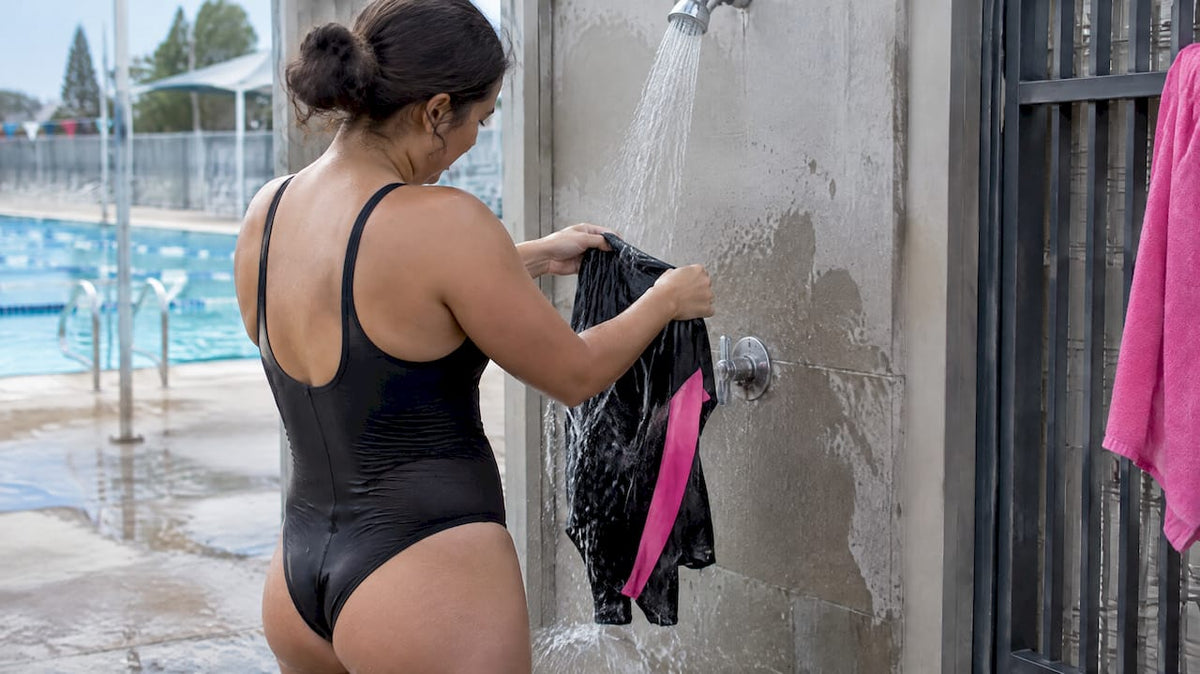
The single habit that keeps neoprene swimwear usable longest is a cool, fresh water rinse inside and out right after every swim, removing salt, chlorine, and sweat before they attack the material. Pair that with occasional hand-washing using a wetsuit-safe cleaner, as suggested in our surf clothing guide, shade drying on a wide hanger, and avoiding heat, machine washing, and folding. Neglecting these care steps can contribute to wear.
TL;DR:
- Rinse inside and out with cool fresh water immediately, opening zippers and hook fasteners to flush seams before salt, chlorine, or sand dries.
- Wash every few weeks with water below 86°F and a mild cleaner made for wetsuits; daily swimmers should deep clean weekly.
- Air dry fully in shade on a wide hanger or flat, turning the suit midway; avoid machines, sun, heaters, and narrow hangers that distort seams.
- Use neoprene cement for small tears, but take long seam separations or inner delamination to a repair specialist; petroleum products swell the rubber.
Table of Contents
- After-swim checklist: rinse, unzip, hang, dry
- Step-by-step hand-wash routine for a deeper clean
- How to neutralize odors and stop mildew before it starts
- Correct drying techniques that protect against UV and heat damage
- Storing neoprene swimwear between uses or off-season
- Keeping zippers, seams, and seals in working order
- DIY patching versus professional wetsuit repair
- The mistakes that ruin neoprene fastest
- Preventing swelling from saltwater and chlorine exposure
- Clearing sand and debris from seams and folds
- Restoring flexibility in an older neoprene suit
- What keeps a suit going season after season
- A lower-maintenance alternative when you’d rather skip the routine
- FAQ
- Sources
After-swim checklist: rinse, unzip, hang, dry
Rinse the suit promptly after leaving the water. Rinsing is the most critical step in preventing salt crystal abrasion and chemical damage to neoprene fibers.
- Rinse the suit inside and out with cool fresh water right away, before salt or chlorine dries on the surface.
- Open all zippers and Velcro so water flushes through recessed seams and folds.
- Shake out excess water, then hang the suit to drip-dry in a shaded spot.
- Never leave it bunched up in a wet bag, backpack, or car trunk.
That last point matters more than it sounds. A damp suit left folded can develop odors and put stress on the seams.
Step-by-step hand-wash routine for a deeper clean
Rinsing handles daily buildup, but neoprene needs an occasional deeper wash to clear oils, sunscreen residue, and bacteria that rinsing alone misses.
- Fill a basin with cold or lukewarm water, staying below 86°F (30°C), and add a mild, non-detergent soap or a cleaner made specifically for wetsuits.
- Turn the suit inside out so the lining gets equal attention.
- Submerge it and knead gently with your hands, working soap through the seams without scrubbing or wringing the fabric.
- Rinse thoroughly in clean water until every trace of soap is gone.
- Hang to drip-dry fully before putting it away.
Do this every few weeks, or sooner if you notice odor building up. Skipping the deep clean doesn’t ruin a suit overnight, but residue left in the neoprene speeds up wear and makes smells harder to shift later.
Pro Tip: Wring nothing. Press water out gently with flat hands instead of twisting, which protects the internal bonding that keeps neoprene flexible.

How to neutralize odors and stop mildew before it starts
Trapped moisture is the main cause of that musty wetsuit smell, and it’s fixable without harsh chemicals.
- If you use a diluted vinegar solution to address odor, rinse the suit thoroughly afterward, as described in practical wetsuit care guides.
- Use an enzyme-based or dedicated wetsuit shampoo for stubborn organic buildup, following the label and rinsing completely afterward.
- Treat visible mold spots directly with a vinegar or enzyme application, then rinse and dry fully so the mold doesn’t return.
Neoprene’s resistance to weathering is one reason it holds up to repeated washing, according to a technical review of CR rubber properties, though that resistance only holds if you dry the suit completely each time.
Correct drying techniques that protect against UV and heat damage
Where and how you dry a wetsuit matters almost as much as the wash itself. UV rays and extreme heat age neoprene rubber faster, causing it to crack and lose insulating properties well before its time.
- Dry in a shaded, well-ventilated spot, never in direct sun or near a heater, radiator, or car dashboard.
- Use a wide or padded hanger, or lay the suit flat. Narrow shoulder hangers stretch and distort seams over weeks of repeated use.
- Flip the suit partway through drying so both sides get even airflow, which also cuts down on trapped odor.
A suit dried flat in open shade can dry more effectively than one left crumpled in a gym bag.
Storing neoprene swimwear between uses or off-season
Storage mistakes are the quiet killer of wetsuits that otherwise get great daily care.
- Hang on a wide, padded hanger, or store the suit flat. Avoid folding or creasing, which creates permanent stress points that crack over time.
- Keep the suit in a cool, dark, temperature-stable space, away from windows, attics, or anywhere that heats up during the day.
- Never compress a suit under heavy gear or pack it tightly at the bottom of a duffel bag for extended trips.
A suit stored properly may retain more of its flexibility. One stuffed in a bin under beach chairs for a season usually comes out stiff at the creases, sometimes permanently.
Keeping zippers, seams, and seals in working order
Zippers and seams fail quietly, a little grit here, a little stretch there, until one day the suit won’t close right.
- Rinse zippers along with the rest of the suit, then dry them before applying a water-based zipper lubricant or wax made for neoprene.
- Skip petroleum-based lubricants and heavy creams. They get absorbed into the rubber and cause swelling rather than protecting it.
- Check seams and glued panels regularly for lifting or separation, and avoid yanking the suit off by one edge, which overstretches seams that are already under strain.
Pro Tip: Run the zipper slider all the way to the stop before pulling it down. Forcing a stuck zip sideways is one of the fastest ways to bend the teeth.
DIY patching versus professional wetsuit repair
Small tears are fixable at home. Bigger problems need an expert.
- For a small edge tear or pinhole, clean and dry the area, apply neoprene cement to both surfaces, press together, and let it cure for the time listed on the product.
- For a slightly larger hole, use a neoprene patch with cement on both the patch and the suit, pressing firmly and letting it set undisturbed.
- Avoid general-purpose glues and anything petroleum-based. Petroleum products cause neoprene to swell and lose integrity, undoing the repair almost immediately.
- If a seam is separating along a long stretch, or a section is delaminating from the inside, a wetsuit repair specialist will get a cleaner, longer-lasting fix than a tube of cement.
The mistakes that ruin neoprene fastest
A short list, but each item on it can end a suit’s useful life in one go.
- Never wash or dry neoprene in a machine. Heat and agitation destroy the rubber’s flexibility and break the seal at the seams.
- Never use hot water or bleach, even for a “quick” clean.
- Don’t leave a wet suit folded, stuffed in a bag, or baking in a car trunk.
- Keep petroleum-based creams and solvents away from neoprene entirely, since they cause swelling and gradual breakdown.
Preventing swelling from saltwater and chlorine exposure
Saltwater and chlorine both work against neoprene the longer they sit against it. Salt crystallizes as the suit dries, and those crystals abrade the surface with every wear. Chlorine is more chemically aggressive, breaking down the rubber’s structure faster with repeated, unrinsed exposure.

The fix is the same rinse habit from the top of this guide, just applied without exception. Pool swimmers should rinse immediately every time, since chlorine left to dry on neoprene does more damage per exposure than a single ocean swim. Ocean swimmers get a pass on chemical aggression but not on frequency. Salt builds up fast with daily use, and skipping even one rinse lets crystals set into the fabric’s pores.
Suits used daily in either pool or ocean conditions benefit from the full hand-wash routine weekly rather than monthly, since residue accumulates faster than casual users expect. Watch for early signs of swelling: a suit that feels looser, spongier, or visibly puffier at the seams than when new has already absorbed more moisture and chemical residue than is good for it. At that point, a thorough deep clean and complete dry-out is the best way to slow further damage, though some swelling becomes permanent once it sets in.
Clearing sand and debris from seams and folds
Sand works its way into every seam, fold, and zipper track, and left there it acts like sandpaper against the stitching and the rubber itself with every movement.
Rinse the suit while it’s still wet, before sand has a chance to dry and lodge into tight spaces. Running water through open zippers and turning seams slightly as you rinse helps dislodge grains that settle into the stitching. For stubborn pockets, a gentle shake while the suit is still wet, followed by another rinse pass, usually clears what a single rinse misses.
Inspect the inside of the suit, not just the outside, since sand collects in the lining folds just as easily. A suit that goes straight from a sandy beach into a bag without a rinse will trap grit against the neoprene for hours, during which the fabric flexes against every grain each time it’s moved. Over a season, that’s a measurable amount of abrasion concentrated at the seams, exactly where the suit is already most vulnerable to wear.
A quick rinse before packing up, even when you plan to properly wash the suit later at home, prevents most of this damage from accumulating in the first place.
Restoring flexibility in an older neoprene suit
Neoprene naturally stiffens with age as the rubber’s internal structure loses flexibility over repeated cycles of wetting, drying, and UV exposure. Accelerated aging research on neoprene in seawater conditions found that toughness and strength decline over time, a pattern consistent with what swimmers notice as a suit gets older.
There’s no way to fully reverse that chemical aging, but a few habits slow it and sometimes improve how a suit feels day to day. A thorough deep clean removes accumulated salt, oils, and sunscreen that make neoprene feel stiffer than its actual condition warrants. Soaking briefly in lukewarm water before wear can also loosen a suit that’s been in storage, since neoprene regains some suppleness once it rehydrates slightly.
Beyond that, consistent care is the real lever. A suit that’s been rinsed after every use, dried in shade, and stored flat may stay more flexible than one that’s been machine washed. Once cracking or visible surface damage appears, no treatment restores the original flexibility. At that stage, the suit is past maintenance and into replacement territory.
What keeps a suit going season after season
The suits that last aren’t the ones that get babied, they’re the ones that get a quick rinse without fail. Some damage traced back to a missed step may begin soon after getting out of the water, rather than during storage or washing. A fast rinse, a quick glance at the zipper and seams, and a proper hang to dry catch almost every problem before it becomes expensive.
Build it into a simple weekly rhythm: rinse after each use, a quick seam and zipper check, and a full deep clean once a month or whenever odor shows up. That routine alone preserves the insulation, the fit, and the look of a suit far longer than any single product or trick. For related care habits, our bikini care guide covers upkeep for swimwear beyond neoprene too.
— Ryan
A lower-maintenance alternative when you’d rather skip the routine
Neoprene rewards careful owners, and we also carry swimwear styles. Our swimwear includes options for casual swimmers.

Browse our full swimwear collection to see bikini sets, one-pieces, and micro styles built for everyday wear. Sign up for our email list for details about any first-order offer, and check the shipping terms for information about free shipping.
FAQ
What happens when neoprene gets wet?
Neoprene is designed to get wet. It’s a closed-cell synthetic rubber that holds water against the skin to maintain warmth rather than repelling it entirely. The concern isn’t the water itself but what’s dissolved in it, salt and chlorine residue left behind after the suit dries, which is why rinsing before drying matters so much.
Can I put neoprene in the dryer?
No. Heat and mechanical agitation destroy neoprene’s flexibility and break down the seals at the seams, making a tumble dryer one of the fastest ways to ruin a suit. Air-dry in the shade instead, on a wide hanger or laid flat.
Are neoprene swimsuits good?
Neoprene offers strong insulation and durability for cold-water swimming and watersports, and its weathering and oil resistance hold up well compared to some other materials when cared for properly. For casual pool or beach swimming where warmth isn’t a priority, a quick-dry synthetic suit is often simpler to maintain.
Do I need to rinse my wetsuit after every use?
Yes. A fresh water rinse immediately after each swim removes salt, chlorine, and sweat before they crystallize or chemically degrade the material, and it’s the single habit that extends a suit’s usable life the most.