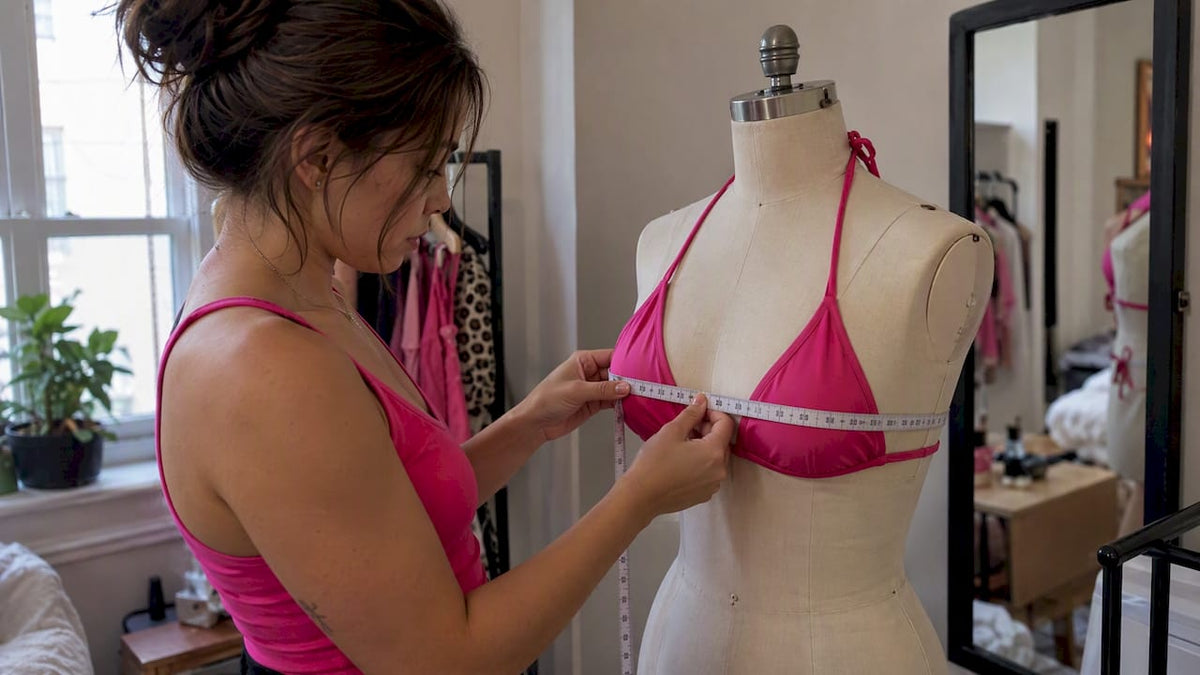
Pick the size that fits your largest measurement. Measure your bust, waist, and hips, then check the product’s size chart and choose accordingly. Order tops and bottoms separately when a brand offers that option, since stretch, lining, and construction all affect how a listed size actually feels on your body.
TL;DR:
- Measure bust, underbust, overbust, waist, and hips twice with a soft tape; average readings that differ by more than a quarter inch.
- For tops, prioritize underbust when choosing bandeau or structured styles; triangle ties adjust easily, while padded or lined cups can feel snugger.
- If hip measurements fall between sizes, sizing up can prevent leg openings from digging; side ties offer more adjustment than fixed narrow sides.
- When fabric stretches easily but recovers poorly, choose by your measurements rather than sizing down, because wear and sun exposure can loosen it further.
- Before removing tags, check exchange rules and return costs; if returns are barred and measurements fall between sizes, ordering both, if affordable, can remove guesswork.
Table of Contents
- How to take the measurements micro-bikini size charts ask for
- How to read a micro-bikini size chart and when to mix sizes
- Fit specifics for micro-bikini tops (coverage, support, and adjustment)
- Fit specifics for micro-bikini bottoms (cut, rise, side ties, and coverage)
- How fabric, stretch, and construction change what a numeric size feels like
- Sizing pitfalls and return-avoidance tactics shoppers can use
- How Doll House Bikinis supports accurate sizing and fits
- Author perspective from Ryan: measurement-first mindset
- Shop micro bikinis at Doll House
- FAQ
- Sources
- Authoritative standards and regulatory guidance
How to take the measurements micro-bikini size charts ask for
Accurate numbers come before anything else. A size chart only works if the measurements you feed it are correct, so this step deserves more care than most shoppers give it.
Start with a soft measuring tape, not a metal one, and measure directly against skin or thin clothing. Take these core measurements:
- Bust: wrap the tape around the fullest part of your chest, keeping it level across your back.
- Underbust: measure directly beneath the bust, where a band would sit.
- Overbust: needed for some micro tops with structured bands; measure just above the bust line.
- Natural waist: find the narrowest part of your torso, usually just above the belly button.
- Fullest hip: measure around the widest part of your hips and backside, feet together.
Keep the tape level and parallel to the floor, breathe normally, and avoid pulling it tight enough to compress skin. Taking five measurements rather than relying on just bust and hip gives you a more reliable match, especially for micro styles with minimal fabric and little room for error.
Record each number in both inches and centimeters if you can, since charts vary by unit and a misread conversion is a common cause of poor fit. Measure twice for each spot. If the two readings differ by more than a quarter inch, take a third measurement and use the average.
Pro Tip: Measure in the same bra or without one, depending on how you plan to wear the top, since breast position shifts the bust number by half an inch or more.
If you’re unsure whether to measure alone, ask a friend to help hold the tape level across your back. A tape that sags or tilts upward adds inches you don’t actually have, which can push you into the wrong size bracket entirely.
How to read a micro-bikini size chart and when to mix sizes
Most swimwear brands size tops and bottoms on separate scales because the body measurements that matter for each piece are different. A top chart weighs bust and underbust heavily, while a bottom chart is built around waist and hip. Treating the two as one combined size is where a lot of sizing mistakes start.
When your measurements span two columns on a chart, follow this approach:
- Identify which single measurement is largest relative to the chart’s ranges.
- Choose the size that accommodates that largest measurement, even if it means the rest of the garment runs slightly loose.
- If the size chart includes a cup or overbust row, use it to refine your top size rather than guessing from bust alone.
- Order the bottom size separately based on hip and waist, ignoring whatever size you picked for the top.
Converting your measurements against a brand’s own chart, rather than assuming your size from a previous purchase elsewhere, prevents the single biggest source of returns in micro styles. A size small top from one label can run tighter across the band than a size medium from another, simply because of how each brand builds its pattern.
A practical example: if your bust measurement lands in the medium range but your underbust falls into small, choose medium for comfort and support, since a tight band is harder to live with than slightly loose cups. On bottoms, if your hip measurement sits between two sizes, sizing up usually avoids digging at the leg opening, which matters more in micro cuts with narrow side coverage.
Fit specifics for micro-bikini tops (coverage, support, and adjustment)
Top shape changes what a given size feels like far more than the number on the tag. A triangle top with adjustable ties behaves differently than a structured bandeau, even at the same labeled size.
- Triangle and micro triangle tops rely on tie tension for fit, so they’re forgiving across a small range of sizes but offer little structural support.
- Bandeau styles depend entirely on band measurement since there are no straps to redistribute weight, making underbust accuracy critical.
- Halter tops shift more weight to the neck and shoulders, so strap width and band tension both affect comfort during longer wear.
- Padded or lined tops add slight bulk, which can make a true-to-measurement size feel snugger than an unlined version in the same listed size.
Underwire or molded cups, when present, change sizing logic further since the structure needs to match your underbust measurement closely rather than stretching to fit. If a product page lists both a band size and a cup indication, prioritize the band measurement first and use ties or adjustable straps to fine-tune cup coverage.
Most micro tops offer some adjustment through sliding rings or repositioned ties. If a top runs slightly loose, retying higher on the neck or tightening the back band often solves the problem without needing an exchange. If it runs tight across the band with no give in the tie, sizing up is usually the better fix than hoping the fabric relaxes.
Fit specifics for micro-bikini bottoms (cut, rise, side ties, and coverage)
Bottom styles vary more in coverage philosophy than tops do, which makes the cut as important as the size number.
- G-string and micro-cut bottoms offer minimal rear coverage and sit low on the hip, so sizing true to your hip measurement matters more than usual.
- Cheeky cuts split the difference between full coverage and a micro cut, generally more forgiving if your measurement falls between two sizes.
- Narrow-side bottoms with thin straps rely on tie placement rather than fabric width, so they adjust more easily than fixed-width cuts.
Side ties let you fine-tune fit after the fact, which means you can sometimes size down safely on a tie-side bottom when you couldn’t on a fixed style. A high-cut rise changes how a bottom sits on your natural waist versus your hip bone, so check which measurement the chart references for that specific cut.
Pro Tip: If a fabric has high stretch but low recovery, size according to your measurement rather than sizing down for a snugger look, since loose-recovery fabric stretches out further with wear and sun exposure.
To reduce rolling or digging at the leg opening, look for a fabric blend with enough elastane content to hold its shape and avoid bottoms with hard seams sitting directly on the hip bone.
How fabric, stretch, and construction change what a numeric size feels like
A size label describes a shape, not a guarantee of fit. Fabric composition changes that shape’s behavior on your body more than almost any other factor.
Check the elastane or spandex percentage on the product page. Higher percentages generally mean more give but also more potential for stretching out over a season of wear, especially with chlorine exposure. Knit type and lining thickness matter too. A fully lined micro top will feel slightly more structured than an unlined version in the identical size.

ASTM D7268-23 lays out performance tests for seamless knit garments including swimwear, covering stretch, dimensional change, and colorfastness to chlorinated or sea water. That standard exists because fabric performance, not just the cut, determines whether a size holds its shape through a season of pool days.
A size label is also not a universal body measurement. ASTM D5585 frames body-measurement tables as a baseline for pattern development, which is why identical labeled sizes can fit differently depending on fabric type, ease, and styling choices a given brand makes.
Care labels offer a quieter but useful clue. The FTC requires fiber content and washing instructions on textile apparel, and reading those details before buying helps you anticipate whether a suit will loosen after repeated washing or saltwater exposure.
Sizing pitfalls and return-avoidance tactics shoppers can use
A few repeated mistakes account for most micro bikini sizing complaints.
- Relying on a generic S/M/L label instead of the brand’s specific chart in inches or centimeters.
- Skipping fabric and stretch details, then being surprised when a high-stretch suit loosens within a few wears.
- Assuming top and bottom come in the same size when many styles are sold and sized separately.
- Ignoring the return policy before buying, then discovering exchanges aren’t available for swimwear once tags are removed.
Before checkout, confirm the listed model measurements against your own, check fabric content and lining, and read the return window and any return shipping costs. If a return isn’t possible once the tag is off, and your measurements sit right between two sizes, ordering both sizes when budget allows removes the guesswork entirely.
Simple care habits also protect the fit you paid for. A gentle hand wash in cool water, followed by air drying away from direct heat, keeps elastane fibers from breaking down faster than normal wear would cause.
How Doll House Bikinis supports accurate sizing and fits
We organize bikini tops and bikini bottoms into separate collections, which makes it easier to shop each piece by the measurement that matters most for that item rather than guessing from a single combined size.
- Product pages list fabric content and construction details so you can check stretch and lining before choosing a size.
- Filters let you narrow by style, price, and cut, which speeds up comparison between micro, cheeky, and triangle options.
- Collections such as bikini sets and micro styles group pieces that are designed to be worn together while still sized individually.
When shopping our pages, check the listed model measurements against your own, review the fabric and elastane content noted on the product description, and read the care label information before finalizing a size. That same measurement-first approach from earlier sections applies directly here: measure first, then match, rather than guessing from a size you’ve worn in another brand.
Author perspective from Ryan: measurement-first mindset
Squeezing into a smaller size for a better photo rarely holds up once you’re actually swimming or lying in the sun for a few hours. A snug micro cut might look right standing still and ride up or dig in within twenty minutes of actual wear, which defeats the point of owning it in the first place. I’d rather see someone size for comfort and movement, then adjust ties for the silhouette they want. Check the return policy before you buy, since swimwear exchanges are often limited once tags come off.
— Ryan
Shop micro bikinis at Doll House
We offer a variety of micro cuts, sets, and separates, with detailed product pages providing fabric content, construction, and measurement notes to assist with sizing.
- Browse bikini sets and micro styles to see tops and bottoms sized for separate purchase.
- Check each product’s fabric and measurement details before adding to cart.
- Review the return policy on the order page if your measurements fall between two sizes.
For a measurement approach that works across any brand, the flat-garment measuring method from Modern Day Knight offers a useful complementary check before you commit to a size. Start browsing our full swimwear collection and match your measurements to the chart on any product page before you check out.
FAQ
How do I know my bikini size?
Measure your bust, natural waist, and fullest hip with a soft tape, then compare those numbers to the specific brand’s size chart rather than a generic S/M/L label. Choose the size that fits your largest relevant measurement, and expect top and bottom sizes to differ since many brands size them separately.
What is considered a micro bikini?
A micro bikini uses a minimal amount of fabric in both the top and bottom, typically featuring narrow triangle cups, thin ties, and reduced rear or hip coverage compared to standard cuts. Coverage varies by style, from cheeky-leaning micro cuts to G-string bottoms.
What is a normal bikini line?
A standard bikini line generally follows the natural bikini area where regular swimwear sits, covering more fabric at the hip and rear than a micro or G-string cut. The exact coverage depends on the specific bottom style, since cheeky, full-coverage, and high-waisted cuts all define that line differently.
Is there anything smaller than a micro bikini?
Within swimwear, micro cuts and G-string bottoms represent the minimal end of coverage offered by most retailers, including narrow-strap and string-tie variations. Coverage below that point moves outside standard swimwear categories entirely.
Sources
- Care Labeling of Textile Wearing Apparel & Certain Piece Goods | Federal Trade Commission
- D5585 Standard Tables of Body Measurements for Adult Female Misses Figure Type, Size Range 00–20
- D7268 Standard Performance Specification for Seamless Knit Garments Including Intimates and Swimwear
Authoritative standards and regulatory guidance
Sizing and fabric claims above draw on ASTM body-measurement and swimwear performance standards and FTC care-labeling rules.