
Deep jewel tones like emerald and sapphire, true navy, and rich neutrals flatter pale skin more reliably than any other color family, because they create contrast instead of blending into fair coloring. Pastels, nude tones close to your own skin, and neon shades tend to wash you out. The exact shade that works best depends on your undertone, cool, warm, or neutral, which is why the palette breakdown below matters more than any single “best color” answer.
TL;DR:
- Pale skin with cool undertones should prioritize jewel tones like emerald, cobalt, and sapphire to create contrast and avoid washed-out appearances.
- Warm undertones are complemented by earthy, saturated shades such as terracotta, mustard, and olive, which enhance natural warmth without overpowering.
- Neutral undertones have the most flexibility but should focus on mid-depth, saturated colors like dusty rose, muted teal, or balanced earthy tones for the best effect.
- Colors such as pale beige, icy pastels, and neon shades tend to wash out pale skin regardless of undertone, especially under store lighting or reflected sunlight.
- Accessories in matching metal tones—silver for cool undertones and gold for warm—along with textured fabrics and appropriate lighting, help optimize swimsuit appearance.
Table of Contents
- What Swimsuit Colors Work Best for Pale Skin?
- Best Swimsuit Colors for Cool Undertones
- Best Swimsuit Colors for Warm Undertones
- Best Swimsuit Colors for Neutral Undertones
- Swimsuit Colors That Wash Out Pale Skin
- How to Make Pale Skin Look More Tan and Radiant
- Stylist Insight, Sun Safety, and Where Doll House Bikinis Fits In
- Matching Swimsuit Colors to Your Hair and Eye Color
- Why the Same Swimsuit Color Looks Different at the Beach vs. at Home
- Accessorizing Swimsuits to Complement Pale Skin
- Why Undertone Beats “Universal” Color Advice
- Shop Doll House Bikinis by Undertone
- Sources
- FAQ
What Swimsuit Colors Work Best for Pale Skin?
Your undertone decides whether emerald or terracotta does more for you, so figuring it out first saves a lot of trial and error at the fitting mirror. Three quick checks get you there, and you rarely need more than one to feel confident.
- Check your veins. Look at the inside of your wrist in natural light. Blue or purple veins point to a cool undertone. Green veins suggest warm. Can’t decide, or see a mix of both? That is a strong sign you lean neutral.
- Try the jewelry test. Hold silver jewelry against your skin, then gold. If silver makes you look brighter and gold looks slightly muddy, you are cool. If gold warms you up and silver looks flat, you are warm. If both look equally good, neutral is your answer.
- Hold up a plain white shirt. A stark white shirt that makes your skin look pink or rosy signals cool undertones. If it makes you look sallow or yellow-tinged, that is warm. Skin that looks balanced either way is another neutral clue.
A fourth data point worth factoring in: how your skin reacts to sun. Burning easily without much tanning usually pairs with cool undertones, while skin that tans faster (even if it starts pale) often leans warm. If your three tests point in different directions, which happens more than people expect, trust the majority result and treat yourself as neutral. That gives you the widest color range anyway.
Once you know your undertone, skip straight to the matching palette section below. That is the fastest way to stop guessing at swimsuit racks and start narrowing your options with actual confidence.
Best Swimsuit Colors for Cool Undertones
Cool undertones, blue or pink base notes, pair best with colors that carry the same cool cast. Jewel tones do the heaviest lifting here.
- Emerald, cobalt, deep teal, sapphire, and amethyst all read as rich rather than harsh against fair, cool skin, and they show up beautifully in both one-pieces and bikini sets.
- Crisp white can work, but only with structure. A flat, thin white fabric tends to flatten cool pale skin; a suit with texture, ruching, or an architectural cut adds the shadow and dimension that keep white from looking washed out.
- Cool pinks, think raspberry or fuchsia rather than baby pink, add color without fighting your undertone the way warmer corals can.
- For patterns, look for cool-based prints with a contrast border or small-scale florals in jewel shades. Pair with silver-tone hardware, hoops, or anklets rather than gold, since style guides recommend matching accessory metal to undertone for a more cohesive look.
Pro Tip: If you’re testing a cool jewel tone under store lighting, step outside or near a window before deciding. Fluorescent lighting can flatten sapphire and teal into something duller than they’ll look on the beach.
For makeup, a cool-toned blush (think berry over peach) and a rosy lip balance out a jewel-toned suit without competing with it.
Best Swimsuit Colors for Warm Undertones
Warm undertones, gold or peachy base notes, come alive next to earthy, saturated colors rather than icy ones.
- Terracotta, warm coral, mustard, olive, amber, and warm chocolate brown all add richness without overpowering fair, warm-toned skin.
- Earthy shades work because they sit close to the warmth already in your skin, so instead of fighting your complexion they extend it. A solid olive one-piece or a mustard bikini top reads as intentional, not washed out.
- Color-blocking helps too: pairing a terracotta top with an amber or chocolate bottom creates the kind of contrast that a single warm shade alone can’t always deliver.
- Save cool pastels and icy blues for someone else’s closet. On warm pale skin they tend to look slightly off rather than simply “not your best.”
Gold-tone jewelry, whether hoops, a simple chain, or an ankle bracelet, reinforces the warmth of these shades. On the makeup side, a bronzy highlight and a warm terracotta lip pull the whole look together without veering into orange.
Best Swimsuit Colors for Neutral Undertones
Neutral undertones sit between cool and warm, which means you have more room to experiment than most people realize.
- Muted teal, dusty rose, jade green, muted coral, and balanced earthy tones (think camel or warm sand, not stark beige) tend to work well.
- You can mix warm and cool pieces, a dusty rose top with a jade bottom, for instance, without clashing, because neutral undertones don’t fight either direction the way strongly cool or warm skin does.
- Prints that blend both temperatures, a tropical print with coral and teal together, or a color-blocked suit pairing muted gold with slate blue, tend to photograph especially well on neutral pale skin.
The main mistake neutral-undertone shoppers make is assuming “anything works.” Most colors work, but the truly flattering ones still lean toward mid-depth, saturated shades rather than pastels or neons.
Swimsuit Colors That Wash Out Pale Skin
Some colors work against pale skin regardless of undertone, mostly because they eliminate contrast instead of creating it.
- Pale beige or nude that closely matches your skin tone erases the line between suit and skin, which can make a fit look unfinished rather than sleek.
- Ultra-icy pastels, pale baby blue, mint, or lavender, tend to blend into fair skin rather than standing out against it.
- Neon yellow and other fluorescent shades create a different problem: instead of blending in, they overwhelm pale skin and can make it look even more washed out by comparison.
Here’s a quick way to test this at home before you buy: hold the suit or a swatch of the color up against your bare arm in daylight. If the color and your skin seem to blend into one flat plane with no clear boundary, that shade is working against you. If you can see a crisp edge between fabric and skin, it is doing its job.
Simple swaps fix most of this. Trade a pale beige one-piece for a warm taupe or terracotta version in a similar cut. Swap an icy pastel bikini for a soft jewel tone, dusty teal instead of baby blue, for example, and you keep the softness you wanted without the washed-out effect.
How to Make Pale Skin Look More Tan and Radiant
Certain colors create a bronzing illusion without a single minute in the sun. Color and styling choices such as coral, turquoise, terracotta, and olive can visually warm up a complexion, making pale skin look sun-kissed by contrast rather than by actual color change.
- Coral, turquoise, terracotta, olive, warm white, and deep jewel tones all play up warmth or create enough contrast to make skin look brighter and more golden by comparison.
- Darker trims and color-blocking amplify the effect. A terracotta suit with a slightly darker chocolate trim, or a turquoise top paired with a deeper navy bottom, adds visual depth that a single flat color can’t.
- Fabric finish matters more than people expect. A subtle sheen or ribbed texture catches light and adds dimension, while a flat matte finish in the same color can look duller.
- Gold or bronze-tone accessories, a simple anklet, a beaded bracelet, reinforce the warm, sun-kissed effect these colors are already creating.
Pro Tip: A ribbed or ruched swimsuit texture doesn’t just add visual interest. It scatters light slightly differently than flat fabric, which is part of why the same color often looks richer in a textured cut than a plain one.
Stylist Insight, Sun Safety, and Where Doll House Bikinis Fits In
- Styling experts point out that solid black can read as too harsh on very fair skin under certain lighting, where deep navy or a rich jewel tone delivers similar depth with a softer edge.
- Pale skin burns faster, so the American Academy of Dermatology recommends pairing color choices with real sun protection: UPF-rated fabric, shade when possible, and broad-spectrum sunscreen on any skin the suit doesn’t cover.
- Jewel-toned and richly colored styles across bikini sets are available with pale-skin-friendly contrast in mind.
- For a deeper breakdown of shade selection by undertone, the complete guide to bikini colors by skin tone expands on several of the pairings covered here.
Matching Swimsuit Colors to Your Hair and Eye Color
Undertone sets the foundation, but hair and eye color fine-tune it. Two people with the same cool undertone can still look different in the same emerald suit depending on whether they’re a cool blonde or a dark brunette.
Fair skin with light blonde hair and blue or gray eyes tends to look strongest in the same cool jewel tones already flattering the undertone, sapphire, cobalt, deep teal, because the contrast between hair, skin, and suit stays balanced rather than competing. A pale complexion with strawberry blonde or red hair, which usually leans warm, often looks better in olive, amber, or warm coral than in blue-based jewel tones, since blue can fight against red hair’s natural warmth instead of complementing it.
Dark hair changes the math again. Pale skin paired with black or deep brown hair creates strong natural contrast on its own, which means a mid-tone color, dusty rose, muted teal, or warm chocolate, often looks more cohesive than an extremely saturated jewel tone that competes for attention with the hair.
Eye color plays a smaller but real role. Green or hazel eyes tend to pop against olive, emerald, or warm coral. Blue eyes often look brighter next to navy, cobalt, or teal. If you’re unsure where to start, pick the color that already matches your undertone group, then check it against a photo in daylight with your natural hair color visible. If your hair color happens to be blonde, the guide to bikini colors for blondes breaks down more of these pairings by undertone.
Why the Same Swimsuit Color Looks Different at the Beach vs. at Home
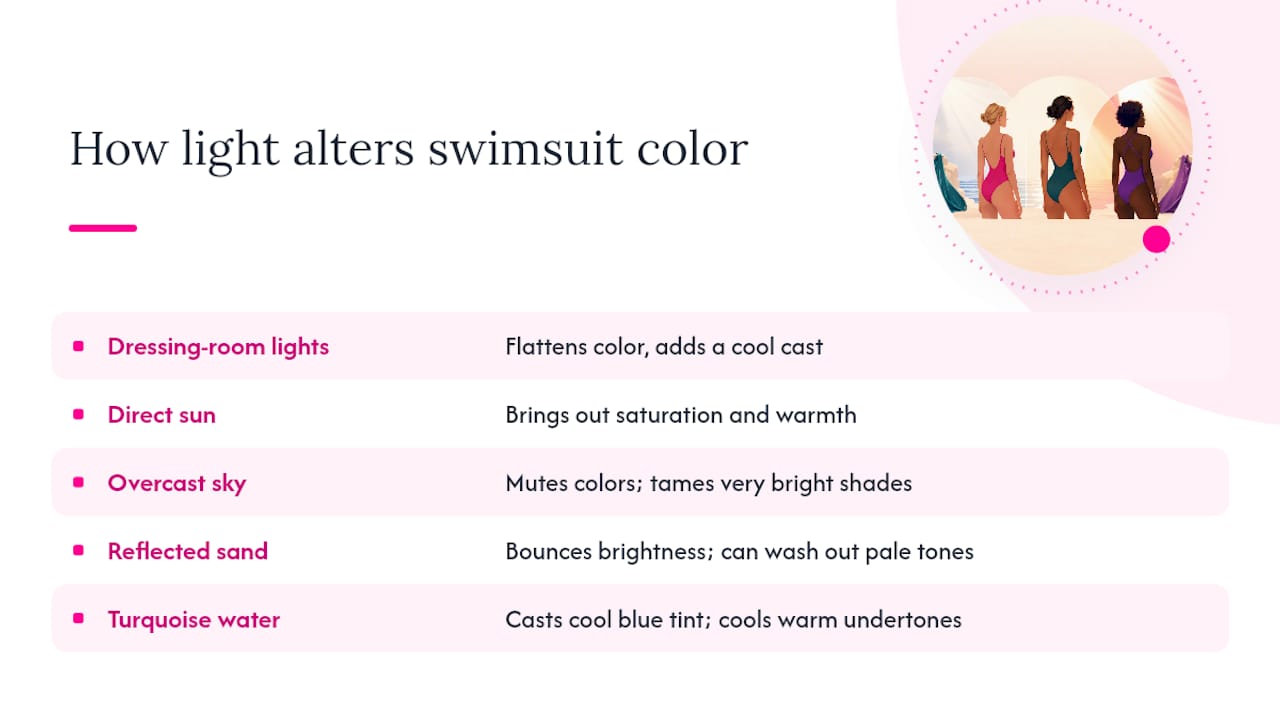
A suit that looked perfect under store lighting can look completely different once you’re standing on sand under direct sun, and that gap catches a lot of pale-skin shoppers off guard. Fluorescent dressing-room lighting tends to flatten color and add a slightly cool cast, which can make warm shades like terracotta or mustard look muddier than they actually are.
Natural daylight does the opposite. Direct sun brings out saturation and warmth, so jewel tones like emerald or sapphire often look richer and more vivid outdoors than they did indoors. Overcast days mute colors slightly, which can actually work in your favor if you’re wearing a very bright or neon-adjacent shade, though on pale skin it is still safer to avoid neons altogether.
Reflected light matters too. White sand and light-colored pool decks bounce brightness upward, which can wash out already-pale colors even further. Deeper colors, navy, olive, deep teal, hold their richness better against that kind of reflected glare than pastels do. Turquoise water has its own effect, casting a cool blue tint that can make warm undertones look slightly grayer than they do on land.
The practical takeaway: don’t make a final decision under dressing-room lights alone. If you can, check the color near a window or step outside for a second before buying, especially for a shade you’re on the fence about.
Accessorizing Swimsuits to Complement Pale Skin
The right accessories finish a color choice instead of fighting it, and metal tone is the biggest lever. Cool undertones generally look sharper in silver, white gold, or platinum pieces, while warm undertones get more mileage from gold, rose gold, or brass tones.
Cover-ups deserve the same undertone logic as the swimsuit itself. A sheer white or pale cover-up over a jewel-toned suit keeps the cool contrast intact, while a linen cover-up in cream or camel plays nicely with warm terracotta or olive pieces underneath.
Sunglasses and hats add another layer worth thinking through. Tortoiseshell frames tend to complement warm undertones, while black or silver-toned frames pair more naturally with cool ones. A wide-brim straw hat works for either group, but a hat with a colored band, navy for cool undertones, rust or mustard for warm, ties the whole look together more deliberately.
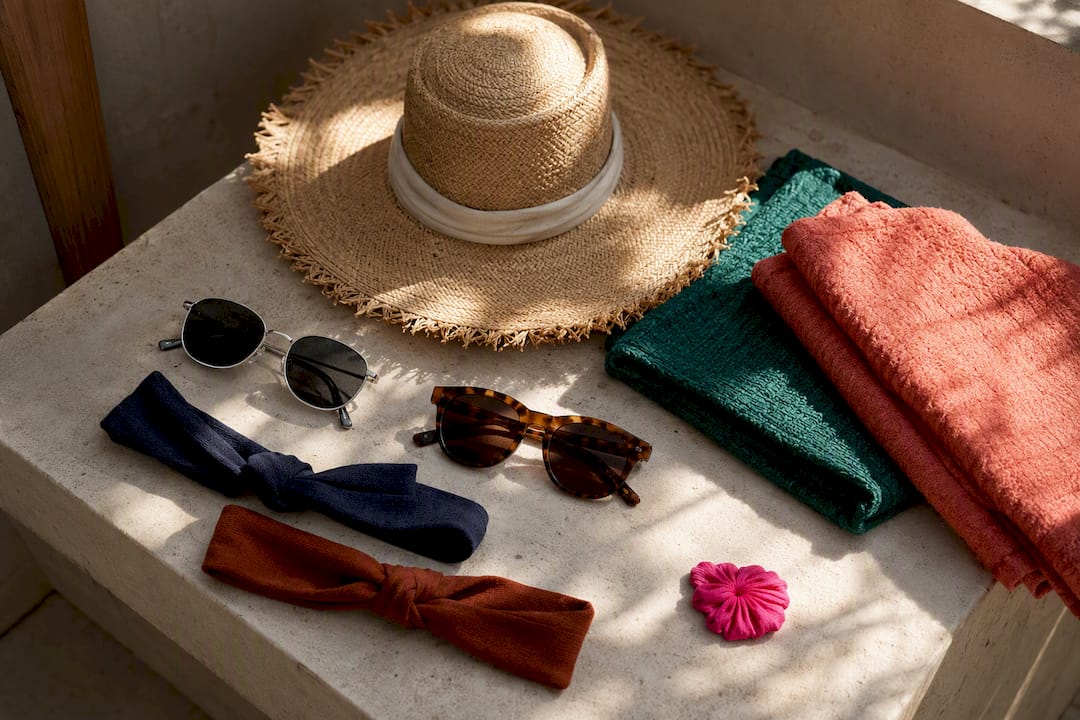
Keep beach bag and towel colors in mind too, since they show up in nearly every photo. A navy or emerald towel next to a coral swimsuit creates a nice complementary pop, while matching every accessory too closely to the suit color can flatten the whole look instead of layering it.
Why Undertone Beats “Universal” Color Advice
Most swimsuit color guides hand out a single “best color for pale skin” answer, usually red or black, and call it done. That advice isn’t wrong so much as incomplete. Black can genuinely overwhelm very fair skin depending on the lighting, which is exactly why stylists increasingly point toward navy and jewel tones as softer alternatives that still deliver contrast.
The bigger issue with generic advice is that it treats “pale” as one category when it’s really three: cool, warm, and neutral undertones that respond to almost opposite color families. A cool-toned reader who takes generic “wear warm terracotta” advice at face value will end up disappointed by the mirror, not because the advice was bad, but because it was aimed at nobody in particular.
If you take one thing from this guide, let it be the undertone test, not the color list. Once you know whether you lean cool, warm, or neutral, the right shades become obvious and the wrong ones stop tempting you at the rack. Depth and contrast will always beat a pastel that matches your skin a little too closely.
— Ryan
Shop Doll House Bikinis by Undertone
Once you know your undertone, shopping gets a lot faster with a catalog built around fashion-forward color and pattern choices instead of the handful of “safe” shades most swimwear racks default to.

Cool undertones can start with jewel-toned pieces like the floral ruched bikini top and tie-side bottom set for contrast that photographs well in daylight and pool lighting alike. Warm undertones tend to gravitate toward richer, sun-kissed pieces such as the gold high-waist bikini set, while neutral undertones have the flexibility to try a mixed palette like the mint tropical floral bikini set.
A few buying basics matter regardless of color: check the size chart before ordering since fit varies by cut, look for ribbed or textured fabrics if you want extra dimension in solid colors, and confirm the return policy before committing to a bold new shade for the first time. Shipping offers and promotions vary; check the website for details. Browse the full bikini sets collection to find a color-coordinated set that matches the undertone you identified earlier, and check out when you find the one that fits.
Sources
- The best colour swimsuit for pale skin: Expert tips to flatter fair tones this summer | Woman & Home
- What to wear to protect skin from sun | American Academy of Dermatology (AAD)
- Best Swimsuit Colors for Pale or Fair Skin in 2026
- The Cut — best self-tanners and related styling advice
FAQ
What colors should you avoid with pale skin?
Avoid pale beige or nude shades that closely match your skin, ultra-icy pastels like baby blue or lavender, and neon or fluorescent colors, since all three tend to wash out fair complexions by removing contrast.
What color looks best on very pale skin?
Deep jewel tones like emerald and sapphire, along with navy, generally look best because they create contrast without the harshness some people experience with solid black.
What color swimsuit goes best with pale skin?
It depends on undertone: cool undertones do best in jewel tones like cobalt and teal, warm undertones in terracotta and olive, and neutral undertones in muted shades like dusty rose or jade that blend both directions.
What color bathing suit makes pale skin look the most tan?
Coral, turquoise, terracotta, and olive tend to create the most convincing warm, sun-kissed illusion, especially when paired with a darker trim or slightly textured fabric for added depth.