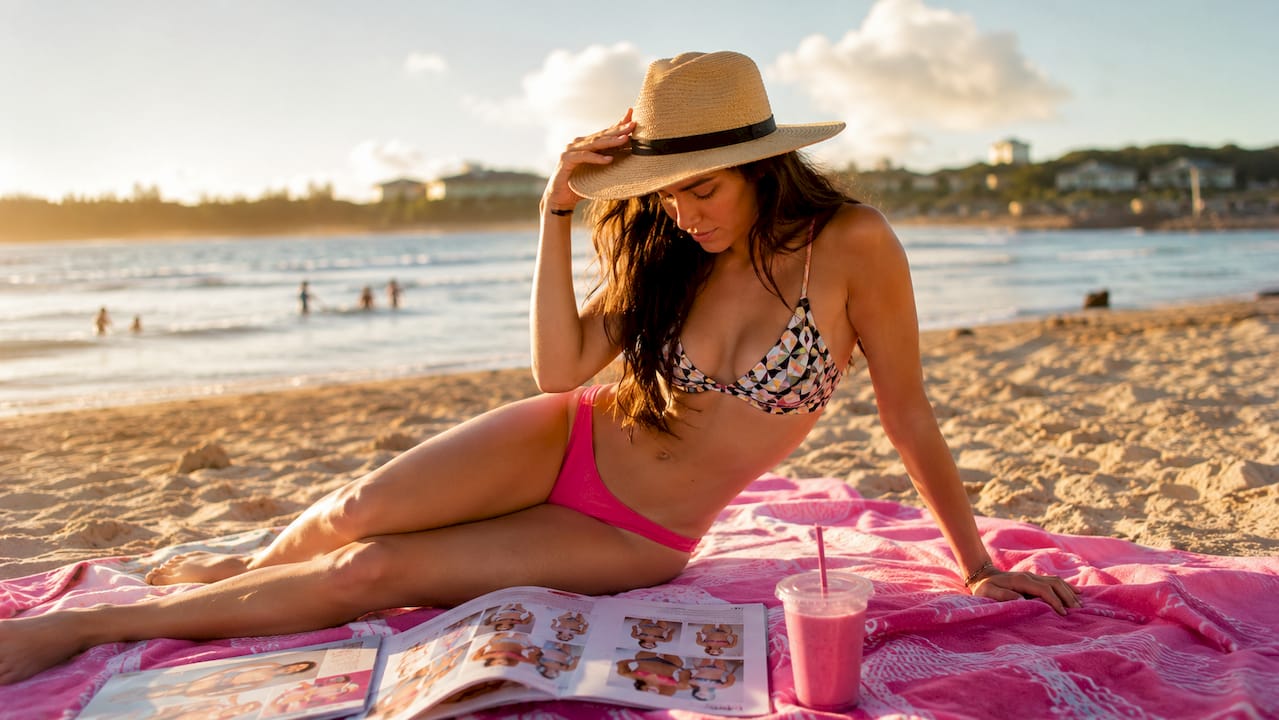
Mix and match swimwear is the practice of pairing separate bikini tops and bottoms from different sets to create a personalized, flattering beach or poolside look. Unlike buying a fixed two-piece set, this approach lets you choose a size 10 bottom and a size 8 top independently, solving one of the most common fit frustrations in swimwear retail. Brands like Summersalt and Lime Ricki built entire product lines around this concept, and reversible swimwear has pushed it further by multiplying outfit options from fewer pieces. The result is a wardrobe that works harder, travels lighter, and looks more intentional.
What is mix and match swimwear and why it works
Mix and match swimwear, also called separates styling in the fashion industry, is defined by one core principle: the top and bottom do not need to come from the same set. You buy each piece based on fit, color, and coverage preference rather than accepting whatever a pre-packaged set offers. This matters because most women’s bodies do not fit neatly into a single size across top and bottom, and a matching set forces a compromise that neither piece wins.
The styling potential goes well beyond fit. Proper color and texture coordination can turn a limited set of pieces into a versatile, photogenic wardrobe. Four tops and four bottoms technically produce sixteen combinations, meaning you can pack for a two-week vacation with eight pieces instead of fourteen. That math alone explains why separates styling has moved from a niche workaround to a mainstream approach.
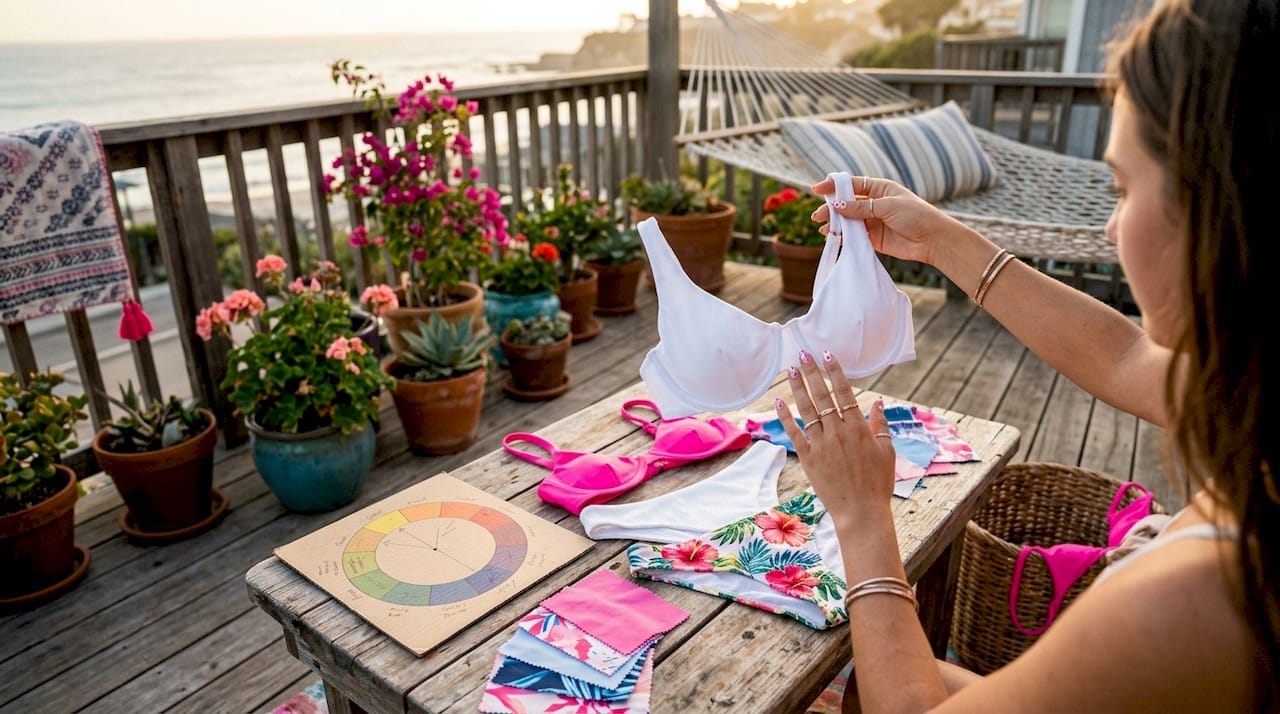
The advantages of mix and match swimwear also include cost efficiency over time. Investing in high-quality individual pieces that coordinate across multiple combinations costs less per outfit than buying multiple complete sets. You replace only the piece that wears out, not the whole set.
How to coordinate colors and patterns in your swimwear
Color coordination is the foundation of any successful mix and match bikini combination. Neutral colors like black, beige, and white match every other color and print in swimwear, making them the most versatile foundation pieces you can own. Warm tones (coral, terracotta, gold) pair naturally with each other, and cool tones (cobalt, teal, lavender) do the same. Mixing a warm tone top with a cool tone bottom creates visual tension that rarely resolves well.
Pattern mixing follows a specific rule that most people skip: share at least one color across the top and bottom to maintain harmony. A floral top with a stripe bottom works when both contain the same shade of red. Without that shared hue, the two pieces look like they belong to different outfits. Check the swimwear patterns guide from Dollhousebikinis for a breakdown of which prints pair well together.
Scale contrast is the second rule of pattern mixing. Pair a large-scale print (oversized tropical leaves, bold geometric blocks) with a small-scale print (thin stripes, micro florals) rather than two prints of the same visual weight. Two large-scale patterns compete for attention and create visual noise.
Here is a quick reference for color and pattern pairing:
| Top style | Best bottom pairing | Why it works |
|---|---|---|
| Bold floral (large scale) | Solid color or thin stripe | Scale contrast prevents visual competition |
| Neutral solid (black, white, beige) | Any print or color | Neutrals anchor any combination |
| Warm-tone print (coral, orange) | Warm solid or small warm print | Shared color temperature creates cohesion |
| Cool-tone print (blue, teal) | Cool solid or small cool print | Consistent tone reads as intentional |
| Stripe (medium scale) | Micro floral or solid | Different pattern type with matching hue |
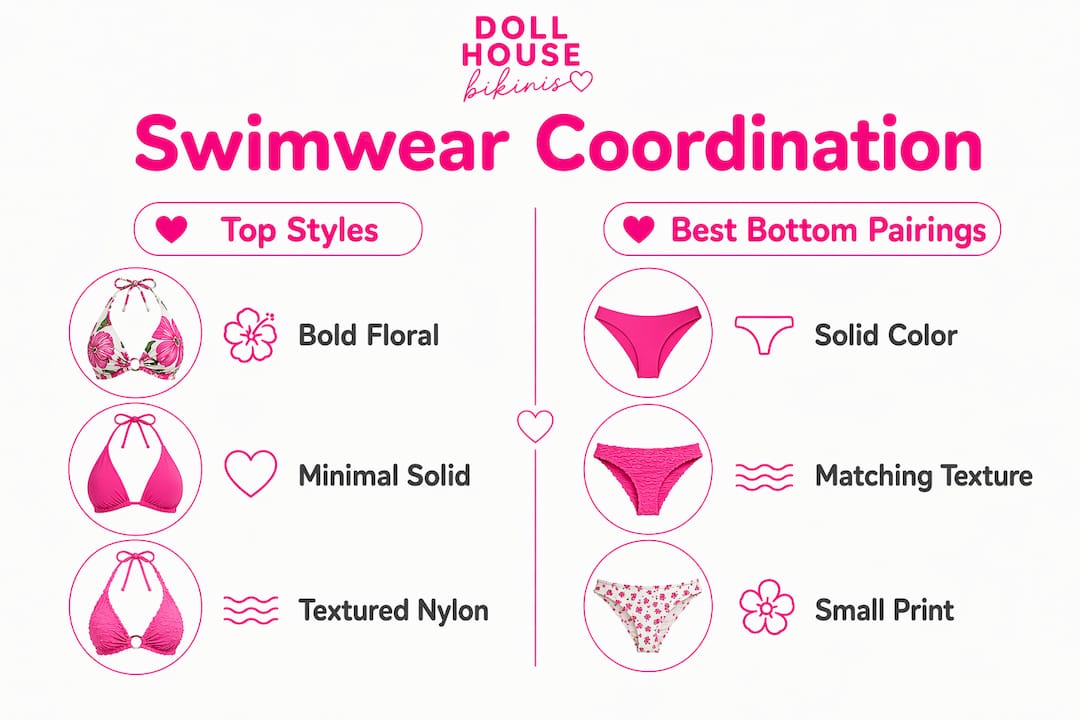
Pro Tip: Use a solid piece on whichever half of your body you want to draw less attention to. A bold printed top with a solid bottom directs the eye upward. A solid top with a printed high-waisted bottom does the opposite.
What fabrics and coverage styles mix well together
Fabric choice determines how your mix and match pieces perform together in water, sun, and movement. The two most common blends are polyester/PBT and nylon/spandex. Polyester blends offer high chlorine resistance and durability, making them the better choice for frequent pool use. Nylon/spandex blends feel softer against the skin and offer excellent stretch, but they degrade faster in chlorinated water.
Mixing these two fabric types in a single outfit is common and practical. A polyester bottom paired with a nylon/spandex top gives you durability where you need it and comfort where you want it. The key is understanding that the two fabrics behave slightly differently when wet. Polyester holds its shape more rigidly; nylon stretches and recovers. Neither is a problem as long as you account for it when choosing coverage styles.
Coverage profiles matter as much as fabric when mixing pieces:
- Minimal coverage: Triangle tops and string bottoms. These pair naturally with each other but require consistent fabric weight to avoid one piece looking heavier than the other.
- Full coverage: Underwire tops and full-seat bottoms. Mix these with other full-coverage pieces for a balanced silhouette.
- Hybrid: A bandeau top with a high-waisted bottom. This is one of the most flattering combinations because the high waist creates a defined waistline while the bandeau keeps the top simple.
Match your coverage choice to your activity. Surfing and active water sports demand secure, high-coverage pieces with strong elastic. Lounging by the pool allows for more minimal, decorative styles.
Pro Tip: A single reversible 4-way top can offer four distinct looks from one piece, which is the most efficient way to multiply your wardrobe without adding weight to your bag.
How to build a mix and match swimwear wardrobe step by step
Building a separates wardrobe works best when you follow a deliberate sequence rather than buying pieces at random. Here is the process:
- Start with two neutral bottoms. Black and white are the standard starting points. Every top you own will coordinate with these, giving you an immediate base of combinations.
- Add two neutral tops. A black bandeau and a white triangle top cover the most common coverage preferences and pair with any bottom you add later.
- Introduce one color or print bottom. Choose a color from your warm or cool palette and pick a print with a scale that contrasts with any patterned tops you plan to buy.
- Add one statement top. A bold floral, a metallic, or a textured top gives your wardrobe a focal point. Pair it with your neutral bottoms to keep it wearable.
- Add one reversible or multi-way piece. Reversible swimwear multiplies looks from fewer items, which is especially useful for travel packing.
- Fill gaps based on occasion. Add a high-waisted bottom for more coverage, a sporty racerback top for active days, or a ruched style for a different texture.
The bikini wardrobe building guide from Dollhousebikinis walks through this process with specific product examples. When shopping, always try tops and bottoms separately and check the return policy before buying pieces you cannot try on in person. Seasonal sales are the best time to invest in higher-quality pieces since the price difference between fast fashion and durable swimwear narrows significantly during end-of-season clearance.
| Wardrobe stage | Pieces to add | Combinations unlocked |
|---|---|---|
| Foundation | 2 neutral tops + 2 neutral bottoms | 4 |
| Color layer | 1 color top + 1 color bottom | 9 |
| Pattern layer | 1 print top + 1 print bottom | 16 |
| Reversible addition | 1 reversible piece (counts as 2) | 20+ |
Essential care tips to keep your swimwear looking new
Swimwear care is not optional maintenance. It is the difference between pieces that last two seasons and pieces that lose their shape after six weeks. Fabric strength can drop by 65% after approximately 35 summer days of chlorine and sun exposure. That number applies even to high-quality fabrics if you skip basic care steps.
The core habits are straightforward:
- Rinse before you swim. Rinsing swimwear before entering a chlorinated pool reduces chemical absorption because saturated fabric takes in less chlorine than dry fabric.
- Rinse immediately after. Use cool or lukewarm water to flush out chlorine, salt, and sunscreen residue. Hot water damages elastane fibers, making swimwear brittle and loose.
- Hand wash with mild detergent. Avoid bleach and harsh chemicals. A small amount of gentle soap is enough to remove sunscreen and body oils.
- Air dry in shade. UV exposure degrades fabric color and elasticity. Laying your swimwear flat in a shaded area preserves both.
- Apply sunscreen early. Applying sunscreen 20 minutes before putting on swimwear reduces the amount that transfers directly to the fabric.
Chlorine and UV exposure cause cumulative, chemistry-driven fabric damage that weakens swimwear fit and color over time. Rinsing immediately is a core preservation step beyond hygiene, preventing progressive deterioration from pool chemicals and sun exposure. Source
Routinely rinsing and air drying swimwear immediately after use significantly prolongs fabric lifespan and maintains elasticity. This matters more for mix and match pieces because you are likely wearing each piece more frequently than a single matched set.
Pro Tip: Never wring out swimwear to remove water. Press it gently between two towels instead. Wringing stretches and distorts the elastic fibers that give the piece its shape.
Key takeaways
Mix and match swimwear works best when you combine neutral foundations, coordinated color palettes, contrasting pattern scales, and consistent fabric care to build a wardrobe that multiplies outfit options from fewer pieces.
| Point | Details |
|---|---|
| Neutral foundations first | Black, white, and beige pieces coordinate with everything and form the base of any separates wardrobe. |
| Share one color across prints | Mixing patterns only works when the top and bottom contain at least one matching hue. |
| Match fabric to activity | Polyester blends resist chlorine; nylon/spandex offers stretch. Choose based on how you swim. |
| Reversible pieces multiply options | A single reversible top can function as four distinct looks, ideal for travel packing. |
| Rinse and air dry every time | Fabric strength drops 65% after 35 days of chlorine and sun exposure without proper care. |
Why I think most people underuse their swimwear separates
Most people buy mix and match pieces with good intentions and then default to wearing the same two combinations every time. The wardrobe potential is there, but the mental habit of treating a top and bottom as a pair never fully breaks. I have watched this happen with my own collection for years before I started treating each piece as a standalone item with its own set of partners.
The biggest shift for me was building around neutrals first instead of buying statement pieces first. When you own four neutral bottoms, every bold top you add immediately has four homes. The math works in your favor without any extra effort. I also stopped underestimating reversible pieces. A single reversible top I picked up for travel ended up becoming one of the most-worn items I own because it genuinely reads as two different tops depending on which side faces out.
The care side of this is where most people lose money without realizing it. Skipping the post-swim rinse feels harmless once or twice, but the cumulative damage from chlorine and UV is real and measurable. I ruined a quality nylon/spandex top in one summer by being careless about rinsing. Now I rinse before and after every swim, and my pieces hold their shape and color noticeably longer. If you invest in quality separates, the care routine is the only thing standing between you and getting two or three full seasons out of each piece. Check the travel-friendly swimwear guide for packing strategies that also protect your pieces in transit.
— Ryan
Shop mix and match styles at Dollhousebikinis
Dollhousebikinis carries a full range of bikini tops, bottoms, and sets designed specifically for separates styling. The catalog includes floral prints, solids, metallics, and textured styles across multiple coverage profiles, so you can build a coordinated wardrobe without hunting across multiple retailers.
The two-piece swimwear sets are a strong starting point if you want pieces that are already designed to mix with other styles in the collection. For a complete beach look, the beach cover-up styles pair directly with the separates range. Free shipping applies to orders over $100, and new arrivals are added regularly across all categories. Browse the full collection at Dollhousebikinis to find the pieces that fit your palette and coverage preferences.
FAQ
What is mix and match swimwear?
Mix and match swimwear means pairing bikini tops and bottoms from different sets to create a personalized outfit. It allows independent size selection for top and bottom, solving common fit issues with pre-packaged sets.
How do you mix and match bikinis without clashing?
Share at least one color between the top and bottom, and pair a large-scale print with a small-scale print or solid. Neutral pieces like black, white, and beige coordinate with any color or pattern.
What fabrics work best for mix and match swimwear?
Polyester/PBT blends offer the best chlorine resistance for pool use, while nylon/spandex blends provide a softer feel and better stretch. Mixing both fabric types in one outfit is practical and common.
How many pieces do you need to start a mix and match wardrobe?
Four pieces (two tops and two bottoms) give you four combinations immediately. Adding one reversible piece expands that to eight or more looks, which covers most vacation or seasonal needs.
How do you care for mix and match swimwear pieces?
Rinse with cool water before and after swimming, hand wash with mild detergent, and air dry in shade. Skipping these steps accelerates fabric degradation, with strength dropping by 65% after roughly 35 days of chlorine and sun exposure.