
Yes, most U.S. retailers accept swimwear returns, but only under specific conditions. The item must be unworn, unwashed, and still have its hygiene liner, sticker, and tags attached. Retailers like Doll House Bikinis and general policy standards agree on this baseline, though the refund type and window still depend on where you bought it, and final-sale items are typically off the table.
TL;DR:
- Most swimwear returns require the item to be unworn, unwashed, with tags, hygiene liner, and sticker still attached, or they will be denied.
- Refunds are typically processed within a few days to two weeks after the retailer receives the return, with policies varying between 30 and 90 days.
- Final sale or clearance swimwear cannot be returned or exchanged under any circumstances, and missing or cut tags automatically voids the return.
- Photos of the item’s condition, tags, hygiene liner, and receipt before shipping can help prove the item was unworn and in resalable condition if disputed.
- Doll House Bikinis offers clear, branded procedures for exchanges, with free shipping on orders over $100 and a focus on proper sizing to minimize returns.
Table of Contents
- Common Retailer Requirements for Returning Swimwear
- How to Make a Successful Swimwear Return
- Refund Timelines and What Happens After You Return Swimwear
- Exceptions, Final Sale Items, and Common Denial Reasons
- Practical Tips to Increase Your Odds of a Successful Return
- Doll House Bikinis’ Swimwear Exchange Procedure
- Do Fabric Type and Swimwear Material Change Return Rules
- How Return Policies Vary From One Retailer to the Next
- A Quick Take on Fit-First Shopping and Hygiene Rules
- Doll House Bikinis: Exchange and Shopping Options
- Where to Check Official Return Policy Wording
- Sources
- FAQ
Common Retailer Requirements for Returning Swimwear
Swimwear sits in its own category on most return policies, separate from t-shirts or jeans, because health codes and resale concerns make it stricter. Retailers build their rules around a few non-negotiable checkpoints.
- Hygiene liner attached: The crotch liner and any clear plastic hygiene sticker must still be in place. Cut it off, and the return is dead on arrival.
- Tags intact: Sewn-in tags and hanging price tags need to stay attached. Most retailers require the hygiene strip and swing tags to remain in resalable condition before they’ll process anything.
- Unworn, unwashed, unstained: No chlorine smell, no sunscreen residue, no sand in the lining. Retailers inspect for this closely.
- Proof of purchase: A receipt, order confirmation email, or the card statement showing the charge. Refunds typically go back to the original payment method.
- In-store vs. mail differences: Store associates can eyeball the item on the spot, while online return portals often scan everything after it arrives at a warehouse, which can delay the verdict. Some portals also require every item in an order to ship together before processing starts.
Miss any one of these, and the retailer has grounds to deny the return outright.
How to Make a Successful Swimwear Return
Following a set order of operations cuts down on wasted trips and denied refunds.
- Read the policy first. Look specifically for “final sale,” “clearance,” or “swimwear” carve-outs before you even try the item on.
- Preserve everything. Keep the hygiene liner, tags, original packaging, receipt, and order confirmation email together in one spot.
- Try it on dry. Wear underwear underneath, skip the pool, and don’t apply sunscreen, lotion, or self-tanner beforehand.
- Pick your return method. In-store returns process faster since a person checks the item immediately; online returns need a printed label or a drop-off code from the carrier.
- Package it carefully and track it. Photograph the item’s condition before sealing the box, and hold onto the tracking number until the refund posts.
Pro Tip: Take a photo of the hygiene liner, tags, and receipt laid out together before you seal the return box. If the retailer disputes the item’s condition later, you’ll have a timestamped record proving it left your hands in resalable shape.
Refund Timelines and What Happens After You Return Swimwear
Once the box ships, the waiting game varies more than shoppers expect.
- Return windows: Most retailers give you somewhere around 30 days, though some stretch that to 60 or even 90 days. Online purchases sometimes get a few extra days tacked on to account for shipping time.
- Refund type: You might get money back on your original card, store credit, or a straight exchange for a different size or color. Policies spell out which option applies, so check before you assume cash back is guaranteed.
- Processing time: Once the retailer receives the item, expect anywhere from a few days to a couple of weeks before the refund shows up. Add transit time on top of that if you’re shipping it back.
- Shipping costs: Some retailers eat the cost with prepaid labels; others deduct a flat return fee from your refund. Loyalty program members sometimes get free returns on categories like swimwear, so it’s worth checking your account status before paying out of pocket.
Exceptions, Final Sale Items, and Common Denial Reasons
Not every swimsuit purchase comes with a safety net. Clearance racks and “final sale” tags almost always mean the sale is permanent, no matter how pristine the item looks when it arrives back at the warehouse.
- Final sale and clearance swimwear typically cannot be returned or exchanged under any circumstance.
- A missing hygiene liner, cut tags, visible wear, chlorine smell, or a return submitted after the window closes are the most common denial triggers.
- Sewn-in tags that have been cut or removed void the return automatically in many policies, even if the suit itself looks untouched.
- Borderline condition can trigger a restocking fee or a partial refund instead of a full one.
- Gifted swimwear is often refunded as store credit to the purchaser rather than cash back to whoever’s returning it.
Your actual right to return anything ultimately comes down to what the seller’s posted policy says at the time of purchase, since return eligibility is governed by store terms rather than a blanket consumer right.
Practical Tips to Increase Your Odds of a Successful Return
A little discipline at the fitting stage saves a lot of frustration later. Try suits on over clean underwear only, and skip the pool, the sunscreen, and the self-tanner until you’re sure you’re keeping it.
- Photograph the item, tags, hygiene liner, and receipt together before you ship or head to the store.
- Reuse the original packaging when possible, and wrap the item discreetly for mail returns.
- If a return gets denied, ask calmly to speak with a manager and reference the specific policy language rather than arguing generally.
- Keep every photo and tracking number as evidence in case you need to escalate the dispute later.
Pro Tip: Retailers can’t always tell the difference between “tried on for two minutes” and “worn to the beach” just by looking. Documentation is what separates a smooth refund from a drawn-out argument, since photos of the liner and tags intact give you real evidence if a store disputes the item’s condition.
Doll House Bikinis’ Swimwear Exchange Procedure
Doll House Bikinis outlines its own Swimwear Exchange Procedure directly on its site, covering the exact steps and timing for swapping a size or style.
- The procedure lays out the return window, hygiene liner and tag expectations, and how exchanges get processed step by step.
- Customers get clarity upfront on whether a request results in a refund, store credit, or a straight exchange, rather than guessing.
- The brand backs this up with care guides and sizing resources built to help shoppers avoid needing a return in the first place.
Reading the full procedure page before you buy or before you ship anything back is the fastest way to know exactly what to expect.
Do Fabric Type and Swimwear Material Change Return Rules
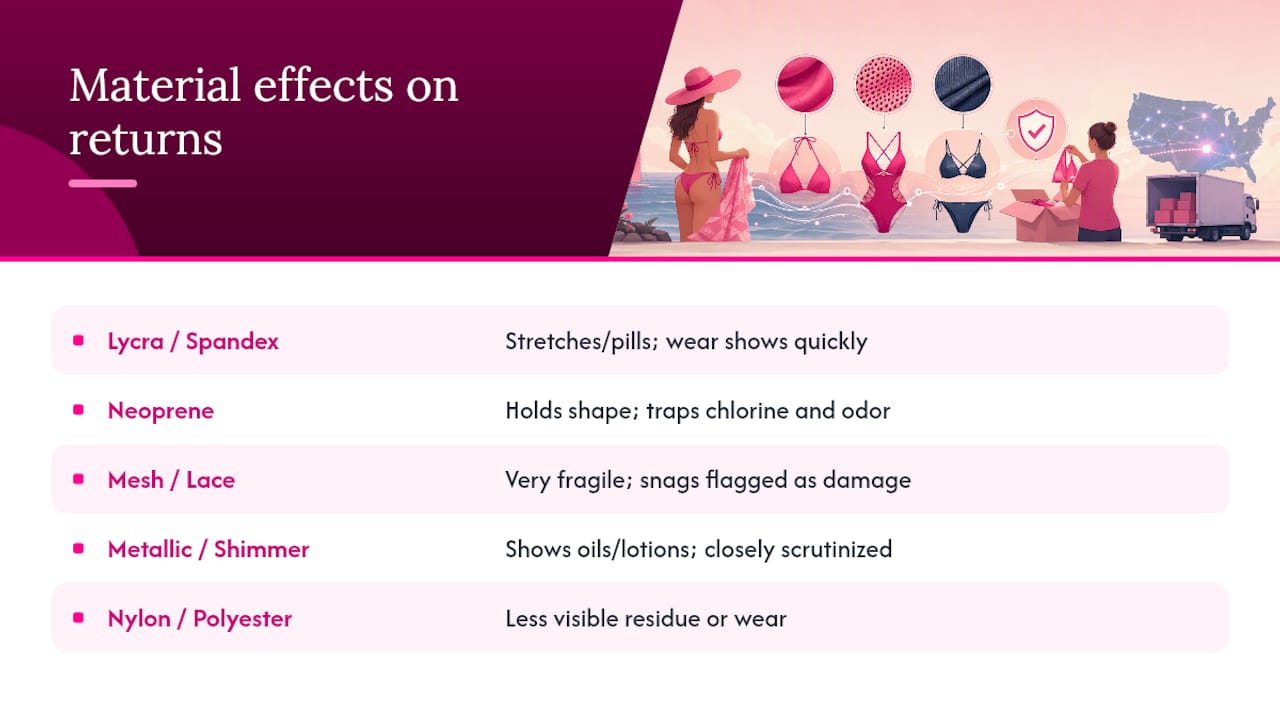
Material rarely changes the paperwork, but it changes how obvious wear becomes. Lycra and spandex blends, the stretchy fabrics used in most bikinis and one-pieces, stretch out permanently once worn and show pilling or snags fast, which makes “unworn” easy for a retailer to verify or dispute at a glance.
Neoprene, the thicker material used in some higher-support swimsuits and wetsuit-style pieces, holds its shape a bit better, but it also traps odor and chlorine residue more stubbornly than thinner fabrics. A neoprene suit that’s been in a pool even once often smells like it, even after drying.
Mesh inserts and lace trim, common on fashion-forward bikini sets, are the most fragile category. Snag one thread trying it on, and the item may get flagged as damaged rather than simply “tried on.” Metallic and shimmer fabrics show fingerprint oils and lotion residue more visibly than solid-color nylon or polyester blends, so retailers scrutinize those returns closely too.
None of this changes the core rule: unworn, tag-intact, liner-intact swimwear returns regardless of fabric. But delicate materials give a retailer more visual evidence to point to if they suspect the item was actually worn, so treat lace, mesh, and metallic pieces with extra care during a fitting.
How Return Policies Vary From One Retailer to the Next
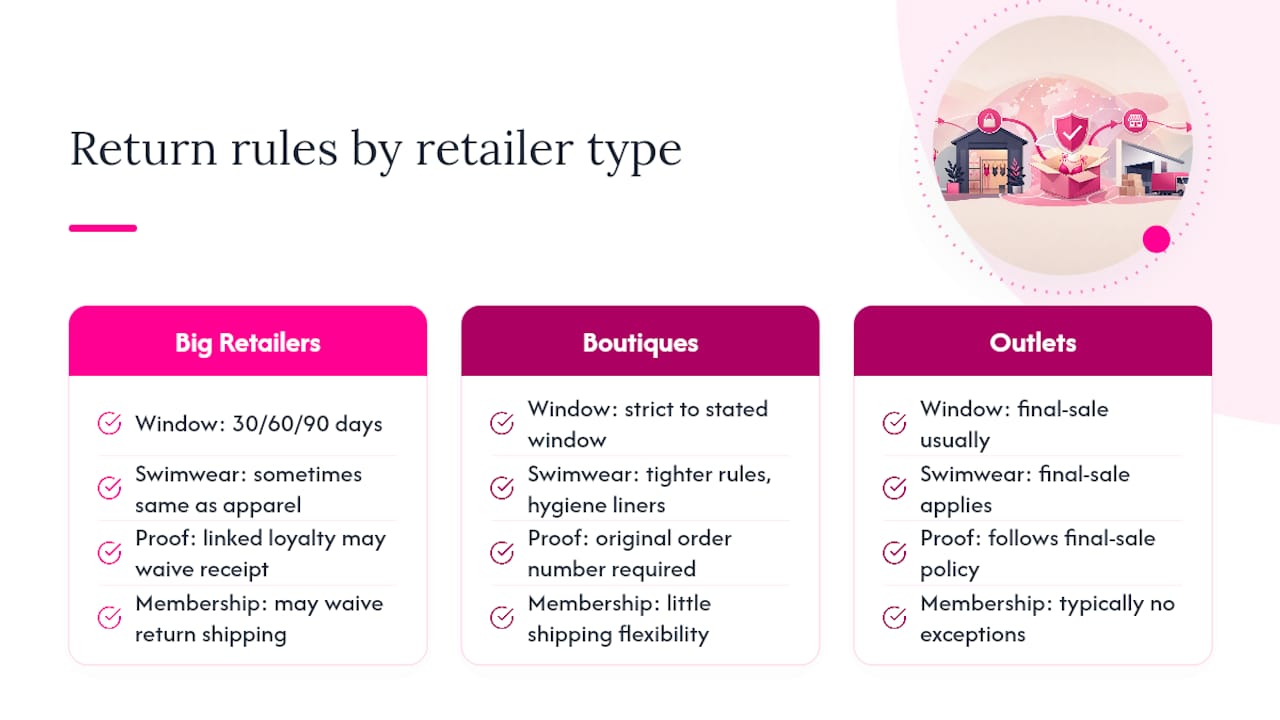
No single national standard governs swimwear returns in the United States, which is exactly why reading the specific policy before you buy matters so much. Some large retailers treat swimwear identically to any other apparel category, applying the same 30, 60, or 90 day window across the board. Others carve swimwear out as its own line item with tighter rules, shorter windows, or mandatory hygiene liner checks that don’t apply to a regular top or dress.
Department stores and big-box retailers often allow in-store returns without a receipt if the item was purchased on a linked loyalty account, while smaller boutique and direct-to-consumer swimwear brands tend to require the original order number and stick closer to their stated window with little flexibility. Outlet and clearance sections almost always carry final-sale terms regardless of the parent retailer’s general policy, even when the same brand’s full-price swimwear is fully returnable.
Membership tiers add another layer of variation. Some retailers waive return shipping fees entirely for loyalty members while charging everyone else a flat deduction from their refund. The safest approach is treating every swimwear purchase as its own case: check the specific product page or order confirmation rather than assuming last year’s return experience with the same retailer still applies.
A Quick Take on Fit-First Shopping and Hygiene Rules
Retailers restrict swimwear returns after water exposure for a straightforward reason: a liner that’s been in a pool or the ocean can’t be resold, full stop. Trying suits on over underwear is the reasonable middle ground between letting you check fit and protecting the next buyer.
The smarter play is spending more time upfront with a sizing guide and real customer photos before you buy, so the return conversation never has to happen at all.
— Ryan
Doll House Bikinis: Exchange and Shopping Options
Doll House Bikinis is the alternative to guessing on fit and hoping a big-box return counter cooperates. Its own Swimwear Exchange Procedure spells out exactly how a size swap or style change works, without the ambiguity that comes from generic department-store policies applied to a category they weren’t designed for.
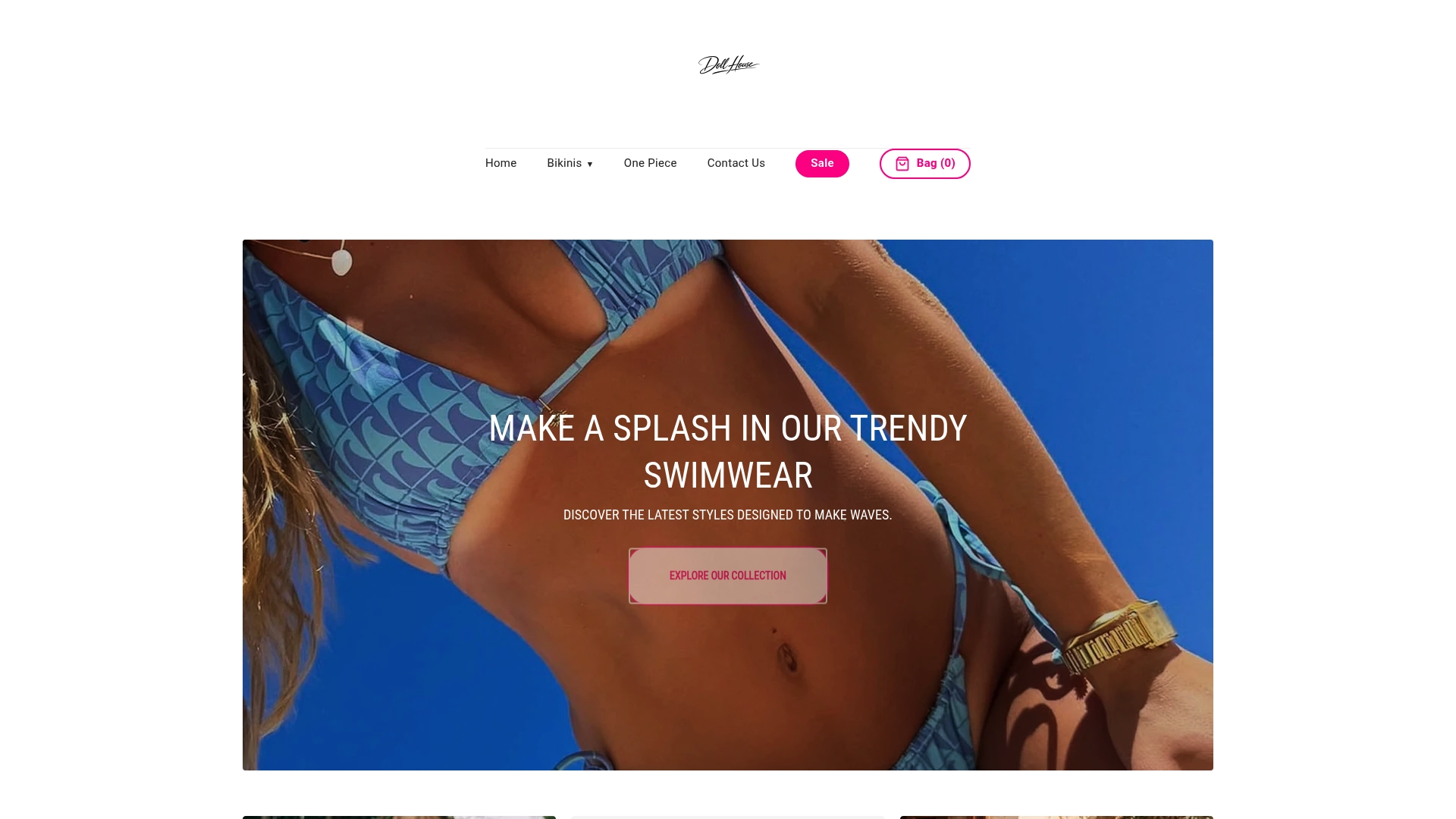
The catalog spans everything from bikini sets and individual tops and bottoms to one-pieces and micro styles, all searchable with filters for style, price, and fit. Orders over $100 ship free, and the sizing guide linked above helps narrow down measurements before checkout so an exchange becomes the exception rather than the norm. Anyone unsure about fit or the exchange steps can review the full procedure page and start shopping the current collection with a clear sense of what happens if the size needs adjusting.
Where to Check Official Return Policy Wording
- Review the Doll House Bikinis Swimwear Exchange Procedure for exact brand terms.
- Check your retailer’s own returns page and order confirmation email for case-specific instructions before shipping anything back.
Sources
- Can You Return Swimwear? (Worn and Unworn) - OpenWaterHQ
- Return, Refund and Exchange Policy | American Eagle
FAQ
Can I Return a Worn Bathing Suit to Target?
Generally, no. Retailers including large chains require swimwear to be unworn with the hygiene liner and tags attached, and a suit that shows signs of wear typically gets rejected at the register or during warehouse inspection.
What Items Cannot Be Returned?
Final-sale and clearance swimwear usually cannot be returned under any circumstance, regardless of condition. Items missing their hygiene liner, sewn-in tags, or original packaging also commonly fall into the non-returnable category once those tags have been cut or removed.
Which Bathing Suits Offer Free Returns?
It depends on the retailer and sometimes your loyalty membership status. Some retailers waive return shipping specifically for members or for categories like swimwear, so checking your account benefits before paying a return fee is worth the two minutes it takes.
Can I Return an Unworn Bathing Suit to Walmart?
Unworn swimwear with tags and the hygiene liner intact is typically eligible for return within the retailer’s standard window, provided you have proof of purchase. Always confirm the current policy on the retailer’s own returns page, since terms can change without notice.
How Long Do I Have to Return Swimwear?
Return windows commonly run around 30 days, with some retailers extending to 60 or 90 days depending on the purchase channel. Online orders sometimes get a few extra days added to account for shipping delays.
Does Doll House Bikinis Accept Swimwear Exchanges?
Yes, Doll House Bikinis maintains a documented Swimwear Exchange Procedure covering size and style swaps. Current pricing and specific product availability are listed directly on the site rather than in a fixed policy document.