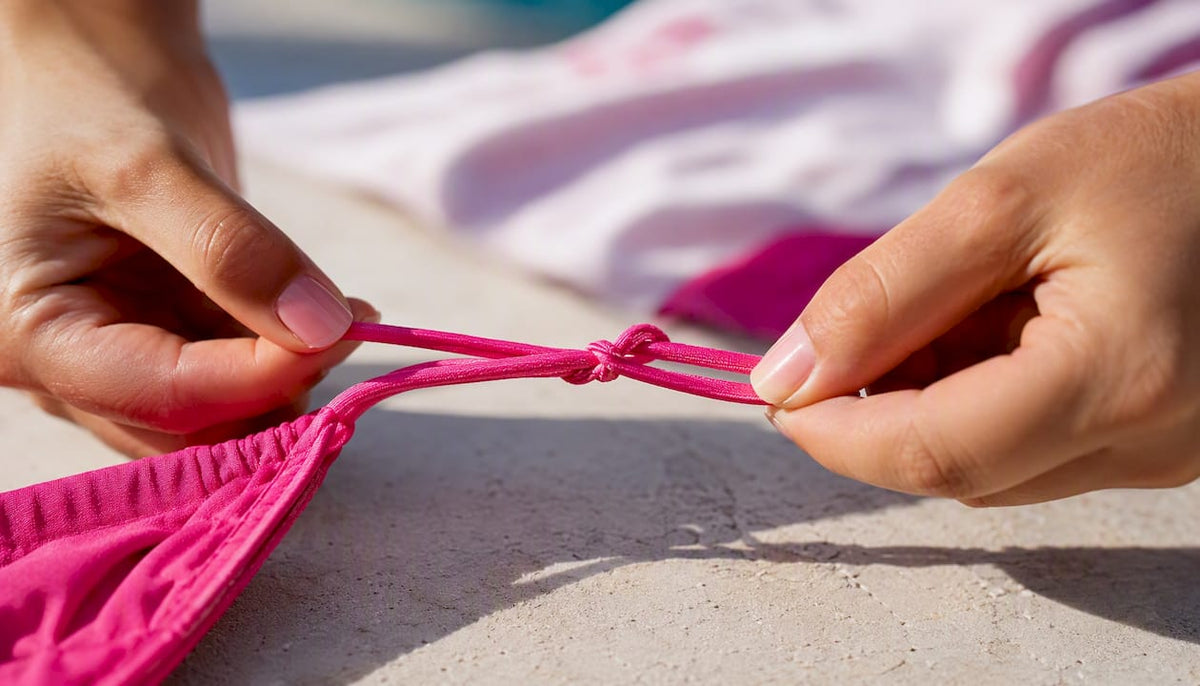
The most reliable fix for a slipping string bikini is a reef (square) knot finished with a double overhand, or a surgeon’s knot when the string is wet and slick. Fabric matters just as much: durable elastane blends keep ties and edges from stretching out over a season. Before leaving the changing room, do a quick pull and jump test, and know a couple of on-the-spot fixes for when a knot loosens anyway.
TL;DR:
- Longer ties made of durable elastane blends significantly improve the likelihood of a secure knot holding through active swimming and waves.
- Using a reef (square) knot followed by a double overhand knot provides the best security for string bikinis, especially in demanding water conditions.
- Fabric quality and proper tie length are more critical than knot technique alone because poor fabric stretch or short strings cause most failures.
- Rinsing, hand washing, and avoiding heat damage extend the lifespan of the fabric and keep ties from slipping over time.
- For active water sports, adjustable string bikini styles with longer ties and reinforced fabric tend to stay secure better than fixed, short-tie designs.
Table of Contents
- The Knots That Actually Keep a String Bikini On
- How Do You Tie Each Piece for a Secure Fit?
- What Fit and Fabric Actually Keep a Tie Secure?
- Care Habits That Keep Ties and Fabric From Failing
- Quick Fixes When a Tie Loosens on the Beach
- What Doll House Bikinis Recommends for Everyday Security
- The Real Priority Order Nobody Tells You
- Where to Find Secure String Styles at Doll House Bikinis
- Sources
- FAQ
The Knots That Actually Keep a String Bikini On
A bow looks pretty and does almost nothing under pressure. Two loops crossed loosely are exactly the kind of knot that unravels the second a wave hits it or a strap gets tugged while you’re pulling a towel out of a bag. If you want a genuinely secure swimwear option, you need a knot built on friction, not decoration.
The reef (square) knot is the foundation. Cross the right string over the left and under, then cross the left string over the right and under, so the two loops lock flat against each other instead of sliding. Done correctly, a reef knot tightens under load rather than loosening. Done incorrectly, with the second cross going the same direction as the first, you get a granny knot, which slips almost as easily as a bow.
The double overhand seals the reef knot for anything beyond calm, waist-deep water. After tying the reef knot, take the two tails and tie a simple overhand knot directly on top of it. That second knot acts as a stopper, so even if the reef knot’s grip loosens slightly from motion, the tails can’t pull all the way through.
The surgeon’s knot is the upgrade for wet, slippery, or thin cords, which is most string bikini ties once they’re soaked. Instead of one wrap on the first cross, wrap the string around twice before pulling tight, then finish with a standard second cross. That extra wrap adds friction exactly where a wet knot wants to slide.
Stopper and sliding-adjustment knots solve a different problem: convenience without losing security. A stopper knot tied a few inches from the end of a tie stops a loosened knot from sliding all the way off, buying you time before a full retie. Sliding knots, similar to the adjustable cord locks on drawstring bags, let you loosen or tighten a halter tie without undoing it completely, then cinch back down to a locked position.
| Knot type | Best for | Security level |
|---|---|---|
| Bow | Poolside lounging, no swimming | Low |
| Reef (square) knot | Everyday swimming, moderate activity | Medium-high |
| Reef + double overhand | Active swimming, diving under waves | High |
| Surgeon’s knot | Wet, slippery cords, ocean conditions | High |
| Sliding-adjustment knot | Repeated adjusting throughout the day | Medium, high when locked |
Pro Tip: Practice the reef knot dry, at home, before you’re standing at the edge of the water fumbling with wet string and an audience.
For a full walkthrough with photos of hand placement, Doll House Bikinis breaks down the technique for tying a string bikini step by step.
How Do You Tie Each Piece for a Secure Fit?
Tying technique changes depending on which part of the suit you’re securing. Here’s how to approach the three trouble spots: halter tops, back-band tops, and tie-side bottoms.
Halter top, step by step:
- Position the cups so the seams sit flat against your chest with no gapping at the sides.
- Bring both neck strings up and cross them at the nape, using the surgeon’s knot wrap if the strings feel damp or thin.
- Finish with a second overhand knot directly against the first to lock it.
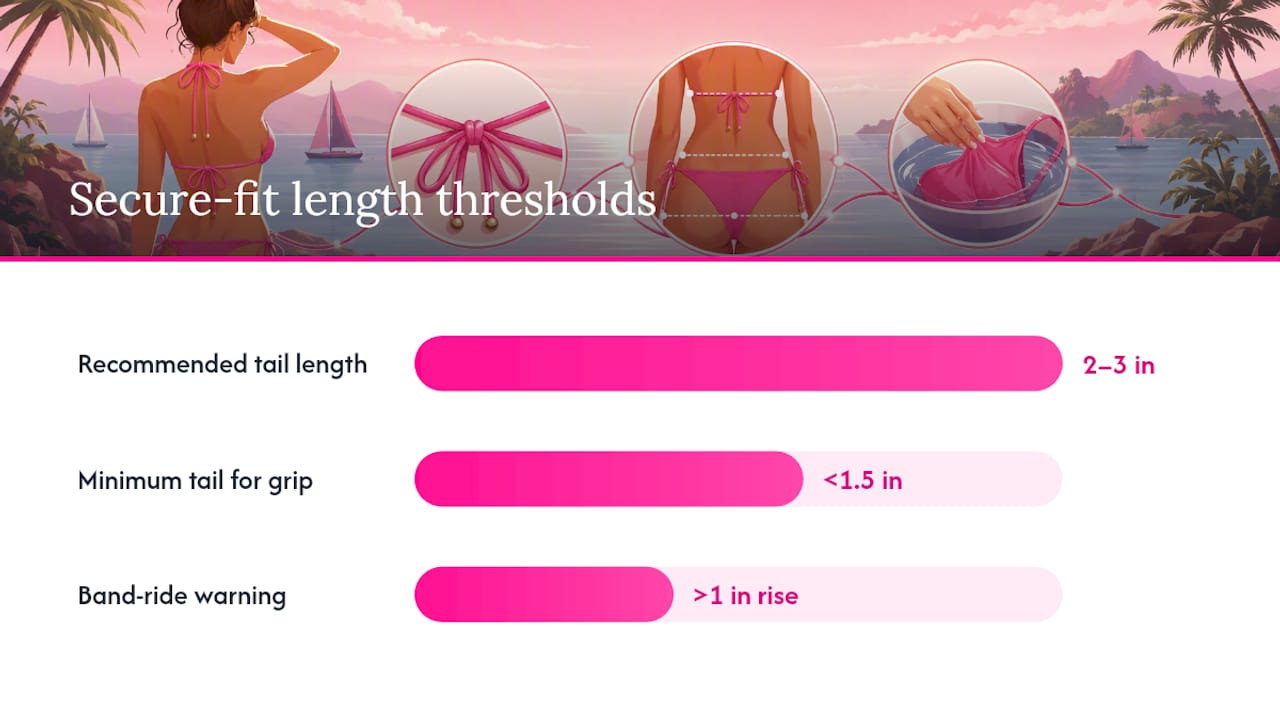
- Leave at least two to three inches of tail so the knot has room to be re-tightened later without running out of string.
Back-band top, step by step:
- Bring the back strings around at bra-band level, not higher, since a tie sitting too high loses leverage and slips faster.
- Tie a reef knot, checking that both loops are even before tightening.
- Add the double overhand on top.
- Check the fit by raising both arms overhead; if the band rides up more than an inch, the knot is likely too loose or tied too high.
Tie-side bottoms, step by step:
- Pull both side strings to equal tension before tying. Uneven tension is the single most common cause of one side sitting higher than the other by the end of the day.
- Tie a reef knot at the hip, not shifted toward the front or back.
- Choose a double knot over a bow if you plan to swim laps, dive, or do anything more active than wading.
- Leave enough tail to retie once if the knot works loose.
Testing matters as much as tying. Raise your arms overhead, do a small jump, and if you’re heading into open water, simulate a wave by ducking your shoulders under a pool ledge or ocean swell before committing to a full swim. Simple checks like an arm raise or a gentle jump reliably reveal a knot that’s about to slip, giving you the chance to retie on dry sand instead of mid current.
Most tying failures come down to tail length. A tail under an inch and a half doesn’t leave enough friction surface for a double knot to grip properly, which is why suits with slightly longer ties tend to outperform ones with barely-there strings, even when the knot technique is identical.
What Fit and Fabric Actually Keep a Tie Secure?
A perfect knot on cheap, worn-out fabric still fails, because the string itself stretches, thins, and loses grip long before the knot does. Fit and fabric quality carry as much weight as tying technique, and they’re the part most buyers overlook when shopping.
Fabric composition comes first. Durable elastane and Lycra blends, sometimes labeled Xtra Life spandex, resist the stretching and thinning that chlorine, salt water, and sunscreen oils cause over repeated wears. Editorial swimwear testing consistently points to these durable spandex blends as the ones that hold their shape and stay in place through active water use, rather than going limp and slippery after a handful of swims.
Strap and tie thickness matters more than it looks. A string that’s slightly wider where it meets the fabric distributes tension across more surface area, which means less stretching at that one contact point over a long beach day. Ultra-thin micro strings look striking, but they’re also the first to thin out and lose grip.
Fit should feel snug, not tight, when dry. Expect a slightly firmer fit right out of the packaging. Most string bikinis loosen a little after a few wet and dry cycles, so a suit that feels perfectly snug when bone dry is usually the right call, while one that already feels loose dry will be too loose wet.
Support isn’t just a bust issue. Real stability comes from the whole garment working together, top and bottom, fabric and knot, so the ties aren’t carrying the entire load by themselves. That’s part of why a supportive overall build matters as much as any single knot.
For anyone planning to swim laps, snorkel, or surf rather than just lounge, adjustable styles with longer ties and double-layered fabric give you more material to work with when tying a surgeon’s knot, and lined or reinforced construction holds its shape better than a thin, unlined single layer through repeated active use.
Care Habits That Keep Ties and Fabric From Failing
Salt water, chlorine, and sunscreen are the three biggest reasons a once-secure string bikini starts slipping by midsummer. None of them damage the fabric instantly, but they compound fast if you skip basic care.
- Rinse the suit in cool, fresh water immediately after swimming in a pool or the ocean, before salt or chlorine has time to sit in the fibers.
- Hand wash in cool water with a gentle detergent rather than tossing it in the washing machine, which stresses elastic fibers and seams.
- Skip the dryer entirely. Heat is one of the fastest ways to break down elastane, and it’s often the real reason a suit that used to hold its shape suddenly doesn’t.
- Never use bleach, even diluted, on the ties or lining.
- Lay the suit flat to dry, or hang it by the fabric rather than the strings, since hanging by the ties stretches them out over time.
- Rinse thoroughly on days with heavy sunscreen use. Oils and chemical filters break down elastic fibers faster than water exposure alone.
Pro Tip: Keep a small travel bottle of gentle detergent in your beach bag. Rinsing and hand washing a suit the same day you wear it does more for its lifespan than any laundering routine done days later.
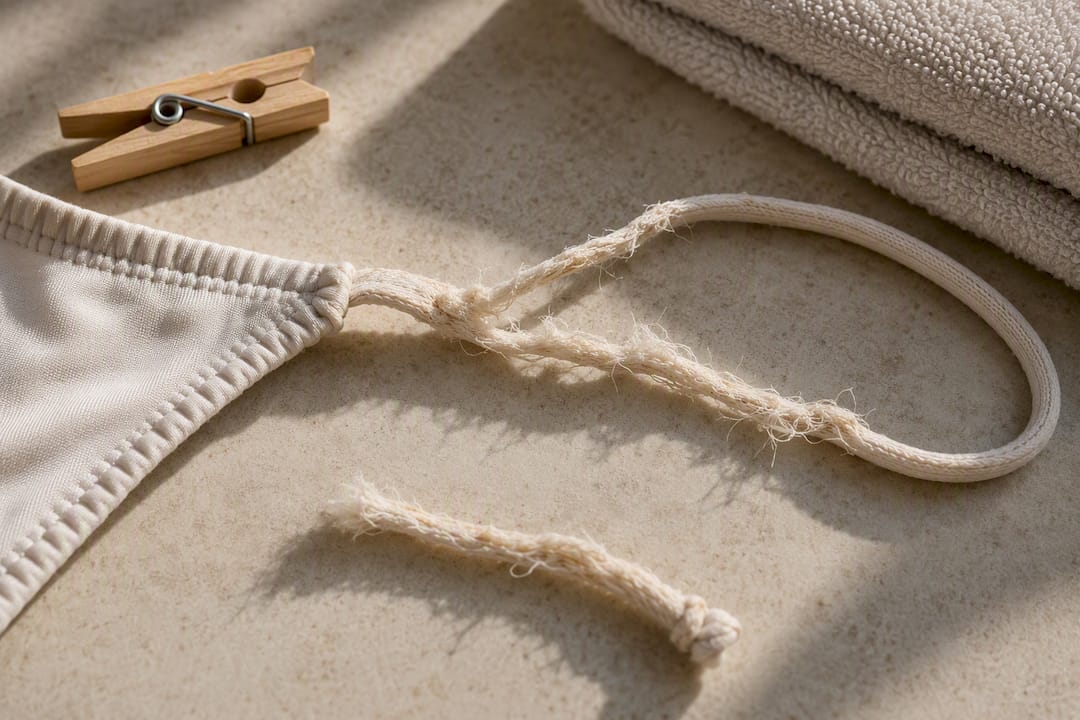
Watch for warning signs that a suit’s integrity is gone for good: strings that feel rough or fibrous instead of smooth, fabric that stays stretched out even after drying, or a knot that won’t hold tension no matter how tightly you pull it. Once elastane has broken down, no knot fixes it.
Quick Fixes When a Tie Loosens on the Beach
Knots loosen mid-day even on well-made suits, usually from repeated sitting, swimming, or towel-drying friction. A few field fixes buy you time until you can properly retie or change.
- Retie immediately using a surgeon’s knot with the extra wrap, then finish with a double overhand for extra grip on a string that’s already shown it wants to slip.
- Tuck a small swim-safe hair tie or silicone band under the knot for added friction. Slide it flush against the knot and it stays hidden under the fabric.
- Keep a strip of swim-safe tape in your bag for a true emergency, like a strap that’s frayed rather than just loose. Skip household adhesives entirely. Tape or glue not meant for skin and swimwear can irritate skin or leave residue on the fabric.
- If a knot keeps failing no matter how you tie it, switch to a coverup or wrap for the rest of the session rather than risking a wardrobe malfunction in open water.
What Doll House Bikinis Recommends for Everyday Security
Doll House Bikinis carries string tops and tie-side bottoms built with exactly the two factors this article keeps coming back to: tie length long enough to work with, and fabric that holds up past the first few swims. The adjustable triangle top styles give you extra string to finish a proper surgeon’s knot instead of running out of tail halfway through.
When you’re shopping the string bikini collection, run through a short checklist before you buy: tie length long enough for a double knot with room to spare, fabric content that includes a durable spandex or elastane blend, whether the top or bottom is lined for extra hold during active swimming, and the site’s return window in case the fit runs differently than expected once wet.
If you’re deciding between a fixed string top and a strapless style, the tied option gives you more control over fit throughout the day, since you can retighten a knot but you can’t retighten a strapless band the same way. That control is exactly why knot technique and fabric choice matter more than any single style trend.
The Real Priority Order Nobody Tells You
Most advice on securing a string bikini treats tying technique as the whole answer, and that’s backwards. A flawless reef knot on a stretched-out, cheap elastane blend still slips, because the fabric has already lost the grip a knot depends on. Technique matters, but it’s the second variable, not the first.
The bigger blind spot is tail length. Buyers focus on cup size and print, then end up with strings barely long enough to double-knot, let alone surgeon’s-knot. A suit with generous ties on mediocre fabric will usually outlast a beautifully cut suit with strings too short to retie properly.
Prioritize in this order: fabric quality first, tie length second, knot technique third. Get the first two right and even a basic reef knot holds up fine. Get them wrong and no knot, however carefully tied, will save you from an afternoon of constant readjusting.
— Ryan
Where to Find Secure String Styles at Doll House Bikinis
A knot only performs as well as the suit it’s tied on, and pairing solid tying technique with well-built fabric is what actually keeps a string bikini in place all day. Some brands carry pieces built around that pairing rather than one or the other.

Start with the floral ruched top and tie-side bottom set if you want a matched pair with generous tie length on both pieces, which makes a reef-plus-double-overhand combination easy to execute on the top and bottom alike. If you’d rather mix and match, the classic swimsuit designs page has adjustable triangle and tie-side options you can pair based on fit rather than being locked into a preset set.
Before checkout, look closely at the product photos for visible tie length, read the fabric content line for an elastane or spandex percentage, and confirm the return window in case the fit needs adjusting once the suit’s been in water. A few extra inches of tie and the right fabric blend do more for a secure fit than any knot alone.
Sources
- Bikini variants
- The Best Supportive Swimsuits of 2026, Tested and Reviewed
- CALYX Roots String Bikini product description
FAQ
What Is a String Bikini, Exactly?
A string bikini is a two-piece swimsuit that uses thin strings or straps instead of wide fabric bands to hold the top and bottom in place, which is why the ties themselves need extra attention to stay secure.
How Do You Tie a Bikini So It Doesn’t Get Loose?
Tie a reef (square) knot and finish it with a double overhand knot, or use a surgeon’s knot with an extra wrap if the string is wet, since a plain bow is the most likely knot to slip once you’re in the water.
What’s Considered the Skimpiest Style of Bikini?
Micro bikinis and extreme string styles use the least fabric of any swimwear category, and their thin construction means knot technique and fabric strength matter even more than on a standard string bikini.
How Do You Keep a Bikini Top From Coming Off in the Water?
Use a reef knot sealed with a double overhand for the neck and back ties, choose a top with reinforced or lined construction, and test the fit with an arm raise or a small jump before committing to a swim.
Do Adjustable String Bikinis Stay More Secure Than Fixed Ones?
Adjustable styles with longer ties give you more material to finish a secure knot and let you retighten throughout the day, which generally makes them more reliable for active swimming than fixed, short-tie designs.