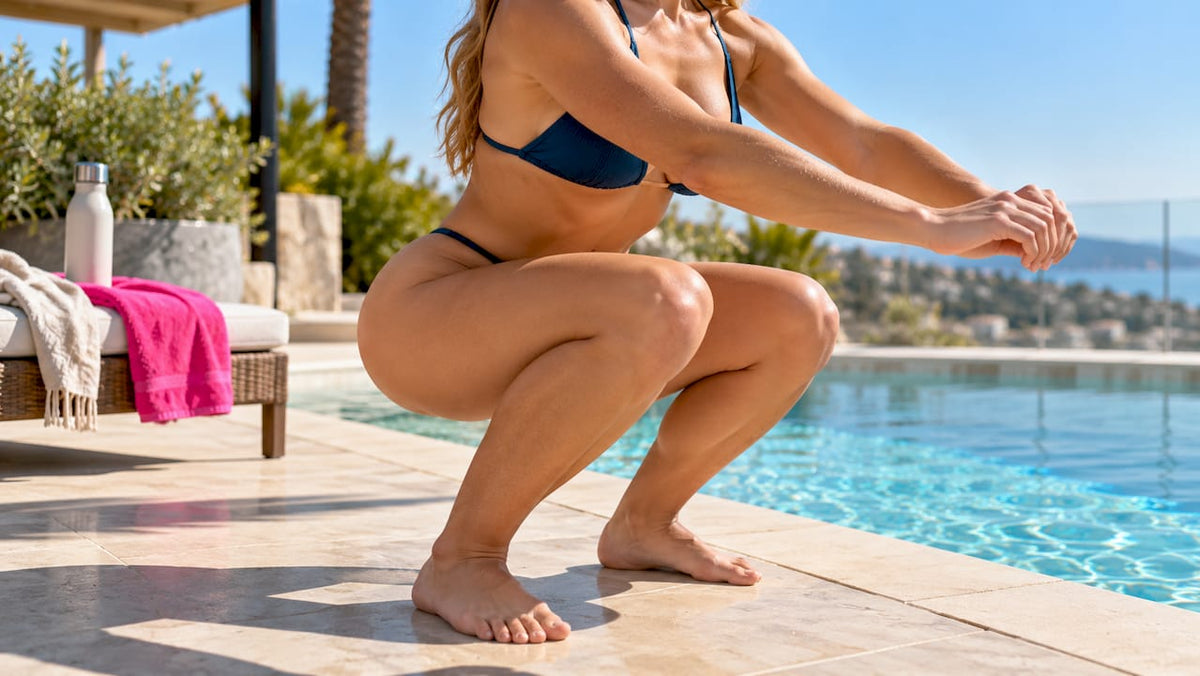
The most reliable way to prevent a swimsuit wedgie is to choose a fuller-coverage cut, like a high-waist bottom, boyshort, or one-piece, then confirm the fit with a quick squat-and-twist test before you ever hit the water. If a suit shifts in the dressing room, it will shift worse once wet. For fast relief in the moment, water-safe swimsuit tape, a quick retie, or a discreet clip can buy you time until you’re home.
TL;DR:
- Fuller-coverage swimsuits with wider side panels, such as high-waist or boyshort styles, significantly reduce the risk of ride-up during active water movement.
- Performing a squat-and-twist test in the dressing room helps ensure the swimsuit stays in place when wet, preventing unexpected shifting during use.
- Water-safe swimsuit tape, discreet clips, or quick reties can provide temporary fixes for wardrobe malfunctions on the spot, but their effectiveness depends on proper application.
- Swimsuit fabric quality, construction features like bonded seams, and elastic integrity are key to maintaining a secure fit over time and preventing sagging or loosening.
- Choosing the correct size and fit, especially for active use, and regular proper care extend the lifespan of a swimsuit and help keep it in place in the water.
Table of Contents
- What Actually Causes a Swimsuit Wedgie?
- Quick On-the-Spot Fixes and What to Carry in Your Beach Bag
- Choose the Right Style and Fit to Reduce Ride-Up
- Fabric and Construction: Features That Keep Swimwear in Place
- How Do You Test a Swimsuit Before You Buy It?
- Care and Maintenance to Preserve Fit and Prevent Future Wedgies
- Retailer-Tested Tips and Evidence From Dollhousebikinis’ Movement Checks
- A Wedgie Is a Fit Problem, Not a Body Problem
- Shop Dollhousebikinis for Styles Built to Stay Put
- Sources
- FAQ
What Actually Causes a Swimsuit Wedgie?
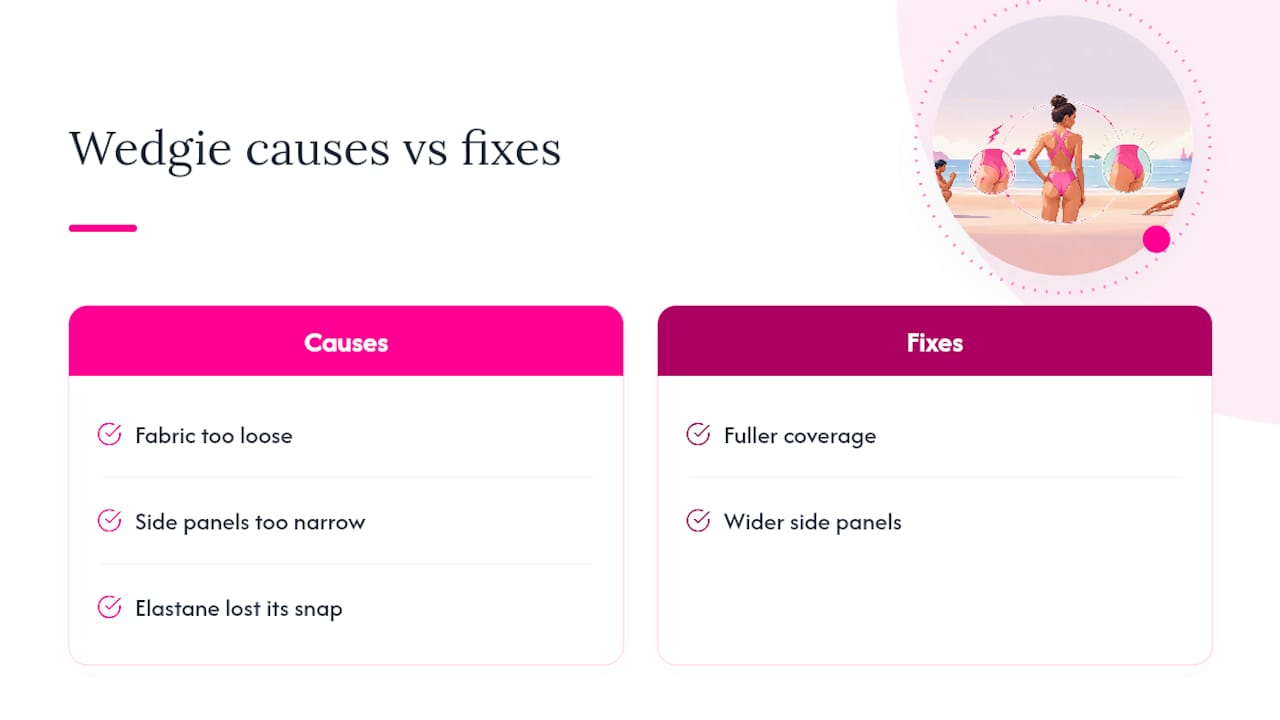
A wedgie isn’t bad luck. It’s a fit and construction problem, and it usually comes down to one of three things: fabric that’s too loose, side panels that are too narrow, or elastane that’s already lost its snap. Fuller coverage and wider side panels reduce the chance of ride-up compared with thin-strap or tie-side designs, according to reporting from the Seattle Times. Tommy John’s fit guidance backs this up: fit and fabric are the two levers that matter most, more than styling or trend.
Quick On-the-Spot Fixes and What to Carry in Your Beach Bag
Sometimes you don’t have time for a full wardrobe rethink. You just need the suit to behave for the next three hours.
- Swimsuit tape: apply to clean, dry skin and press firmly along the edge for at least a few seconds so the adhesive actually bonds. It won’t hold on wet or oily skin.
- Water-safe body adhesive: athletes and performers use specialized adhesives to keep swimwear anchored through high-movement routines, a trick documented in Yahoo Lifestyle’s look at Olympic-level fixes. It works, but it can irritate sensitive skin with repeated use, so treat it as an occasional solution, not a daily habit.
- Mechanical fixes: a small safety pin at the hip seam, a discreet clip, or simply retying looser straps solves plenty of minor shifting without any adhesive at all.
- What to skip: sunscreen, oils, and lotions applied right where fabric meets skin. They make fabric slide instead of grip, which is the opposite of what you want.
Pro Tip: Keep a small strip of swimsuit tape in a zip pouch in your beach bag. It weighs nothing and solves the one problem no amount of styling can fix on the spot.
Choose the Right Style and Fit to Reduce Ride-Up
Some cuts are just mechanically better at staying put. If wedgies are a recurring problem, start here before you blame your body or your luck.
- Boyshorts and swim shorts cover more surface area and distribute movement across a wider band of fabric, so there’s less loose material to ride up.
- High-waisted bottoms sit above the hip bone, which anchors the fabric instead of letting it slip down and bunch.
- Full-coverage one-pieces and tankinis eliminate the bottom-and-top gap entirely, which removes one of the most common shift points.
- Narrow side panels and G-string cuts are more prone to riding up because there’s simply less fabric holding the line in place, a pattern the Seattle Times piece on wedgie-resistant swimwear also calls out.
Sizing matters as much as style. A suit for lap swimming or beach volleyball should fit snugger than one meant for lounging by the pool, since constant motion works fabric loose over time. If you’re between sizes, size up rather than down, or look for a long-torso cut if a standard rise keeps sliding. When shopping, prioritize adjustable straps or ties, wider side panels, and construction that keeps its shape after repeated stretching. Dollhousebikinis breaks down these differences in its guide to different bikini cuts, which is worth a look before you buy.
Fabric and Construction: Features That Keep Swimwear in Place
Cut solves half the problem. Fabric and construction solve the rest.
- Double-lined panels add structure and hold their shape better than single-layer fabric, which tends to go sheer and slack after a few swims.
- Bonded seams and compression fabric keep the suit close to the body instead of letting it billow and catch during movement.
- Elastic quality determines how long a suit lasts before it starts sagging. Chlorine breaks down elastane over time, which is why a suit that fit perfectly in June can feel loose by August.
- A slightly compressive dry fit is actually the right call for active swimming, since water adds slack once you’re in the pool, a point Wallien’s fit guide makes clearly. If it feels loose on land, it will sag the moment it’s wet.
Darker colors and busy prints won’t fix a fit problem, but they do a decent job of hiding minor shifting between adjustments. Features like inner-grip elastic at the leg opening also help; Dollhousebikinis covers this in its post on keeping bikini bottoms from rolling.
How Do You Test a Swimsuit Before You Buy It?
Don’t trust the mirror alone. A suit can look flawless standing still and fail completely the second you move.
- Squat as if you’re picking something up off the sand. Watch the back panel; if it disappears, that’s a fail.
- Reach overhead like you’re stretching before a swim. Check whether the top rides up or the bottom slides down.
- Twist at the waist in both directions. Fabric that bunches or pulls to one side won’t hold up in the water.
- Jump lightly in place. This mimics the impact of diving in or catching a wave.
- Sit, then stand and check the fit again. Fabric that stayed put through the first four moves sometimes shifts here.
If a suit fails any of these, don’t assume it’ll “break in.” Retie the straps, try a size down for a firmer hold, or move to a different cut entirely. Dollhousebikinis documents this exact process in its 30-second movement test, a quick way to catch fit problems before you’re committed.
Pro Tip: Do the squat test twice. The first squat shows you the fit; the second shows you whether the fabric recovers or stays stretched out.
Care and Maintenance to Preserve Fit and Prevent Future Wedgies
A suit that fit perfectly on day one can start failing by midsummer if it’s not cared for.
- Rinse chlorine or salt water off immediately after swimming. Both accelerate elastane breakdown.
- Hand wash with a mild detergent and lay flat to dry. Skip the washing machine and dryer entirely.
- Heat is the enemy of stretch fabric, so hot water and dryer cycles will shorten a suit’s lifespan fast.
- Watch for sagging, thinning fabric, or elastic that doesn’t snap back. Suits worn several times a week typically need replacing every 6 to 12 months, according to Decisive Beachwear’s breakdown of fabric wear.
- Store suits flat rather than folded or balled up, which stretches side panels out of shape over time.
Retailer-Tested Tips and Evidence From Dollhousebikinis’ Movement Checks
A 30-second movement test can help catch fit problems before checkout instead of on the beach, since mirror checks may miss issues that cause wedgies.
- Double-lined panels on core styles add structure that holds shape through repeated wear.
- Adjustable ties let you tighten a bottom snug enough for active swimming without sizing down the whole suit.
- High-waist options anchor above the hip bone for shoppers who want coverage without sacrificing style.
For sizing questions, the brand’s bikini fit guide walks through measurements and cut recommendations by body type, a useful stop before you commit to a size.
A Wedgie Is a Fit Problem, Not a Body Problem
Too much swimwear advice frames wedgies as something to just tolerate, or worse, something wrong with the wearer’s body. It’s neither. It’s an engineering mismatch between fabric, cut, and movement, and it gets solved the same way any fit problem gets solved: test it, adjust it, replace it when the elastic gives out. Tape and clips are fine for a single afternoon. Real comfort comes from buying suits built to move the way you do.
— Ryan
Shop Dollhousebikinis for Styles Built to Stay Put
Some retailers carry fuller-coverage, structured cuts as recommended here, providing more convenient options for high-waist bottoms that fit well. Its high-waisted bikini sets and high-waist two-piece styles are built with the wider panels and adjustable ties that hold up through the squat-and-twist test, not just a photo shoot.

Before you check out, run your size against the bikini fit guide and, once your suit arrives, give it the 30-second movement test at home: squat, twist, reach, jump. If something feels off, customer support can help you swap sizes or styles before your next beach trip. Browse the swimsuit collection and shop with the fit checklist already in hand.
Sources
- How to Prevent Wedgies: Tips and Tricks - Tommy John
- How do athletes avoid wedgies? And more Olympic questions you’re afraid to ask - Yahoo Lifestyle
- Swimsuits that avoid wedgies - Seattle Times
FAQ
What Is a Pubikini?
A pubikini is a style of bottom cut low at the front but still full-coverage at the back and sides, designed to avoid the narrow panels that cause ride-up while keeping a lower-rise look.
Why Do Wedgies Happen So Often in Swimwear?
Wedgies happen because swimwear fabric loosens with wear, water adds slack once you’re submerged, and narrow side panels have little material to resist shifting during movement.
How Can You Prevent Wedgies While Swimming?
Choose fuller-coverage cuts like boyshorts, high-waist bottoms, or one-pieces, confirm the fit with a squat-and-twist movement test, and replace suits once the elastic stops recovering its shape.
How Do You Prevent a Severe or “Atomic” Wedgie?
Avoid narrow-panel or string-style bottoms during high-impact activity like diving or wave play, and size for a slightly compressive dry fit since water adds slack that loosens an already-borderline fit.
Does Swimsuit Tape Actually Work?
Water-safe swimsuit tape works when applied to clean, dry skin with firm pressure, but it won’t adhere well over sunscreen, oil, or wet skin, so timing the application matters.